

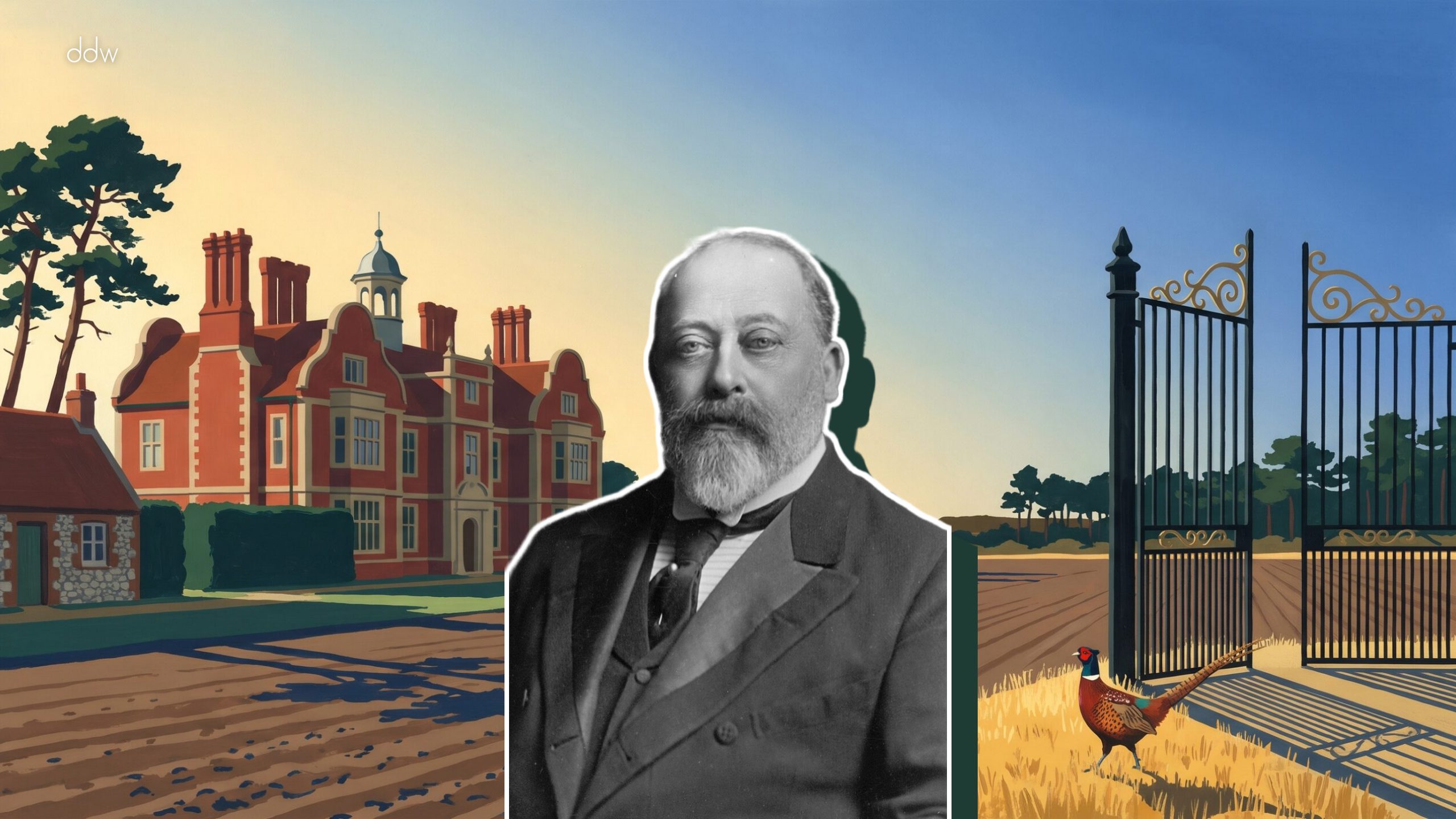
Sandringham was bought for a prince of twenty-one in 1862 and has passed through five kings and a queen since, always as private property, which is why the King could find his brother a home there.
Most people picture the royal houses as one great national portfolio, held in trust and handed from reign to reign along with the orb. Windsor fits that picture well enough. Sandringham belongs to King Charles III in much the way a farmhouse in Suffolk belongs to whoever’s name is on the deeds, and the difference has lately become very practical.
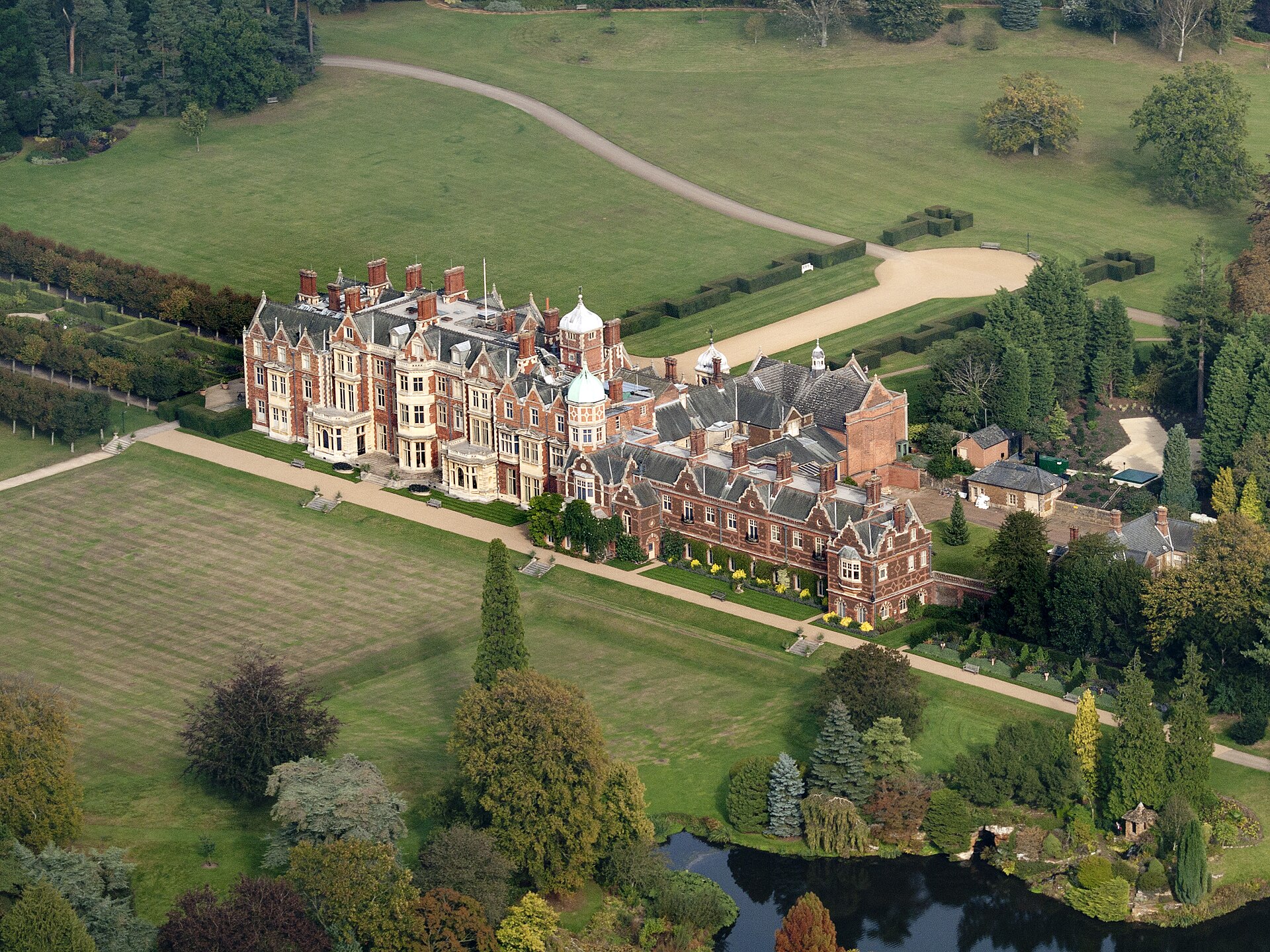
Who actually owns Sandringham?
The King owns it personally, as a private individual. The Royal Household’s own page on Sandringham House describes it as one of two private residences owned by the family, Balmoral being the other, set apart from the palaces that belong to the Crown.
The distinction can sound like a lawyer’s hobby, but it settles three practical matters: who maintains the place, who may live there and who inherits it.
The land is considerable, even by Norfolk standards. The Royal Household gives the estate as some 8,000 hectares of heath, woodland and farmland in north-west Norfolk. Who Owns Norfolk, the county’s land-ownership project, ranks it as the second-largest private estate in the county after Holkham. It also records that the estate owns most of the villages of Sandringham, West Newton, Anmer and Flitcham, with hundreds of rented homes. More than 200 people make their living there as farmers, foresters, gamekeepers and gardeners. In 2023, valuation experts consulted by Who Owns Norfolk put the whole estate at between £250m and £390m. That figure is an outside estimate, and the estate has never been sold on the open market to test it.
How did a royal family come to buy a Norfolk estate?
They bought it the way any family might buy one, for an heir who needed somewhere to live. Queen Victoria and Prince Albert decided their eldest son, Albert Edward, should have a house of his own. In 1862, shortly after he turned twenty-one, the estate was bought from Charles Spencer Cowper. Who Owns Norfolk gives the price as £220,000 for just under 8,000 acres. The following March the prince married Princess Alexandra of Denmark, and by about 1870 the house had been substantially rebuilt for the life they intended to lead there.
The estate has kept growing since. The number 8,000 has survived from 1862 to the present, but the unit has changed from acres to hectares.
From there it passed down the family line. When Edward VII died in 1910 it went to George V, who made the first royal Christmas broadcast from Sandringham in 1932 and died there in January 1936. After the abdication later that year it came to George VI, although accounts differ on whether he inherited it or bought it from his brother. He died there in February 1952, and Elizabeth II, who first opened the house to the public in 1977, held it for seventy years. Charles inherited it in 2022.
How is that different from Windsor?
Windsor sits in another category of property altogether. Royal land falls into four distinct kinds of holding, and the four are often confused. The Crown Estate, as CNN put it, manages land and property on behalf of the British state, and Windsor is part of it. The Duchy of Lancaster and the Duchy of Cornwall are separate estates, each with rules of its own. The occupied palaces are a third category. Sandringham and Balmoral make up the fourth: private houses that happen to belong to a monarch.
Calling it “the Crown’s Sandringham” or “the nation’s Sandringham” is therefore simply wrong. The Crown has no more claim on the place than it has on your spare room.
Why does Andrew’s move make the point so clearly?
His move was the first time in years that the distinction made news. When CNN reported on 1 November 2025 that Andrew Mountbatten-Windsor was being moved to the Sandringham estate, it set out the two kinds of ownership side by side. His home at Windsor was Crown Estate property. Sandringham is privately owned by the sovereign and has been handed down through the generations.
The money followed the same line. NBC reported that the King would fund his brother’s relocation and pay him an annual stipend from his own private resources. A king can house a relative on his own land without asking anyone. He could not do the same with Windsor.
Rumour briefly placed Andrew at York Cottage, Hello! reports, but the cottage is the estate office, with holiday lets and staff flats in part of the building.
Does the King pay tax on it?
He pays some taxes and not others, under an arrangement made in 1993. The Commons Library’s June 2026 briefing on royal finances sets out the terms. Inheritance tax is not charged on gifts or bequests from one sovereign to the next. It is charged on gifts and bequests to anyone else. The stated reasoning is that Sandringham and Balmoral serve official as well as private purposes, and that the monarchy needs some financial independence from the government of the day.
That is a long way from tax-free living. Since 1993 the monarch and the heir have voluntarily paid income tax on duchy income and personal earnings. The Commons Library also records that after 1963 the Queen paid local authority rates on Sandringham and Balmoral as private homes, the same as any other householder.
The exemption is narrow, then, but it carries great weight. A private estate that passes from parent to child would normally be cut down by death duties at every handover. This one moves from sovereign to sovereign intact.
Who gets Sandringham next?
Officially, nobody outside the family knows. Royal wills are sealed by convention, so any answer is an inference. The tax rule points clearly towards the next sovereign, because a bequest to anyone else would bring inheritance tax into play.
The Prince of Wales already lives on the estate. Anmer Hall, his family’s Norfolk home, stands on Sandringham land, and Who Owns Norfolk says it was gifted to him in 2013. If the pattern of 1910, 1952 and 2022 holds, the estate will change owner without changing character, and the likeliest heir will not need to move far.
Read Next: 7 Facts on King Charles’s Sandringham Estate Ownership in 2026
Cover photograph: W. & D. Downey via Wikimedia Commons (Public domain).