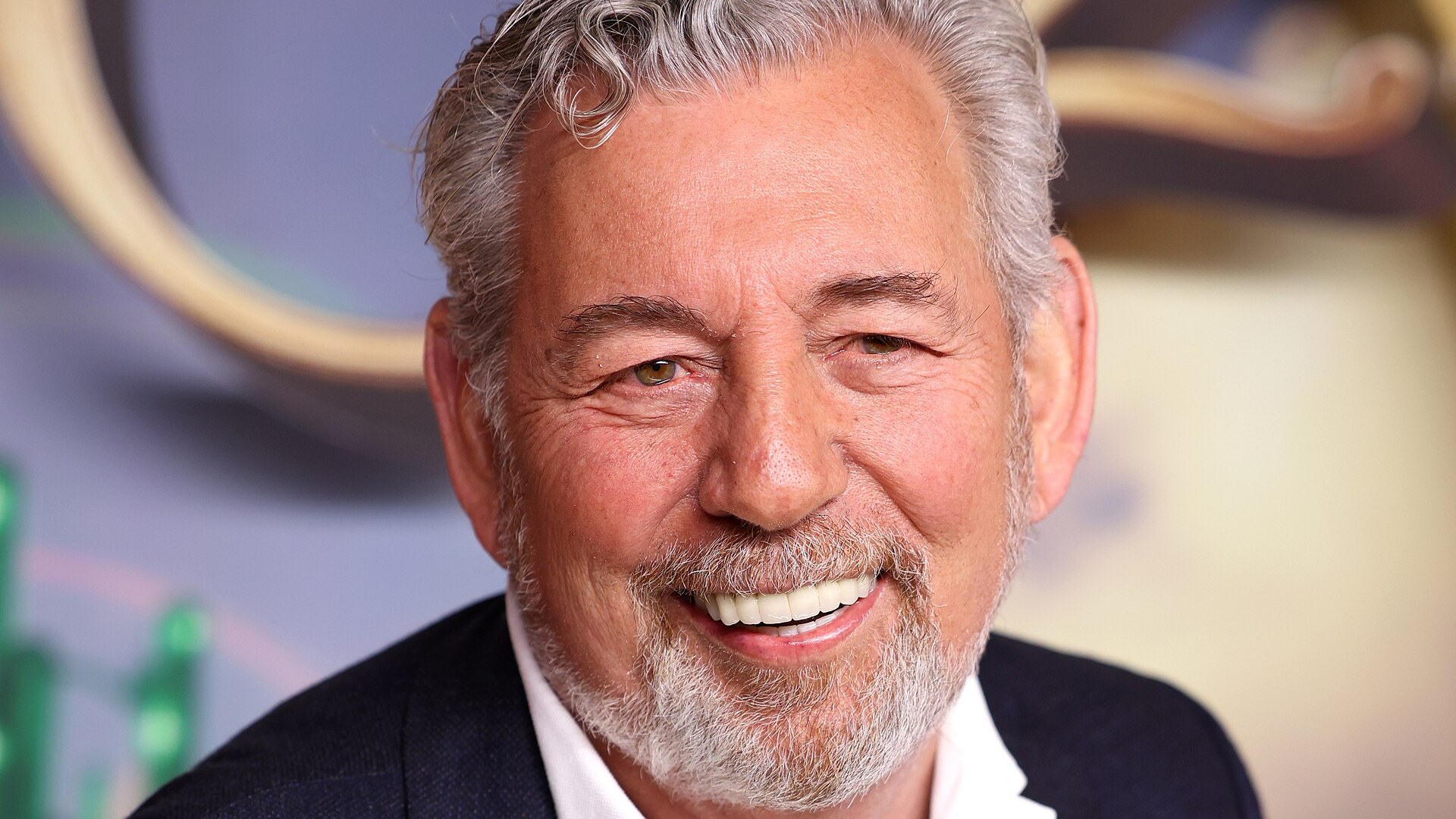




India’s largest share sale closed on Akash Ambani’s 35th birthday, with the eldest son fronting the pitch, his father absent from the stage and less than 3% of Jio actually up for sale.
1991 to 2014
Akash Ambani has spent his career holding the second-grandest title in whichever room his father happens to be in. He was born on 23 October 1991 to Mukesh and Nita Ambani, alongside his twin sister, Isha. Eleven years later their grandfather Dhirubhai, who founded Reliance, died.

Akash read Economics at Brown University. According to the Jio Institute, he also co-owns the Indian Premier League side Mumbai Indians, and Reuters says he plays a key role in running it. Both twins joined Reliance boards in 2014. Akash went to Reliance Jio Infocomm, the telecoms operator, where Reliance’s own board page records him as a non-executive director from October that year.
Jio had not yet switched on for paying customers. Being early to a board is cheap. Arriving early in a market costs a fortune.
2016 to 2019
Jio launched commercially in 2016. Akash dates the company’s anniversary to 6 September. Three years later it was large enough for its owner to promise it a separate life. At Reliance’s 42nd annual general meeting, on 12 August 2019, Mukesh Ambani said Jio would be listed separately within five years. That set the deadline at August 2024.
Akash married that same year. Reuters says he has two children.
2020
Keeping the five-year promise became considerably easier in 2020, when Silicon Valley turned up with a chequebook. Reuters says Meta joined Google and other global investors in putting 1.52 trillion rupees, then $20.5bn, into the company. Business Standard reported that Google paid ₹33,737 crore for 7.73%, in a deal signed on 15 July at an equity valuation of ₹4.36 lakh crore. Reports of the later draft prospectus put Meta’s affiliate, Jaadhu Holdings, at 9.98%.
Selling a tenth of your company to Facebook’s parent is one way of telling everyone what the other nine-tenths are worth.
June 2022
This was the reshuffle that got people talking. Mukesh resigned as a director of Reliance Jio Infocomm and Akash was appointed chairman of its board. Pankaj Mohan Pawar became managing director of the operating company. Mukesh kept the chair of Jio Platforms, the holding company above it, where Akash is now managing director.
The result is a son who chairs the subsidiary and helps run the parent, which his father chairs. Family firms have produced far more confusing organisation charts, and most of them did not have Google on the share register.
According to Reuters, the move was widely seen as succession planning. That phrase carries a good deal of weight, because the siblings have their own corners. Exchange4media says Isha leads Reliance Retail. Fortune reports that Anant, the youngest, has sat on the boards of Reliance New Energy and Reliance New Solar Energy since 2021. Anyone keen to pick an heir from the outside will find three plausible candidates and no announcement.
August 2025 to June 2026
The five-year deadline came and went. Reliance’s annual meeting on 29 August 2025 pointed to a listing in the first half of 2026. Then, according to Reuters, a filing planned for as early as March was pushed back after the Iran war dampened appetite for new issues.
Jio Platforms filed its draft red herring prospectus with SEBI on 19 June 2026. YourStory reported a fresh issue of up to 27 crore shares of ₹10 face value, with no offer for sale, which means no existing shareholder sells a single share. Mukesh, in a statement reported by IANS, called it proof that India can build technology companies of global scale. The Tribune reported that up to ₹27,500 crore of the proceeds is earmarked to repay borrowings at Reliance Jio Infocomm, the wholly owned subsidiary Akash chairs.
In other words, most of the money raised goes to repaying debt at Jio Platforms’ operating subsidiary rather than to any selling shareholder.
Mid-October
ICICI Direct lists the red herring prospectus as filed on 14 October, with anchor investors bidding on the 19th. The investor event came in the week before bidding closed, and the casting told its own story. Akash led the pitch, briefing on 533 million customers and profit margins. Isha shared the stage. Their father, according to Reuters, skipped it.
“I’m here as a representative of the entire company,” Akash said at the Jio Platforms investor event, a line that does a heir no harm at all.
Reuters quoted an unnamed industry executive as saying Akash weighs in on some of the bigger calls but leaves day-to-day decisions alone. The same source said father and son handle investors separately: Mukesh is closer to many of the sovereign wealth funds, while Akash is Reliance’s “Silicon Valley man”. When the investors split along those lines, it is not hard to see which generation is meant to take the calls from California.
21 to 23 October
Bidding opened on Wednesday 21 October, and Reuters reported that the $3.2bn issue was fully subscribed in under two hours. The agency called it India’s largest share sale and the first from Reliance in two decades. By Thursday, according to exchange data cited by Reuters, the retail portion was fully subscribed and the quota reserved for Reliance shareholders had been subscribed 2.58 times. Both books had filled with a day of bidding to spare.
The offer closed on Friday 23 October, Akash’s 35th birthday. PTI reported more than one crore applications. Reuters ran its profile, which cast him as the heir stepping into the spotlight as Jio went public, across a long list of syndication partners. An earlier version had given his age as 34, which was correct for most of the week.
28 October
Allotment is scheduled for 26 October and trading for the 28th. Reuters says the offer values Jio Platforms at up to $108.3bn. YourStory puts the issue at about 2.9% of post-issue share capital. Roughly 97% of the company stays exactly where it was. Reports of the draft prospectus give Reliance Industries 66.43% before the offer, with Meta’s affiliate at 9.98% and Google at 7.73%. Nobody in the family is cashing out, and the sole promoter remains Reliance.
Mukesh’s fortune is assessed elsewhere, and the estimates differ widely. On 23 October Bloomberg put him at $78.8bn, 23rd in the world, with most of it drawn from a 42% stake in Reliance Industries. Forbes, pricing its 2026 list on 1 March, had him at $99.7bn. No serious outlet has put a figure on Akash’s own fortune.
One figure deserves a second look. Reuters says Jio Platforms made about $3.2bn in profit on roughly $15.5bn of revenue in the year to March, so the largest share sale in Indian history raised about what the company earns in a year. Telecoms, Reuters adds, still brings in nearly 90% of the revenue.
The prospectus opens its company overview with “We are a technology platform.” Akash told PTI that Jio is betting on AI and cloud to grow beyond telecoms, then squared the circle himself: “There is no either-or at Jio: the network is our technology”. With telecoms bringing in nearly nine-tenths of the revenue, it would have been unwise to argue otherwise.
Cover photograph via Reuters.