

United Airlines’ chief executive wants inheritances taxed at close to 100 percent at some level and says he would pay; the US Treasury has been quietly accepting voluntary cheques towards the national debt for 29 years.
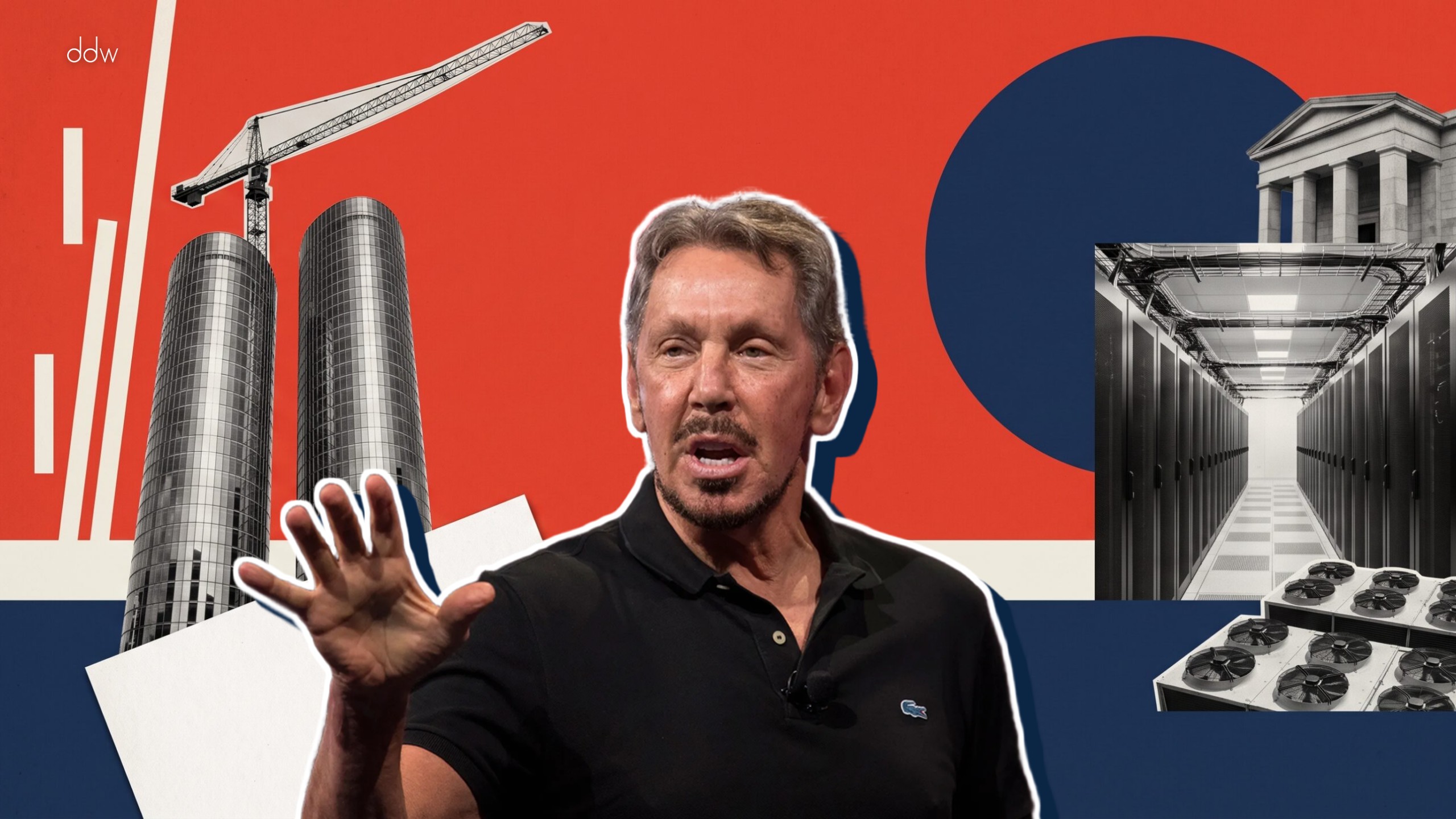
The phrase now attached to Scott Kirby is “a 100 per cent inheritance tax”, and he never quite said it. In an interview with The New York Times published on 18 October 2026, the chief executive of United Airlines said America should have inheritance taxes that get “close to 100 percent at some level”, and then added a short promise of his own: “I would pay them.” He named no rate, no threshold and no bill. The country he was describing also has no federal inheritance tax at all.
Three sets of numbers decide what the remark is worth. The first is Kirby’s pay, which United discloses every spring in its proxy statement to shareholders. The second is the federal estate tax as it applies to deaths in 2026. The third is a small account at the Treasury that accepts gifts towards the national debt from anyone who cares to send one, and has done so, according to Fox Business, for 29 years.
What did Scott Kirby say about inheritance tax?
The Times asked him about the falling public trust in chief executives. Kirby answered with a view on the distribution of wealth, telling the paper that “Wealth inequality has become a danger to our society, and we need to address that”, a line Fortune reported two days later.
He went further and said America should have a national wealth tax, because a state-level one would fail: “people will just move”. Then came the inheritance line and the offer to pay. A man who runs an airline knows better than most how easily the well-off change address.
The key words are “at some level”. Kirby did not say where that level would sit, or how much an heir would have to receive before the rate approached 100 percent. What he described was an idea about where the top of the scale should be. He did not propose a 100 percent tax on every estate.
How much is Scott Kirby paid?
Fortune, working from United’s 2026 proxy statement, put Kirby’s total compensation for 2025 at $32.3m. That comprised a $1.2m base salary, $22.6m in stock awards, $8m in non-equity incentive pay and about $500,000 in other compensation. The base salary is less than four per cent of the total.
Fox Business reported that the $32.3m was about 334 times the pay of United’s median employee, whom the same proxy puts at $96,670. The ratio is the company’s own estimate, calculated under SEC rules.
The trend is mixed and the figures run in both directions. United’s proxy statement for 2024 pay recorded $33,924,988 for Kirby against a median of $89,197, a ratio of roughly 380 to 1. A year earlier, in 2023, he received $18,573,299, about 229 times the median. So 2025 was a slightly smaller year than 2024, with a narrower gap.
Fox Business also asked United whether Kirby planned to cut his own pay or share his wealth with employees. The company did not respond to either question.
What did Jeff Landry say to Scott Kirby?
The Governor of Louisiana replied on X on 19 October. Jeff Landry wrote that if Kirby felt so strongly he “could simply cut a check”, and linked to the Treasury’s fund for public donations towards the national debt.
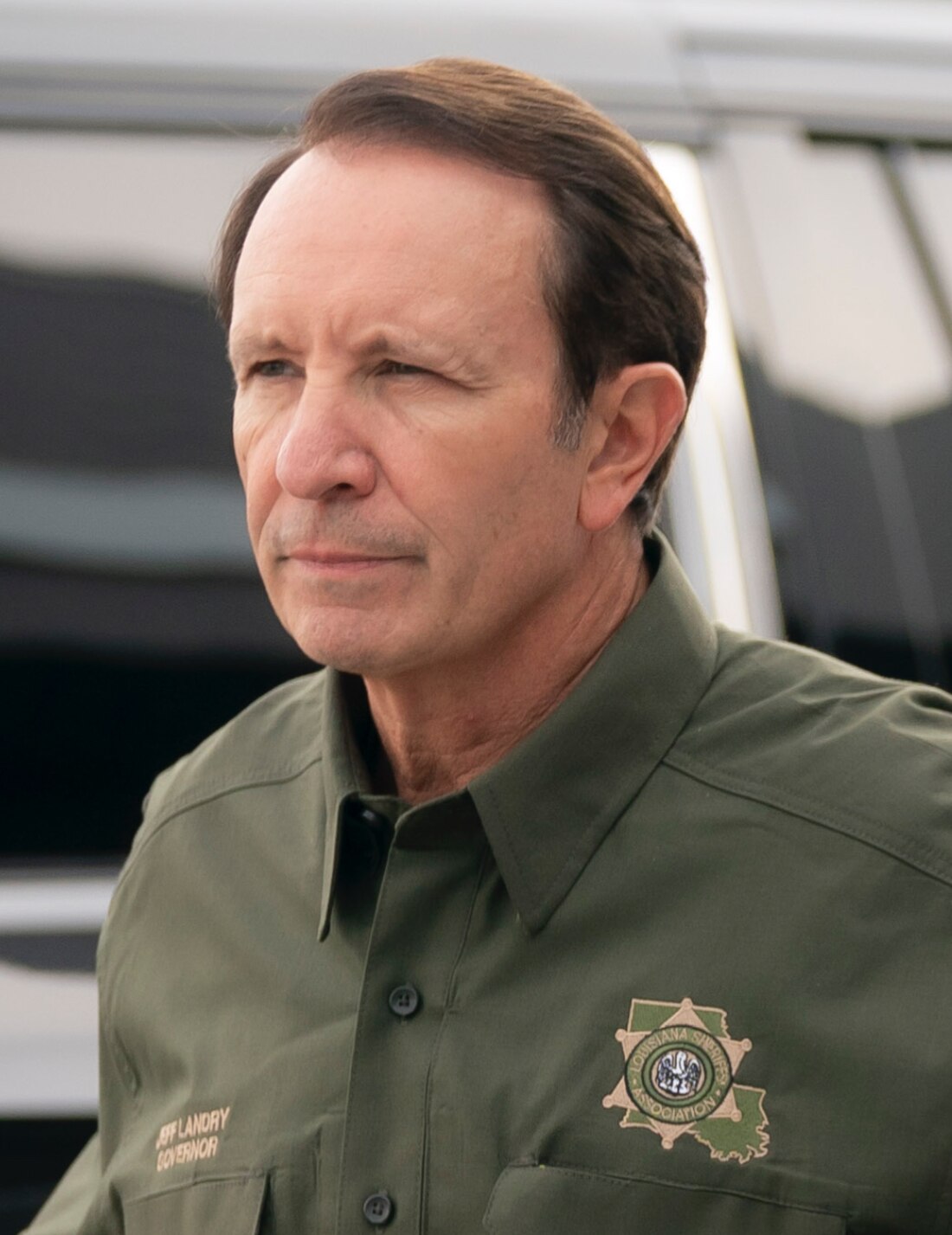
He was blunter in the same post. Landry called the remark audacious, coming from “a guy that didn’t even build @united” who earns $32 million a year. That is the governor’s description of Kirby’s career. It is not a finding about how United was built.
The link was the sharper part of the reply. It pointed at something that really exists, which gives the exchange more substance than a political spat usually has.
Does the United States have an inheritance tax?
There is no inheritance tax at federal level. The Tax Policy Center lists five states that levy one: Kentucky, Maryland, Nebraska, New Jersey and Pennsylvania. Iowa phased out its own in 2025.
What Washington does levy is an estate tax, and the difference matters in a family. The federal bill is settled by the estate itself, before anything reaches the people named in the will, and the heirs do not pay it themselves. Kirby said “inheritance”, but the tax his idea would most likely reshape is the estate tax.
What are the estate tax exemption and top rate in 2026?
Fortune puts the federal estate tax’s top rate at 40 per cent and the 2026 basic exclusion at $15m per person. According to the law firm Harris Beach Murtha, that exclusion rose by $1,010,000 from $13,990,000, and the One Big Beautiful Bill Act made it “permanent” and adjusted it for inflation. The figure applies to deaths and gifts after 31 December 2025.
Married couples can go further. The estate-planning practice James Burns Law notes that up to $30m can be protected through coordinated planning and a portability election, and warns that the protection is not automatic. Families who leave the paperwork too late lose half of it.
In practice, most American estates owe nothing federally. The 40 per cent rate applies only to the part of an estate above the exclusion, so a fortune has to be very large before the top rate takes a meaningful share. Below $15m there is no federal bill.
What would “close to 100 percent at some level” mean for heirs?
On Kirby’s own words, nobody can yet say, because the level is the whole question. Today the federal rate stops at 40 per cent and applies only above $15m. His version would raise the top of that scale to somewhere near 100 percent. Whether that line would sit at the current exclusion or far above it, he did not say.
The principle is easier to state than the policy. Above whatever line Congress chose, the government would take nearly everything and the family would take nearly nothing. In effect, the state would become the main heir to the largest estates, and the planning industry built around the $15m and $30m figures would have a very different job.
The idea has a numerical background, at least. Drawing on Federal Reserve data, Fortune reported that the richest 1 per cent of American households held 32.5 per cent of national net worth in the second quarter of 2026, up from 31.1 per cent a year earlier.
Who else among the very rich has called for higher taxes on the wealthy?
Kirby has company, and Fortune placed him alongside Bill Gates and Marc Benioff as wealthy business leaders who have publicly supported raising taxes on the rich. The idea is also on a ballot. Fortune reports that California voters decide on a billionaire tax in November 2026.
What sets Kirby apart is his position. Kirby runs United as its chief executive, and what the public record documents about his money is the compensation United reports in its proxy statement: salary, stock awards and incentive pay. On the record, it is pay, and pay is the one thing his own company publishes every year.
Has Scott Kirby walked the remarks back?
He has not walked them back. Kirby went on Bloomberg TV on 21 October, and Fortune, in a follow-up published on 25 October, reported that he stood by what he had said. He told Bloomberg he is not a policy advocate and has no plans to run for office. He said he had simply been asked for a “non-consensus opinion”.
It is a fair description of an interview answer. It also explains why there is no bill attached, no threshold and no rate: an opinion needs none of them. A tax needs all three, and it needs Congress.
Can you give money to the US Treasury to pay down the debt?
You can, and the arrangements are more developed than most people would guess. According to TreasuryDirect, the Treasury’s own site, the Bureau of the Fiscal Service may accept gifts to the United States to reduce debt held by the public, on the condition that the money is used for that purpose. The site adds that such gifts may be made during a donor’s lifetime or left as a bequest in a will. For anyone who wants their estate to go to the state, the clause already exists.
Giving is simple, and Pay.gov hosts a form titled “Gifts to Reduce the Public Debt” that accepts bank transfers, PayPal, Venmo and cards. The Treasury also takes a cheque payable to the Bureau of the Fiscal Service, with a memo saying it is a gift to reduce the debt held by the public.
The total so far is small. Fox Business reported that the programme had collected $67.3m over 29 years to 2025, against a national debt of $36.7tn.
Two points make the comparison fair. A gift is not a tax: it goes towards the debt, it cannot be directed to any particular purpose, and it is not a levy passed by Congress. Nor is a cheque a way of paying an inheritance tax early, because there is no such tax to pay.
So could Scott Kirby act on his own idea today?
On the personal side, yes. A national wealth tax or a near-100% top rate on inheritances would need Congress, and Kirby has said he is not campaigning for either. A personal version needs only the Treasury’s form or a line in a will. Whether he has ever used either is his own affair, and there is no reliably sourced public figure for what he is worth. In my view the gesture is worth less than the debate it started, and the debate is a serious one. Still, the open question is a practical one, and Landry put it in a single link. The gift form is on Pay.gov, and it accepts Venmo.