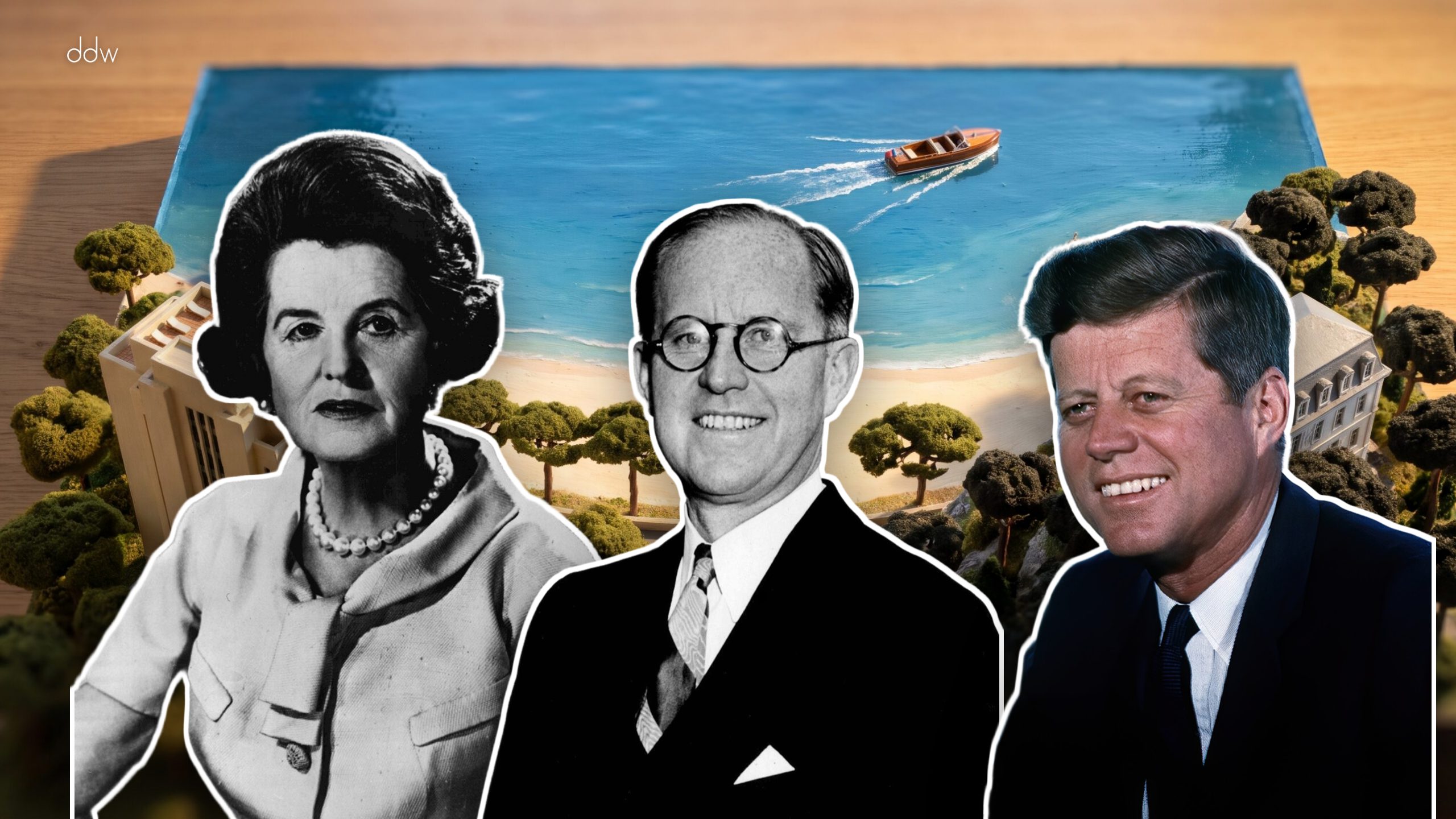




Soft tailoring, no visible logos, a navy blazer worn until it softens and a palette borrowed from Carolyn Bessette-Kennedy add up to a look meant to be inherited, and the houses selling it count the proceeds in billions.
Old money style has two rulebooks. Style editors at Luxe Digital, Vogue Adria and the retailer Rampley & Co write the first, and Hermès, Ralph Lauren, Brunello Cucinelli and LVMH write the second in their annual accounts. Read together, they describe one wardrobe from opposite ends, and the money in them belongs to the companies, which suits a look that prefers personal fortunes left unspoken.
Hermès sells saddlery to a wardrobe that is supposed to last
Luxe Digital’s guide for men expects a garment to stay in the wardrobe for a decade or longer, to be mended when it wears through and to be worn again without apology. On that reading, the house that suits the look best is one that still lists saddlery as a business line. Hermès, whose chief executive is Axel Dumas, reported €16 billion in revenue for 2025. Its results presentation puts leather goods and saddlery well ahead of ready-to-wear and accessories, with silk and textiles some distance behind both. The detail people repeat at dinner is the margin: recurring operating income came to 41% of sales, a shade above the year before, for a company whose customers are told to buy less and keep it longer. Luxury Tribune reported that the group plans moderate price increases in 2026, which gives the decade rule a small reward. Anyone still carrying last year’s bag bought the cheaper one.
Ralph Lauren sells the American version of old money style by the billion
Rampley & Co traces the American form of the look to Ivy League and East Coast preppy dressing: the Oxford shirt, the blue blazer, the loafer and the pleat-front chino. Voguetidings forbids logos everywhere else but makes room for a small polo player or a tiny alligator, and readers can supply the labels for themselves. Ralph Lauren Corporation is the house most associated with that wardrobe in the public mind, and in its latest annual report it sounded entirely at home with the exception. Patrice Louvet, president and chief executive, pointed to “revenues surpassing $8 billion for the first time on healthy quality of sales” in the company’s fiscal 2026 results, with reported revenue up 15% on the year and the final quarter growing faster still. Louvet’s phrase “healthy quality of sales” is how a listed company says it did not have to mark things down, and a look built on navy and khaki makes that easier than most, since its stock goes out of fashion so slowly. The Oxford shirt and the pleat-front chino are about as close as American dressing comes to a uniform. A company that sells the uniform for a look that frowns on showing off has done rather well out of the frown.
Brunello Cucinelli’s company grows on a palette of camel, cream and charcoal
Luxe Digital describes the old money wardrobe as quiet, well-made classics in neutral colours, cut in soft tailoring from natural fabrics, and Old Money Brand’s own blog narrows the palette to navy, camel, cream, beige, white and charcoal grey, with forest green and burgundy let in as accents. One of the houses the look trades on is led by Brunello Cucinelli, executive chairman and creative director of the company that bears his name. FashionUnited reported record 2025 revenue of €1.41 billion for the company, up 11.5% at constant exchange rates. Six months earlier, Cucinelli had opened his half-year results presentation by saying “We have closed the first half of 2025 with excellent results both in terms of revenue and profit”, which for a chairman in a cashmere-coloured trade counts as raising his voice. The detail worth taking to dinner came from The Industry, which reported that the Americas supplied 37% of the company’s turnover last year. A palette described in Italian is therefore bought, to a large degree, across the Atlantic. Old money style travels well, as long as the colours stay quiet.
Loro Piana still carries the family name, and LVMH owns almost all of it
Rampley & Co puts the British version of the look down to an attitude to ownership: inherited pieces, well-kept cloth, things that improve with wear. Loro Piana tests that idea from the far side of the counter. Pietro Loro Piana founded the business in 1924 as a local wool merchant in Quarona, according to Business of Fashion, which also reported that LVMH bought a majority in July 2013, leaving the Loro Piana brothers with a minority stake and the running of the company. Pier Luigi Loro Piana said at the time that the family was proud to see its name associated with the LVMH group, WWD reported. Bernard Arnault, LVMH’s chairman and chief executive, later told analysts that the group had taken its holding to 94%, buying a further 9% from the family for €1 billion under a call option written into the 2013 agreement, FashionUnited reported. His eldest son, Antoine Arnault, is chairman of Loro Piana, and Pier Luigi and Maria Luisa Loro Piana remain on its board, according to WWD. LVMH does not break down sales by brand, so the house’s own revenue stays as discreet as its clothes. The family managed both halves of the rule, in the order the guides recommend.

Carolyn Bessette-Kennedy and Sofia Richie Grainge are the faces the guides keep borrowing
Every rulebook needs a portrait gallery, and the guides hang roughly the same pictures. Vogue Adria names Sofia Richie Grainge as an embodiment of the look and points back to Carolyn Bessette-Kennedy and her husband, John F. Kennedy Jr., a couple whose photographs still circulate as a reference for clean lines and very little colour. Voguetidings widens the frame to whole families, the Kennedys, the Vanderbilts and the Astors, and adds Jacqueline Kennedy Onassis, Princess Diana and Grace Kelly to the list of icons. These are attributions of style, made by the people who write about clothes, and none of them says anything about where any of these women shopped or which houses they favoured. That gap is useful to the houses, which can be admired in the same breath as a Kennedy without claiming a Kennedy as a customer. The portraits do the selling, and nobody has to name a shop. A good photograph of a navy coat on a pavement has outlasted most advertising campaigns, and it never cost the house a penny. The guides cite the faces and leave the receipts to the imagination.
Vogue Adria has moved the look away from preppy and towards minimalism
The look went mainstream through TikTok, where it became hugely popular around 2022, according to Vibesabi, and anything that popular eventually has to calm down. Vogue Adria argues that it has, describing minimalism now taking precedence over preppy aesthetics, which moves the centre of gravity from the American wardrobe in the second entry towards the quieter British one in the fourth. The practical instruction comes from Luxe Digital, which tells men to repeat outfits without embarrassment and cites a 3-3-3 rule: three tops, three bottoms and three pairs of shoes. Nine pieces is a capsule wardrobe that would fit in a weekend bag, and it suits a reader who flies more often than he shops. It also makes the rules on colour and logos easier to keep, since a shirt that has to go with everything else in the bag cannot afford to shout. Minimalism sounds like an austerity measure until the price of the nine pieces is added up, which the guides, tactfully, never do. The fewer things a wardrobe holds, the better each one has to be.
Start with a navy blazer, and wear it until nobody can say where it came from
The question every reader asks after the rules is what to buy first, and the answer sits where the rulebooks overlap. Rampley & Co puts the blue blazer at the centre of the American wardrobe, the palette puts navy at the top of its list, and Luxe Digital asks for soft tailoring, no visible logo and a garment kept long enough to look lived in. A navy blazer satisfies all three, goes over a cream knit in the minimalist version and an Oxford shirt in the preppy one, and survives the 3-3-3 rule as the jacket that counts for more than one outfit. Which house made it matters for a season or two. After that the cut of the shoulder and the wear at the cuffs do the talking, and in the way the guides intend, the blazer starts to look as though it belonged to someone else first. That is the only part of old money style no shop can sell.