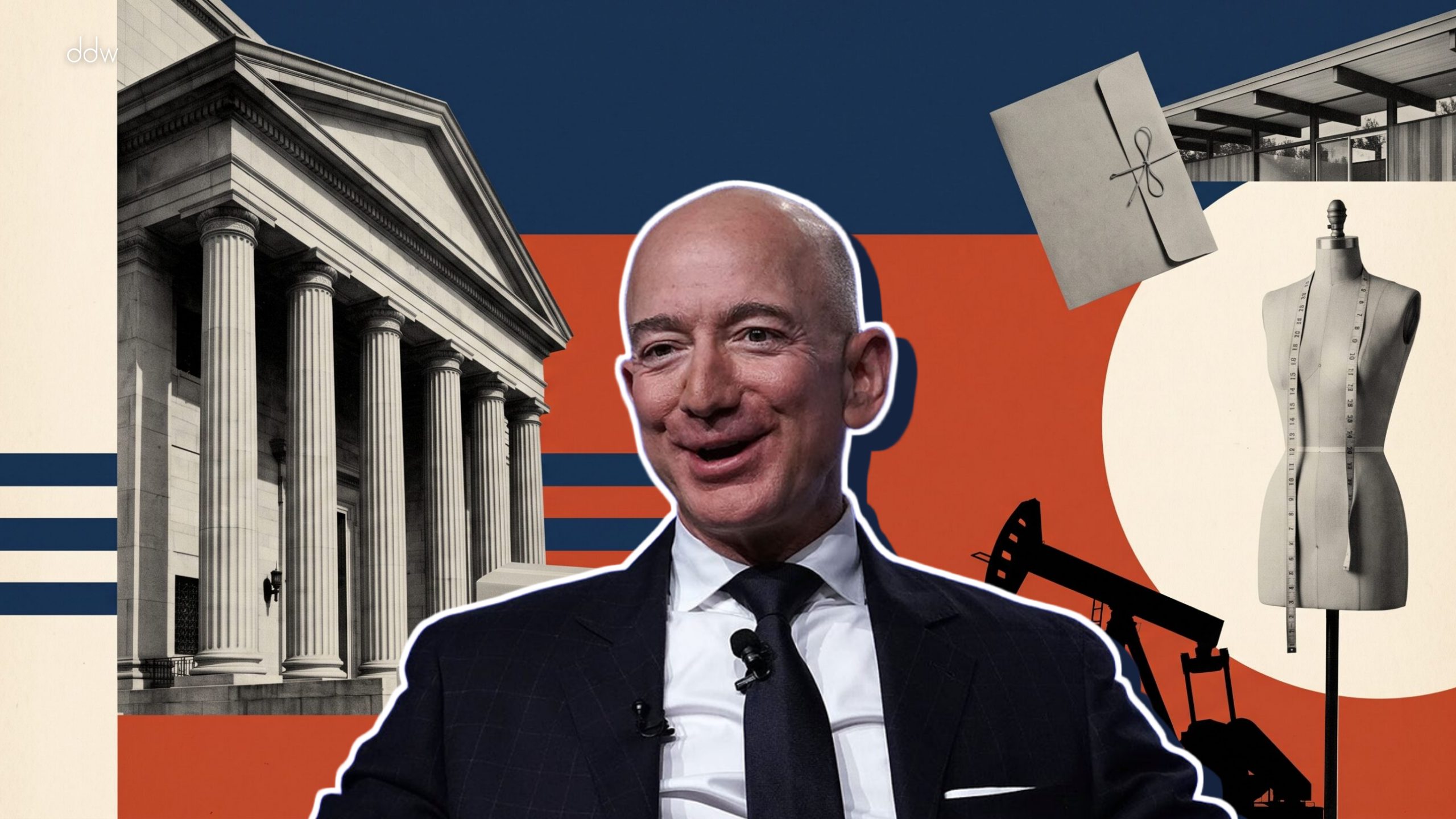



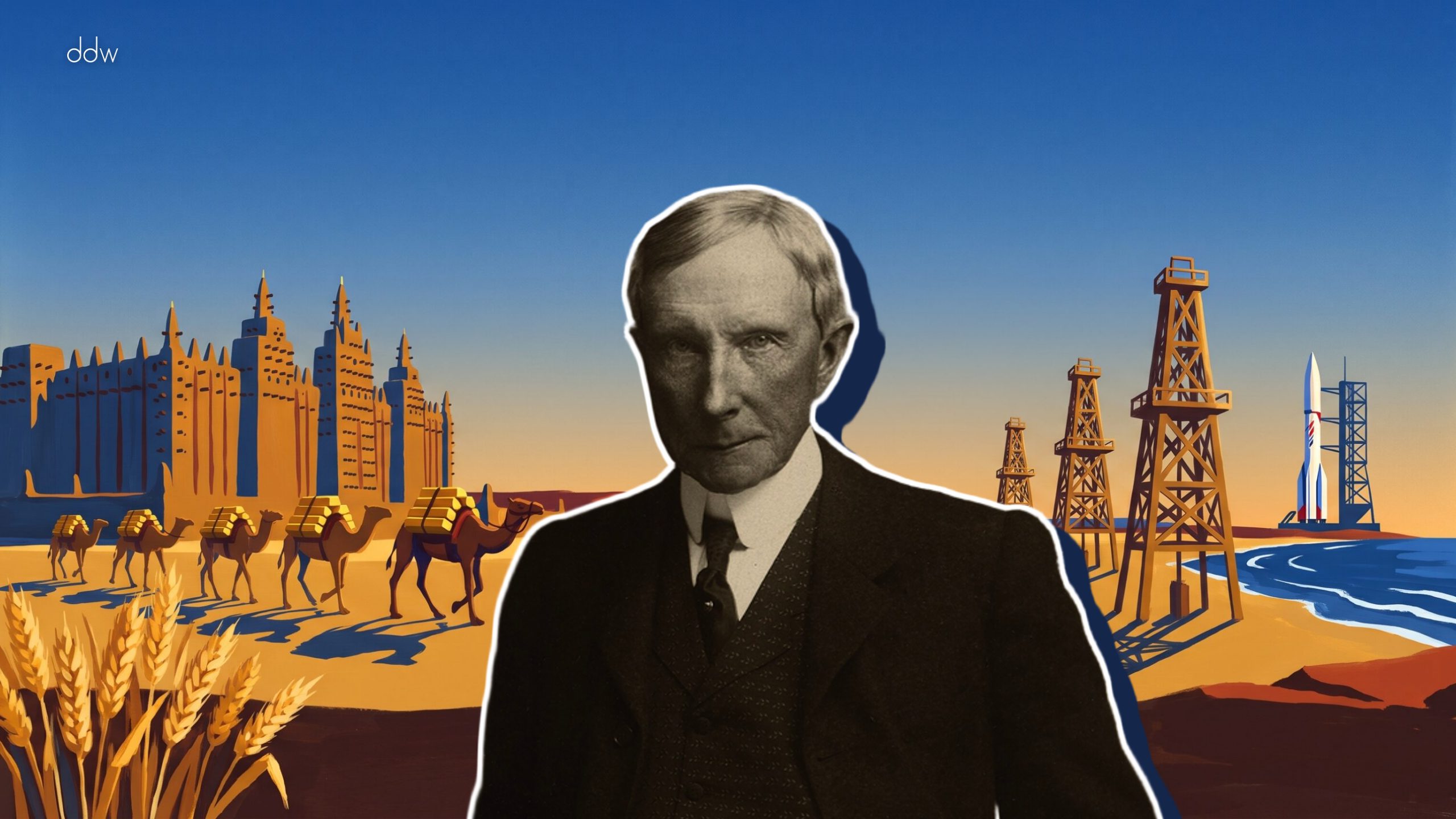
Genghis Khan at $120tn, Mansa Musa at $400bn and Rockefeller at $631bn are all products of arithmetic, and the one fortune priced by a stock market, Elon Musk’s, refuses to keep still.
John D. Rockefeller’s $900m of 1913 is worth $23.67bn today on one blog’s straight inflation sum, or $631bn on Guinness World Records’ share-of-the-economy method, and every list of the richest people who ever lived is written somewhere in the gap between those two numbers.
There are two respectable ways to carry an old fortune into modern money, and on Rockefeller they disagree nearly 27-fold. The first runs it through consumer prices and asks what the money would buy now. The second asks what share of the national economy the man controlled, then hands him the same slice of today’s. One measures his shopping and the other measures his weight. Anyone who died before governments kept national accounts can be measured by neither, which is where the trouble starts. Living fortunes are a third creature again. Forbes estimates them, largely by marking shareholdings to market on a stated date, and nobody audits the result.
$631bn
Rockefeller is the best demonstration of the machinery because his money left paperwork. Standard Oil made him, and Guinness reckons he was worth $900m by 1913. Its economic share adjustment compares that sum with the size of the American economy at the time and concludes that anyone holding an equivalent share today would be worth $631bn.
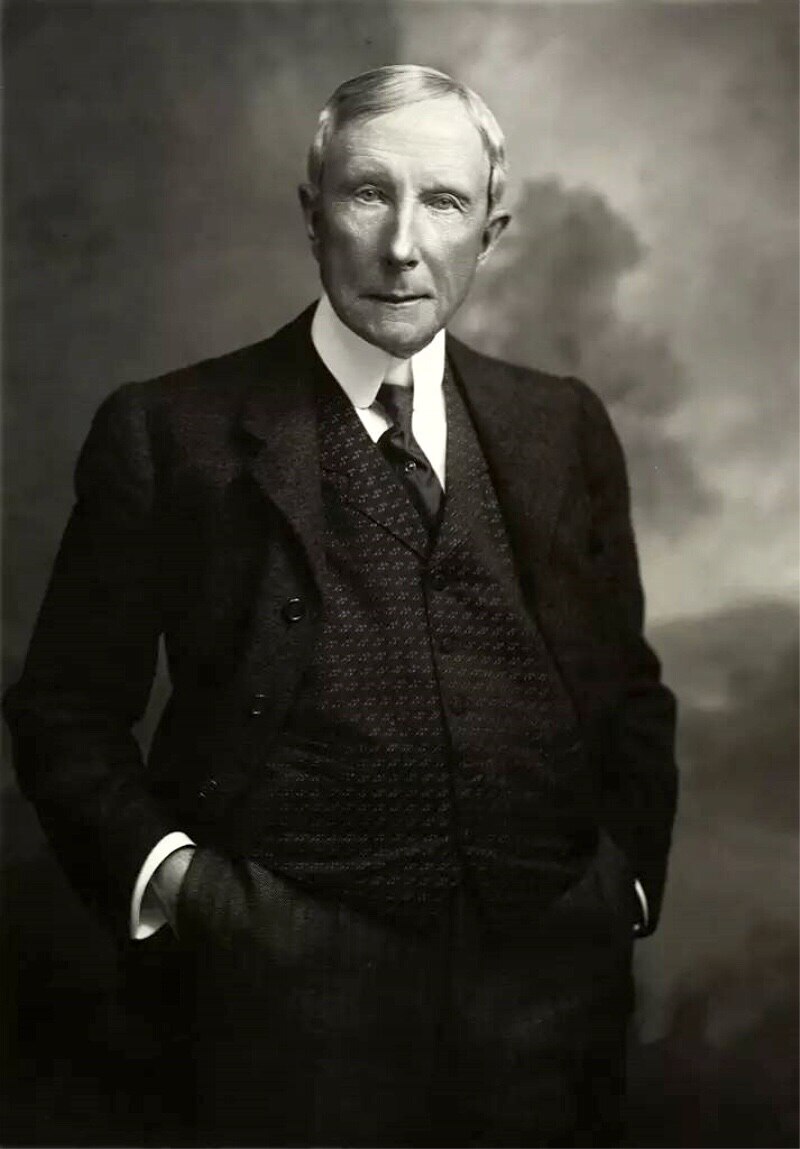
The Washington Post put his wealth at about 2.5% of US GDP. Even the base number is contested: historians dispute whether he ever crossed $1bn, and the Wall Street Journal pegged him nearer $900m.
The Journal also estimates he gave away more than $500m before his death in 1937. That matters whenever the 1913 peak is quoted as if it were the estate. A fortune measured at its summit has usually been measured before the philanthropy.
$120tn
SCMP’s widely shared ranking of the richest people who ever lived lists Genghis Khan at “US$120 trillion“, comfortably ahead of anyone with a brokerage account. Other versions are less settled. Insider Monkey gives $100tn and Utmost Array offers $120–130tn. Power Net Worth floats a range from $100tn to over $1 quadrillion, a spread of ten times, which is roughly the distance between a London flat and a London street.
A price that moves by an order of magnitude between websites has no price basis. Insider Monkey, having printed its own figure, says there is no good evidence to authenticate his net worth, that his loot is believed to have been redistributed and that records were distorted or destroyed. Utmost Array adds that the Mongol Empire had no unified accounting system and that Genghis Khan shared spoils with his generals rather than hoarding them.
The same explainer shows how such headlines are built. Take 25% of an assumed world GDP of about $100tn and you arrive at $25tn. Every input in that sum is an assumption, and multiplying assumptions together produces a bigger assumption.
$400bn
Mansa Musa’s number at least has a birth certificate. According to an Ancient Origins fact-check, it first went out on NPR’s Morning Edition on 16 October 2012, credited to a new inflation-adjusted list compiled by Celebrity Net Worth, and the New York Daily News ran the ranking two days later. The same fact-check reports that the list’s method is nowhere to be seen, and that when Money revisited the list on 30 July 2015 it printed no dollar figure for Musa at all.
History Extra, the BBC History Magazine site, says economic historians are unwilling to put a figure on his net worth and calls the $400bn “pure speculation”. The ruler of Mali has become, posthumously, a content strategy.
What he held, according to In The History, citing the historian Hadrien Collet, was control of the flow of gold out of one of the richest goldfields in the medieval world. Control of a supply and a fortune you could sell are different assets, and only the second fits on a balance sheet.
The famous coda, that his generosity depressed the price of gold for about twelve years, rests on a single chronicler, al-Umari, according to Ancient Origins. Working from recorded exchange rates, the historian Warren C. Schultz argues that a long-term disruption is not supportable. The anecdote survives because it is a good one.
20bn sesterces
The most rigorous attempt to price an ancient elite belongs to Walter Scheidel of Stanford and Steven Friesen of the University of Texas, whose 2009 paper in the Journal of Roman Studies estimates the empire’s second-century GDP. They put it at the equivalent of 50 million tons of wheat a year, or close to 20bn sesterces. Wheat, it turns out, is a steadier unit of account than Celebrity Net Worth.

Their finding about distribution is the one that travels. The elite, about 1.5% of the population, controlled roughly a fifth of total income. Reconstructions of this kind are built without national accounts and are, in the authors’ phrase, “controlled conjecture”.
The abstract offers no personal fortune for any emperor, and its benchmark is the second century AD rather than the reign of Augustus. A $4.6tn figure for Augustus does the rounds on net-worth sites all the same. Scheidel and Friesen count a class of people, and the lists want a single winner.
$839bn
Forbes’ 2026 World’s Billionaires list, published on 10 March with data as of 1 March, put Elon Musk first at $839bn. Behind him came Larry Page at $257bn, Sergey Brin at $237bn, Jeff Bezos at $224bn and Mark Zuckerberg at $222bn. Forbes counted a record 3,428 billionaires, worth a record $20.1tn between them.
Old money is still on the page if you scroll. Forbes put Warren Buffett, at 95, on $149bn. Below him sit three Waltons: Rob at $146bn, Jim at $143bn and Alice at $134bn, all ahead of Carlos Slim Helú and family at $125bn. Françoise Bettencourt Meyers and family appear at $100bn. Inheritance is the only strategy on the list with a century-long track record.
These are Forbes estimates for named individuals or family groupings, and Forbes is explicit about the date. That dated snapshot is all a list price can honestly claim.
$1.012tn
Forbes’ real-time tracker had Musk topping $1tn on the morning of Monday 5 October 2026, as SpaceX and Tesla shares climbed. Quartz reported that SpaceX had risen more than 5% to $167 by mid-morning, returning him to a line he first crossed in June. On the 5th, Forbes had him more than $628bn ahead of Jeff Bezos.
The status lasted about as long as a dinner reservation. A $36bn loss on 8 October dropped him below the mark, and Forbes then put him at $1.012tn around 10am on 9 October, with Bezos at $378.2bn. By 20 October, FinanceFeeds reported, the Forbes profile showed $923.7bn, which it split into $705.2bn of SpaceX and $145.6bn of Tesla.
Even a share price comes with a method attached. The 311 Institute, which leaves out options and private assets, had him at about $843.0bn on 18 October, more than $80bn below the Forbes reading two days later. Musk topped $1tn in early October on Forbes’ count and was below it again by the 20th.
The question people actually type is whether Elon Musk is the richest person in history. On every figure a named publisher will stand behind, he is. Forbes’ $839bn in March and $1.012tn on 9 October both sit above the $631bn Guinness assigns Rockefeller, and the larger sums for Genghis Khan and Mansa Musa come from lists with no ledger beneath them. The one caveat is Rockefeller’s 2.5% of GDP, because the comparison that flatters him is a share and Forbes counts dollars. Rockefeller’s fortune was measured once, at its peak. Musk’s is measured again every trading day.
Cover photograph: Pach Brothers Studio via Wikimedia Commons (Public domain).