


Indoor pool, suede-walled cinema, a British Virgin Islands owner on paper, and now a final charging order in favour of a defence contractor over Libya’s unpaid bill for a 2008 communications contract.
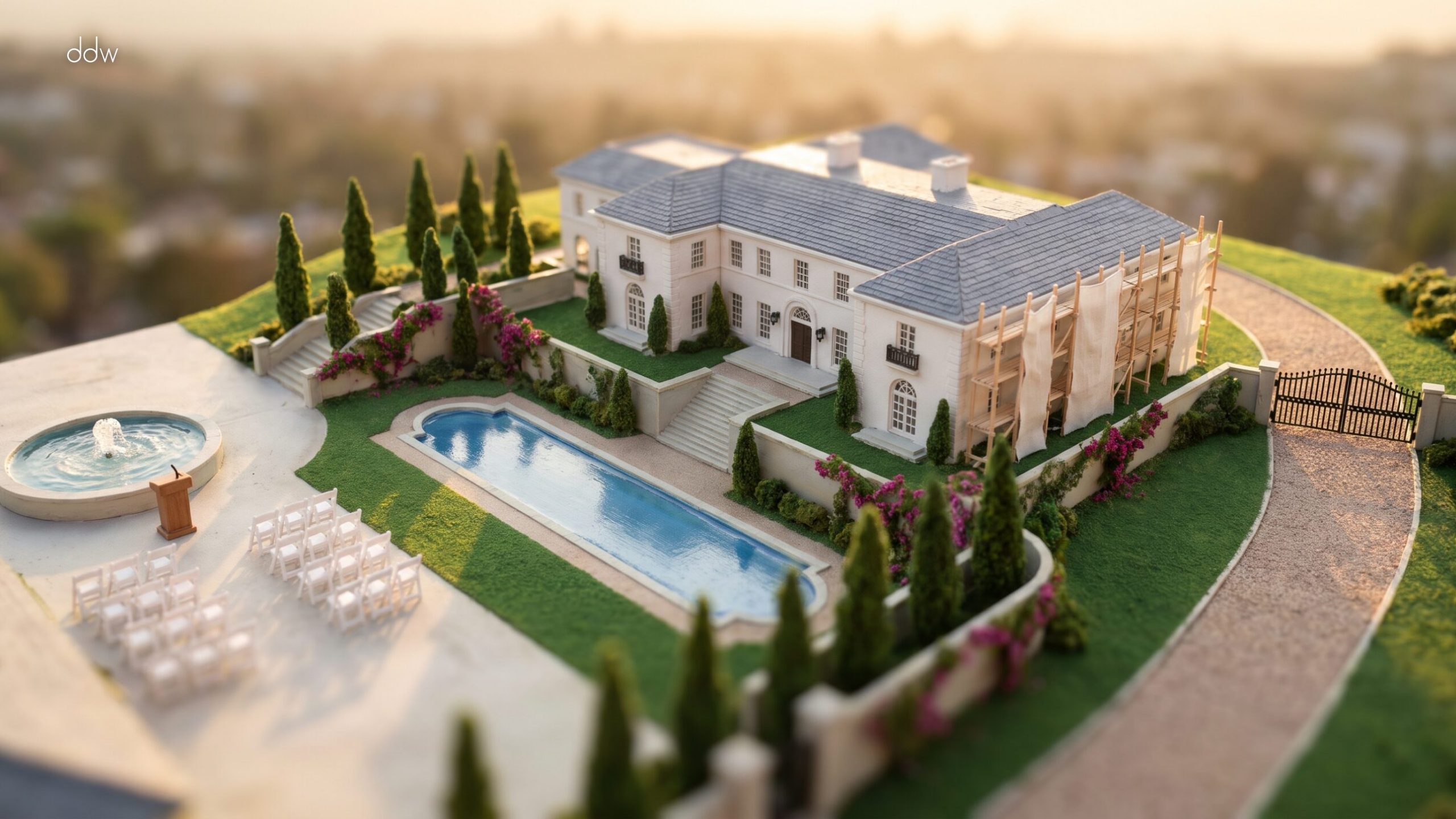
The neo-Georgian house in Hampstead Garden Suburb that the High Court found was bought with Libyan state funds for the dictator’s son now carries a final charging order securing £16,114,120.62 owed by Libya to General Dynamics United Kingdom, and the last figure anyone published for the house itself, back in 2012, was £10m.
Drone footage of 7 Winnington Close, Hampstead Garden Suburb, the house bought for Saadi Gaddafi in 2009 and now under a court-ordered sale
— @MarioNawfal Watch on X
Between those two numbers sit an offshore company, a ruling nobody turned up to contest, a Swiss-law contract for military communications kit, an ICC arbitration and three tiers of English court. The last of them declined to hear Libya at all.
£10m
The Bureau of Investigative Journalism put the house at “in excess of £10m” in March 2012 and described a neo-Georgian, eight-bedroom home with an indoor swimming pool and a private cinema. NBC counted nine bedrooms and noted that the cinema walls were suede. Clifford Chance, in a 2025 note on the litigation, says seven. Call it seven or eight, then, and keep the suede.
No published source gives the price actually paid. MailOnline reported the purchase of a £10m Hampstead mansion for Colonel Gaddafi’s son in August 2009, and that is the report the World Bank’s asset-recovery database relies on. Global Witness, in 2012, said the house was bought in 2010. The owner on paper was Capitana Seas Limited, a company registered in the British Virgin Islands, and according to Global Witness its UK assets were frozen by HM Treasury, which listed Saadi Gaddafi as the owner.
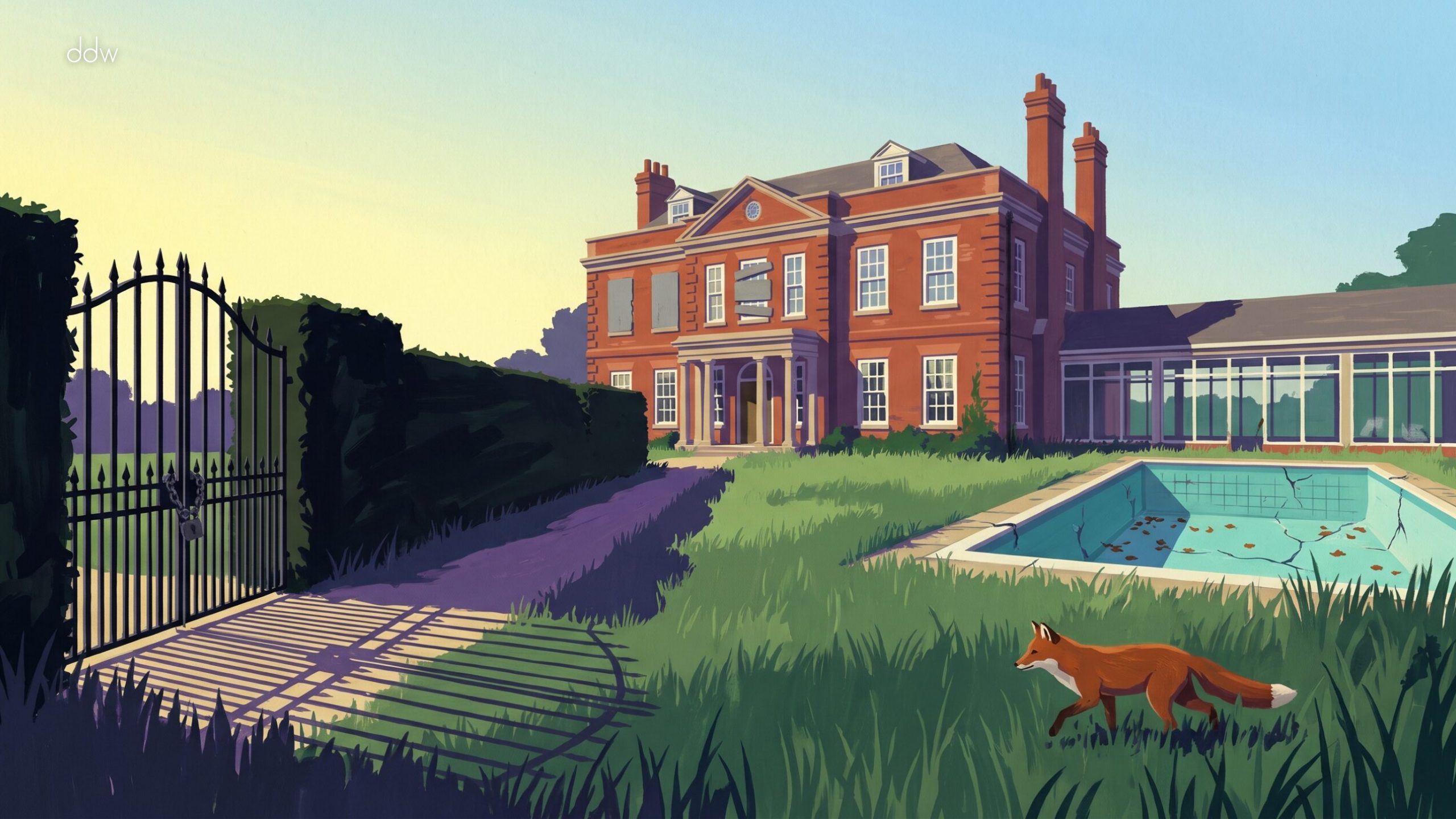
The house did not keep well. Global Witness said in March 2012 that it was occupied by Libyan squatters; msnbc said it had been wrecked by them. A decade later The National reported that the property “has not aged well” since it was seized. A YouTube explorer video presenting it as a forgotten mansion abandoned on Billionaire’s Row has been circulating for more than a year. The “Billionaire’s Row” is the video’s own geography; Winnington Close is in Hampstead Garden Suburb.
£120,000
The case that took the house away was The State of Libya v Capitana Seas Ltd [2012] EWHC 602 (Comm), heard by Mr Justice Popplewell in March 2012. According to the Bureau’s report of the ruling, he was satisfied that Saadi Gaddafi, the son of Muammar Gaddafi and described at the time as 38, was the ultimate beneficiary of Capitana Seas, and that Libyan state funds had been used to buy the house. He ordered it transferred to the State of Libya within three weeks and ordered Capitana Seas to pay £120,000 in costs.
The judgment was given by default. Neither Capitana Seas nor Saadi Gaddafi was represented, and no defence had acknowledged the claim. Global Witness said the company’s representatives, Trident Trust Company of the BVI, did not intend to contest it. The World Bank’s StAR database records it plainly as a default judgment against the legal owner of 7 Winnington Close.
The Bureau had earlier described the man behind the company as a high-living ex-footballer. In English procedure, costs follow the event even when nobody comes to the event.
$20m
Libya won its house back at a time when it was winning very little else. The National reported in 2022 that, according to a 2016 study linked to Transparency International, roughly $20m had been returned to Libya in all, and that half of it was this house. NBC had given its value in 2012 at about $16m; the World Bank’s database lists the case at $14.20m.
So the most visible piece of the recovered fortune was a seven-or-eight-bedroom house in north London with a pool, now owned outright by a sovereign state. States, like everyone else, have creditors. One of them had been waiting since before the house changed hands.
£84m
On 5 May 2008, Libya signed an agreement in writing with General Dynamics United Kingdom for the supply of a Tactical Communication and Information System, at what the High Court later recorded as a price in excess of £84m. The contract was governed by Swiss law, and clause 32 sent disputes to arbitration.
That clause carried more weight than either party could have expected in 2008. By the time the case reached the Court of Appeal it was common ground that clause 32 was a written agreement to arbitrate within section 9 of the State Immunity Act 1978, which meant Libya could not claim immunity from the jurisdiction of the English courts. According to Jus Mundi’s record of the case, the ICC arbitration, numbered 19222/EMT, was introduced on 14 January 2013.
£16,114,120.62
The ICC award was published on 5 January 2016, in General Dynamics UK’s favour, for £16,114,120.62. On 18 July 2018 Teare J recognised it under section 101 of the Arbitration Act 1996 and gave leave to enforce it as a judgment. The company now had a judgment against a country, and it needed something in England to attach it to.
On 24 February 2023, HHJ Pelling KC, sitting as a High Court judge, made an interim charging order over 7 Winnington Close without notice to Libya. The argument that followed turned on two subsections. Libya said the house was immune from execution under section 13(2)(b) of the 1978 Act; General Dynamics UK said Libya had given written consent under section 13(3). Daniel Toledano KC and James Ruddell, instructed by Alston & Bird, appeared for the company; Lucas Bastin KC and Freddie Popplewell, instructed by Curtis, Mallet-Prevost, Colt & Mosle, appeared for Libya.
On 22 March 2024 the judge made the order final and dismissed Libya’s application to discharge it. This was not the first round. Middle East Monitor reported that Libya had appealed an earlier point to the Supreme Court and won, but the company pressed on; that earlier decision is cited as [2021] UKSC 22.
On the only published figure for the house, the 2012 one, the award was larger than the asset securing it. No outlet has published a current valuation.
72 days
Libya filed its appellant’s notice on 11 April 2024, and the Court of Appeal heard the case on 13 November, with Lewison LJ on the bench. Squire Patton Boggs, with Richard Lissack KC and Jacob Turner, now acted for Libya; Freshfields and Joe Smouha KC for General Dynamics UK. On 19 February 2025 the court dismissed the appeal, [2025] EWCA Civ 134. Clifford Chance summarised the result as a rejection of sovereign immunity from execution against a state’s assets in London.
Libya’s application to the Supreme Court was issued on 25 March 2025. Seventy-two days later, on 5 June, permission to appeal was refused on the ground that the application “does not raise a point of law which is arguable or of general public importance”, according to the Supreme Court’s own case record. There was no full hearing and no ruling on the merits. The application simply ended there.
What comes next was set out more than a year earlier, when Middle East Monitor reported that the company would then have to apply for a court order to have the property sold. With the appeals exhausted, the courts have cleared the way for a sale. No agent, buyer or price has been made public.
The suede-walled cinema now has a creditor.