


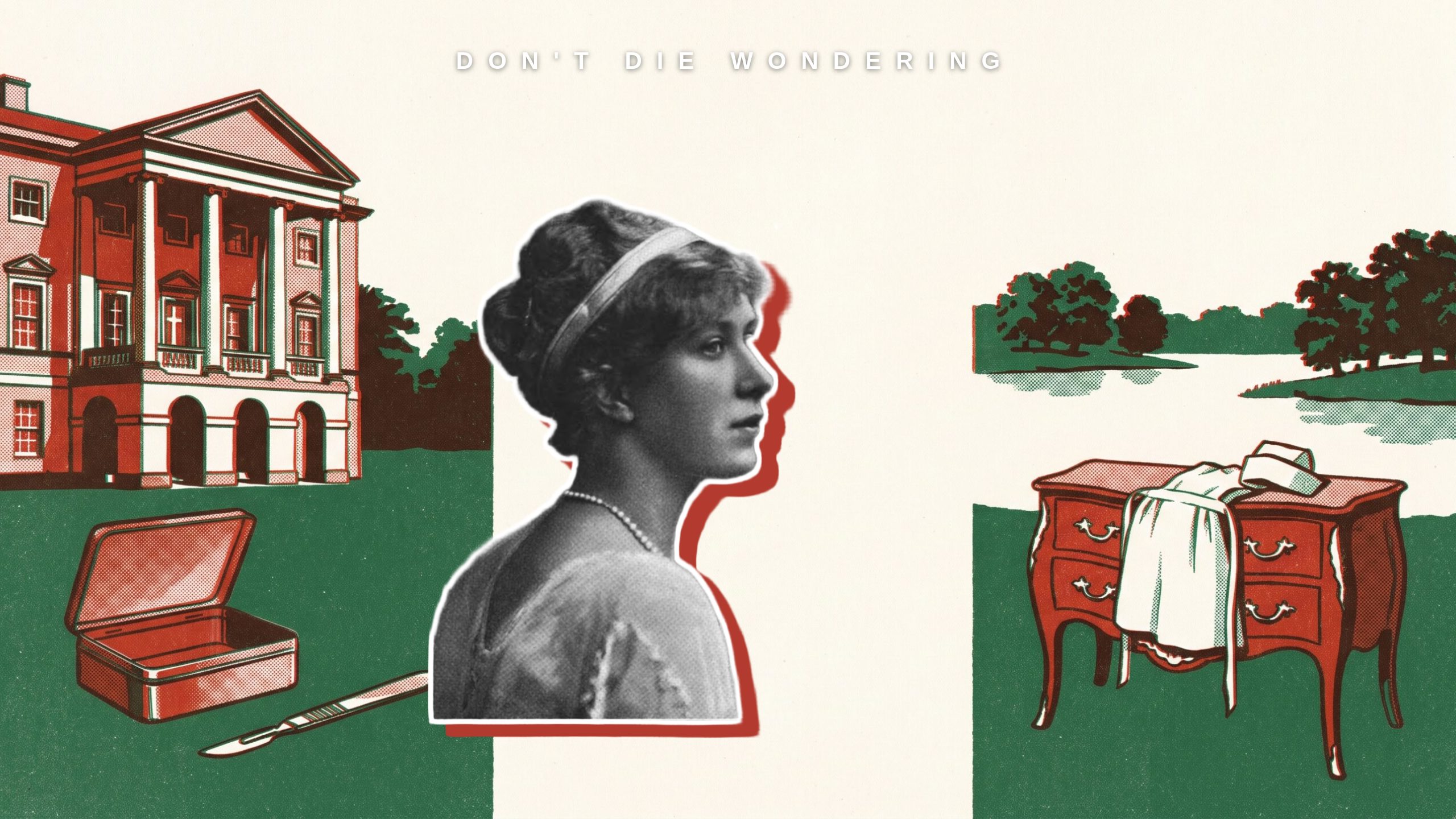
The only daughter of George V trained as a nurse, sent Christmas boxes to the troops and married into Harewood, a house built on older money that now earns its keep as a charity.
Mary, Princess Royal and Countess of Harewood, mostly turns up as a name on a royal family tree. That undersells a woman who held a hospital post, a surgical fellowship and a Yorkshire great house, in roughly that order. Her story runs here in the order she lived it, and then in the order Harewood has lived since. Two kinds of money stay separate throughout, as they do at Harewood: the Lascelles family’s, which is the family’s business, and the charity’s, which is filed with the regulator every year.
Mary Was the Only Daughter of George V and Queen Mary
The National Portrait Gallery lists her under two titles at once, which is roughly how she lived. Mary was born on 25 April 1897, the only daughter of George V and Queen Mary, and she later became both Princess Royal and Countess of Harewood. One title kept her in the front row at court. The other came with a husband, an earldom and a Yorkshire house that Robert Adam had a hand in designing. Searchers tend to treat the pair as a riddle, as though a princess answering to a countess’s title must have mislaid something on the way. She mislaid nothing, and held both titles at once for the rest of her life.
Princess Mary’s Gift Fund Sent Christmas Boxes to Every British Soldier
At Christmas 1914 she was seventeen, and her name was on a present for every man in the British forces. The National Portrait Gallery records that Princess Mary’s Gift Fund provided Christmas boxes for all British troops that year. Most teenagers in a royal household are kept busy with deportment. This one lent her name to the war’s first great act of public generosity, and the boxes went to men who had never seen her. It is one way to become known in every home in the country before reaching the age of majority. Few patrons since have managed anything as direct.
She Trained as a Nurse and Worked at Great Ormond Street Hospital
The gift fund could have been the whole of a princess’s war work, and nobody would have complained. Instead, according to the National Portrait Gallery, she took a nursing course in 1918 and went on to work at Great Ormond Street Hospital. The habit stuck, and in 1926 she became Commandant in Chief of British Red Cross Detachments, a title that sounds ceremonial and came, in her case, after time spent on actual wards. A king’s daughter who has emptied a bedpan is harder to patronise on the subject of hospitals. In later life it was a subject she knew well.
She Was the First Woman Made an Honorary Fellow of the Royal College of Surgeons
After her marriage in 1922, the Royal College of Surgeons of England elected her an Honorary Fellow, the first woman to receive the honour. Surgeons, as a profession, were not known in the 1920s for holding the door open, and the College keeps her entry in Plarr’s Lives of the Fellows alongside the men who held the scalpels. Honorary fellowships go to people the College wishes to be associated with. A royal patron who had done the nursing course was an easy choice. As firsts go, it is one of the less glamorous on her record. It may also be the hardest to have earned.
Her Husband Inherited the Clanricarde Fortune After a Meeting at His Club
The money that most shaped her married life arrived before she did. In 1916 Henry, then Viscount Lascelles, met the 2nd Marquess of Clanricarde at his London club. According to The DiCamillo Companion to British & Irish Country Houses, the marquess died some months later and left his huge fortune to Lascelles. Accounts disagree on whether Clanricarde was Henry’s uncle or great-uncle, and the published estimates of the sum disagree with each other, so DiCamillo’s word, huge, will have to serve. Homes & Antiques reports that the bequest included Old Master paintings, and that Henry went on to add Italian pictures by Bellini, Titian, Veronese, Pollaiuolo and Tintoretto. The rest of us join a club for the newspapers. Henry came away with the makings of a picture collection.
She Became Countess of Harewood and Moved Into a House Begun in 1759
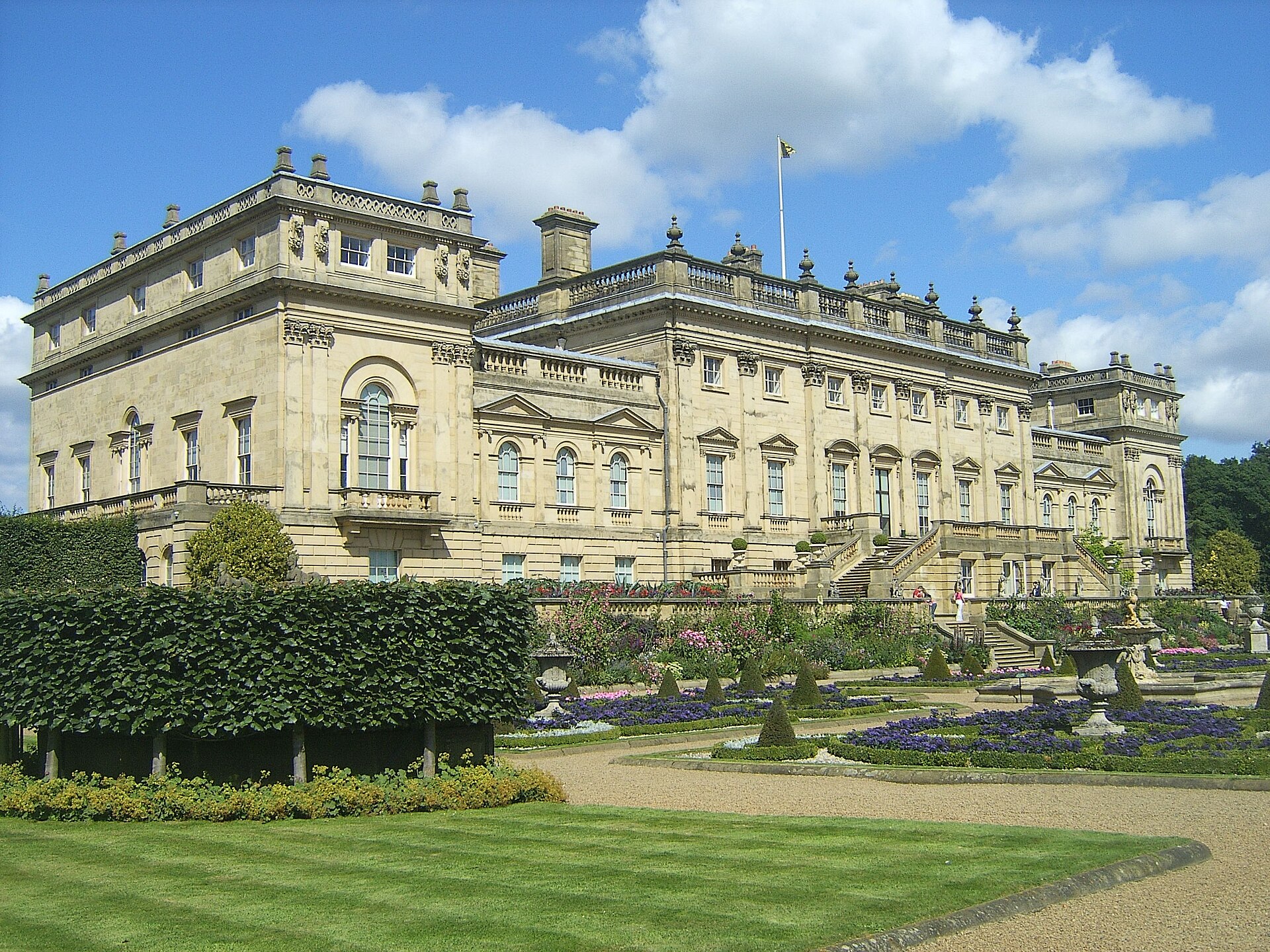
Harewood was already old when she arrived. Edwin Lascelles began building it in 1759, with John Carr as architect, Robert Adam on the interiors and Thomas Chippendale making the furniture, which is a trio most country houses would kill to claim even one of. DiCamillo puts the original building cost at £37,000. According to Harewood’s own history, Henry and Mary married in 1922 and moved in during 1930, after the 5th Earl died in 1929 and Henry succeeded him. The princess who had nursed at Great Ormond Street now had a Chippendale commode and a household to run. She ran it for thirty-five years.
The Lascelles Wealth Behind Harewood Began With Plantations and Enslaved People
The house tells this part of the story itself. Harewood’s history page says the Lascelles money came from owning plantations, enslaved people, ships and warehouses. A review published by the British Society for Eighteenth-Century Studies describes nearly 30,000 acres and two dozen plantations by 1780, and records that the family’s last West Indian plantation was sold in 1975. Mary married into the family in 1922, more than a century after the fortune’s founders, and the Clanricarde money that arrived in 1916 came from a separate inheritance altogether. Great houses used to keep this sort of history in the cellar with the spare chairs. Harewood now puts it on its own website, in the family’s name.
Harewood Passed From Her Husband to Her Elder Son, With Mary as Chatelaine
Mary never held Harewood in her own right. It belonged to her husband and then to her elder son. Henry died at Harewood in May 1947, and the earldom passed to George Lascelles, the 7th Earl, with Mary staying on as dowager in the house she had run since 1930. She died there too, suddenly, on 28 March 1965, while out on a Sunday walk with her family in the park at Harewood House, according to the Royal College of Surgeons. The house outlived her in the usual expensive way. According to DiCamillo, the 7th Earl sold part of the estate in 1988 for £13 million to help pay for restoring the house and gardens. Every great house eventually has to sell some land to keep the roof on.
Harewood House Trust Keeps the House Open as an Independent Charity
The modern arrangement dates from 25 March 1986, when Harewood House Trust Limited was incorporated, company number 02004021, with its registered office at the house itself, according to Companies House. Harewood describes the Trust as an independent charitable educational trust that maintains the house, its collections and its grounds for the public benefit. The Charity Commission register shows total income of £6,020,464 for the year to 31 December 2025, drawn from donations and legacies, visitors and trading, and it spent slightly less than it took in. Income has risen every year since 2021. Chippendale and Adam, it turns out, can still bring in the public. Those accounts belong to the charity, not to the Lascelles family, and they do not put a value on the house or the pictures.
That leaves the obvious follow-up, which is who has Harewood now and what the princess was worth. The earldom sits with her grandson, David Lascelles, the 8th Earl, whose wife Diane, Countess of Harewood, is an artist, according to Homes & Antiques. No outlet has published a reliable net worth for Mary or for the family, and Harewood offers none. The figures Harewood does publish are the charity’s, filed each July, and they show a house that pays for itself.
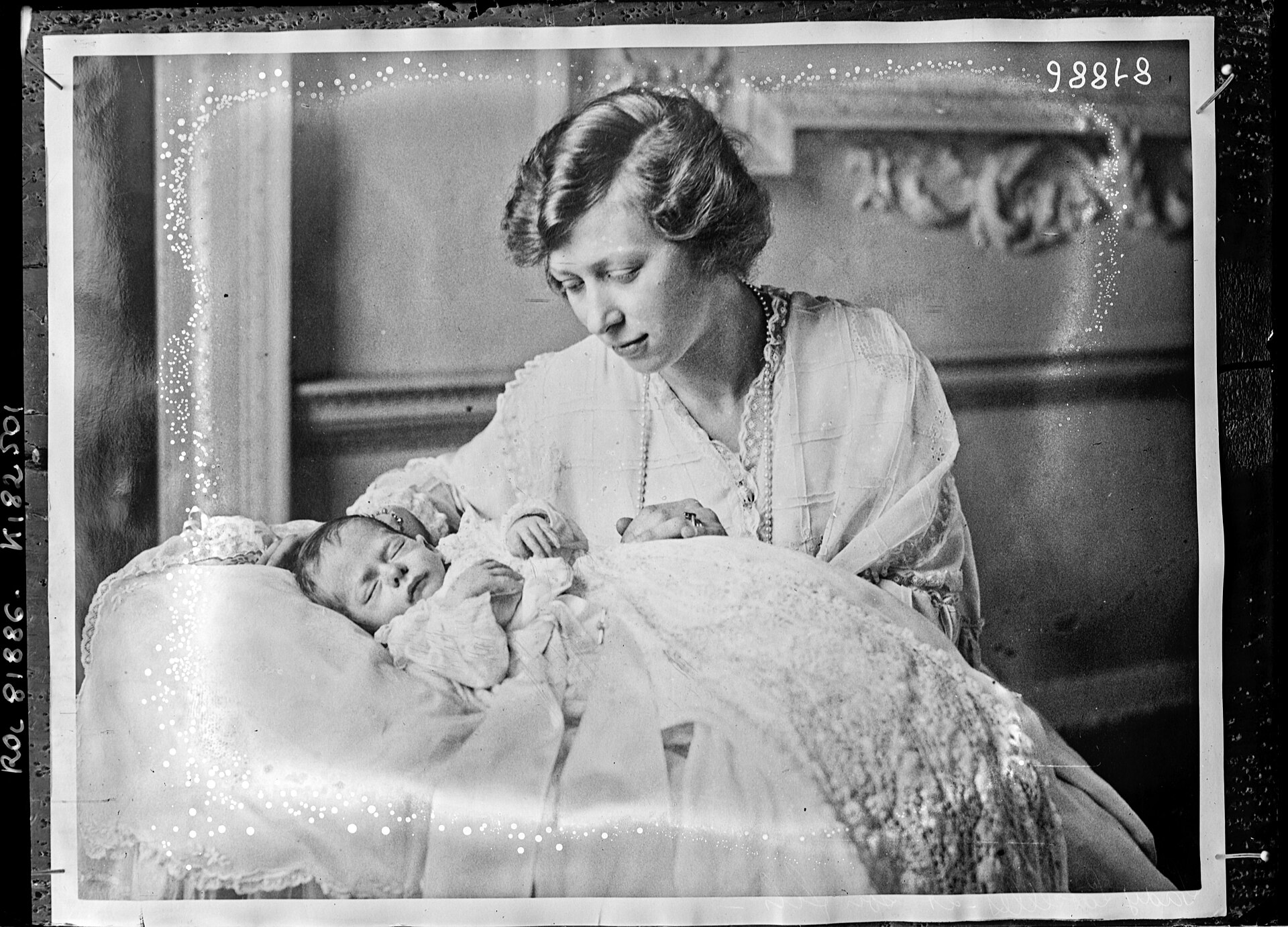
Cover photograph: Alice Hughes via Wikimedia Commons (Public domain).