


For years the press attached $200 million to Gloria Vanderbilt’s name. The will filed in Manhattan Surrogate’s Court told a smaller story, and her youngest son had been saying so, unprompted, since 2014.
“My mom’s made clear to me that there’s no trust fund. There’s none of that.” Anderson Cooper to Howard Stern, 2014
There is a sentence Anderson Cooper has been repeating for over a decade, and he repeats it in the same unbothered register he uses for election nights. No trust fund. None of that. People hear it from a man whose surname on his mother’s side built Grand Central Terminal, and they assume modesty, or a bit, or a tax structure too clever to describe on the radio.
A sentence he keeps returning to
The remark that travelled was made to Howard Stern and first widely reported on 1 April 2014. Cooper, then 46, did not soften it afterwards. ABC News quoted him calling inherited money an “initiative sucker” and a “curse”, which is strong language from a man who had grown up inside the thing he was describing.

He also asked Stern a question that functions as the household’s whole philosophy, compressed: “Who’s inherited a lot of money that has gone on to do things in their own life?” He added that if he had believed there was a pot of gold waiting, he doubted he would have been so motivated. The line was reported everywhere as a flex of character. It was closer to a weather report.
The Commodore’s hundred million, four generations on
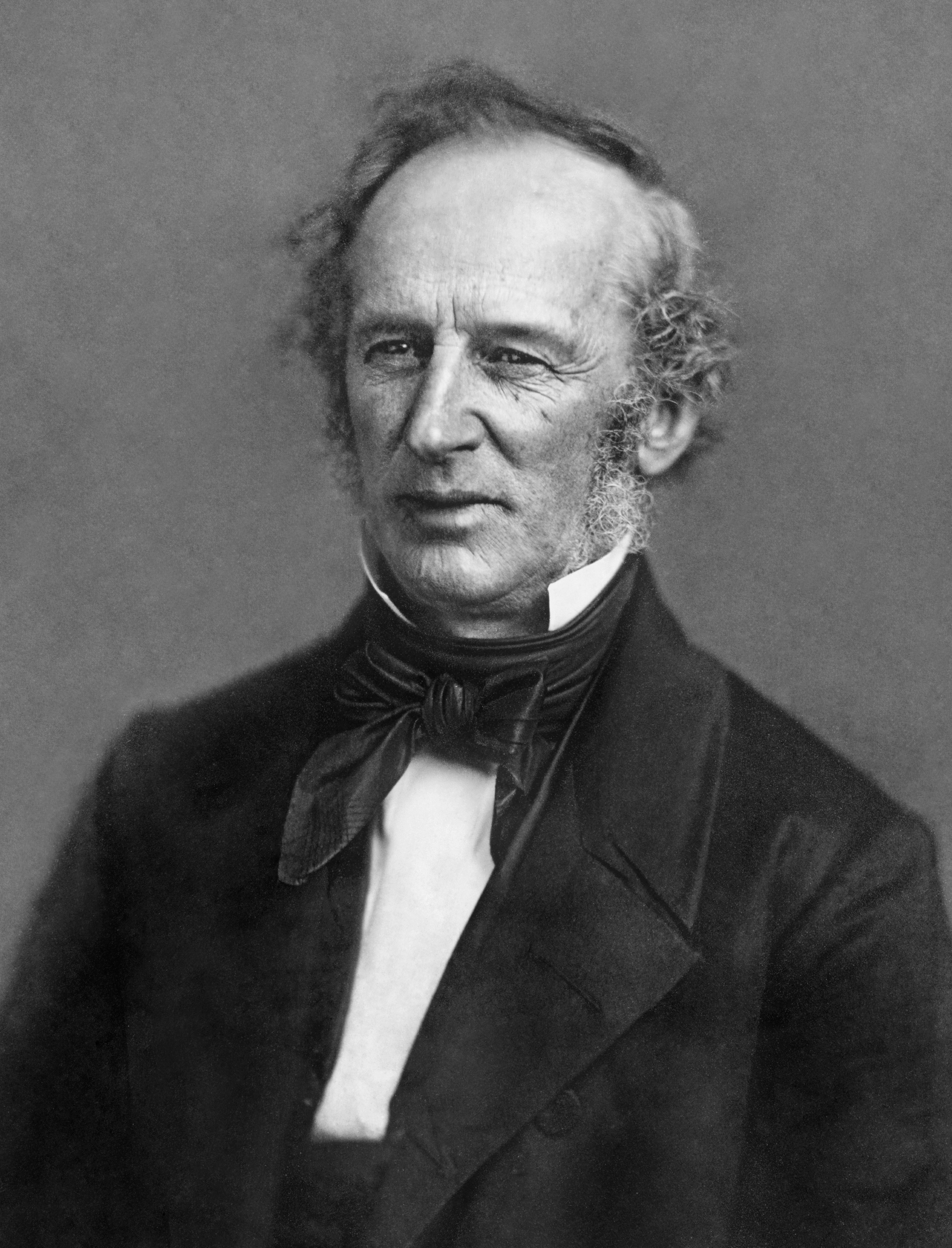
To understand why his mother told him that, you have to go back to the man whose money everyone assumes is still sitting somewhere. Cornelius “Commodore” Vanderbilt died in 1877 with a fortune estimated, per an account published by Yahoo Finance, at between $95 million and $105 million, a sum contemporaries liked to compare with the contents of the US Treasury.
His son William Henry then did the harder thing and roughly doubled it, to more than $200 million, by expanding the New York Central Railroad before his own death in 1885. That is the high-water mark. By the fourth generation, as the same reporting notes, much of the money had dissipated: no scandal required, only time, houses, divorces, taxes and a great many descendants.
Gloria Vanderbilt was the great-great-granddaughter of the Commodore. She arrived two generations after the peak and spent her life being introduced as an heiress to something that had largely stopped existing.
Poor little rich girl, aged ten
Her father, Reginald Vanderbilt, died when she was 18 months old. Fox News reported that he left her half of a $5 million trust; other accounts give her share differently, and the figures have never been reconciled in any public record. What is firm is the shape of it. A baby, a dead father, a fund, and lawyers.
In 1934, at the age of ten, she became the subject of the custody battle between her mother, Gloria Morgan Vanderbilt, and her aunt, Gertrude Vanderbilt Whitney, that the papers called the Trial of the Century and that fixed the phrase “poor little rich girl” to her for life. Fox Business records that Whitney won, and that Vanderbilt came into her own trust fund at 21, in 1945.
She then did something unusual for a woman described in every headline as an heiress: she went to work. Paintings, collage, acting, writing, and eventually the denim line that put her signature and her swan on the back pocket of a generation of jeans.
What she wrote down for him
In 2016, Harper published The Rainbow Comes and Goes, a correspondence memoir written between mother and son, who discussed it publicly that April at New York’s 92nd Street Y. It is a book about life, love and loss, and the loss includes Anderson’s older brother, Carter Vanderbilt Cooper, who died by suicide in 1988, and their father, the author Wyatt Cooper, Gloria’s fourth husband.
Money runs through it as a warning rather than a subject. In the book she tells her son that money brings out terrible things in people, that it can split a family and undo the foundations of a life, and that he should be careful about whose interests he trusts. He writes, of the fortune he grew up adjacent to, that the money he inherited never really belonged to him.
That is the family doctrine, delivered in writing, in public, by a woman who had been fought over in open court as a child because of a fund she was too young to spend.
The will, filed on 1 July 2019
She died on 17 June 2019, aged 95, after a diagnosis of advanced stomach cancer. Two weeks later her will was filed in Manhattan Surrogate’s Court.
Its contents, first reported by Page Six, were brief. Her eldest son, Leopold “Stan” Stokowski, from her marriage to the conductor Leopold Stokowski, was left her Midtown Manhattan co-op apartment. Everything else went to Anderson. The document’s phrasing, as reported, was “All of the rest”.
Her middle son, Chris Stokowski, was left nothing. Multiple outlets reported that he had cut himself off from the family some four decades earlier over a dispute involving his mother’s psychiatrist, an account neither he nor she confirmed in any public document. The NZ Herald, reporting the filing, noted plainly that it was unclear how much Cooper would receive.
All of the rest
The answer came from the probate paperwork rather than the obituaries. Fox News reported that documents filed after her death valued the entire estate at less than $1.5 million. That is the ceiling on “all of the rest”: an apartment to one son, and under seven figures of everything else to another.
The $200 million that had been printed alongside her name for years was a media estimate, circulated in 2014 when the Stern interview ran, and Vanderbilt never confirmed a number of her own. The precise sum Cooper received has never been disclosed beyond that probate ceiling. Four generations earlier, the family patriarch had died with a fortune journalists measured against the national Treasury. Five generations on, the file in Manhattan ran to less than the price of a decent Manhattan apartment.
So the most quoted piece of rich-person self-mythology of the last decade turns out to have been, in the end, simple bookkeeping.
Little kids, and the last segment
Cooper joined CNN in 2001 and launched Anderson Cooper 360° two years later. Deadline reported in December 2025 that he had signed a new contract to stay at the network. In February 2026 he confirmed he was leaving 60 Minutes after two decades as a correspondent; his final segment aired on 17 May 2026. His reason, as he gave it, was that he has small children now and wants their time while they still want to give it.
He has, in other words, arranged a life in which the salary is the money. The family lesson about inheritance was not a lesson about thrift, or about taste, or about the vulgarity of other people’s new fortunes. It was about what a fund does to the people standing around it, taught by a woman who had been ten years old in a courtroom while adults argued over hers.
The apartment went to Stan. All of the rest went to Anderson, and all of the rest was under $1.5 million.
Cover photograph via Edu.