


Every telling of Spencer Haywood’s Nike shares ends on a fortune, though the detail worth keeping is the smaller one in his own account, a friend with his power of attorney who needed paying in cash.
The shares Spencer Haywood says he once held in Nike were sold by the one person in the arrangement who, on Haywood’s own account, had no use for shares. Everything else in the story is decoration, the headline number included. Haywood told it a year ago to Matt Barnes on All The Smoke. When Barnes asked what the stake might be worth today, the former Seattle SuperSonics star answered, “It was up around $2.7 billion.” This week a clip of that answer went round X again, posted by an account that does not own the footage. Along the way it picked up a caption that hands the agent a commission Haywood does not mention in the episode. The agent himself remains a blank. In the 2020 book about his life, Haywood declined to name him, and the decent course is to leave the blank where he left it.
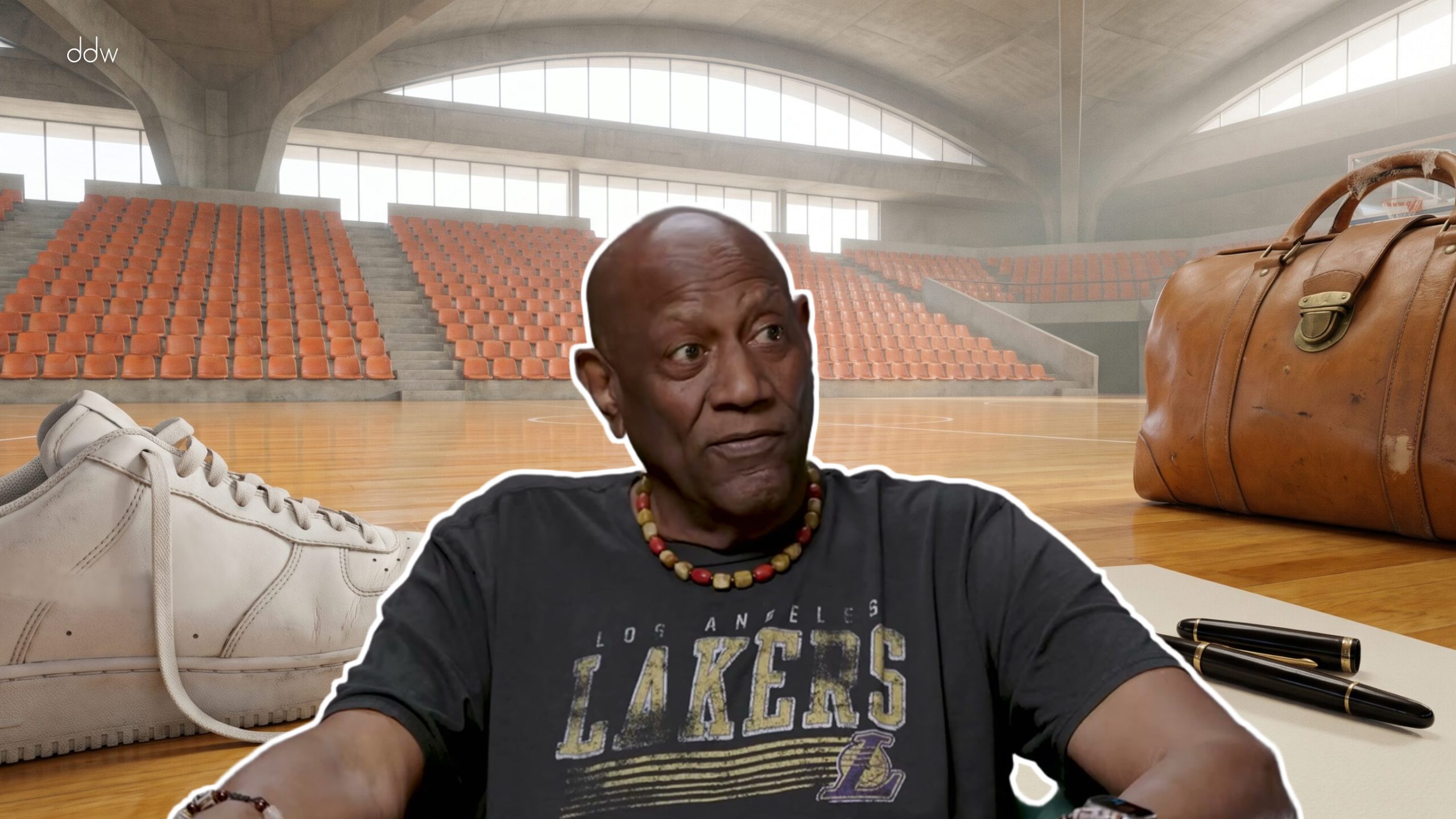
Spencer Haywood on All The Smoke, on the Nike stake his agent sold
— @realgekkox Watch on X
Haywood is a Hall of Famer, inducted in 2015, and a gold medallist at the 1968 Olympics. His is also the name on the 1971 antitrust case over the NBA’s four-year rule, so he has a better claim than most athletes to know what a piece of paper can do to a career. His Nike story usually travels as a fable about foresight: the young man who could not see the swoosh coming. Read his versions side by side, though, and they keep returning to the smaller and more useful matter of whose money arrived first. Every family with an adviser should be able to answer that question about its own affairs before anyone signs anything.
A shoe company with no cash to spare
Haywood places the approach in 1972 and 1973, when he was the draw in Seattle. By his account, Phil Knight asked him whether he would wear the company’s sneakers. The fullest version is in The Spencer Haywood Rule, the book by Gary Washburn of the Boston Globe and Marc Spears of ESPN, which the Globe excerpted in October 2020. According to that excerpt, Nike was a growing company less than ten years old. It had neither the cash nor a lucrative contract to offer, so it offered Haywood stock instead.
He has been disarmingly frank about how that landed. Haywood has said the idea was so foreign to him that, young as he was, his first thought on hearing the word was “livestock?” Plenty of people offered equity early have had the same thought, and fewer have owned up to it.
The matter went to a friend. Over the years Haywood has called the man his agent, his friend and, on All The Smoke, “my boy”, the one he let handle the negotiating. On the podcast he said the friend was struggling to keep up with his bills and had persuaded him the shoe would never work. Haywood was a professional basketball player in season, with somewhere to be most nights. He says he signed the friend a power of attorney with a line he still remembers: “I’ll give you the power of attorney. Let me just go play,” as he put it in the full All The Smoke episode. He went on the road. When he came back, he says, the stock had been sold.
The Globe excerpt sets out the mechanics as Haywood tells them. Using the power of attorney, the friend agreed to accept a $100,000 payment on his client’s behalf, nearly $600,000 in 2020 money, then took the stock and sold it. The book also gives Haywood’s reading of the friend’s position. In his account the man was consumed with how he himself would be paid, and a deal settled in company stock would produce no cash for him.
The story has run in more than one edition. In a 2016 interview with ClickOnDetroit, Haywood described a straight choice between the cash and a tenth of the company in return for promoting the shoes, with the cash taken on his agent’s advice. In the 2020 and 2025 versions he holds the stock and the friend sells it under the power of attorney. The size of the slice is also contested. Haywood told Washburn and Spears that 10 per cent is the figure he remembers, and that when he raised it with Nike years later, “In talking with Nike [later], everybody said, ‘Nah we didn’t offer you that much’,” according to the Globe’s excerpt from the book. Nike, then, reportedly disputes the number, and its objection reaches the public through Haywood, which is generous of him.
How a slice of a small company shrinks
Suppose the tenth was real and the shares had stayed put. They would still have been shares in a small private company. Blue Ribbon Sports had been founded in 1964 and was still finding its feet as Nike. It did not go public until 1980, the year Haywood won a championship with the Lakers. A company that grows quickly in its first decade usually pays for that growth by issuing new shares, and the flotation adds more. Each issue leaves an early holder with a thinner slice of a larger company. An early stake is a seat at a table that keeps adding chairs.
When the story surfaced in 2016, Fox Sports did the sum the simple way. It put a 10 per cent stake at around $8.6 billion, which is what a tenth of Nike would have been worth if nothing had happened to the shareholding between 1973 and that year. Haywood’s own figure, given on the podcast nine years later, is far below it. Whether he intended it or not, a smaller number is the one that allows for dilution, so his guess is the more realistic of the two. His accounts do not say how many shares there were, who bought them or on what terms. Every valuation since, his included, is a calculation laid over a memory.
None of this makes the story smaller. A diluted slice of Nike, held from the early 1970s to now, would still be the kind of holding that pays for a family office and the people who staff it. The figures disagree because the facts underneath them are unknown. The direction of travel is not in doubt. Whatever was handed over in Seattle, Haywood’s descendants would have had reason to be grateful for it.
The standard defence, offered on behalf of everyone involved, is that nobody knew in 1973. Knight was asking basketball players to wear an unproven shoe, and a company less than ten years old was paying in paper because it had no money. Nobody could have priced that paper with confidence. That is true, and it is the heart of the matter.
Who gets paid, and when
When an outcome is unknown, the person deciding has three sensible choices: hold, sell or wait. Each has a fair case, and the merits rarely settle it. What settles it is usually the incentive of whoever is advising. On Haywood’s account, the friend’s own pay depended on there being cash, and stock in a young company produced none. Selling the shares settled the friend’s question on the spot. Holding them would have settled Haywood’s in 1980 at the earliest, by which point the friend’s bills would have been seven years overdue. No villainy is required to explain the choice. Two men on different clocks are enough.
The same test works for any family with an adviser, and it can be run without accusing anyone of anything. Ask how the adviser is paid if the family sells, and how if it holds. Ask what the adviser earns if the family does nothing at all for ten years. A fee taken as a share of a transaction rewards transactions. A retainer rewards staying on. A share of the profit rewards risk, sometimes other people’s. These are all honest arrangements, but each pushes advice in a particular direction, and the family should know which way before it listens.
Equity is the asset most exposed to that push, because it pays nothing on the way. A share in a private company is an IOU from the future, and anyone who needs paying this quarter will find it unattractive in exact proportion to how long the future takes. Founders feel the same pull. So do younger siblings bought out by older ones, and trustees with fees to justify. The person urging a sale is not necessarily wrong. It is still worth knowing whether the sale is what pays them.
Then there is the power of attorney, which Haywood signed so that he could go and play. It is about the most trusting document a person can sign, and it is usually signed for the most ordinary of reasons: the signer is busy elsewhere. Families sign them before long postings abroad, before operations and in the last years of a parent’s life, and they tend to grant more than the occasion needs because drafting less feels like distrust. A power can be drawn narrowly, for one named purpose and a fixed term, so that an attorney can negotiate without being able to sell. For a family that owns something it may want later, the narrow version is the courteous one, and it protects the attorney as much as the family.
Haywood has told the story for a decade in a book, on podcasts and in front of cameras, and he tells it without naming the friend. He played for six NBA teams between 1970 and 1983, sued the league over its rules and reached the Hall of Fame. The Nike shares are the one contest of his career he says he missed, and by his own account the reason is simple. He was out playing, as he had asked to be.
Cover photograph: All The Smoke / DraftKings Network, shared on X by @realgekkox.