

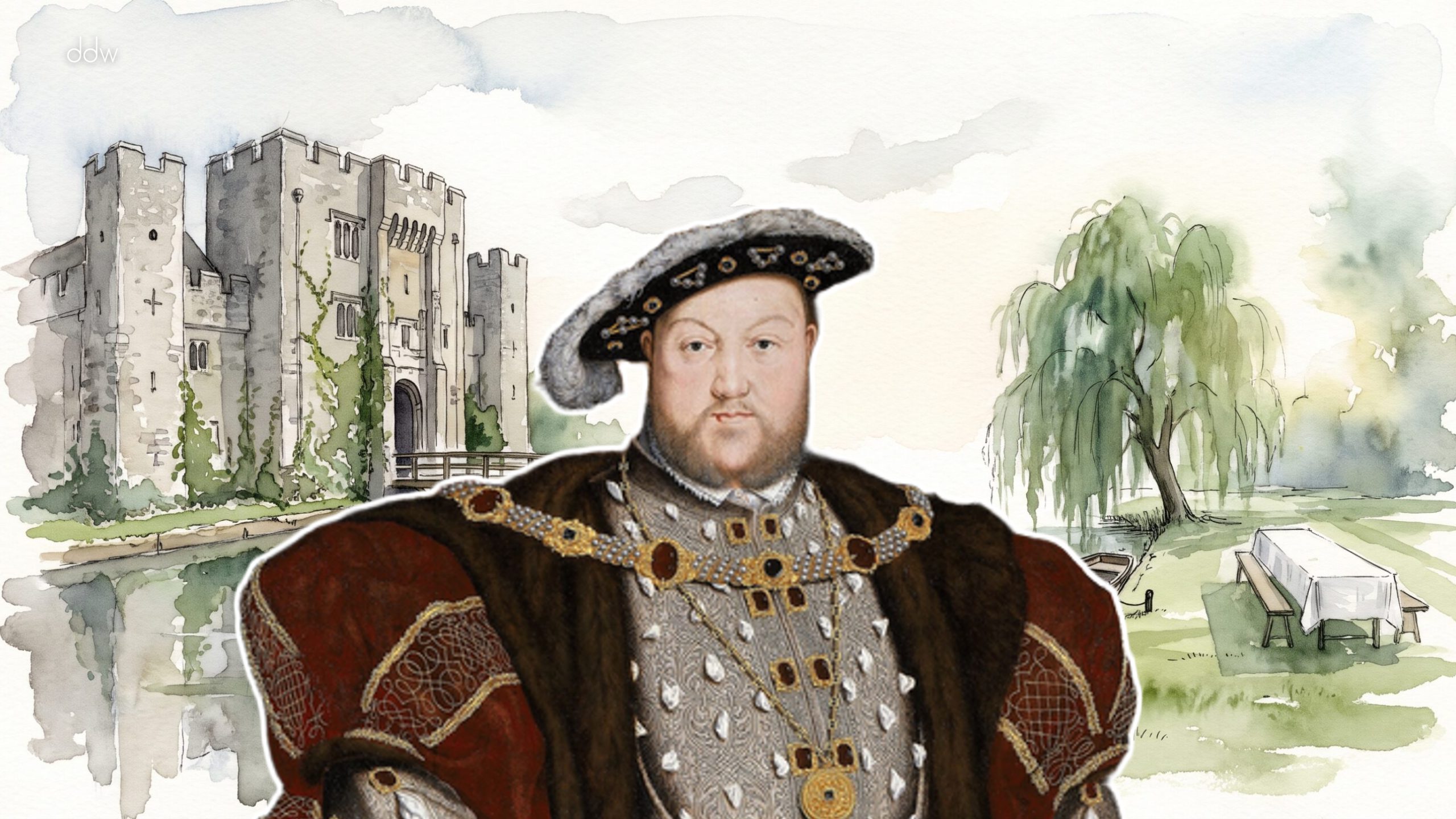
Henry VIII and Anne Boleyn are said to have dined in its Great Hall, yet Allington Castle, moat and jousting yard included, is cheaper than a carefully kept Georgian house in Berkshire.
A castle ought to cost more than a house. It has more walls and more centuries, and at Allington it has a moat that runs into the River Medway. Even so, Knight Frank is offering Allington Castle, near Maidstone in Kent, at a guide price of £5,000,000. In Berkshire, Savills has Hurst Grove, a Georgian country house, at £8,500,000. The house with the Tudor legend is the cheaper of the two by a distance, and the reasons are a short education in how old England changes hands.
Both numbers are guide prices, meaning what the sellers’ agents are asking. Neither house has a published sale price, and nobody has published a figure for what either set of owners is worth. Knight Frank is the agent at Allington and, according to Robb Report, shares the Hurst Grove instruction with Savills. Knight Frank also publishes the country-house price index that describes the market both houses are being sold into, so its reading of that market comes with an interest attached.
Where is Allington Castle, and what exactly is for sale?
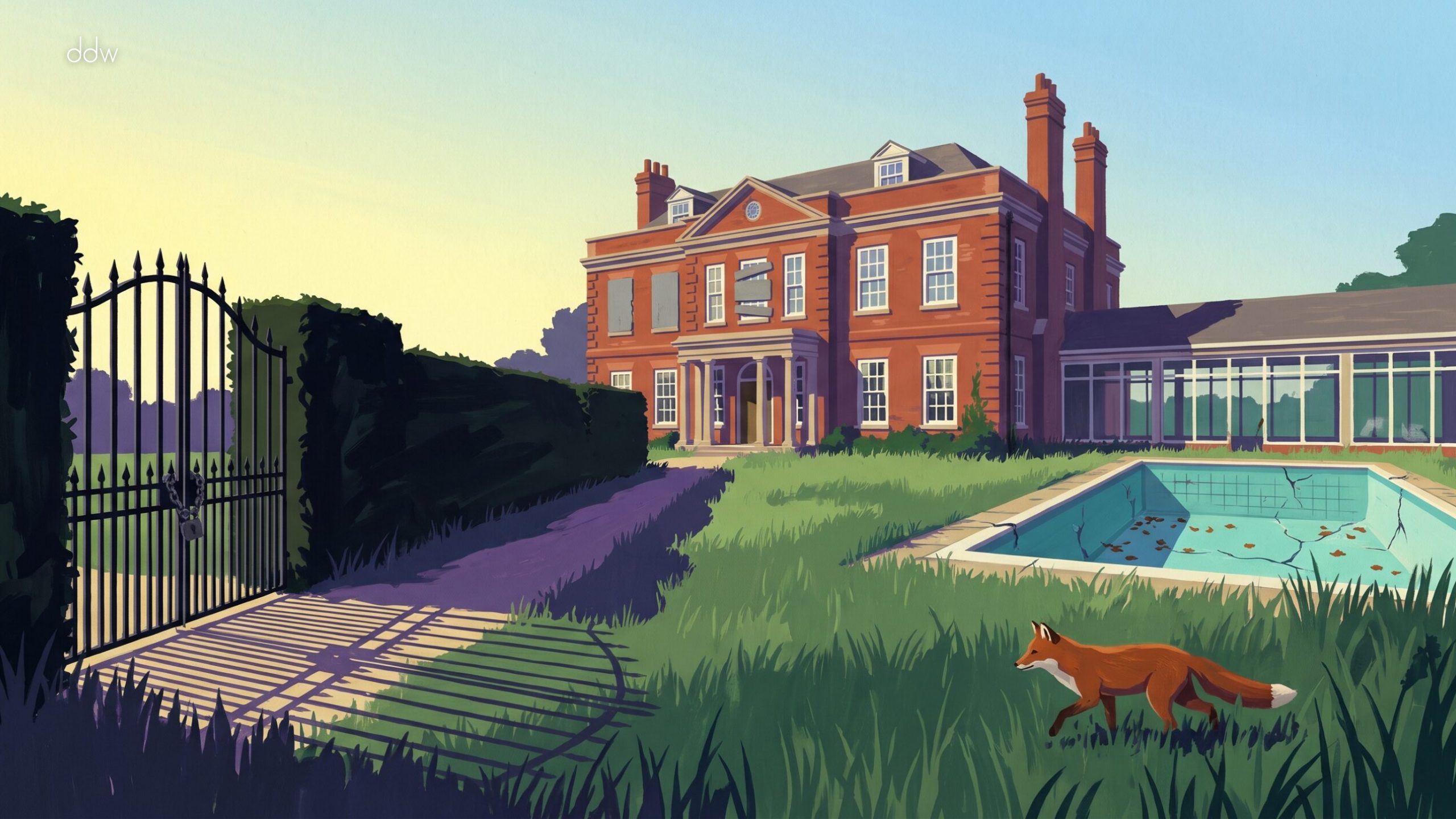
The agent’s listing puts the castle three miles north-west of Maidstone, in about 42 acres of woodland and riverside grounds on the Medway. It calls the building a “beautifully restored 12th-century medieval castle” and notes that the site is mentioned in the Domesday Book of 1086. Two inner courtyards sit within the walls, with a full moat around them. Kent County Council’s Historic Environment Record describes a fortified country house whose moat connects to the river, which is the sort of plumbing estate agents rarely get to mention.
Rightmove, whose search filters were not built with moats in mind, files the whole thing as a 30-bedroom detached house in Maidstone. (Detached, certainly. The moat sees to that.) Kent Online gave the bedroom count as “up to” that number, alongside 26 reception rooms and 20 bathrooms. How many of those rooms count as bedrooms depends on who is doing the counting, and the cautious phrase is the right one.
The rest of the inventory belongs to another age. The listing describes a bear-baiting ring, a Tilt yard where knights once jousted, and a set of chambers beneath the castle known as the Dog Caves. Plenty of country houses have a games room. Very few have one designed around a bear.
Did Henry VIII and Anne Boleyn really dine there?
Knight Frank chooses its words carefully: it is “said” that the king and Anne Boleyn once dined in the Great Hall. The castle’s own website is more confident and places the meal around 1530, with Sir Thomas Wyatt as host. That is a venue describing itself, not a chronicle.

The Wyatt connection is better grounded. The listing names the Wyatt family as the people who turned the castle into a grand residence in the late 15th century. Kent Online describes Sir Thomas Wyatt as a poet, diplomat and courtier to Henry VIII who counted Anne Boleyn among his acquaintances, and it adds that rumour of a romantic connection between them nearly cost him his life. Anything warmer than rumour belongs to legend, and the agents have sensibly left it there.
What a buyer gets, then, is a hall with a story told in the conditional. In old houses, “said to” are the two most valuable words a listing can carry.
Who saved the castle, and who is selling it?
By 1905 Allington was a ruin, according to Kent County Council’s Historic Environment Record, and its revival came in the 20th century. The castle’s own website says that only a section of wall and the kitchen fireplace of 1174 survive from the original building. That is enough to support the “12th-century” in the listing. Everything else a visitor admires is the product of restoration.
Kent Online reported that Sir Robert Worcester, the American-born pollster and businessman who founded MORI, bought the castle in the 1990s, and he went on to restore it. The rooms on offer today owe a good deal to that work.
The present owners are harder to find. The listing refers only to the “current owners” and gives no names, and no reason for the sale has been published. Anyone searching for who owns Allington Castle will get that phrase and nothing more.
Can a castle pay its own way?
Allington is set up to earn. The listing says the medieval section contains a commercial kitchen and that the commercial side of the business is already established. The castle’s website markets it as a venue for weddings and filming, and Country & Town House says CBBC’s Horrible Histories has used it as a location, which suits a building that has spent nine centuries supplying the programme with material.
The missing piece is the accounts. Neither the listing nor the castle publishes a figure for what the weddings bring in or what the upkeep costs.
A buyer is taking on a business as well as a home, with a moat on one side and a booking diary on the other. Before anyone signs, the diary will need to show how much the moat costs to keep.
What is Hurst Grove, and why does it cost more?
Savills dates the house to around 1730 and calls it an “outstanding Grade II listed Georgian country house” that comes with rental income. Its detailed listing gives 17,919 sq ft of accommodation, freehold tenure, council tax band H and an EPC rating of D. Knight Frank lists the land at 37.07 acres. For Allington, the Grade I status repeated in the local press still awaits confirmation from Historic England’s own list entry, so the comparison here rests on what the agents say.
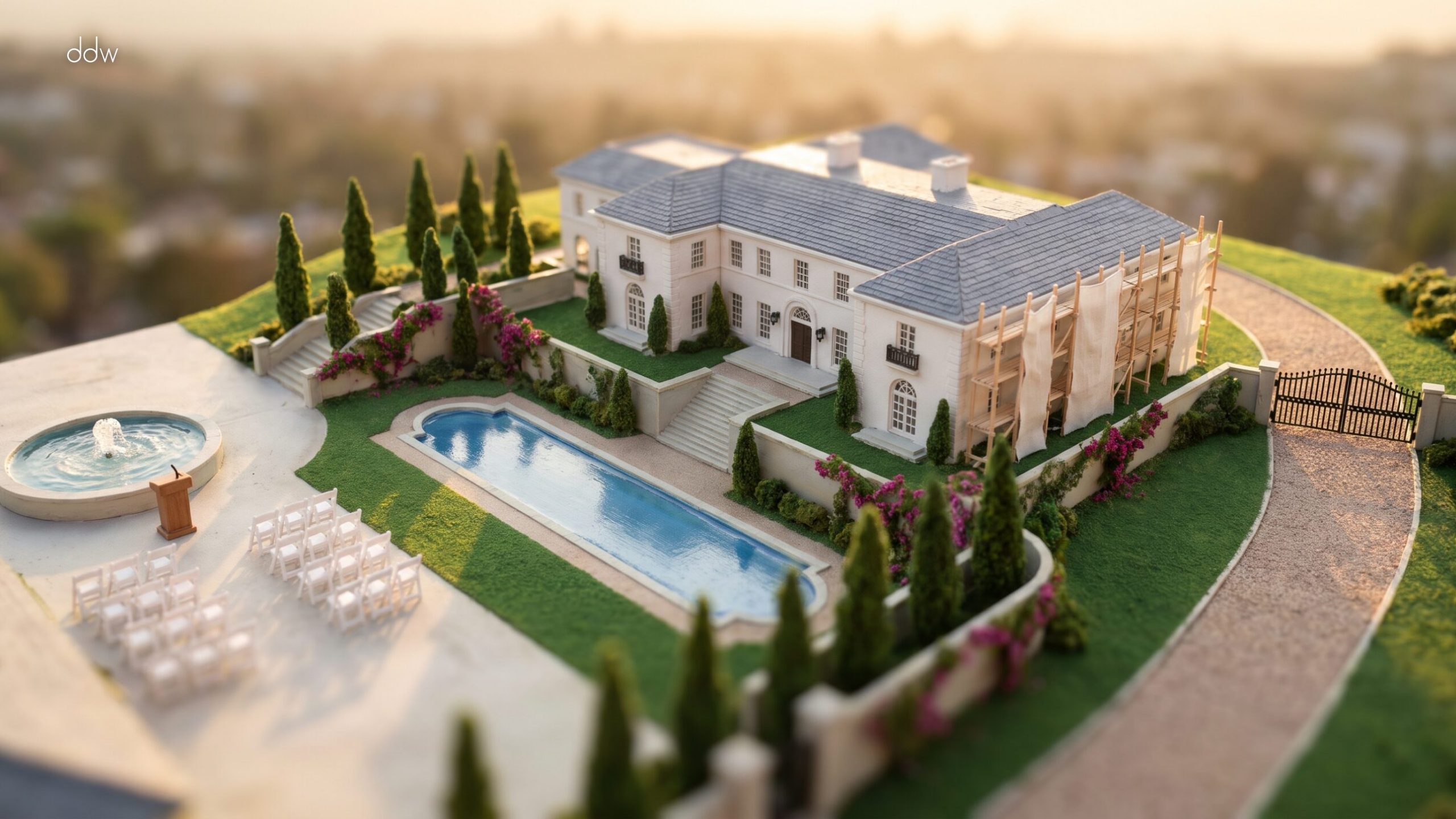
The current owners have had the house for 20 years. Savills says they commissioned Hugh Petter of Adam Architecture to redesign parts of it, and the result reads like a house already prepared for its next chapter. Robb Report says the West Wing, at present used as offices, has permission to become three bedroom suites with a gym and an indoor swimming pool. Its photographs show a guest lodge and an octagonal gatehouse in the grounds.
The history goes back a long way, with suitable hedging. Robb Report says that, according to the chronicles of Abingdon Abbey, the property was reportedly owned by King Edgar in 968. Its list of later owners includes a British army officer and politician, a brewer whose name it does not give, and John Bredenkamp, the Zimbabwean businessman and former rugby player. Ed Sugden, head of prime country houses at Savills, is quoted by Robb Report describing the estate as secluded but well connected, with more than three centuries of history behind it.
That last point carries most of the price. A Georgian house of good proportions, with its planning permissions granted and its tenants paying, is the thing this market understands best.
Is this a good time to sell an English country house?
Knight Frank’s Country House Price Index follows property above £750,000 outside London, which takes in both houses easily. The firm’s own figures describe a market that is still waiting for confidence to return. In Knight Frank’s January note, average prices stood 13% below their peak in the third quarter of 2022.
The same note recorded a change in tone. James Cleland, head of Country sales at Knight Frank, wrote in January that “After the Budget, the market has exhaled.” That was a winter comment from the firm now selling both houses, and it should be read as one.
Neither listing claims to be new to the market, and it would be unwise to call Hurst Grove freshly launched. On Knight Frank’s own figures, the buyer arrives holding the stronger hand.
Which is the better buy, acre for acre?
Divide each guide price by its land and Allington works out at roughly £119,000 an acre, while Hurst Grove comes to about £229,000, both rounded. Hurst Grove also works out at about £474 per square foot. Allington’s total floor area has not been published, so the castle cannot be measured that way, which some will think fitting for a building with caves beneath it.
The extra money in Berkshire buys order: a Grade II Georgian house of about 1730, a pool and gym already approved, rental income on the books and a location its agent calls well connected. The Kent money buys more land, a moat that meets the Medway, a working events kitchen and a Tudor story told with proper caution. Which is the better buy depends on whether you want to live in a house or run a castle.
On land alone, Berkshire’s symmetry costs nearly twice as much as Kent’s moat.
Is Allington Castle still for sale?
In late October 2026 the Rightmove listing and Knight Frank’s own feature still showed Allington on the market, and Savills, Rightmove and Knight Frank still showed Hurst Grove at its guide price. Listings change quickly at this level, and a guide price is where negotiation starts, not where it ends. No sale price has been published for either house. Until one is, the asking price is an opening position, and the Dog Caves are included.
Cover photograph: Workshop of Hans Holbein the Younger via Wikimedia Commons (Public domain).