

The Palace says nobody has to curtsy, Debrett’s says the King always goes first, and between a neck bow and a carriage procession sits the most closely read seating plan in Britain.
The most repeated rule in royal etiquette does not exist. Every season someone writes that a guest “must” curtsy to the King, and every season the Palace’s own guidance says otherwise, in a tone of mild patience. The order of precedence is real and the curtsy is optional. Most confusion about the Royal Family begins when those two get muddled.
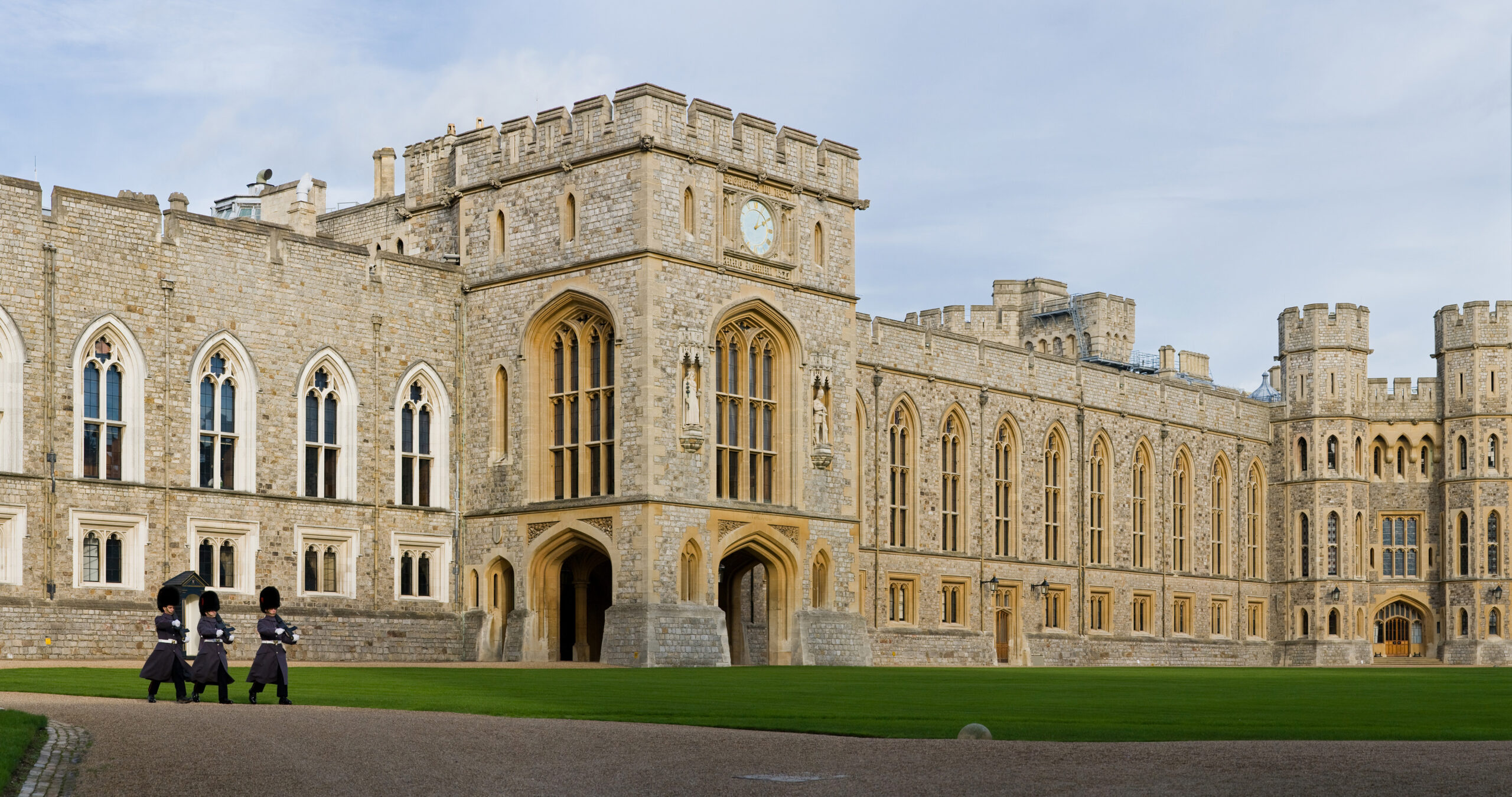
On this subject two documents carry real weight. One is the Royal Household’s published guidance on greetings. The other is the set of Tables of Precedence published by Debrett’s. The first governs the bow and the second governs the seating plan. Everything else, including most of what appears after a state visit, is commentary.
Does anyone actually have to curtsy to the King?
The Royal Family’s website says there are no obligatory codes of behaviour when meeting the King, the Queen or any member of the family. Many people choose to observe the traditional forms anyway. For a man that means a neck bow, made from the head only. For a woman it means a small curtsy. Others, the same page notes without a flicker of disapproval, prefer simply to shake hands in the usual way.
A second page, written for anyone about to meet the King and Queen in particular, reduces the matter to courtesy, while allowing that many people still wish to greet them the old way. A press report that says a guest was obliged to curtsy is describing a habit, and a pleasant one. The Household’s own wording asks for nothing beyond good manners.
The convention survives because it is useful. A small curtsy tells everyone in the room that you know where you are, and it costs nothing except, occasionally, a knee.
What is the order of precedence, and who decides it?
Debrett’s defines the Order of Precedence as the long-established hierarchy of royal family members, clergy, peers, officers of state, holders of Crown honours and professionals. It has been formalised into tables used for state banquets, guild dinners and diplomatic functions. These are the occasions when one person must go through the door first and everyone else must know where to stand.
There is one fixed point. The Sovereign is always first. On everyone else, Debrett’s is admirably candid:
“The precedence of all others is the Sovereign’s prerogative.” (Debrett’s, “A matter of precedence”)
Debrett’s adds that even the precedence of people listed in the official tables varies from time to time. Between a host and guests, it says, the requirements of courtesy and hospitality often override any strict order. A hostess who seats an old friend beside the guest of honour has broken no law of the realm.
Precedence is a hierarchy that has learnt when to give way.
Who comes first after the King?
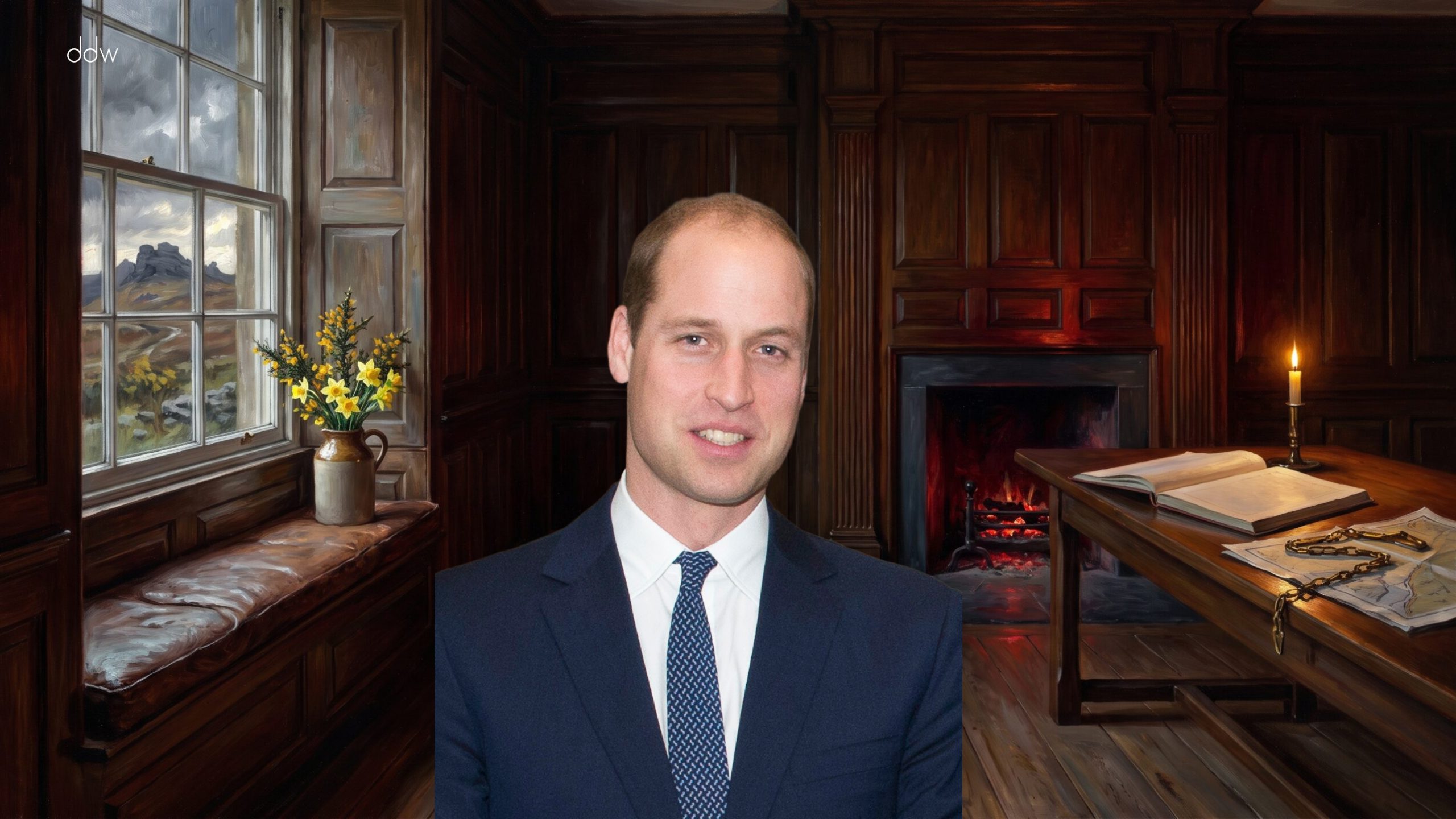
Debrett’s table for gentlemen in England and Wales opens with the family. After the King comes the Heir Apparent, William, Prince of Wales. Next is the Sovereign’s younger son, Prince Harry, Duke of Sussex. Then come the Sovereign’s grandsons, brothers, nephews and cousins, in that order. The grandsons include Prince George and Prince Louis of Wales, and Prince Archie of Sussex, as Debrett’s styles him in its line of succession.
The Church and the state come next. The Archbishop of Canterbury leads them, followed by the Lord High Chancellor, the Archbishop of York and, only then, the Prime Minister. A Prime Minister with a thumping majority still walks in behind the Archbishop of York.
The Great Officers, among them the Earl Marshal and the Lord Chamberlain, then come before the dukes. Debrett’s also says that Ministers of the Crown and Privy Counsellors belong at the top table on formal occasions, which spares the Cabinet the indignity of the far end. The ladies’ table follows its own parallel order, and the guiding principle for wives appears in the next answer.
How do dukes, marquesses, earls, viscounts and barons rank?
The hereditary peerage has five ranks. In descending order they are duke, marquess, earl, viscount and baron. A duke sits at the top of them. Within each rank, Debrett’s says, precedence depends on the antiquity of the peerage: the older the title, the more senior the holder. A newer dukedom gives way to an older one, and nothing on a balance sheet alters that. Scotland keeps a hereditary rank of its own outside the peerage: the Scottish barons, who in Scots precedence stand below knights and above esquires.
One person can also hold several peerages of different ranks. That is why some peers’ full styles take a good breath to read aloud.
The family follows the father, with a twist. Heraldica’s rule of thumb is that a peer’s eldest son ranks just after the peers one step below his father, his younger sons fall further back, and wives mirror the rank of their husbands. A reference site adds that within each rank English peerages precede Scottish, then those of Great Britain, then Irish, then the United Kingdom’s. Those who care about such things check that ordering against Debrett’s before they print a place card.
In the peerage, seniority means age, counted in centuries.
Where does Andrew Mountbatten Windsor sit now?
This is where precedence and succession part company. On 17 October 2025 Andrew said he would “no longer use” his title. On 30 October Buckingham Palace said the King had “initiated a formal process” to remove his style, titles and honours, and that he would henceforth be known as Andrew Mountbatten Windsor. Letters Patent under the Great Seal dated 3 November 2025 declared that he is no longer entitled to the style Royal Highness or the titular dignity Prince, according to the House of Commons Library. AP reported that the Gazette notice recorded those Letters Patent and that the King also formally removed the title Duke of York.
The Palace’s first statement carried no hyphen in Mountbatten Windsor. After a query from The Times, the Palace said on 12 November that it would use one in future.
Succession is a separate matter. Britannica says he remains eighth in the line of succession and that removing him would require an act of Parliament. Debrett’s line-of-succession page still lists “Andrew Mountbatten Windsor (brother of The King)”.
Precedence is a third matter again. The Crown Chronicles, an explainer site, says he is no longer entitled to any place in the orders of precedence derived from his titles. That is its reading rather than a Household ruling, and the legal position of his peerages invites careful wording. Until the Royal Household or the College of Arms says otherwise, his place in the line of succession is a matter of record and his place at the table is not.
Do royals curtsy to each other?
They do, and the cameras keep count. People reported that Catherine, Princess of Wales curtsied to the King after the Duchess of Kent’s funeral at Westminster Cathedral on 16 September 2025. Three days later, at the Imperial Palace in Tokyo, Sophie, Duchess of Edinburgh curtsied to the Emperor of Japan, a moment Yahoo’s coverage singled out for its depth.
The rule most often quoted, that a Royal Highness does not curtsy to another Royal Highness, comes from the etiquette consultant Myka Meier, speaking to People as reported by The List. It is a professional’s opinion and a tidy one. The Household’s own guidance on greetings contains nothing of the kind.
Inside the family, a curtsy works as punctuation, and the press reads it like a grammar test.
Who curtsied to whom when the Sultan of Oman came to Windsor?
The State Visit by Sultan Haitham bin Tarik of Oman shows the whole machine at work. The Palace announced it on 3 September 2026, for Tuesday 20 to Thursday 22 October, hosted at Windsor Castle. The previous State Visit by a Sultan of Oman was in March 1982, when Queen Elizabeth II received Sultan Qaboos bin Said. The two men had already met in July 2025, when the King received the Sultan for tea and a private meeting at Windsor.
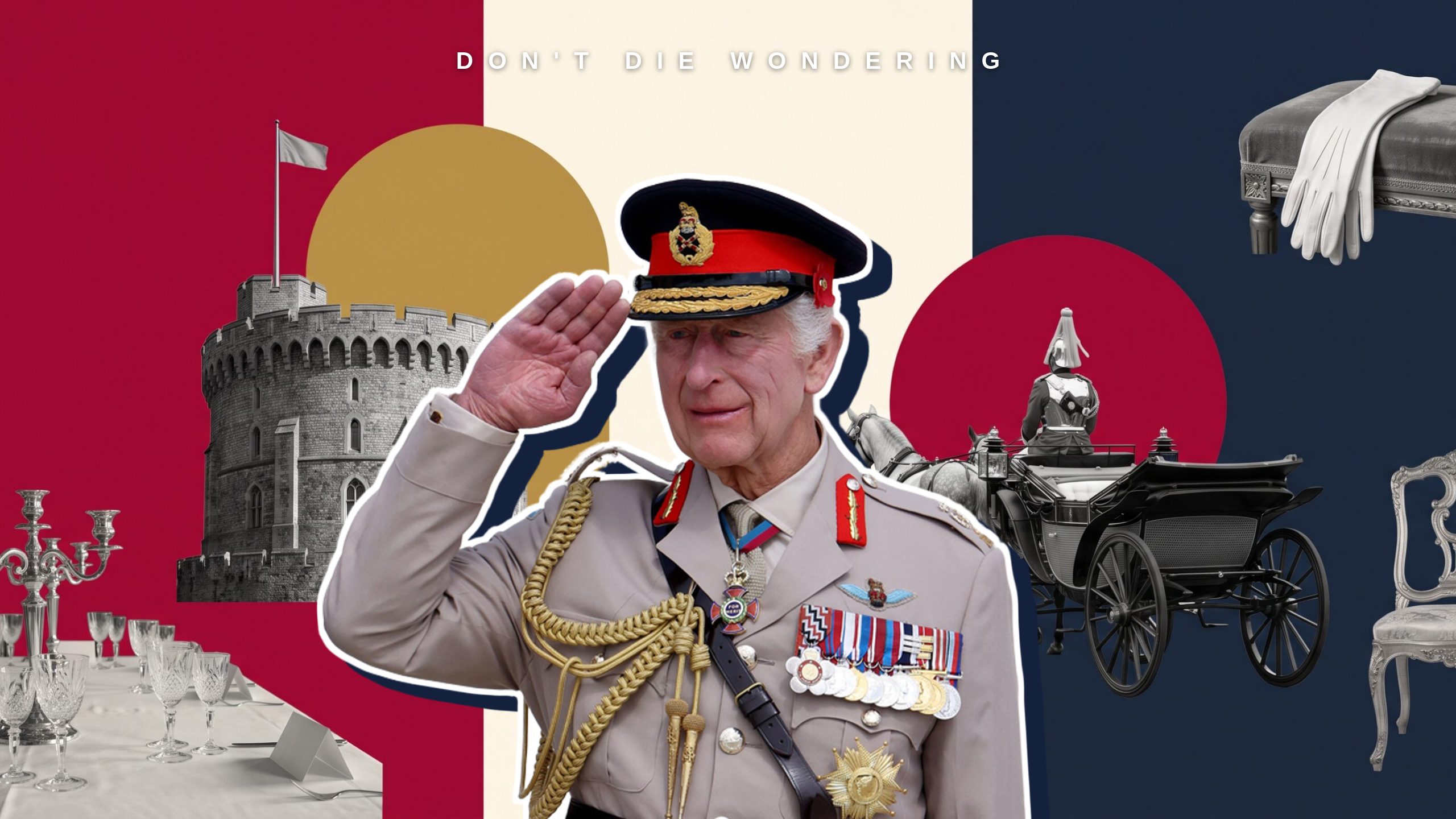
Precedence set the choreography. The Prince of Wales first greeted the Sultan on the King’s behalf, the Heir Apparent standing in for the Sovereign. The King and Queen, joined by the Prince and Princess of Wales, then welcomed him at Datchet Road. According to the Palace’s account of the welcome, the Sovereign’s Escort gave a Royal Salute, the Omani anthem was played, and the Sultan joined a carriage procession to the Quadrangle of Windsor Castle. A State Banquet followed that evening, with speeches from both the King and the Sultan.
The curtsy was left to convention. Yahoo reported that the Sultan shook hands with the King, then Queen Camilla, then the Princess of Wales, who took his hand and dipped into a curtsy. People observed that she was not seen curtsying to the King and Queen there, as she has at past welcome ceremonies. Footage shows what a camera caught at one moment of a long day, which is not necessarily all that passed before it.
A state visit is precedence performed in public, with horses.
So what should you actually do if you meet the King?
Be courteous, which is all the Palace asks. A neck bow or a small curtsy remains perfectly correct, and so does a handshake. On presentation, the King is addressed first as “Your Majesty” and thereafter as “Sir”. The Queen is “Your Majesty” first and “Ma’am” after that. Any other member of the family is “Your Royal Highness” at the outset, then “Sir” or “Ma’am”.
The one point on which the Palace is exact is pronunciation, and Ma’am rhymes with jam.
Cover photograph: Simon Dawson / No 10 Downing Street via Wikimedia Commons (OGL 3).