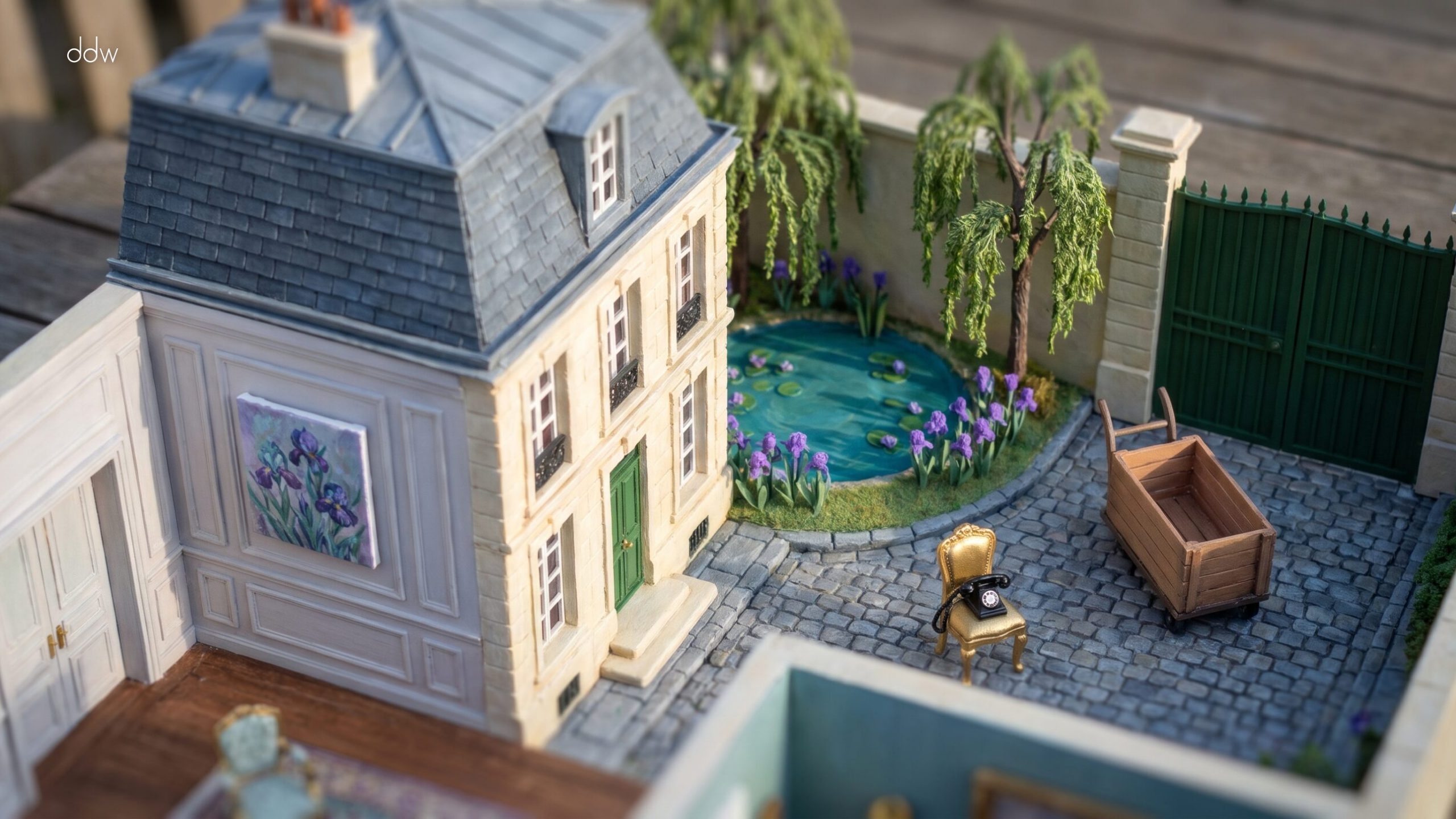
A Monet that hung in a Left Bank townhouse and was never lent to anyone has become the most expensive artwork sold at auction in France, at least until somebody mentions inflation.
Of the €74.4m that Jeanne Schlumberger’s pictures made at Sotheby’s Paris on 22 October 2026, €50m was paid for a single canvas of irises, roughly two euros in every three.
Prices below include the buyer’s premium and estimates do not, which is the convention The Art Newspaper sets out and the auction houses follow. Euros come first, with dollars as the outlets converted them on the night. The hammer price, the figure before fees, has not been published.
€50m
Sotheby’s put Iris at €22m to €30m and said no painting offered at auction in France had ever carried a higher estimate. The Art Newspaper and ARTnews report that it sold for €50m with fees, or $56.2m. Bloomberg rounded the dollars to $56m and reported that the Schlumberger heirs were the sellers, which is as far as anyone has gone on the subject. The collection was consigned by the family. Names, shares and tax treatment are not public.
Even allowing for the fees the estimate leaves out, the price cleared the top figure by a distance. According to Il Sole 24 Ore, no lot in the sale was guaranteed, so nothing underwrote the evening except the name on the catalogue. Estimates are written to be beaten, and this one was beaten twice over.
45 minutes
Six collectors bid, and the contest lasted three-quarters of an hour, which at that level is an eternity of raised paddles, telephone pauses and auctioneer patience. Thomas Bompard, Sotheby’s France co-head of Modern and Contemporary art, who oversaw the sale, summed it up in a post-sale statement as “Six bidders, 45 minutes, €50 million, and a new record high for France” (Artnet).
He closed the same statement with “Tonight, Paris belonged to Monet.” It is a line that plays well. The ending was phoned in from further east.
314.9m francs
Here the record acquires its asterisk. The previous French high was Amedeo Modigliani’s Tête de Caryatide, which made €43.2m ($48.4m) at Christie’s Paris in 2010, according to Artnet. Iris passes it comfortably in nominal terms.
In real terms, it does not pass Picasso. The Art Newspaper points out that Les Noces de Pierrette sold at Drouot in 1989 for 314.9m French francs, about €48m on the paper’s conversion, and that once inflation and historic currency conversions are counted the title stays with the Picasso.
The accurate phrasing, then, is the most expensive artwork ever sold at auction in France, not adjusted for inflation. It is a mouthful, and it is the version that holds.
160cm
The canvas measures 160cm by 180cm. Monet painted it at Giverny in 1924–25, and The Art Newspaper calls it the largest picture from his Iris series ever to come to market. Sotheby’s, as Artsy reports, describes it as the largest painting from the 20-work series still in private hands. Artlyst quotes the house going further, calling it the largest work from Monet’s final decade outside an institution. Its true pendant, according to the French site Arts in the City, belongs to the Musée Marmottan Monet in Paris.
Then there is the surface. Sotheby’s says that Iris and its companion Saules remain exactly as Monet left them: unvarnished, unlined and untouched. No restorer’s glaze sits between the paint and the viewer, so the purples and blue-greens have the slightly chalky bloom of a canvas nobody has tidied up.
Jeanne Schlumberger never lent her paintings to exhibitions, and once a work was hung in the family townhouse on rue Las Cases, it stayed there. Iris was unseen by the public until the free pre-sale exhibition at Sotheby’s, 83 rue du Faubourg-Saint-Honoré, from 16 to 22 October. For about a week, anyone could walk in off the street and stand in front of it.
1926
Three things happened that year. Marcel and Conrad Schlumberger, brothers from Alsace, founded the first company of what became the Schlumberger group, now SLB and based in Houston. Monet died. And Katia Granoff opened the gallery that would, three decades later, deliver his irises to Marcel’s widow.
Britannica dates Conrad to 1878–1936 and Marcel to 1884–1953, and credits the pair with inventing continuous electric logging of boreholes in 1927: reading the rock through electrical measurements instead of guesswork. It is the kind of invention that makes nobody famous and some people very comfortable.
Readers used to DDW’s net-worth tallies will find this column empty. No serious outlet has put a figure on the Schlumberger family’s wealth, or on any stake the family holds in SLB.
1953
Marcel died in 1953, and the French edition of The Art Newspaper dates Jeanne’s serious collecting from then. Several outlets have since called her an heir to the oil fortune. She was a co-founder’s widow, which is a different seat at the table and arguably the better one. Sotheby’s gives her dates as 1889–1983. Artlyst says she disliked Parisian society and filled rue Las Cases with art she loved instead.
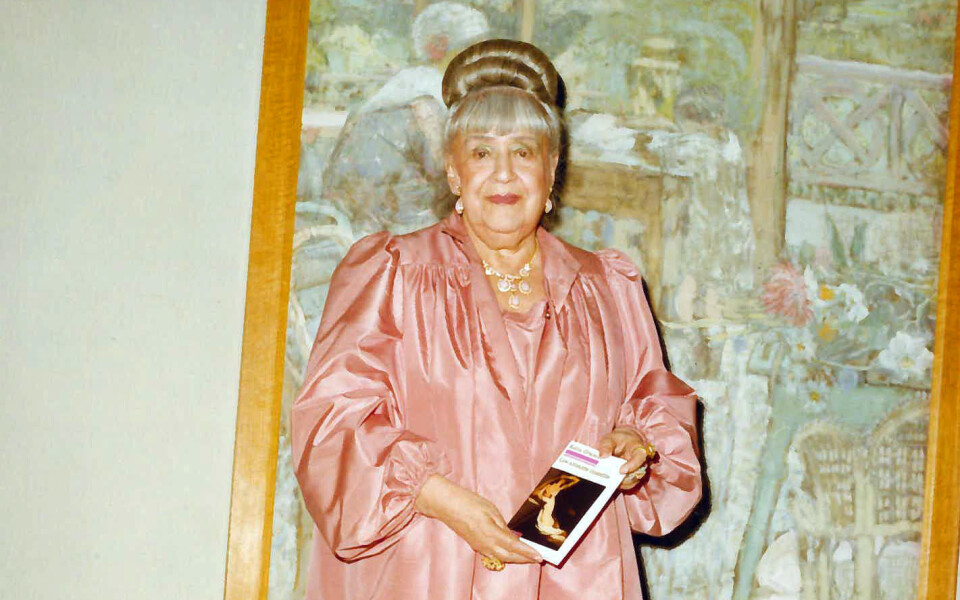
From the 1950s she worked closely with Granoff, a Russian-born dealer who had built her name on Soutine and Bonnard, and the collection gathered Cézanne, Bonnard, Moreau, Soutine and Rouault. Their tastes did not overlap much. Artnet reports that Schlumberger bought only French and 19th-century artists, while Granoff preferred living painters she could meet and champion.
The Monets came through Michel Monet, the painter’s son, who kept the late canvases after his father’s death. Artlyst’s account is that Granoff met him in 1950 and, six years later, sold Schlumberger a large group of Giverny pictures, having mortgaged her own assets and borrowed from Schlumberger to buy them. The lender had first pick, and she chose Iris. Monopol tells it slightly differently, citing Wildenstein Plattner Institute provenance that places the painting with her from around 1958. Either way, the woman with the chequebook chose first.
Bompard’s own description of her is the one that sticks.
“a bourgeoise grand dame living on the Left Bank, but she was quite wild at heart.” Thomas Bompard of Sotheby’s, speaking to Artnet
€74.4m
The evening total, with fees, was €74.4m ($83.7m), against a pre-sale estimate of more than €40m without them. Artsy, citing the house, reports it as the highest total ever for a fine art auction at Sotheby’s Paris. Every lot sold, and The Art Newspaper says three-quarters went above their high estimate, while Monopol puts the share that beat estimates at 74%.
Two other artists got new records out of it, according to Artnet: Pierre Bonnard’s La Cueillette des Prunes, of about 1899, at €2.5m, and Gustave Moreau’s Rêve d’Orient, of 1881, at €1.4m. Christie’s was selling the same evening and, Monopol reports, made €41.6m from 26 works.
A rival house, the same night, a few streets away, and a smaller total. Paris auction rooms remember evenings like that for a long time.
3 Cézannes
Three early Cézannes from the collection were never offered. They had recently been designated French national treasures, which in practice means the state would rather they stayed. Sotheby’s announced on the day that they had been withdrawn after discussions between the Schlumberger family and the city of Aix-en-Provence, Cézanne’s home town, and Finestre sull’Arte reports that the Ministry of Culture supported the arrangement.
Artnet says the paintings will go to the Musée Granet in Aix. Neither the price the city is paying nor the terms of the arrangement have been published.
$665,000
The Schlumberger name has passed through Sotheby’s before, attached to other people. Anne Schlumberger’s collection was the subject of a separate Sotheby’s series in autumn 2025. And Diamond World reported that a Dalí necklace, given by the artist to Sao Schlumberger, Pierre’s second wife, sold at Sotheby’s in 2014 for $665,000.
Those are separate collections with separate owners, and none of them is Jeanne’s. The 2026 sale is hers alone, assembled by a widow on rue Las Cases with a dealer at her elbow.
$110.7m
For scale, Monet’s own auction record remains Meules (1890), which made $110.7m with fees at Sotheby’s New York in 2019, according to The Art Newspaper. Iris fetched roughly half that. A French record and a Monet record are clearly priced in different currencies of ambition.
Which leaves the question everyone asks next: who bought Monet’s Iris? Sotheby’s identifies the buyer only as a private collector in Asia. The winning bid came by telephone through Jen Hua, the house’s deputy chairman for Asia, at the end of those 45 minutes. A painting that never left rue Las Cases while its owner lived is now headed east.