


Europe has its Graf, its comte and its contessa, while Britain has countesses aplenty and no counts at all, because the English kept their old word for the man and never had one for his wife.
A count is the nobleman with the oldest job description in Europe and the least settled place in its ranks. A countess is either his wife or a woman who holds the rank herself. In Britain the countess survived and the count never arrived, which is why the question needs answering at all. The history below is Britannica’s, the manners are Debrett’s, and the parliamentary law comes from the House of Lords Library.
A count is the same rank as a British earl, so neither outranks the other
Britannica defines a count as a European title of nobility equivalent to a British earl, which settles the most searched version of the question at once. A count is neither higher nor lower than an earl. They are one rank in two languages. Where that rank sits is less fixed, because in modern times, Britannica adds, the count ranks after a marquess, or after a duke in countries that have no marquesses, so the same title can stand one rung or two from the top depending on which border its holder was born behind. In Britain the five ranks of the peerage run duke, marquess, earl, viscount and baron, which puts the earl, and his continental twin, exactly in the middle.
Counts began as the emperor’s companions and ended as nobles without a job
The word is older than the rank. In Rome the comes was originally a household companion of the emperor, a man whose standing came from proximity. Under the Franks he became something more practical, a local commander and judge, which is to say the person a district answered to. Then the kings recovered their nerve. Britannica records that when royal authority was reasserted over the feudatories, most counts lost their political authority and kept their privileges as members of the nobility, and every count since has inherited the second half of that arrangement rather than the first. A title is what remains of a job once the king has taken the job back.
Britain has countesses but no counts because a countess’s husband is an earl
The Christian Science Monitor counts nearly 200 countesses in the UK and no counts at all, for the tidy reason that the husband of a British countess is an earl. Scholars disagree about why the English never adopted the continental word for him. The account the Monitor finds more plausible is a matter of habit: earl was the highest noble title in England before the Norman invasion of 1066, and the English simply held on to it when the newcomers arrived with their own vocabulary. The rival theory, which the Monitor credits to the linguist Geoffrey Hughes and which remains disputed, holds that count sounded too close to a vulgar word to be comfortable in English mouths. It is the version people repeat at dinner, and the one resting on the thinner evidence.
A countess is an earl’s wife, or a woman who holds the earldom herself
English never produced a female earl. History Facts makes the point that the word has no feminine form, so the wife of an earl is a countess, and the gap has been filled that way ever since. Most British countesses hold the title by marriage, while a far smaller group hold an earldom in their own right, and History Facts puts that group at four, a figure it gives without a date. On the Continent the principle is the same: a countess is a count’s wife, or a woman holding the rank herself.
The English kept a word for the man and found none for the woman. Nobody has tidied it since.
Graf, comte, conde and conte all name the same rank
The count is Graf in German, comte in French, conde in Spanish and Portuguese, and conte in Italian. His wife is a Gräfin, a comtesse, a condesa or condessa, or a contessa, and further north she becomes a gravin in Dutch and a grevinna in Swedish. The words line up more neatly than the law does, and each country has reached its own settlement with its old nobility. According to the website Teck Hustlers, Austria’s 1919 law on the abolition of nobility banned noble titles in official contexts, so an Austrian count cannot style himself Graf or his wife Gräfin in any official setting. The same site says a German count may still be addressed socially as “Herr Graf von …”, with the title now working as part of the surname. Neither arrangement speaks for the rest of Europe, and Britannica’s own caution about the shifting rank is the safer guide to any table that claims to line every country up at once.
In conversation a countess is Lady and her title, and an earl is Lord
Debrett’s sets out the rule in The Trouble with Titles: every rank below duke is Lord or Lady plus the title in conversation, and words such as earl or baroness belong on envelopes and public lists, never in speech. Its own example is a cheerful good morning to Lord Debrett, at precisely the moment instinct reaches for good morning, earl, and calling a man Earl Smith is an error Debrett’s names outright. A duke is the one exception, greeted by his rank. On paper the forms lengthen. A letter to an earl opens Dear Lord and the title, and his envelope reads The Earl of plus the title, or The Earl plus the title, according to how the title is formed; his wife’s envelope reads The Countess of. A joint envelope, according to Forms of Address, reads The Right Hon. The Earl and Countess followed by the complete name. Given names have no place in formal address at all, which is the detail that catches the newcomer. Put a countess’s first name after her Lady and you have addressed her as an earl’s daughter.
An earl’s daughter is Lady Mary, and his younger sons are The Honourable
Daughters of dukes, marquesses and earls take Lady before their first name and surname. Debrett’s, reaching for the example its readers are likeliest to know, offers Lady Mary Crawley, the earl’s daughter in Downton Abbey, which says something about where most people now learn their peerage. The eldest son normally uses a courtesy title, and younger sons are The Hon. followed by forename and surname, a style that appears on envelopes and never in speech. One family can therefore seat a countess, a Lady with a first name and an Hon. without one at the same table, each of whom requires a different envelope. The placement card is where the hierarchy is actually enforced.
The 2026 Act ends hereditary seats in the Lords and leaves the titles alone
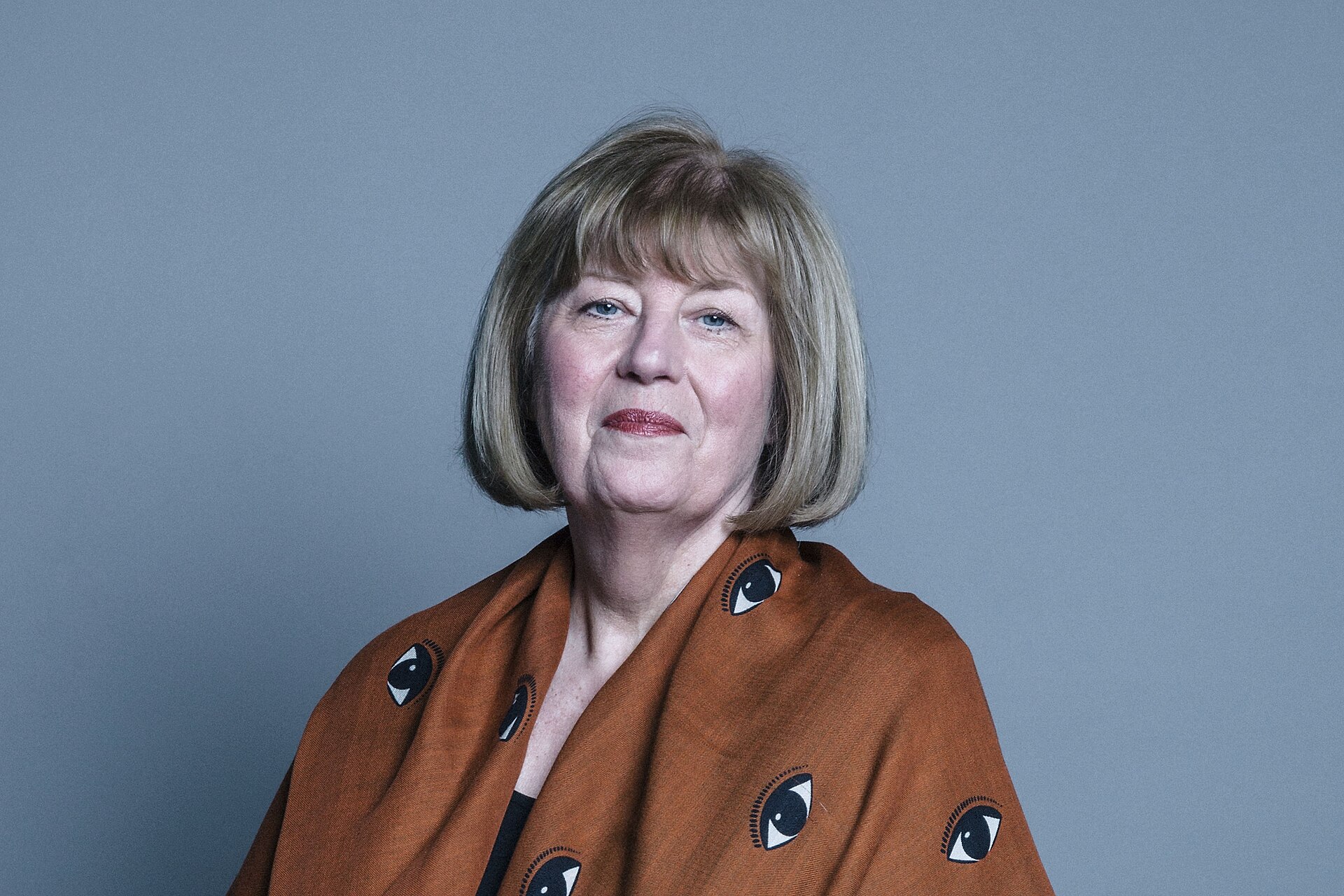
Hereditary peers lost most of their places in Parliament in 1999, when the House of Lords Act ended the sitting and voting rights of all but 92 of them. The House of Lords (Hereditary Peers) Act 2026 received royal assent on 18 March 2026, with its provisions ending the right of the remaining excepted hereditary peers to sit due to come into force at the end of the parliamentary session. The bill had been introduced in September 2024, after a government took office that July on a manifesto commitment to reform the Lords. The Lords Library notes that some of the departing hereditary peers will stay on as life peers, present by appointment where they were once present by birth. Its account of the Act deals in seats and votes and says nothing of earldoms. The earl loses his bench and keeps his envelope.
A British countess is made by marriage or by the Crown, and Sealand sells its own
In Britain the title reaches a woman by marriage to an earl or through an earldom she holds herself, and peerages, according to History Facts, are conferred by letters patent in the monarch’s name. That is a slow route, and for anyone in a hurry the Principality of Sealand offers a Count or Countess noble title of its own at £199.99, sold as a Sealand title and described as one. It confers what Sealand has to confer, and the British forms of address above are unaffected by the purchase. Anyone asking how to become a countess in Britain has therefore been answered by the history: an earl, an inheritance, or the Crown. The Crown’s version arrives by letters patent. Sealand’s, for a little more, arrives with a card.