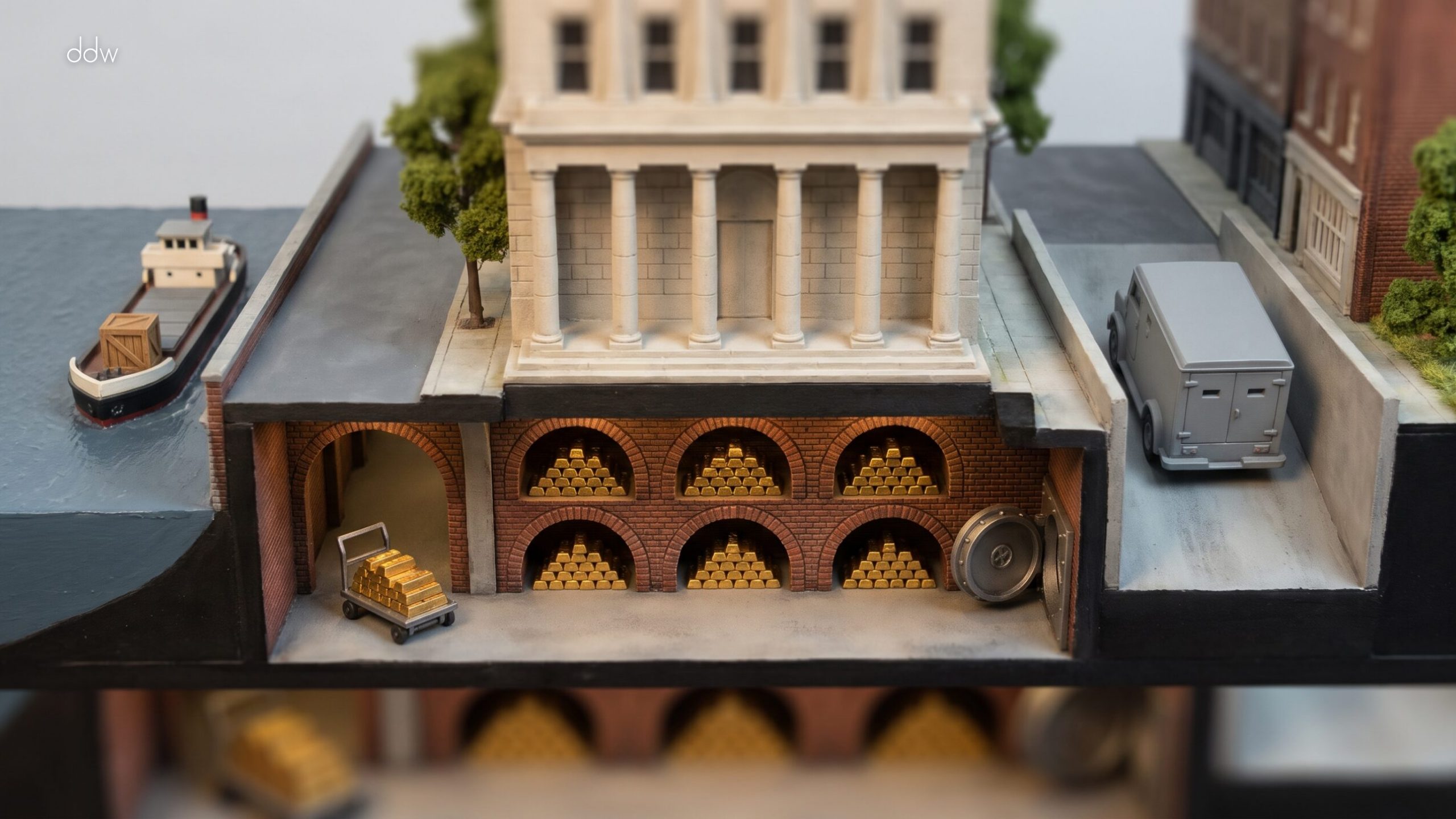
Most of the world’s official gold sits in someone else’s basement, and the central banks moving it in 2026 have mostly done so by selling bars in New York and buying replacements in London and Paris.
The phrase going round is that central banks are bringing their gold home. The best-documented move of 2026 ended mostly in London, and a good share of it never crossed the Atlantic, because it was sold in one city and bought again in another. At this level, gold travels mainly on paper.
Central banks publish what they own far more readily than where it sits. The two great custodians, the Federal Reserve Bank of New York and the Bank of England, hold gold on behalf of other people and say little about whose. The numbers that move markets are therefore estimates. Goldman Sachs builds its monthly view of central-bank buying from trade and flow data rather than relying only on official disclosures. The World Gold Council’s annual survey of reserve managers is answered on condition of anonymity. Ownership is a matter of public record, and location is closer to a courtesy.
What is inside the Bank of England’s vaults?
Beneath Threadneedle Street, the Bank of England keeps gold in nine underground vaults. Its own explainer puts the count at around 400,000 bars and ranks the Bank second among the world’s keepers of gold, behind the New York Fed. That page was last updated in October 2020, so the figure has the look of a period piece. The Vault Report, as VWRP relays it, put the gold at the Bank at about 5,782 tonnes at the end of September 2026. At 400 ounces a bar, that comes to more bars than the Bank’s own page counts.
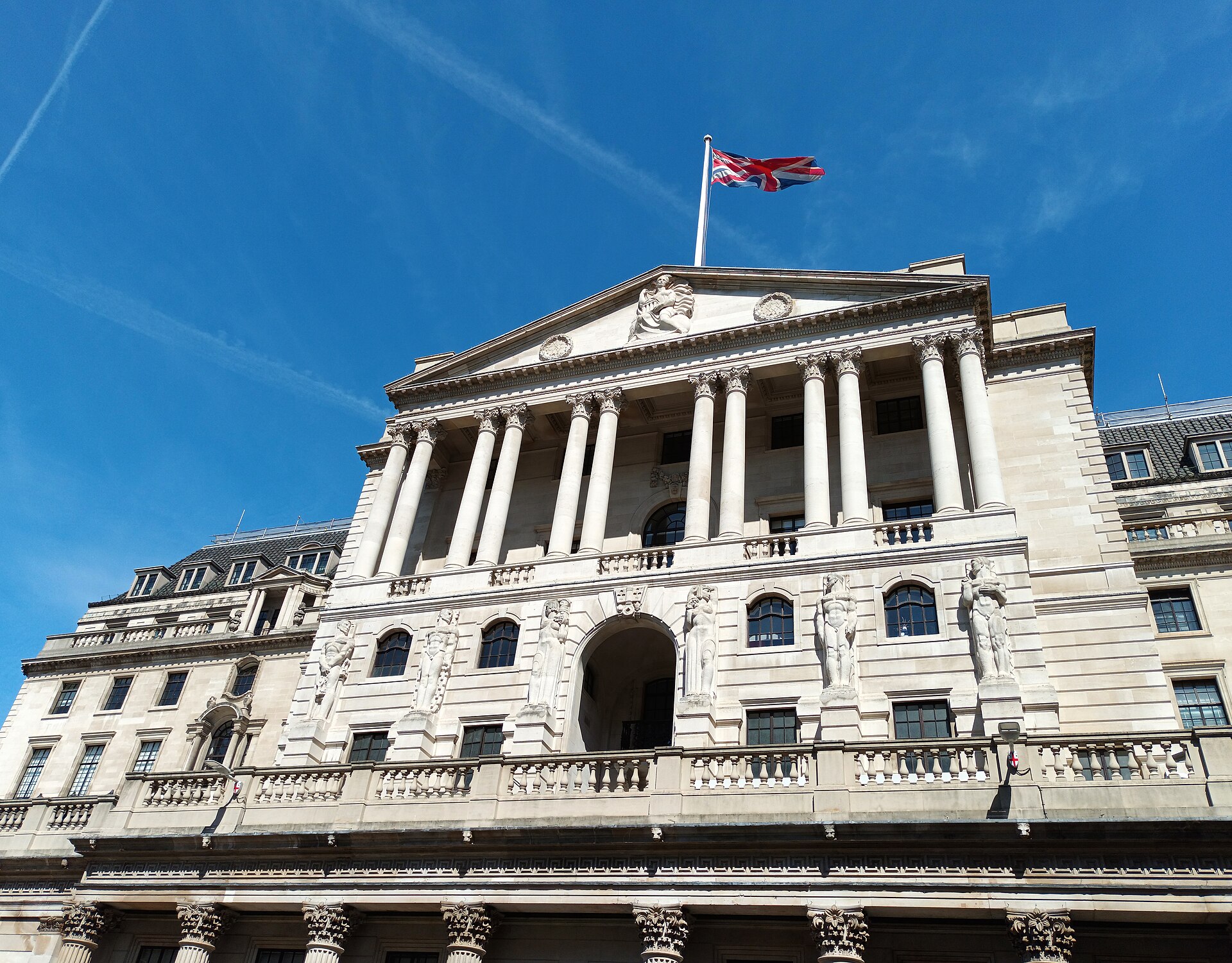
According to the dealer BullionStar, the bars are Good Delivery bars of about 400 troy ounces each, and the Bank itself owns only a few display bars. Its customers are the UK Government, banks and other governments around the world. On The Vault Report’s figures, Britain owns only about 310 tonnes of what lies down there.
MINING.com, carrying a BBC report, says the Bank has suffered no heist since its founding in 1694. Three centuries without a robbery is the whole sales pitch.
Who keeps gold at the New York Fed?
Across the Atlantic, the Federal Reserve Bank of New York has long served as custodian for the US government, foreign governments, other central banks and official international organisations, Fortune reports. European gold went there for safekeeping during and after the Second World War. Fortune says the stockpile peaked in the early 1970s and now stands at about half that peak.
By the Bank of England’s own reckoning, New York is still the largest keeper of gold in the world. It is a smaller one than it used to be.
Why are central banks buying so much gold again?
Goldman Sachs estimated in an October note that central banks bought 79 tonnes in August 2026, against a pre-2022 average of 17 tonnes a month. Goldman and Fortune both describe the August figure as more than four times the old norm. Goldman’s July estimate had been 44 tonnes, and the bank says official-sector demand remains a structural support for the metal.
China was the largest identifiable buyer, at an estimated 25 tonnes, against the roughly 20 tonnes the People’s Bank of China reported for the month. The gap between those two figures is the reason anyone bothers to estimate.
Goldman’s other observation matters most to the people who run the vaults. For domestic economies, it says, the debate has moved on from how much gold to hold to where to store it.
Why is gold moving from New York to London?
Fortune, citing the Goldman note, reports that central-bank holdings at the New York Fed fell about 40 tonnes in August while holdings at the Bank of England rose about 46 tonnes. These are custody figures, which record where gold sits rather than who owns it, and neither Goldman nor Fortune names the banks behind the shift. Goldman links the storage debate to “broader concerns around reserve security and cross-country trust”, in the words Fortune quoted from the note. Goldman has also pointed to the 2018 dispute over Venezuelan gold held at the Bank of England as an example of custody risk, which shows that London carries its own complications.
London is also the reserve managers’ favourite address. In the World Gold Council’s 2026 survey, 57% of respondents named the Bank of England as a place where they vault gold, which kept it at the top of the list, although that was down from 64% the year before. The Federal Reserve came well behind London in the 2025 edition, at 17%.
The appeal is liquidity. When a central bank needs to sell, the buyers are in London.
How did the Dutch move their gold to London?
De Nederlandsche Bank owns 612.4 tonnes, valued at €72.2bn at the end of 2025, according to the Globe and Mail. On 2 September 2026 it announced that between March and August it had moved about 86 tonnes’ worth of its holdings out of New York and Ottawa to London, citing “increasing geopolitical unrest”. The governor, Olaf Sleijpen, said: “With this relocation, we have improved the tradability of our gold reserves,” CNBC reported. DNB described London gold as the most easily tradable in the world.

The mechanics deserve more attention than the announcement got. The Globe and Mail, reporting DNB’s figures, says more than 27 tonnes were physically shipped from the US and Canada to the bank’s vault at Zeist, and a similar quantity then went from Zeist to London. The rest was done by selling around 59 tonnes in New York and buying gold in London with the proceeds. Selling in one place and buying in another is old money’s oldest trick, and it spared most of the bars the crossing.
New York and Ottawa now hold 18.5% of Dutch gold each, down from 31.3% and 19.7%. According to Canadian Mining Report, the finance minister, Eelco Heinen, said the plan was kept quiet until it was finished because it concerned a vital public interest.
Did France really take all its gold out of America?
Fortune reports that France removed all its gold from the New York Fed between July 2025 and January 2026. That is accurate about custody and misleading if it calls to mind lorries heading for the docks. Newsweek reports that the Banque de France sold 129 tonnes held at the New York Fed, about 5% of its reserves, while its total holding stayed the same.
GIS Reports says the New York gold consisted of older, non-standard bars, which were replaced with London Good Delivery bars stored in Paris. RFI reported that the bank made €12.8bn on the operation.
The replacements went into La Souterraine, the Banque de France’s vault, which Nasdaq describes as 27 metres below street level and one of the IMF’s four designated gold depositories. Paris ended up with newer bars and a profit, and New York ended up with one customer fewer.
Where do Germany and Italy keep their gold?
The Bundesbank owns 3,351.53 tonnes, according to Nasdaq, which says more than half is stored abroad. Newsweek reports that 36.6% of German gold remains at the New York Fed, and that the Bundesbank completed the transfer of 300 tons from New York to Frankfurt in the summer of 2017. Germany was moving gold home years before it became a talking point, and it still left a large share in Manhattan.
Italy, by Investing News Network’s count, keeps about 1,100 tonnes at home and 1,061 tonnes at the US Federal Reserve, with smaller holdings in Switzerland and the United Kingdom. On those figures, Rome trusts New York almost as much as it trusts itself.
Which countries keep their gold at home?
Russia stores all its physical gold domestically, two-thirds in Moscow and one-third in St Petersburg, according to Investing News Network.
The wider picture is less tidy. CNBC’s report on the World Gold Council’s 2026 survey says more central banks are holding a larger share of their gold domestically. Yet the share of respondents saying they keep at least part of their reserves at home fell to 49%, from 59% a year earlier. The movement shows up instead in what banks say they have recently done: 9% said they had increased domestic storage in the previous twelve months and 10% had diversified their overseas locations, up from 5% and 2% in the prior survey.
Home storage, in other words, is rising at the margin, while the headline share is falling for a reason the next answer explains.
How many central banks won’t say where their gold is?
In the World Gold Council’s 2026 survey, 20% of respondents said they would “prefer not to respond” when asked where they vault their gold. A year earlier that share was 8%. The Council notes that the larger silent group may have pulled down the figures for every other location, including the drop in domestic storage.
The survey is anonymous, so the 20% does not describe named banks refusing to answer. It describes reserve managers who, even with their names withheld, chose to keep the address private. The figure that grew fastest in the survey is the one that says the least.
Is there actually gold in Fort Knox?
Yes, along with two other places. According to Nasdaq, the US Treasury says a large percentage of America’s gold is held in “deep storage” at Denver, Fort Knox and West Point. The Treasury’s quoted description gives no tonnage. In a year when other countries’ gold has been sold, bought back and moved between New York, Ottawa, Zeist, London and Paris, the American answer has stayed the same: deep storage.