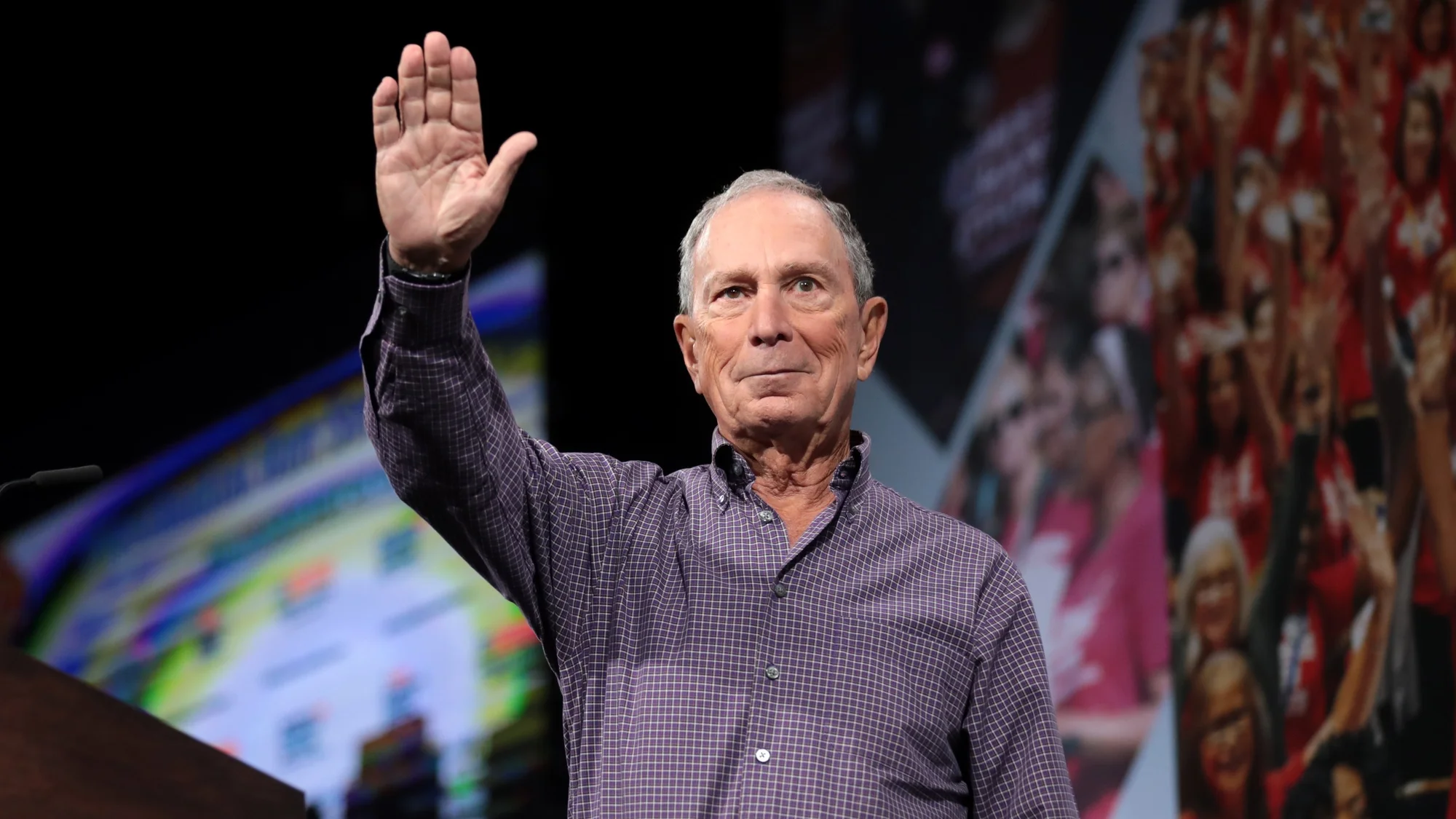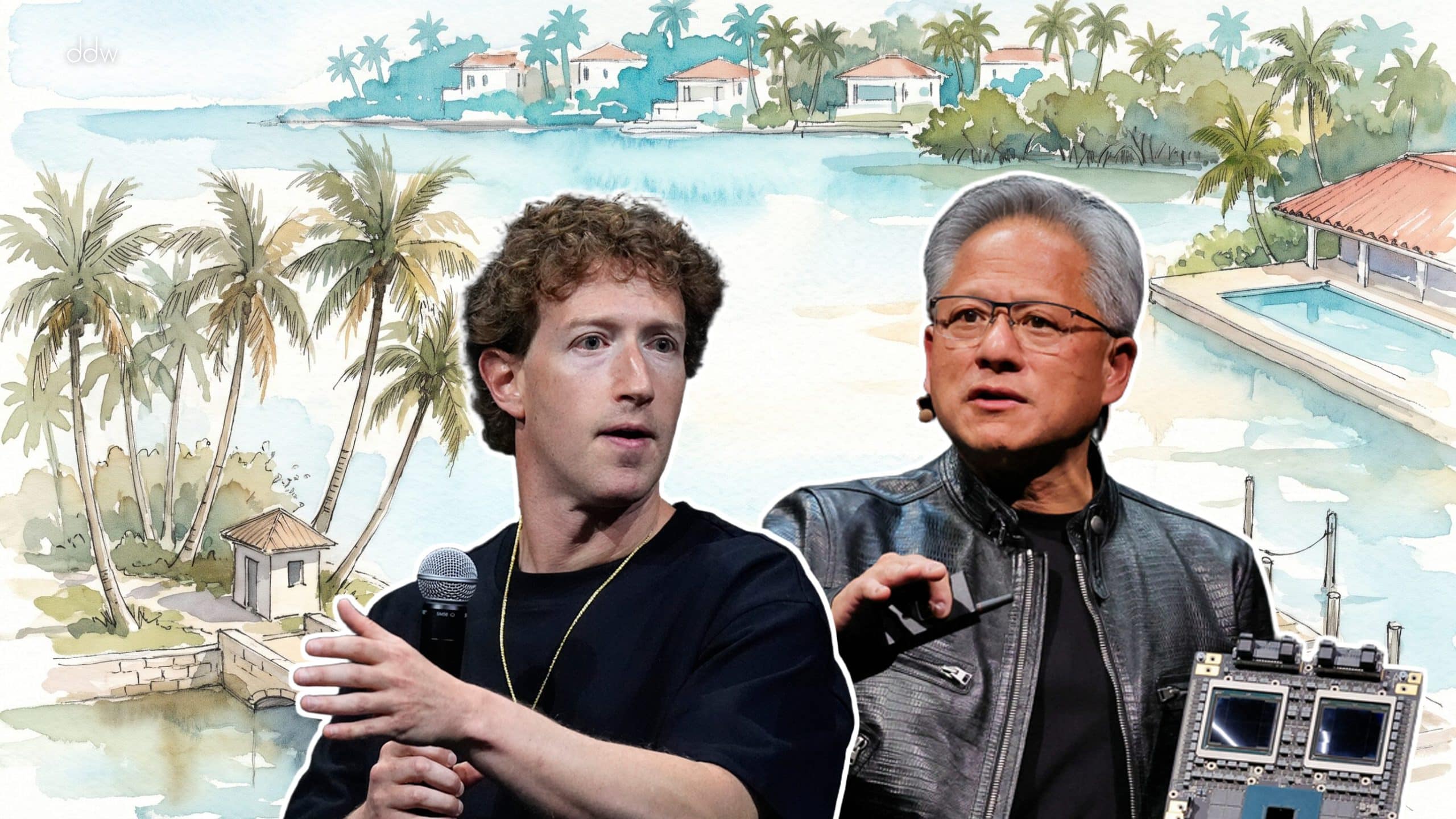
Roughly 200 fortunes would face California’s one-time 5% tax, and two of its biggest estimated bills belong to men pointing opposite ways: Larry Page reportedly bought $173.4m of Miami waterfront, while Mark Zuckerberg agreed to eight more years as a Californian.
Roughly 200 people would owe California’s proposed billionaire tax, according to CalMatters, and each would be assessed on where they lived on 1 January 2026, a date ten months gone by the time the votes are counted.
A bill under the measure is 5% of a net worth the state would value in its own way. PwC says those methods include book value plus an earnings multiplier, with strict rules on charitable pledges and trusts. Forbes, Bloomberg, Fortune and the Telegraph each publish their own estimates of the richest Californians, and those estimates move daily. Five per cent of any of them is plain multiplication, which takes no account of the taper near the threshold, the state’s valuation rules or the option to pay over five years.
5%
The measure, which GV Wire and Scripps News call Proposition 40, is sponsored by the healthcare union SEIU-UHW under Dave Regan. It would levy a one-time 5% excise tax on individuals worth more than $1bn. PwC and Ballotpedia describe a phase-out between $1bn and $1.1bn, with the rate shrinking as a fortune nears the lower figure. NBC News described the threshold as $1.1bn. The measure would amend the California Constitution and needs only a simple majority. It reaches people resident on 1 January 2026, and CalMatters reports that this includes anyone who has left since. Billionaires could pay in instalments over five years. Of the proceeds, 90% would go to a health account and 10% to education and food assistance, and PwC puts the one-time take at roughly $100bn.
Signatures reached Secretary of State Shirley Weber on 27 April 2026, against a requirement of 874,641 valid ones. Her office declared the measure eligible in June, NBC News reported, and Californians vote on it on 3 November 2026.
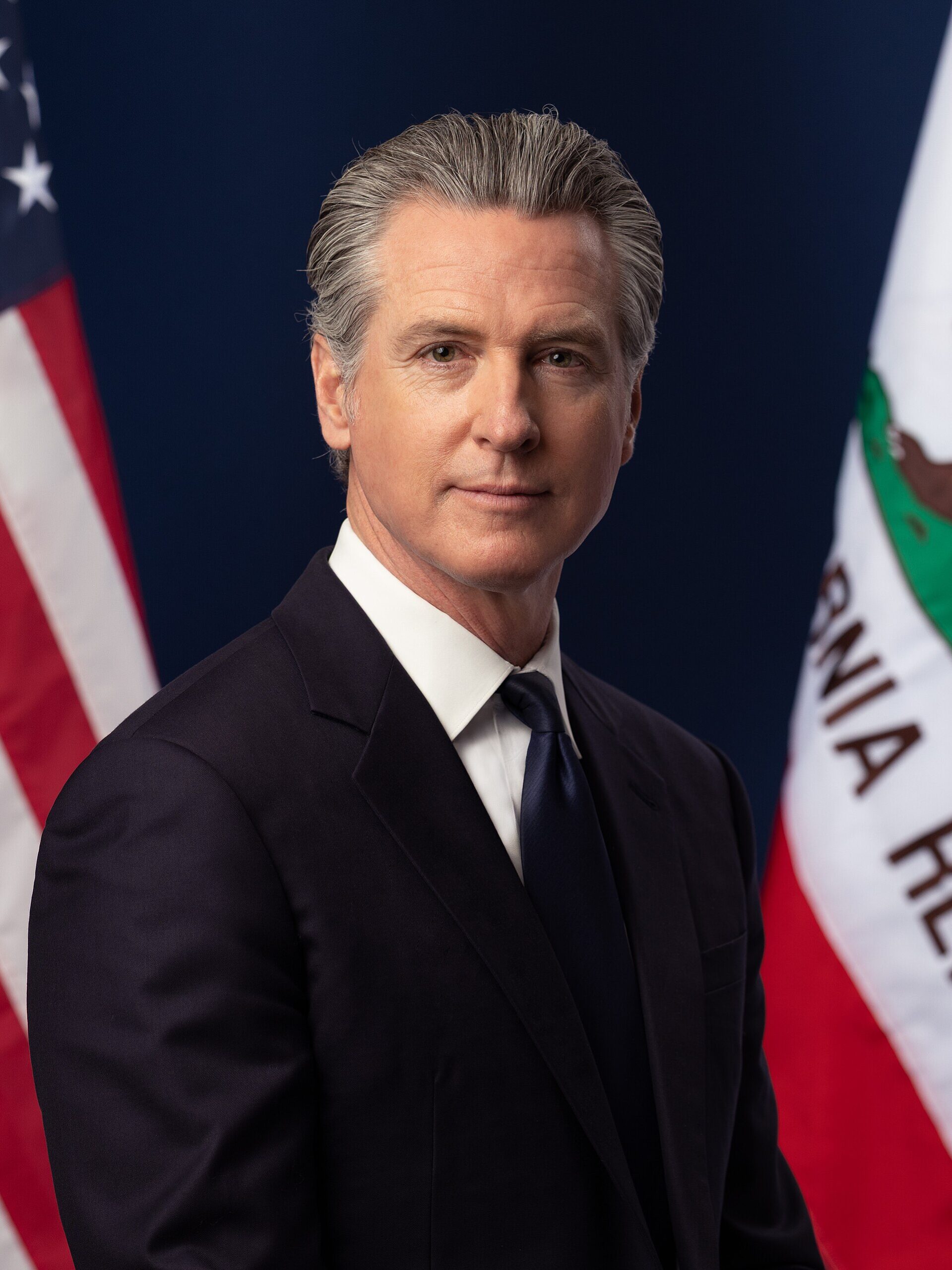
Governor Gavin Newsom opposes it. PBS reports that he is considering a run for president. He has endorsed Prop 42, which would cancel Prop 40 and bar future state wealth taxes, and he has proposed a federal minimum tax on Americans worth more than $100m instead. The Hill reported that Prop 42 was funded by Sergey Brin, the Google co-founder. In January, The Wall Street Journal had reported that Brin was in talks over a Miami home, and no purchase has been reported. Newsom would tax the very rich nationally, which is a long way from Sacramento.
$173.4m
Larry Page carries the largest estimate in the story. Forbes valued the Google co-founder at $269bn in January 2026 and Fortune at $292bn in October. Five per cent of the larger figure is about $14.6bn, and Fortune has put his potential exposure at nearly $15bn. That estimate presumes Page was a California resident on 1 January 2026, and residency is a legal and factual question for every person the measure touches.
The Wall Street Journal reported that Page paid $101.5m in December 2025 for a waterfront compound in Coconut Grove, the former home of the late restaurateur Jonathan Lewis. IBTimes reported that Miami-Dade County records put the compound at 4.5 acres. On 5 January 2026 he bought a nearby house for $71.9m from the heiress Sloan Lindemann Barnett and her husband, Roger Barnett, which brought the pair to $173.4m. According to Fortune, one of them had earlier been listed at $135m, with 13 bedrooms and 15.5 bathrooms.
Fortune also reported reviewing filings that show several Page entities converting out of California. According to Fortune’s reporting, Koop, Flu Lab LLC, One Aero and Oceankind were re-incorporated in Delaware in December. Page has not spoken publicly about his residence or his reasons. The New York Times reported in December 2025 that he and Peter Thiel had considered leaving the state.
Dina Goldentayer of Douglas Elliman, speaking as a broker and not on Page’s behalf, gave Fox News Digital the market’s reading in a sentence.
“Miami is the upgrade.”
8 years
Mark Zuckerberg is the only billionaire here whose thinking about the tax appears in a regulatory filing. Meta’s information statement to the SEC is dated 21 October 2026 and was released alongside third-quarter earnings. It records his commitment to remain a resident of California, or wherever Meta is headquartered, for eight years, absent material unforeseen circumstances. The agreement behind it is dated 19 October. The filing also records that he had told a board committee he was considering relocating his primary residence outside California.
Forbes put him at $239.3bn in October 2026, and CNBC calls him the sixth-richest person in the world. In February the Telegraph valued him at $229bn and estimated his bill at $11.45bn. Five per cent of the Forbes figure is about $12.0bn.
The eight years attach to his address. Releases of his new shares carry a separate condition, that he remain in a full-time leadership role.
60.6%
Every holder of Meta’s Class A and Class B stock, Zuckerberg included, receives the same one-for-one dividend of new, non-voting Class C shares. The stapling condition, the release schedule and the residency commitment apply to him alone. According to Scripps News, he may sell up to 20% of his Class C shares at once, roughly 10% of his economic stake, and use them for any Prop 40 liability without touching voting control. The remaining 80% unlocks at 2.5% a quarter over eight years, and only while he holds a full-time leadership role.
Scripps News reported that he controls about 60.6% of the votes and that he told the board selling voting shares to pay the tax could cut that to about 53%. He draws a salary of $1 a year. Meta’s filing states his position bluntly: “Mr. Zuckerberg would effectively be paying to serve as the Company’s chief executive officer while residing in California,” in the passage CNBC reported.
Class A shareholders did not vote, because Zuckerberg could approve the change himself. The new stock takes effect on 19 January 2027. CBS News reported that it is also meant in part to help Meta raise capital for AI infrastructure. According to Scripps News, the company spent $34.9bn on capital expenditure in a single quarter. The votes are the part of this fortune the arrangement is built to keep.
$170m
Zuckerberg’s Florida chapter exists in reports and not in filings. In February 2026, The Wall Street Journal first reported that he and Priscilla Chan were buying a newly built waterfront estate on Indian Creek. InvestmentNews identified the seller as a company linked to Peter Cancro, the founder of Jersey Mike’s. The Journal could not confirm a price. Miami agents expected $150m to $200m, pointing to the $105m sale of a similarly sized empty lot, and Fortune reported $170m. The sale had not officially closed when the reports appeared. In October, CNBC still counted Zuckerberg, with Jensen Huang, as one of only two of tech’s centibillionaire chief executives living in California.
According to Fortune, Indian Creek has 41 residents and security around the clock. Fox Business lists Jeff Bezos, Tom Brady, Carl Icahn, Ivanka Trump and Jared Kushner among the neighbours. Bezos bought his two adjoining properties in 2022 and 2023, for $68m and $79m, before the measure existed. An island of 41 residents is less a neighbourhood than a guest list.
$7bn
Jensen Huang, founder and chief executive of Nvidia, gave his answer on television, and briefly. Bloomberg valued him at $155bn in January 2026 and put his likely bill at about $7bn. In August, Forbes estimated nearly $8bn. On 6 January 2026 he told Bloomberg Television he was “perfectly fine” with the tax, and that “I haven’t thought about it even once.”
He still lives in California, which at his scale counts as a position.
60 days
If voters approve Proposition 40, Baker Botts says any legal challenge must be filed within 60 days, with a direct, expedited appeal to the California Supreme Court. CalMatters reports that challenges are expected and that the measure’s apparently retroactive reach invites a constitutional one. Meta’s Class C shares arrive on 19 January 2027 either way.
On the measure’s own terms, leaving now takes nobody out of it. The tax reaches residents as of 1 January 2026. CalMatters reports that people who have gone since would still owe. Each case would turn on residency as a matter of law and fact. Under Proposition 40, the only move that counts is one made before New Year’s Day 2026.
Cover photograph via The Independent; via Reuters.