

Royal Lodge belongs to the Crown Estate and Cornwall to whoever is Duke, but Sandringham, bought for a Victorian Prince of Wales in 1862, belongs to the King himself, and its books stay shut.
Each summer the royal finances arrive as a small library of PDFs. There is the Royal Household’s Sovereign Grant report, the Crown Estate’s annual report and the two Duchies’ results, and by September a Commons Library briefing reads them all on Parliament’s behalf. Sandringham appears in that paper as a single word in a list of private assets, and nobody prints a price beside it.
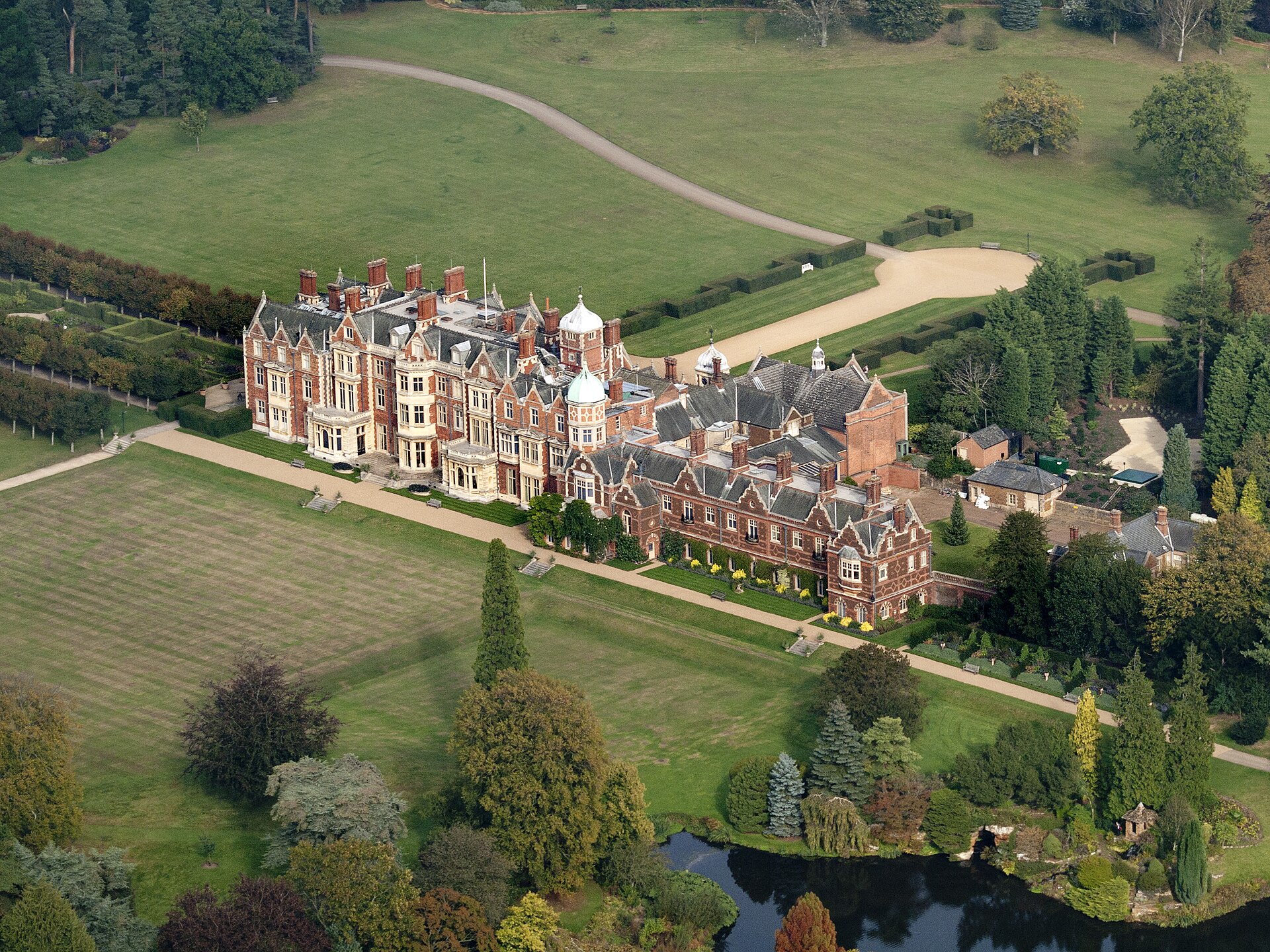
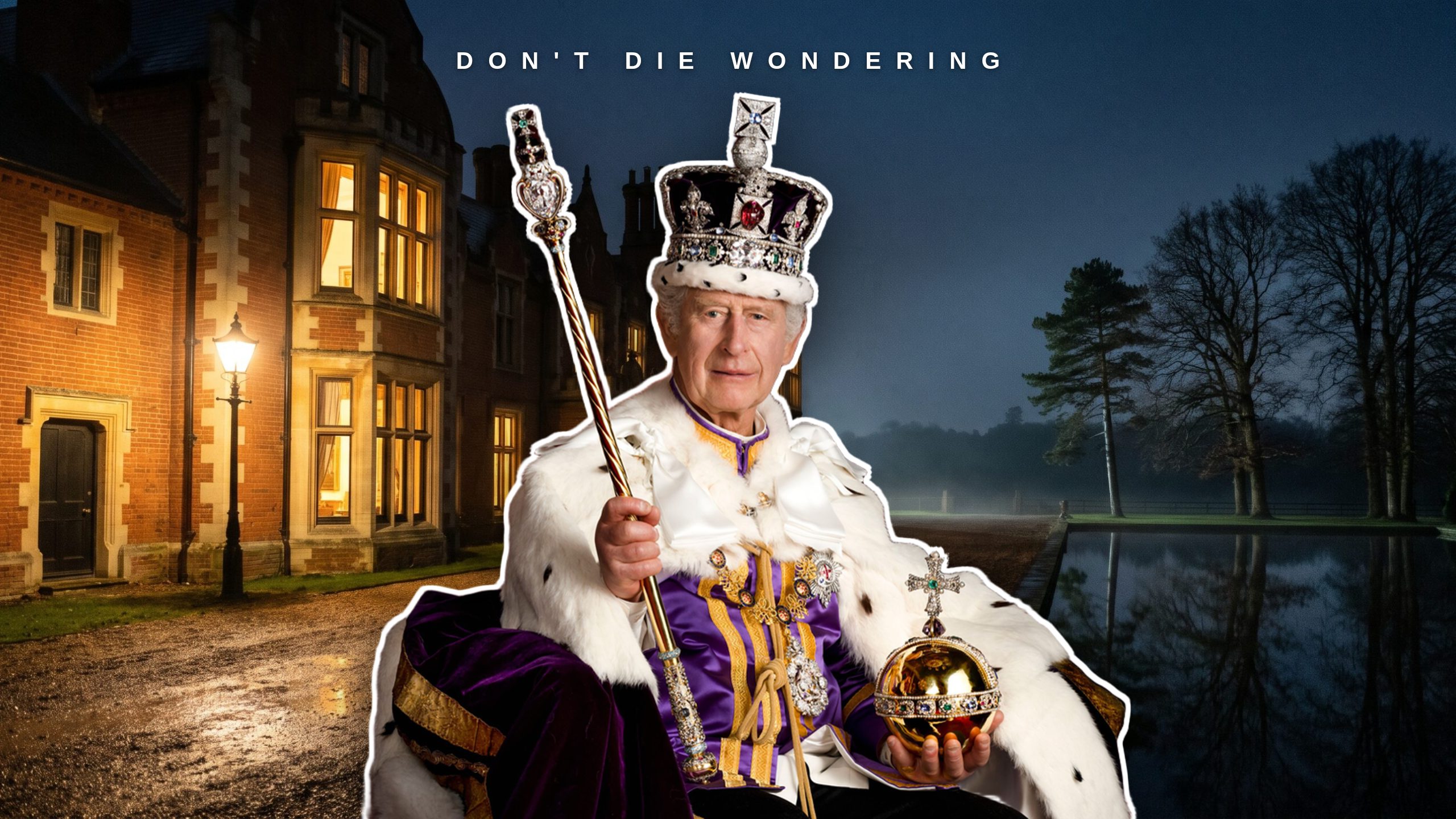
King Charles owns Sandringham personally, as private property
Sandringham belongs to the King in the way a Norfolk farm belongs to its farmer. He holds it in his own name, outside the machinery of state. The Royal Household’s one-page guide to its 2026 accounts lists the Balmoral and Sandringham estates among the Monarch’s private assets and income, on a different part of the page from the palaces and a long way from the Crown Estate. The Commons Library makes the same point in drier type, recording that the King’s personal income comes from his privately owned estates at Balmoral and Sandringham, from investments and from private savings. Ask whether King Charles owns Sandringham and the official papers give an unusually direct yes. His mother held the estate before him. No member of the family lives in Sandringham House permanently, though the King visits often, so the house is less a home than a holding with a very grand front door. Private ownership brings the privilege that comes with any private estate, which is that the figures stay in the family. The amount of the King’s personal income, the Commons Library notes, is not reported.
Sandringham was bought as a country home for the Prince of Wales who became Edward VII
Sandringham came into the family the way most country houses change hands: somebody bought it, with one young man in mind. In spring 1862 the house and its estate, then 2,800 hectares, were bought from Cowper as a country home for Albert Edward, Prince of Wales, the heir who would later reign as Edward VII. A house bought for a person is a different creature from a palace maintained for an office, and that origin explains everything that follows. Sandringham was acquired by a royal, for a royal, and the Crown as an institution never entered the transaction. The estate has also grown up considerably since the prince first had it. It now runs to about 20,000 acres, with 600 acres of royal parkland and some 150 properties, which makes the King one of Norfolk’s more substantial proprietors in his own right, quite apart from anything he does in London. A country retreat bought for an heir has become a working estate with a monarch on the deeds.
Balmoral is owned the same way as Sandringham, while Royal Lodge belongs to the Crown Estate
Balmoral is Sandringham’s northern twin on paper. The Household lists the two estates together, and the Commons Library names both as the private sources of the King’s personal income. The distinction made the news through Windsor rather than Deeside. Andrew, the King’s younger brother, lived at Royal Lodge in Windsor, which is part of the Crown Estate. On 1 November 2025, CNN reported, citing a royal source, that he would move to a property on the Sandringham estate and that the King would finance the move privately. Sarah Ferguson, his former wife, was reported to be making her own arrangements and was not expected to join him in Norfolk. Ownership shaped the whole arrangement. A Crown Estate house is held for the Crown, while a house at Sandringham is the King’s own.
Sandringham is outside the Crown Estate, which the King cannot sell or draw an income from
The Crown Estate is where royal property stops being personal, and the Commons Library makes the point in one passage. The King owns some property “in right of” the Crown: the Crown Estate, government buildings, the Occupied Royal Palaces and the Royal Collection. He cannot freely dispose of any of it, nor derive direct income from it. The Crown Estate is a substantial business by any measure, reporting a net revenue profit of £0.5bn for 2025/26, and the King has the title on the letterhead and no claim on the till. That is why adding the Crown Estate to a royal fortune, a habit of excitable round-ups, gets the arithmetic and the law wrong together. Sandringham works the other way round. It is a fraction of the size, it does produce income for its owner, and the Commons Library counts that income as his. The smaller estate is the one he owns.
Public money arrives through the Sovereign Grant, and the palaces take more than half
The Sovereign Grant is how public money reaches the monarchy, and the Royal Household’s report for 2025-26 puts it at £132.1m, the first rise since 2021-22. More than half went on preserving and protecting the Occupied Royal Palaces, and the Household describes the grant as covering official duties and those palaces. The size of the grant is set by reference to the higher of a share of the Crown Estate’s profit from two years earlier or the previous year’s grant. The King’s working budget therefore follows, at a polite distance, the fortunes of property he cannot touch. The 2026-27 grant funds the final year of the Buckingham Palace reservicing programme, after which it will be reduced, and the government has introduced a Sovereign Grant Bill to reset it lower. None of that machinery mentions Norfolk. The grant’s two categories are official duties and the Occupied Royal Palaces, and Sandringham appears in neither of them.
Lancaster is the King’s second private estate, and it travels with the throne
The Duchy of Lancaster is also private, though it runs on different rules from Sandringham. The Royal Household’s finances paper describes it as the personal estate of the reigning Monarch since 1399, held separately from all other Crown possessions, with rural estates covering 41,910 acres of England and Wales, roughly twice the size of Sandringham. For the year to 31 March 2026 the Duchy reported an adjusted net surplus of £25.2m, and Alastair Martin, its chief executive and Clerk of the Duchy Council, said it had advanced its sustainability ambitions “while delivering a stable financial performance.” The surplus provides the Sovereign with an income. The capital stays put, because Duchy capital must be retained in the Duchy, and the monarch has voluntarily paid income tax on its profits since 1993. The King therefore holds two kinds of private land. Sandringham belongs to him as an individual, while Lancaster belongs to whoever reigns. He draws income from both, but only one is his in the way a house is anyone’s.
Prince William holds the Duchy of Cornwall as Duke, and cannot touch its capital
The estate most often mistaken for the King’s belongs to his son. The Duchy of Cornwall covers 53,000 hectares, mostly in south-west England and including the Isles of Scilly, and belongs to whoever holds the title of Duke of Cornwall. That is now Prince William, the heir. The Royal Household’s figures put its distributable surplus for 2025-26 at £21.55m. William has no access to the Duchy’s capital and pays income tax on the annual surplus, so the estate is better understood as a living than as a fortune: a great deal of land that pays him an income, which he can never sell for himself. Set beside Sandringham it makes the contrast plain. Cornwall comes with a title and leaves with it. Sandringham came with a sale, and it stays with its owner.
That leaves the question everyone asks next, which is what Sandringham is worth. No official body says. The Household’s accounts list the estate among the King’s private assets without a value, and the Commons Library records that his personal income is not reported. The valuations that circulate come from newspaper rich lists and belong to them alone. Adding the Crown Estate’s portfolio or either Duchy’s capital produces a large number and a wrong one, because none of that is the King’s to dispose of. Sandringham, small by comparison, is simply his.
Read Next: The $735m Treasury Estimate at the Top of 2026’s Most Expensive Superyachts
Cover photograph via Cnn.