

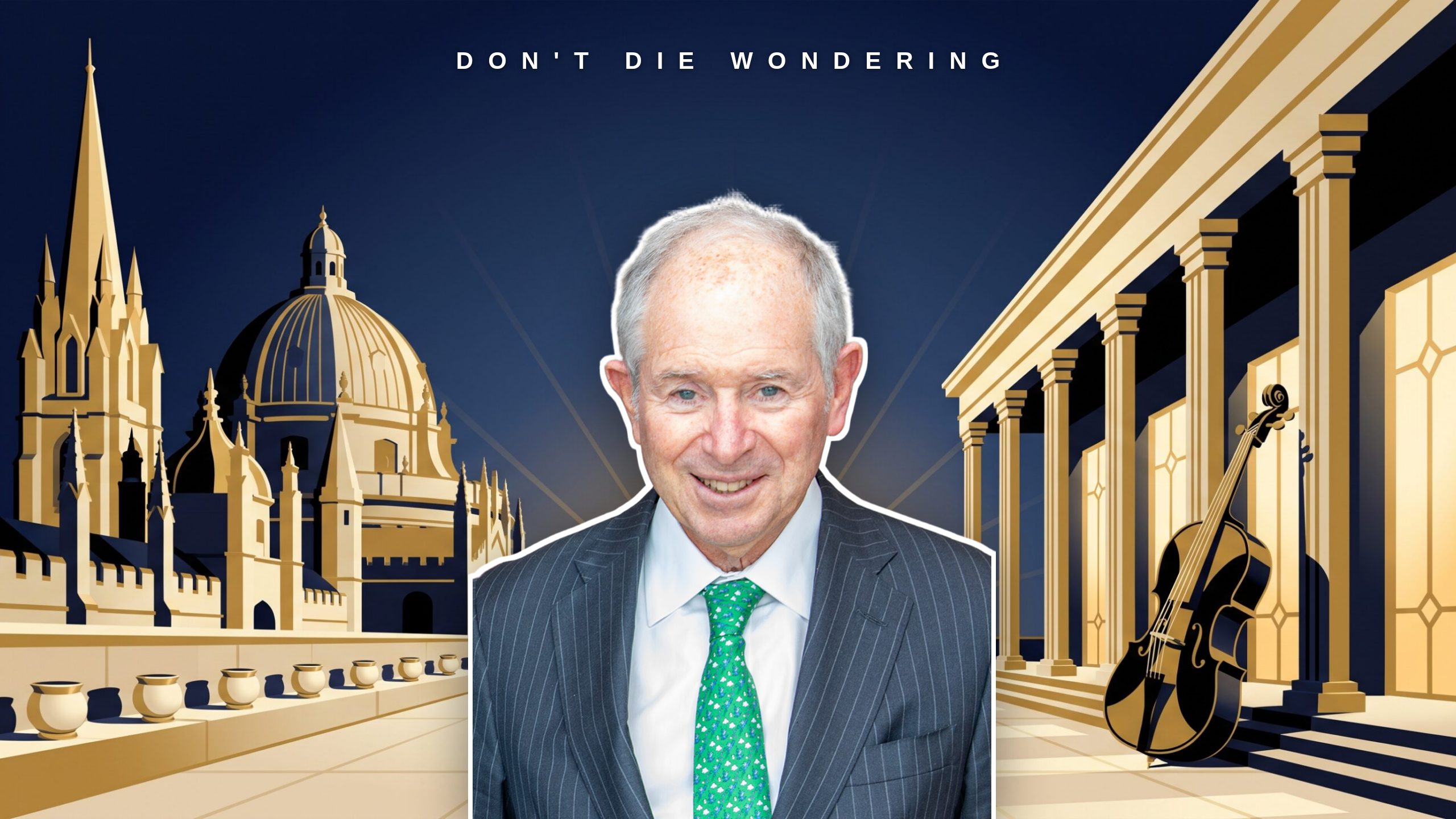
A Wall Street founder with no notable Oxford connection made the university’s largest single gift in modern times, and Oxford gathered seven faculties, a 500-seat concert hall and his surname under one roof.
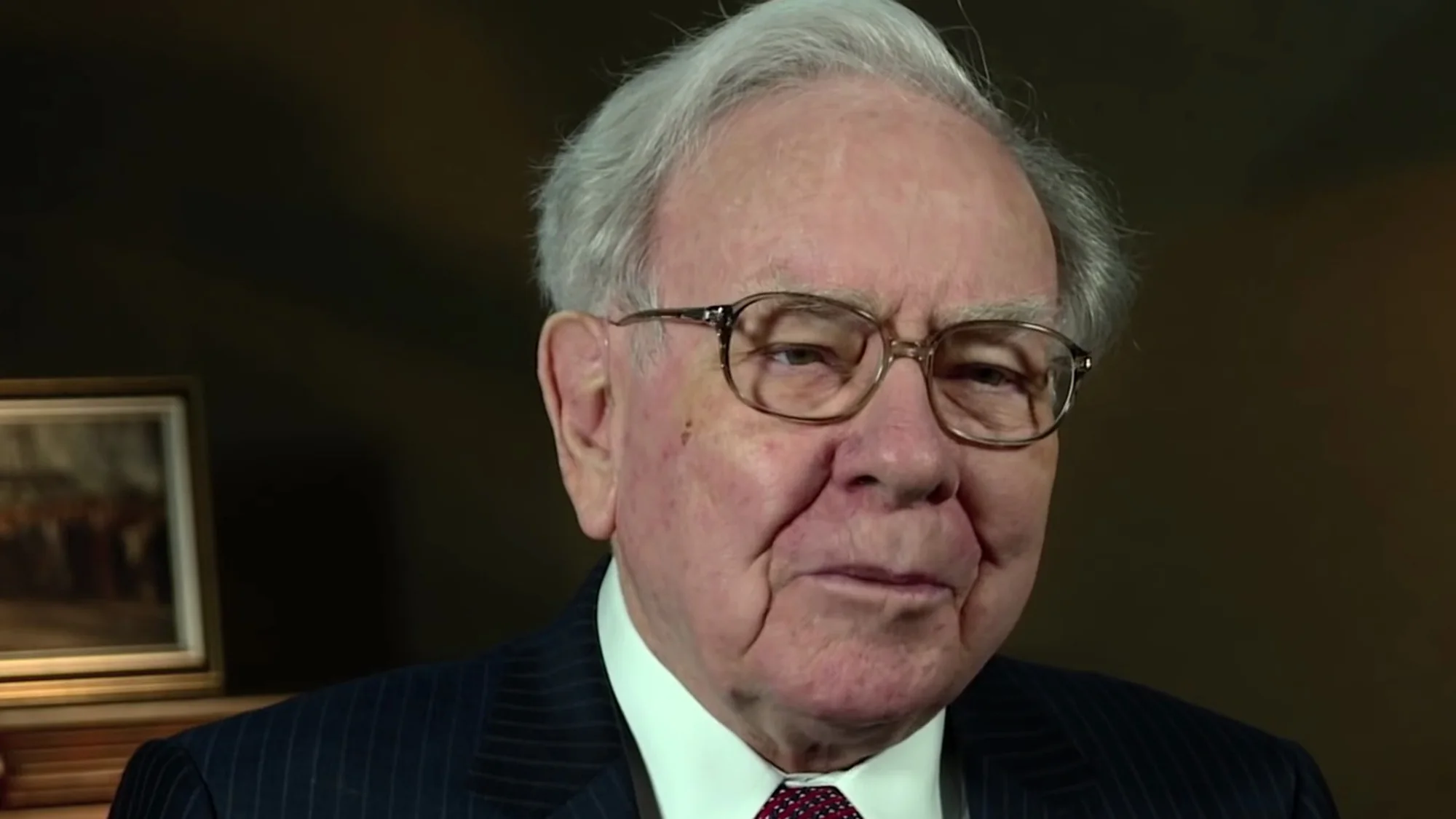
Stephen Schwarzman had, by NBC’s account, no notable connection to Oxford when he became the biggest donor in its modern history. The co-founder of Blackstone now has his name on the building where the university’s humanities faculties live together for the first time. The same building holds a theatre, a cinema, a library and an institute devoted to the ethics of artificial intelligence. Its full title is the Stephen A. Schwarzman Centre for the Humanities. Its own website settles for the Schwarzman Centre.
Oxford counts the gift in pounds. American newspapers converting it into dollars have landed tens of millions apart, so the cleaner comparison uses the figures the institutions announced themselves: sterling for Oxford, dollars for the Schwarzman Foundation’s gifts to Yale and MIT.
Oxford calls Schwarzman’s £185m its largest single gift in modern times
Oxford says the Centre was made possible by £185 million from Stephen A. Schwarzman, the largest single gift to the university in modern times. The headline figure in 2019 was £150 million. Cherwell, the student newspaper, describes donations totalling £185 million, among them a £150 million gift that the university called its biggest “since the Renaissance” (a comparison few fundraisers ever get to make). Oxford’s current pages use the larger number and leave the arithmetic between the two unexplained. The Schwarzman Foundation’s December 2025 release describes the £185m as funding the Centre, new performing arts and exhibition venues, and the Institute for Ethics in AI. One building, three purposes, one name.
Blackstone made the fortune, and Forbes put it at $42bn in October 2026
Forbes describes him as the son of a dry goods store owner who founded Blackstone with Peter Peterson in 1985. Blackstone is now the world’s largest alternative asset manager, with more than $1 trillion under management. Forbes put his real-time net worth at $42bn on 27 October 2026, ranked him No 23 on the 2026 Forbes 400 and placed him 52nd among the year’s billionaires in finance and investments. Real-time fortunes move with the share price, which is why the date matters as much as the figure. A billionaire’s net worth is less a sum than a reading, and readings change.
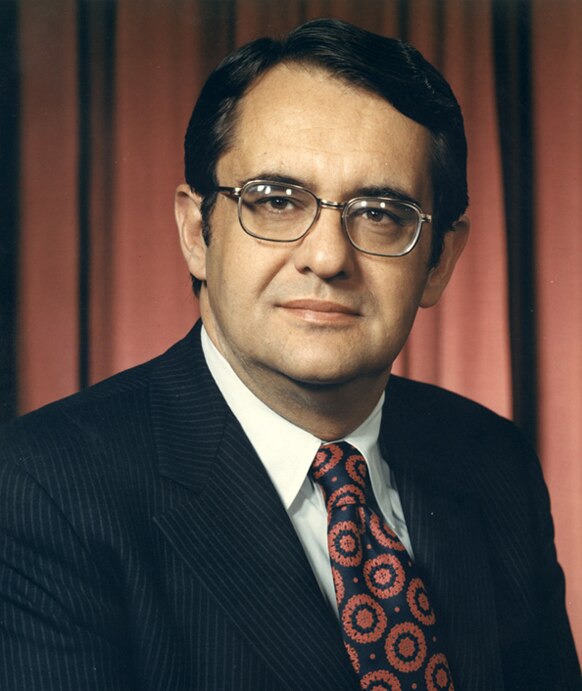
Louise Richardson asked, and a man with no Oxford ties said yes
The approach came from Oxford. In his conversation published by the Centre, Schwarzman says Dame Louise Richardson, then Vice-Chancellor, came to him with the idea of uniting the humanities departments in one place. NBC reported at the time that he had no notable connections to the university. His statement on the 2019 gift, as NBC carried it, made the case on Oxford’s own terms: close to a thousand years of humanities teaching, and its place at the centre of Western scholarship. Universities spend a great deal on alumni who already love them. Richardson found a donor who had not studied there, persuaded him all the same, and secured more than any Oxford graduate had given in modern memory.
Seven humanities faculties now share a building for the first time
The Centre brings seven faculties together for the first time: English, History, Linguistics, Philology and Phonetics, Medieval and Modern Languages, Music, Philosophy, and Theology and Religion. It also houses the Institute for Ethics in AI, created in 2019 as part of the original announcement, along with the Oxford Internet Institute and the new Bodleian Humanities Library. Putting the machine-ethicists in with the theologians may be the boldest piece of planning in the building. Philosophers and historians who spent generations disagreeing across the city now do it within a corridor of one another.
The 500-seat Sohmen Concert Hall is the world’s first Passivhaus concert hall
The cultural half of the building runs to a 500-seat concert hall, a 250-seat theatre, a cinema, a black-box performance lab, a white-box exhibition space and a recital hall, according to the Centre’s own account of itself. Oxford names the concert hall the Sohmen Concert Hall, which gives the main auditorium a different name from the building around it. BroadwayWorld reports it as the world’s first Passivhaus concert hall. The architects are Hopkins Architects. The building carries Schwarzman’s name, and the hall carries another.
Academics moved in on 13 October 2025 and the public followed on 25 April 2026
The building opened to the academic community on 13 October 2025, half a year before anyone else was let in. The public programme began with a free weekend on 25 and 26 April 2026, with ZooNation, Scottish Ensemble and Justice in Motion among the performers. Experience Oxfordshire records that the opening also gave the world premiere of 360 Vessels by Es Devlin and Nico Muhly, sung by the chamber choir Schola. The first themed season, “Unfinished Revolutions”, ran from May to June and took up the legacy of the 1776 Declaration of Independence. It was a pointed choice for a building named after an American, and a generous one, given who won. The Centre’s homepage lists exhibitions called “After Utopia” and “On Paradise”, and carries a news item, dated 10 July 2026, saying that His Majesty The King officially opened the Schwarzman Centre.
Yo-Yo Ma, De La Soul and Anoushka Shankar head the 2027 season
The programme is directed by John Fulljames, who praised the donation in remarks to AFP. The Cultural Fellows named at the opening include Refik Anadol, Lil Buck, Anna Clyne, Es Devlin, Rhiannon Giddens, Suzan-Lori Parks, Wayne McGregor, Nitin Sawhney, Anoushka Shankar and Edmund de Waal. That list reads like a well-connected dinner party, and the second season keeps the guest list going. Oxford announced the 2027 season on 9 October 2026, naming Yo-Yo Ma, De La Soul, Lia Kim, Anoushka Shankar, Wayne McGregor and Marshmallow Laser Feast. It runs from January to July 2027, according to Gramilano. Serenade Magazine lists Britten Sinfonia with Sir James MacMillan on 20 January. Gramilano has Shankar in the Sohmen Concert Hall on 16 and 17 June, and the Centre’s homepage lists Yo-Yo Ma on 2 May.
Leonard Blavatnik gave £75m in 2010 and Wafic Saïd’s business school opened in 2001
Schwarzman stands on a ladder other donors built first. The Blavatnik School of Government launched on 20 September 2010 with a £75 million commitment from Leonard Blavatnik, to which the university added £26 million and land in the Radcliffe Observatory Quarter. The Blavatnik Family Foundation calls it one of the most generous gifts in Oxford’s history. The Oxford Clarion reports that the Saïd Business School opened its doors in 2001 thanks to a £23 million benefaction from Wafic Saïd, who had given more than £70 million by 2014. Other accounts put Saïd’s founding gift at different sums. AFP describes the Schwarzman Centre as the newest example of an elite British university displaying a billionaire’s endowment, part of a run of mostly American and British mega-donors. At £185 million, Schwarzman’s gift is more than twice Blavatnik’s founding commitment.
Yale received $150m and MIT $350m before Oxford got its centre
Oxford was not his first university. The Schwarzman Foundation says it gave $150 million in 2015 for the Schwarzman Center at Yale and announced $350 million in October 2018 for the MIT Schwarzman College of Computing. Cherwell reports that he gave $100 million to Tsinghua University to build a scholarship programme modelled on the Rhodes. Yale, MIT and Oxford each now have a building or college bearing his name, and the gifts have tended to arrive in the hundreds of millions. AFP reports that Britain gave him an honorary knighthood in 2024 for his philanthropy. Because it is honorary, he is not styled “Sir Stephen”.
Critics objected in 2019, and their open letter passed 100 signatures
The gift had opponents from the start. Cherwell reported on 18 September 2019 that an open letter had been signed by 42 local people, students, staff and councillors. By 14 November, Cherwell put the count at more than 100 signatures, and a group calling itself Oxford Against Schwarzman had issued a new call to action. The signatories argued that the centre would be built on money made at the expense of vulnerable people around the world. Writing in Isis magazine, René Christian Moya of Housing Is A Human Right, himself a signatory, put the campaigners’ case that the donor was buying a share of Oxford’s prestige. The Oxford Blue describes Schwarzman as a long-time friend and ally of Donald Trump and a former chair of the president’s Strategic and Policy Forum. AFP noted that the era of very large donors has coincided with British government cuts to university funding. Oxford named the building after him all the same.
The building is now open to everyone. Since 25 April 2026 the public programme has run alongside the faculties’ teaching, and the 2027 season runs from January to July. Anyone who wants to see what Oxford’s largest modern gift made possible can book a seat in the Sohmen Concert Hall. Yo-Yo Ma plays there on 2 May.
Cover photograph via Wikimedia Commons.