


Petrochemicals, Hong Kong property, Samsung, supermarkets grown from a seed trade and a great deal of aluminium made Asia’s twenty richest clans richer in 2026, and the family at the top was the one that slipped.
The richest family in Asia spent the year getting fractionally poorer. Bloomberg’s April ranking kept the Ambanis of Reliance at the top for a second year, though their estimated fortune came in a shade below the 2025 figure. Meanwhile the twenty clans on the list grew to a collective $647bn. Bloomberg puts the rise down to artificial intelligence. The families behind companies from Samsung to Reliance are profiting from it, even as talk of a bubble grows louder in the same markets that are making them rich.
The families are unlikely to lose sleep over the word. A bubble, if that is what this is, inflates the shares they already own, and a ranking taken in April records a season rather than a settlement. Some of the names below have been building for a century. One has been at it for two generations.
How Bloomberg counts a family
Bloomberg counts families rather than individuals, and from the start it applied rules that kept some very large fortunes off the page. Its original edition left out first-generation money and fortunes held by a single heir. A self-made founder can therefore be among the richest people on the continent and still not appear. A fortune with one heir is, for Bloomberg’s purposes, a person rather than a family. The same early edition found no family from mainland China that qualified, and the rules have shifted since, as the Zhangs prove further down.
Forbes works the other way round. It prices individuals and revalues them every trading day, so its numbers and Bloomberg’s rarely agree. At the end of October, Al Jazeera put Mukesh Ambani’s personal fortune at about $80bn, a different measure taken on a different day from the family estimate below. The two methods answer different questions, one about a man’s holdings on a given afternoon and the other about what a clan holds together. Every figure that follows is a publisher’s estimate, not an audited sum.
The Ambanis stood still at the top
Dhirubhai Ambani founded Reliance in 1958 as a commodity-trading venture. That is a modest start for what is now India’s most valuable company. His son Mukesh, 69, inherited it and carried it far beyond its roots in textiles and petrochemicals, into telecoms with the launch of Jio in 2016 and, lately, into the infrastructure AI runs on. In February 2026 Reliance announced a seven-year plan to build data centres and other infrastructure across India.
Each of those turns has taken the group further from what Dhirubhai traded and closer to what the market is paying for. The data-centre plan is the latest, and it places Reliance squarely in the trade Bloomberg credits for this year’s gains across the list.
Bloomberg’s April list put the family at $89.7bn, more than any other Asian clan by a wide margin, and almost exactly where it stood the year before. Standing still at the top while everyone below climbs is a particular kind of comfort.
The more recent number belongs to Jio. In late October, Jio Platforms rose 21% on its first day of trading, which made it India’s second most valuable company after Reliance, Al Jazeera reported. The listing came months after Bloomberg’s count, so the April figure does not include it. A telecoms business launched in 2016 took a decade to sit behind only its own parent in the national rankings.
India’s two most valuable companies now come from the house Dhirubhai built.
The three Ambani heirs
Mukesh and his wife Nita, founder-chairperson of the Reliance Foundation, have three children. Akash and Isha were both 34 in early 2026, and Anant is the youngest son. In March 2024 Fortune reported that each of the three controls a different industry within the group. The division of the empire is publicly visible in the org chart, which is where Indian dynasties have learnt to keep it.
Giving each child a separate industry answers the succession question before anyone has to raise it at dinner. Each heir has a business to run, and the boundaries between them are drawn while their father is still chairman.
Mukesh’s younger brother, Anil Ambani, built a separate business, and his Reliance Communications filed for bankruptcy in 2019, according to Al Jazeera.
The Kwoks climbed to second
Kwok Tak-seng co-founded Sun Hung Kai in 1963 and turned it into one of Hong Kong’s great property companies. When he died in 1990, his sons Walter, Thomas and Raymond took over. Walter ran the company until 2008, when his mother, Kwong Siu-hing, replaced him as chairman. Thomas and Raymond later became co-chairmen, and Walter and the rest of the family settled their dispute in January 2014.
More than five years separated Walter’s removal from that settlement, a long time for a family to argue while its company kept trading. The business carried on through it, run by the brothers and their mother.
Walter died in October 2018. His shares passed to his sons through trusts, Bloomberg’s profile of the family records, citing filings. His son Geoffrey joined the board that December. The company later named Adam Kwok, Thomas’s son, and Edward Kwok, Raymond’s son, as alternate directors. The trusts kept Walter’s line inside the company, and the appointments gave the third generation a seat for each branch.
Bloomberg put the Kwoks at $50.2bn in April, well up on 2025 and enough to overtake Thailand’s Chearavanonts, who had sat above them a year earlier. The family that once fought in public over who would run the business has turned out to be very good at keeping it.
The Lees doubled in a year
Lee Byung-chull started Samsung in 1938 as a trading company, the same modest beginning as Reliance. His son Lee Kun-hee made it a global electronics business and died in October 2020, when Bloomberg warned that the inheritance tax bill could dent the family’s fortune. Dynasties tend to survive their death duties. What matters is how long the recovery takes.
For the Lees it took a few years. Lee Jae-yong, Kun-hee’s son, is chairman of Samsung Electronics, and Bloomberg’s 2026 write-up credits him with driving the company’s push into AI and robotics. The April list put the family at $45.5bn, roughly double its 2025 estimate, which lifted the Lees into third place.
Of the leading families, the Lees make the plainest case for Bloomberg’s explanation of the year: an electronics dynasty whose chairman pointed the company at AI just as the market decided to pay for it. The third generation inherited the tax bill and the company together, and has so far kept both in hand.
The Chearavanonts, a century in
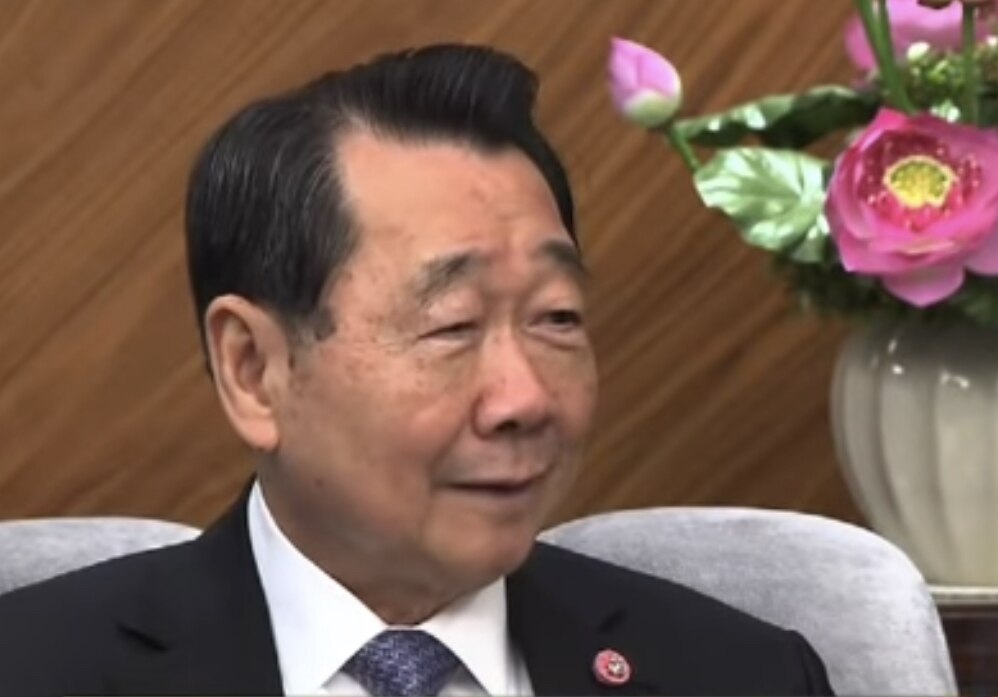
Chia Ek Chor came to Thailand from southern China in 1921 and began by trading seeds and produce. A century later, Charoen Pokphand is one of Asia’s largest conglomerates, and the family behind it is now in its fourth generation. That makes the Chearavanonts the oldest dynasty in the top five, where most families are in their third. Dhanin Chearavanont is CP Group’s senior chairman.
Like the Ambanis and the Lees, the family began in trade. Three of the five richest dynasties in Asia started by buying and selling other people’s goods, in Gujarat-born Bombay commerce, in Korea and in Thailand, before any of them made anything at all.
The seed trade now runs supermarkets. In February 2026, CP Axtra, the family’s retail arm, announced plans to add 110 stores across Thailand, Malaysia and the Philippines, VnExpress reported. The plan carries the family’s shop fronts into three countries in a single announcement. Bloomberg placed the family fourth in April, at $44.8bn, VnExpress reported, two places lower than on Bloomberg’s 2025 figures, after the Kwoks and the Lees moved past.
The Chearavanonts are not the only Thai family on the list. Money & Banking counts three: the Chearavanonts, the Yoovidhyas and the Chirathivats. For a country of Thailand’s size, that is a heavy share of Asia’s dynastic money.
The Zhangs, the first mainland family
The Zhangs of China Hongqiao Group made their money in aluminium, and they are only in their second generation. That makes them the youngest dynasty in the top five, according to VnExpress. Bloomberg put them fifth in April, at $44.7bn, a whisker behind the Chearavanonts.
Aluminium is a plain metal to build a dynasty on, and in the top five it keeps company with petrochemicals, property, electronics and food. The gap between the Zhangs and the family above them is narrow enough that a single week’s trading could reverse it.
Their presence is the clearest sign of how the ranking has changed. When Bloomberg first compiled it, no mainland Chinese family qualified, and its methodology has evolved since.
Next year’s list
On Bloomberg’s 2026 ranking, the Ambanis are the richest family in Asia, and their lead over the Kwoks is wide enough that a single good year in Hong Kong property would not close it. Below them the order is far less settled. The Lees doubled in a year, the Chearavanonts slipped two places without doing anything wrong, and the Zhangs sit close enough to fourth to swap places on a decent quarter.
The next edition has no fixed date. The 2025 list arrived in February and the 2026 one in April. Whenever it comes, it will be the first to price the Jio listing, and in October Al Jazeera reported that the market valued Jio Platforms at $131.5bn.
Read Next: Rupert Family Net Worth in 2026, and Who Comes Next