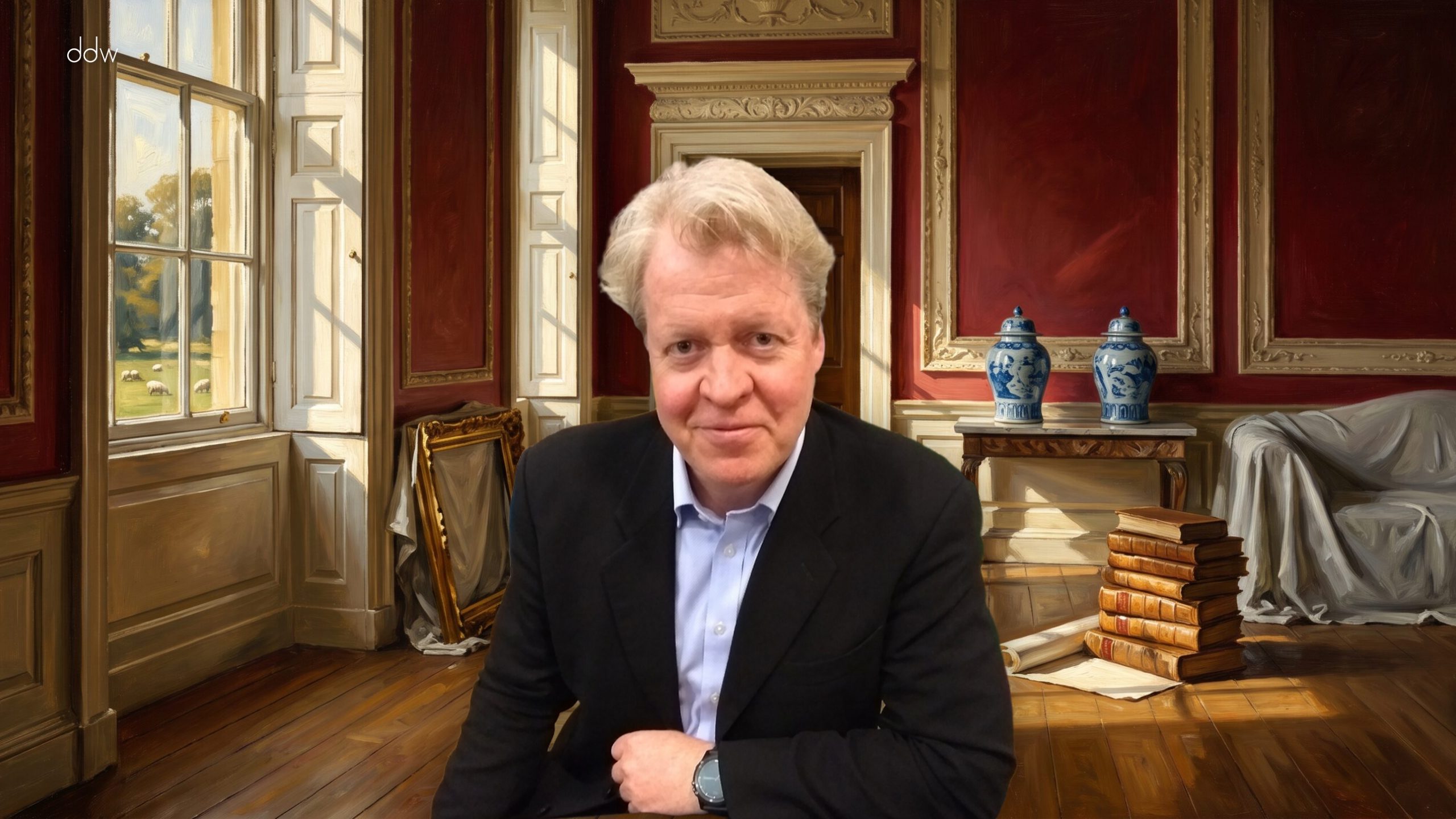


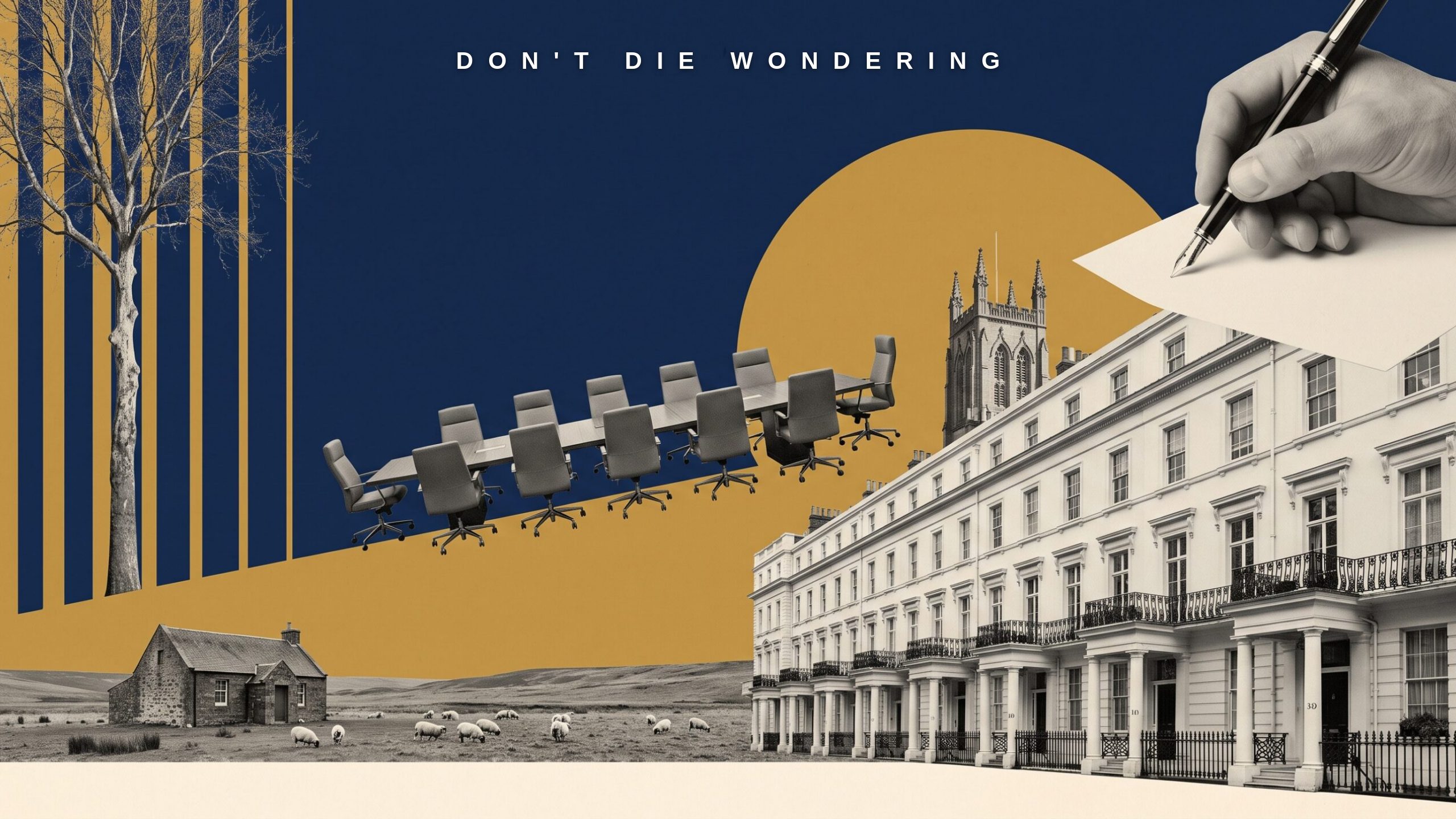
Hugh Grosvenor became the 7th Duke of Westminster at 25, chairman of 300 acres of Mayfair and Belgravia, godfather to two princes. What he did not become was the owner.
“Alongside my fellow Trustees, I would like to thank the entire Grosvenor team for their ongoing support. Their work, detailed throughout this Review, has resulted in shared successes that we can all take great pride in.” Signed “The Duke of Westminster, Chair of Grosvenor Trustees”, Grosvenor’s 2024 Annual Review, dated 18 March 2025.
The headlines handed a 25-year-old £9 billion. In the paperwork he got a chairmanship, a beneficial interest and a dukedom, which is a different kind of windfall entirely. Fellow Trustees is the operative phrase, and it is his own.
What passed when the 6th Duke died, and what stayed where it was?
Gerald Grosvenor, 6th Duke of Westminster, died on 9 August 2016 after a heart attack, at his Abbeystead estate in the north of England, aged 64. His only son, Hugh, born 29 January 1991, became the 7th Duke that day. His sisters, Lady Tamara van Cutsem, Lady Edwina Snow and Lady Viola Roberts, did not.
The Gazette’s wills and probate coverage put the estate at £9 billion and explained the mechanics plainly: the majority of it was held through a series of trusts, so the standard 40 per cent rate of inheritance tax did not apply on the Duke’s death. Land that is already inside a trust does not pass at a death. It simply carries on where it sat the day before.
As for what the 6th Duke did own personally, Grosvenor’s own position is on the record: the personal assets he left to his widow, Natalia, now Dowager Duchess of Westminster, were exempt from inheritance tax in exactly the way they would have been for any other UK married couple. That is the spouse exemption, available to a bricklayer in Birkenhead on identical terms.
Who legally owns Mayfair, then?
The trustees do. Grosvenor’s own description of them is unambiguous: chaired by the Duke of Westminster, they are responsible for long-term stewardship, and they act as legal owners of a series of UK resident trusts whose beneficiaries are both current and future members of the Grosvenor family.
The 2024 financial statements for Grosvenor Group Limited, company number 12656651, approved on 18 March 2025, list a board of nine: Michael McLintock as chairman, the Duke of Westminster, Jonathon Bond, Robert Davis, Magnus Goodlad, William Kendall, Mark Preston, Dame Fiona Reynolds and Alexander Scott. The non-executive directors are described in the accounts as representing the shareholders as trustees of the Grosvenor Trusts.
Goodlad joined with effect from January 2025 and also sits on the Group Investment Committee, bringing, per the Annual Review, finance, private equity and venture capital, technology, renewable energy, intellectual property, law and philanthropy. One man, seven disciplines. The Duke, in this room, has one vote and the chair.
Why wasn’t there a forty per cent bill?
Because there was nothing at the moment of death for the 40 per cent to bite on, beyond the personal assets covered by the spouse exemption. MoneyWeek ran the story under the headline “How the Duke of Westminster dodged IHT”; the solicitors’ firm Bates titled its note “Trust enabled Duke of Westminster to avoid billions in tax”. Grosvenor’s own answer to all of it sits on its tax policy page, which states that family members are all UK resident and pay UK taxes in the same way as the rest of the UK population, while being entitled to the same exemptions.
Trusts are not a tax-free zone, which is where the ten-yearly periodic charge comes in. MoneyWeek’s analysis was that the bulk of the Westminster billions would be liable only to a periodic charge paid every ten years and amounting to no more than about 6 per cent. Grosvenor’s own tax policy page does not address the periodic charge, and no on-record Grosvenor statement confirms the rate or the payment history. Readers should treat the 6 per cent as MoneyWeek’s reading rather than a disclosed number.
The same Grosvenor page volunteers one detail most estates would keep quiet about: alongside the main UK trusts there are two small non-UK resident trusts, set up more than 55 years ago to acquire some non-UK assets, holding less than 1 per cent of the value of Grosvenor’s assets. No family member, the page says, has received any benefit from them.
What do the trusts actually own through Grosvenor Group?
Three hundred acres of Belgravia and Mayfair, for a start, plus an international property business and rural estates. Everything descends from the 500 acres of London land Sir Thomas Grosvenor came into on marrying the heiress Mary Davies in 1677.
For 2024, Grosvenor reported underlying profit, meaning the net operating result from recurring revenues after costs, of £86.4m, up 16.5 per cent on the previous year’s £74.1m, driven by rental growth, completed developments and cost savings. It also recorded £3.1m of investment in support of philanthropic initiatives. Mark Preston, the chief executive and an executive trustee, framed the year against mediocre global growth and rising geopolitical tensions, and called the results strong.
The most recent set on Grosvenor’s annual review page is cooler: revenue profit of £70.5m against £82.1m, a total return of 0.9 per cent against 3.4 per cent, and rural estates net profit of £33.5m against £3.7m, on rural estates with a gross value of £411.2m, up from £379.8m. A farm portfolio out-earning the headline property return, in the year the property return nearly flatlined.
What the beneficiaries themselves draw in a given year is another matter. No serious outlet has put a figure on it.
How much is the fortune, and who is saying so?
Depends who you ask, and when. The Sunday Times Rich List 2025 put the Duke and the Grosvenor family at £9.884bn, second in the North West behind Sir Jim Ratcliffe at £17.046bn, 14th nationally, and the richest person under 40 in the country. That was a fall of £243m on the 2024 list, which had them at £10.127bn. Over the same stretch the family sold a stake in one of their Mayfair portfolios to Norwegian investors.
Bloomberg’s Billionaires Index runs a different number on a different basis, putting his net worth at $13.0bn and noting controlled assets valued at £9.5bn, or $12.8 billion, on 31 December 2025. Bloomberg credits the entire fortune to him alone, and explains why: the Grosvenor Estate is subject to a 1933 Act of Parliament, the Grosvenor Estate Act, which it says effectively restricts inheritance to the male line, according to UK legal professionals. That attribution is Bloomberg’s, to unnamed lawyers, and nobody else has put their name to it.
What happens when Lady Cosima grows up?
The Duke married Olivia Henson at Chester Cathedral on 7 June 2024. Their first child, Lady Cosima Florence Grosvenor, was born on 27 July 2025. The dukedom itself follows the male line; the trusts, by Grosvenor’s own wording, hold for current and future members of the family, which is a wider net than a title.
He is godfather to Prince George and to Prince Archie, which is the part of the story that travels fastest and explains the least.
Everything else is a document. On the review he signed in March 2025, the line printed beneath his name is not Duke, or owner, or proprietor of Mayfair. It reads Chair of Grosvenor Trustees.