Thailand’s crown property passed to its king by law, Brunei’s sultan has never been given a figure anyone will sign, and the most carefully counted monarch alive turns out not to be a billionaire.
A king’s money comes in three layers: what he owns, what comes with the throne, and what the state pays to keep the throne running. Most rankings of the richest royals add the three together, then include a few people who no longer reign, and print the total as if it were a bank balance. The order below admits reigning monarchs only and keeps personal wealth apart from crown and state property. Each monarch is placed by the largest figure that can be traced to someone willing to stand behind it. Where nobody has put a name to a number, he is placed by what he controls.
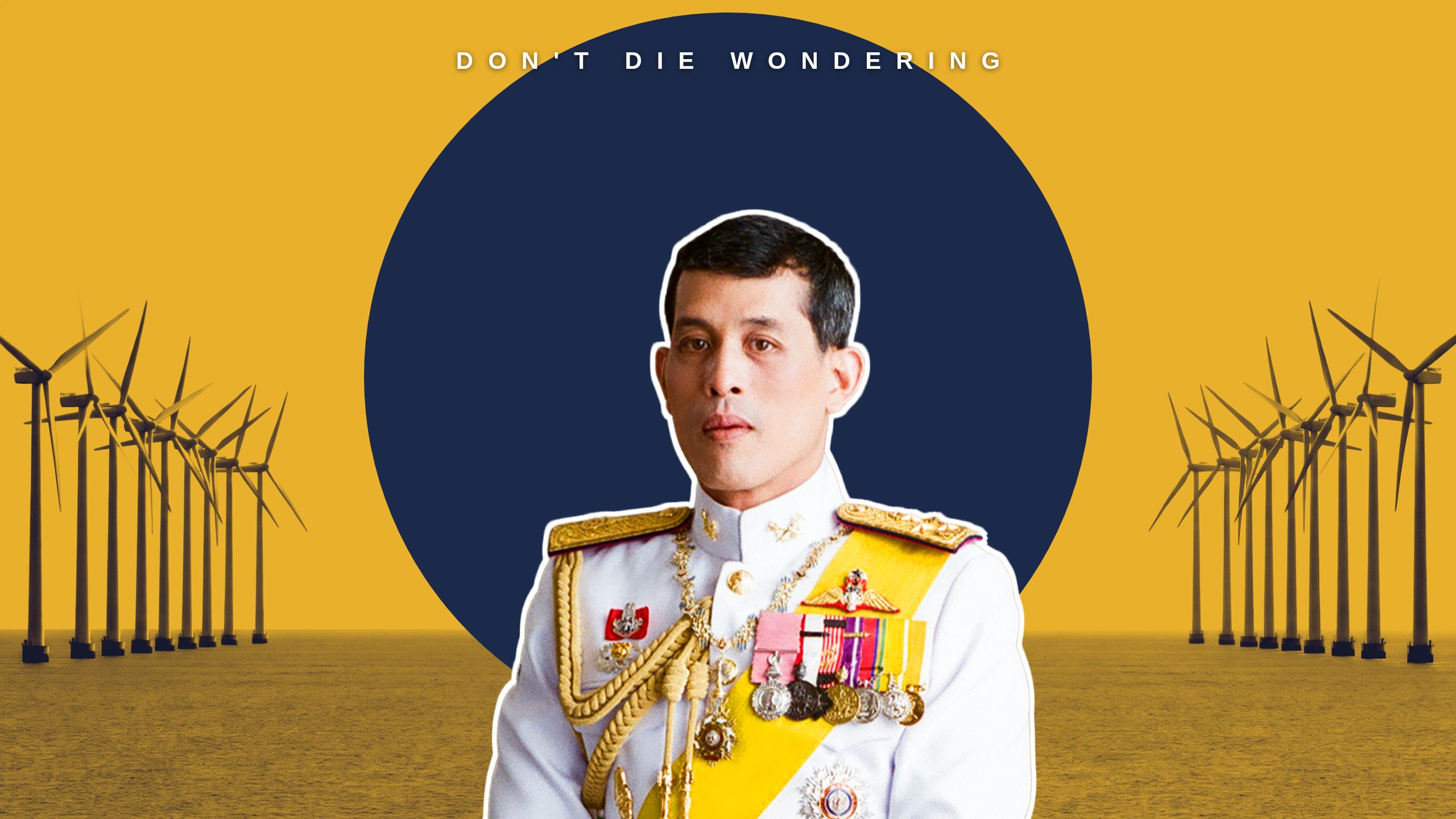
King Maha Vajiralongkorn of Thailand heads the list because the crown’s holdings passed to him
Every other monarch here keeps some distance between himself and his crown. Thailand closed it. King Bhumibol died in October 2016 and his son succeeded him. In 2017 the military government amended the royal property law for the first time in sixty-nine years, giving the new king full control of the Crown Property Bureau. In June 2018 the bureau announced that full ownership of the palace’s assets had been handed to him under that law. The bureau is the kingdom’s great royal landlord and shareholder, with leases across Bangkok and the provinces, and that transfer is why the King of Thailand tops any ranking that counts legal title. What it all comes to is harder to say. The Thai monarchy does not publicly declare its wealth and is shielded from scrutiny by a lèse-majesté law, so there is no official figure. The range most often repeated, $30bn to $60bn, is an analysts’ estimate from 2018 with no single named author. The tidier numbers on this year’s lists settle anywhere from the low thirties to the low fifties of billions, and none of them says where it came from. The width of the range is the most accurate thing about it. Nobody outside the palace can say how far ahead he is.
Sultan Hassanal Bolkiah of Brunei presides over an oil state whose money is easily mistaken for his
The Sultan has reigned since 1967 and is also the country’s prime minister, which leaves very little daylight between the throne and the government. Brunei’s oil and gas wealth is managed through the Brunei Investment Agency, a state body. The state publishes no detailed account of the Sultan’s personal finances. Every figure ever printed about him sits between those two facts. Lists of the richest royals place him across a range in which the top is double the bottom, and none of them names the source of its number. The usual approach is to put a price on the country and give the bill to the man, which is good arithmetic and bad manners. The agency’s holdings belong to Brunei. What belongs to the Sultan personally has never been set out by anyone prepared to sign it. He sits second on the scale of what he presides over. On what he owns, the only precise answer is that nobody has published one.
Prince Hans-Adam II of Liechtenstein is still valued by a number from another decade
A sovereign prince is a monarch in every sense that matters to a ranking, whatever the coronet on the writing paper, and the Prince of Liechtenstein belongs here on that footing. The figure still repeated for him, $3.5bn, is an estimate made in 2011. Later numbers circulate that roughly double it, and they arrive with no source at all. This is what usually happens to a fortune once the last careful look at it grows old. Nobody revises it; each new list simply copies the last and adds to it. The figure that has a pedigree describes the Prince’s position fifteen years ago, when he was comfortably a billionaire. Anything higher is a guess that has been repeated often enough to look like a fact. The sensible reading is that he ranks above Britain’s King on the only reckoning anyone has bothered to stand behind, and that the reckoning badly needs redoing. The other sensible reading is that the princely house has given nobody a reason to redo it. In Vaduz, discretion is the family business.
King Charles III has the most closely counted fortune of any monarch, and it stops well short of a billion
Britain’s King has something no other monarch on this list has: an annual valuation by a newspaper that checks its working. The Sunday Times Rich List 2026, published in May, put his personal wealth at £680m, up on the previous year. That places him 230th in his own kingdom. The figure is modest because of what it leaves out. In its 2025 list the Sunday Times excluded both the Crown Estate and the Duchy of Lancaster, on the grounds that the two estates come with the job and that rules limit a monarch’s ability to sell them or profit from them. Many of the assets associated with the monarchy are held in trust or belong to the crown. The King’s private income comes chiefly from the profits of the Duchy of Lancaster, with personal investments and assets on top, so the estate that pays him is not counted as his. A billionaire is a man who could sell what he has. Every list that calls King Charles one has counted things he cannot sell.
The Crown Estate belongs to the crown, and the Sovereign Grant is not the King’s pay
Since 1760, as the Royal Household’s own paper on royal finances sets out, each monarch has surrendered the entire revenues of the Crown Estate to the government in exchange for an annual grant from public funds. The estate is very large. Its revenue account profit for 2024–25 was £1,149m, according to the Royal Trustees, a single year’s profit greater than the Sunday Times’s valuation of the King himself. The grant is pegged to that profit two years in arrears. When the Royal Trustees reviewed it in July 2023, they cut the share from 25 per cent to 12 per cent because offshore wind was expected to swell the estate’s earnings. The British monarchy’s budget now rises and falls with the leases on wind farms out at sea. The Royal Household’s summary shows the grant reaching £137.9m for 2026–27. It is public money for the institution, paid in return for revenues the King hands over. Treating it as his salary is the most common mistake in royal arithmetic, and the Royal Trustees have never made it.
King Salman, Emir Tamim and King Mohammed VI appear on every list with numbers that refuse to agree
The kings of Saudi Arabia and Morocco and the Emir of Qatar all reign, and all appear on every list of the richest royals. None of them has a figure that carries a named source. The lists do not even agree with one another. One 2026 list gives the Emir of Qatar little more than half what another gives him. The same lists differ over the King of Thailand by more than twenty billion dollars. One of them credits King Charles with over twice what another does, and both are well above what the Sunday Times found. In Saudi Arabia, as in Brunei, a monarch’s personal wealth is constantly confused with the state’s, and a list that puts a price on King Salman has usually priced the kingdom. Albert II of Monaco turns up on the same lists with the same kind of unsourced number beside his name. The honest entry for each of these men gives his name and his country and leaves the column blank. In a ranking, an empty cell tells the reader more than a confident one.
Juan Carlos I, Henri of Luxembourg and the Gulf ruling families do not belong on a list of reigning monarchs
A list of reigning monarchs ought to start by checking who reigns. Juan Carlos I of Spain abdicated in 2014 and still appears on rich lists in 2026. Henri of Luxembourg turns up on a widely copied table with the note that he abdicated in 2025, which is an odd thing to print beside a ranking of current monarchs. A second error is to count a whole dynasty as one person. Some lists rank the Al Nahyan and Al Saud families as though each were a single monarch, when a dynasty’s fortune is spread across its members and the head of the house does not own it all. The ruler of Dubai, Sheikh Mohammed bin Rashid, raises a third question: he governs one emirate within the federation of the United Arab Emirates, and putting him alongside heads of state is a matter of opinion more than protocol. None of this makes those families less rich. It means they belong on a different list, under a different heading, with a different kind of figure.
The richest monarch in the world in 2026 is King Maha Vajiralongkorn of Thailand, because the Crown Property Bureau announced in 2018 that the palace’s assets had passed to him, even though no official figure exists for what they are worth. The best counted is King Charles, whom the Sunday Times values well short of a billion. He is not a billionaire.
Read Next: 9 Tests That Settle What Is an Aristocrat in 2026 and Who Still Counts
Cover photograph via Wikimedia Commons.