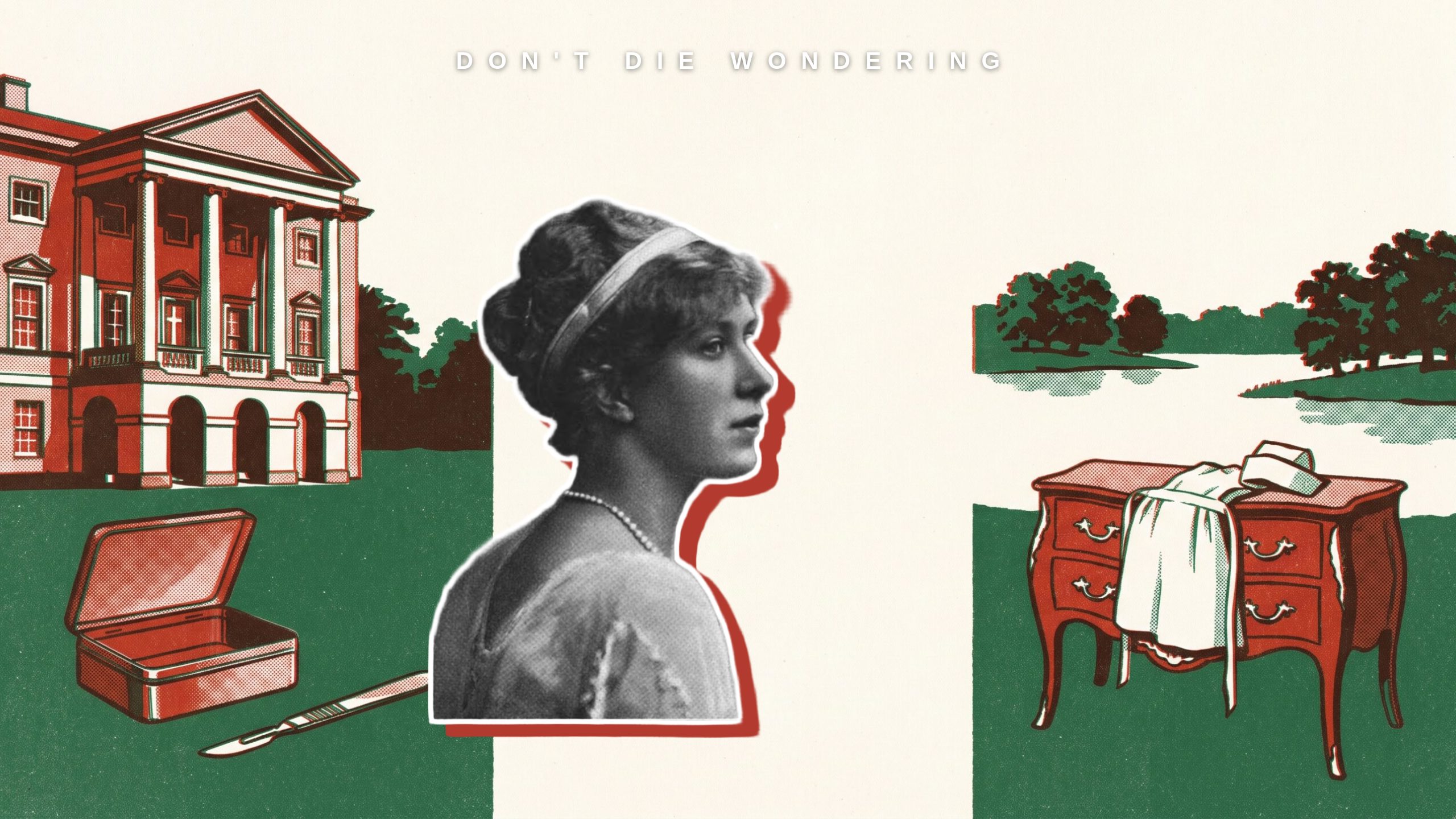


Roosevelt’s Justice Department wanted Andrew Mellon charged with tax fraud. A grand jury declined, a tax board cleared him of fraud after his death, and the paintings in dispute became the National Gallery.
Andrew Mellon was 65 and among the richest men in the world in the autumn of 1920, by Tevi Troy’s account. He then spent eleven years minding the nation’s money as well as his own, and his last four defending a single tax return against the government he had served. His fortune has never had a modern valuation anyone could defend. The inflation-adjusted lists disagree with one another by billions, and in his own lifetime he was never a billionaire. The seven points below follow the case in the order it happened.
Andrew Mellon ran the Treasury for three presidents before Roosevelt arrived
Mellon was Secretary of the Treasury from 1921 to 1932 under Harding, Coolidge and Hoover, a run the National Gallery of Art gives in its own history. Troy notes that he remains the only person to have led the Treasury under three different administrations. The money behind him came from Pittsburgh, through the companies the National Park Service lists as ones he helped found and fund: Alcoa, Carborundum, Koppers and Gulf Oil. A biography quoted on the Park Service page puts the book value of his fortune at $100 million in 1926, rising to about $105 million by 1928, with after-tax income well above $5 million a year. He was a famously quiet man with a very loud balance sheet. Washington noticed the balance sheet first.
The Roosevelt administration opened the Mellon inquiry within months of taking office
Roosevelt was inaugurated in March 1933, and Mellon resigned his ambassadorship in London the same month. Within months, Attorney General Homer Cummings said he would look into charges that Mellon had under-reported his income and underpaid his tax. Contemporary reporting described a long-standing personal feud between the two men, which did nothing to make the inquiry look disinterested. Mellon’s defenders have that on their side. His critics have a story of their own: as Treasury Secretary, Mellon had pursued Senator James Couzens, a millionaire Michigan Republican who had set up a Senate investigation of the Internal Revenue. Treasury charged Couzens an extra $11 million, and the Board of Tax Appeals threw it out. Congress had also passed a gift tax over Mellon’s objections, along with a “publicity amendment” allowing taxpayers’ names and the tax they paid to be made public. Both sides of this quarrel had read the same rulebook.
A Pittsburgh grand jury declined to indict Mellon
The government announced in March 1934 that a grand jury would be empanelled over alleged fraud on Mellon’s return, and the National Park Service record has it seated in Pittsburgh on 7 May 1934 to consider his 1931 income tax. The Department of Justice sought criminal charges, and the jury voted not to indict. Steinmetz’s account, as Andrew Keen summarises it, is that Roosevelt’s own Attorney General had already told him there was no case. Hillsdale College’s history of the episode says Robert Jackson, who led the government’s side, failed to convict Mellon but found favour with the president for trying. Mellon said publicly that the Treasury was “attempting to discredit me”. A man who had chaired the Treasury for eleven years was well placed to know what that looked like.
The civil case turned on stock sold to a bank run by his own family
Losing in front of the grand jury did not end anything. Mellon petitioned the Board of Tax Appeals, claiming he had overpaid $130,045 on his 1931 return. The reply revived the evasion charge, added a 50 per cent fraud penalty and demanded $3,075,103 in back taxes and penalties. The heart of the allegation was that in 1931 Mellon had “sold” large blocks of securities to Pittsburgh’s Union Trust Co., whose board included his late brother Richard B. Mellon and his nephews, in order to book a tax loss. On the docket it was case 76499, Andrew Mellon against the Commissioner of Internal Revenue, and the Treasury’s brief ran from those stock losses to a bank stock question and a third matter about charitable contributions. That third matter was a room full of Old Masters. It would become the most expensive footnote in American tax history.
Mellon offered his paintings to the nation while the case was still running
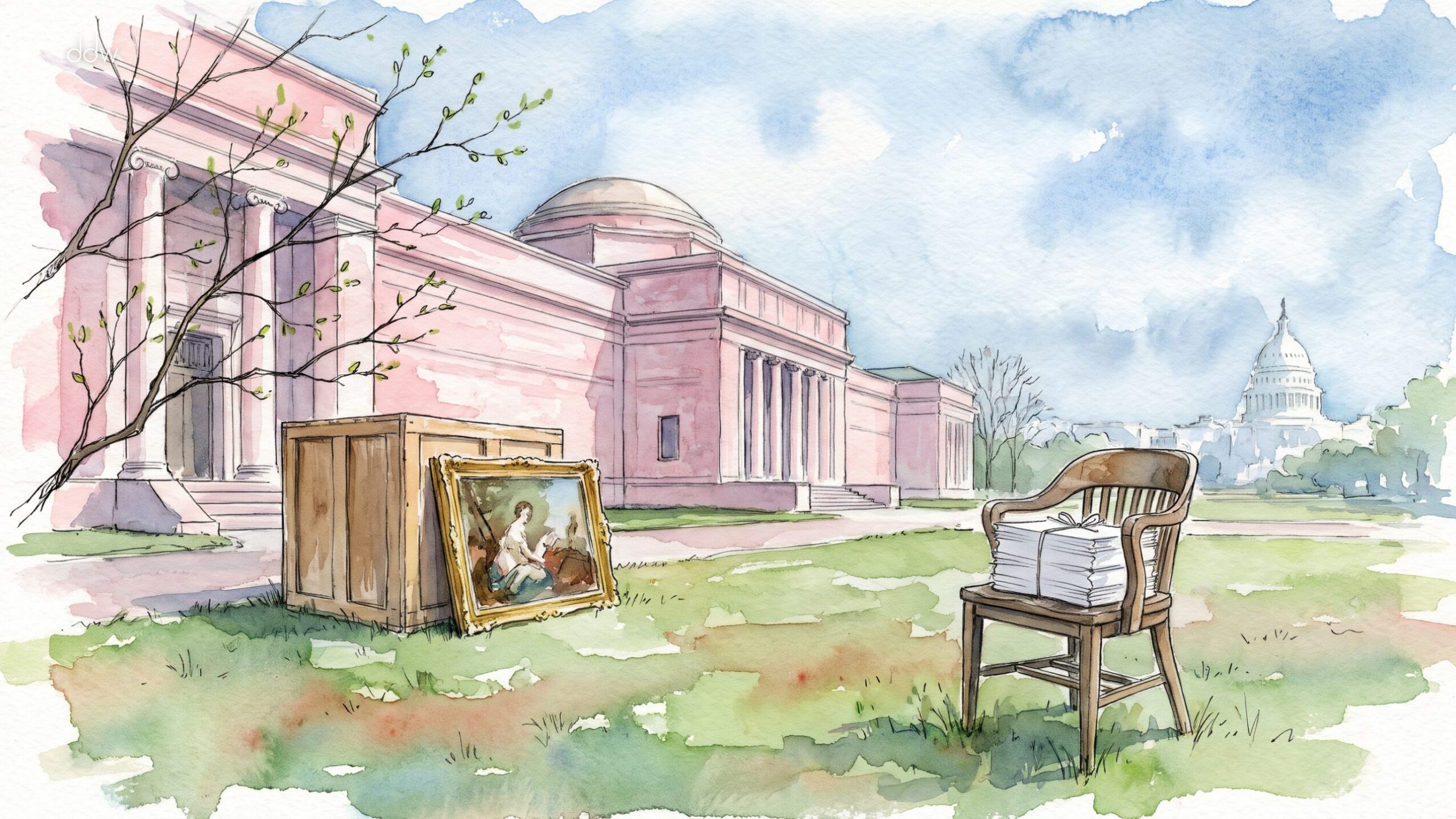
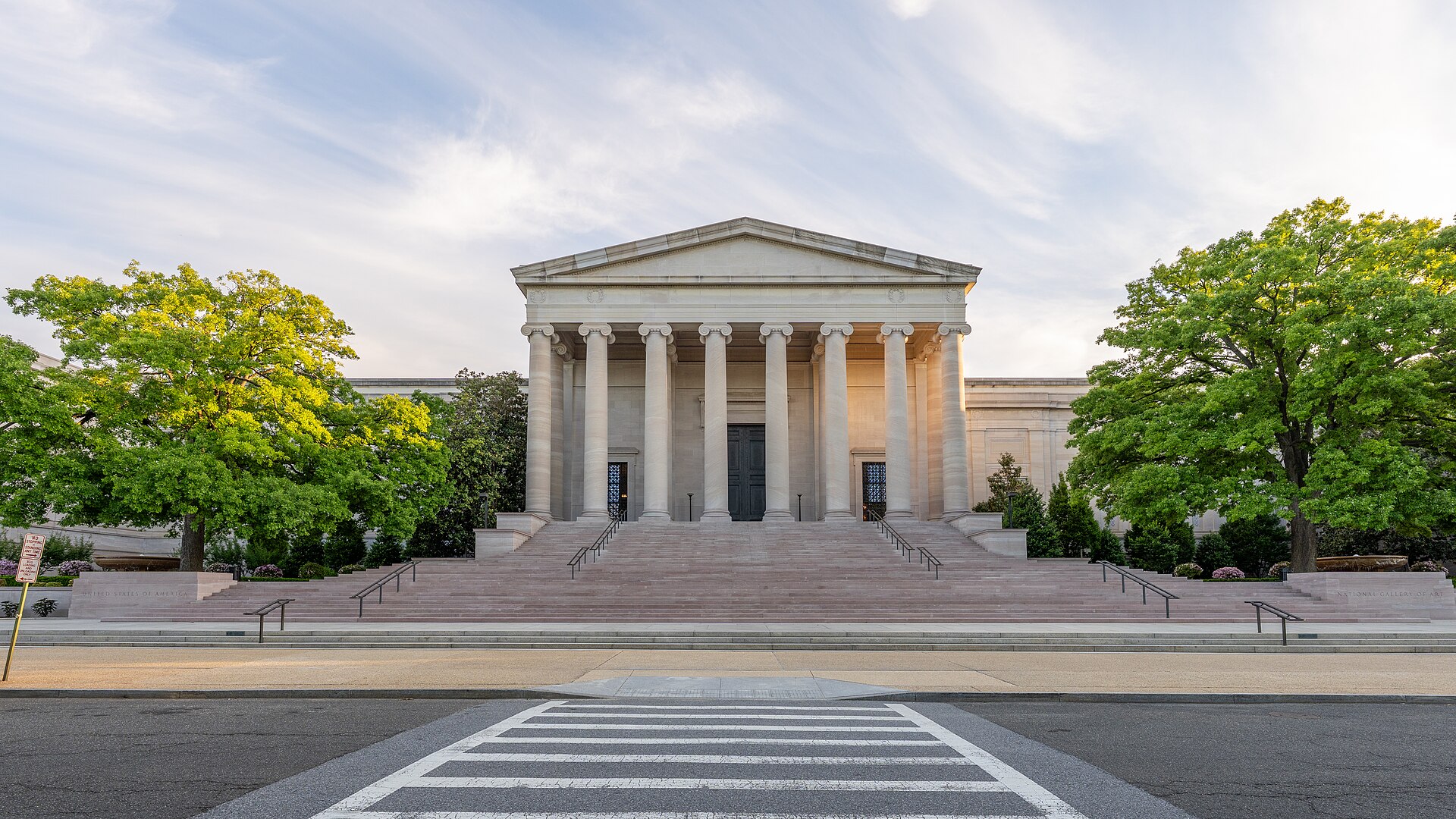
The contributions dispute concerned pictures Mellon had given to the AW Mellon Educational and Charitable Trust, which the Treasury did not consider a genuine charity. Steinmetz, in Keen’s summary, describes the alleged crime as a tax write-off on art donated to a foundation, something he says the rich do every day. In 1936, with the civil case unresolved, Mellon wrote to Roosevelt offering to build a national gallery and give it his collection; Roosevelt endorsed the offer and Congress accepted it by joint resolution on 24 March 1937. The nucleus was 126 paintings and 26 sculptures, and Mellon insisted that the building should not carry his name. It is tempting to read the gift as a way out, and the record will not support it. The National Gallery says Mellon came to want a national museum during his years in public office, and the dealer Joseph Duveen testified at the hearings that the gift had been long in the planning. A man buying his way out of a tax bill does not usually start shopping a decade early.
The Board of Tax Appeals cleared Mellon of fraud after he died
In May 1935 the proceedings moved from Pittsburgh to Washington, where they ran for three years before a fifteen-member board that changed its membership eight times and took 10,350 pages of testimony. Mellon’s legal fees came to $360,000, according to the National Park Service. He died in August 1937, aged 82. The board delivered its judgment on 7 December 1937, a little more than three months later. It found the record did not sustain the charge of fraud and accepted the trust holding his pictures as a valid organisation. “Exonerated” overstates it, all the same: the board ruled for Mellon on six disputed transactions and against him on three, and press reports at the time put his estate’s additional liability at about $600,000. The fair summary is cleared of fraud, short of a clean sheet. He was not present to enjoy either half.
Greg Steinmetz argues the prosecution was pure politics
The case returned to the bookshops in October 2026 with The President and the Oligarch: Roosevelt, Mellon, and the Triumph of Big Government, 368 pages from Simon & Schuster. Steinmetz covered investment banking for The Wall Street Journal before running its Berlin and London bureaux, and his earlier books dealt with Jacob Fugger and Jay Gould, so rich men in trouble are his patch. His publisher says Roosevelt targeted America’s third-richest man to prove his progressive credentials, and that ranking is a jacket line, not a measurement. Keen describes the book as a revisionist argument that the pursuit was pure politics, and Troy, reviewing it, calls the prosecution unjust. Steinmetz’s sharpest point, as Keen relays it, is that the paintings which triggered the case became the National Gallery, and Roosevelt took the credit. The case against him starts with the board’s findings: it still went against Mellon on three transactions, and Mellon’s own Treasury had treated Senator Couzens no more gently. Hillsdale notes that Roosevelt and his Treasury Secretary, Henry Morgenthau Jr., were old friends who met privately and often, and infers that the president directed or at least approved the audit. Nobody has produced the order itself, and that inference remains the weakest link in the argument against Roosevelt.
So did Roosevelt put Andrew Mellon in jail? No. Mellon was never indicted, never convicted and never imprisoned; the criminal case ended with a Pittsburgh grand jury in 1934, and the civil case ended in December 1937 with a finding of no fraud and a smaller bill for his estate. The gallery opened on 17 March 1941, when Paul Mellon presented it on his father’s behalf and Roosevelt accepted it for the American people. The collection has grown to more than 150,000 works. The name over the door is the nation’s, as Mellon asked.
Read Next: What We Know About Who Owns Dylan’s Candy Bar in 2026