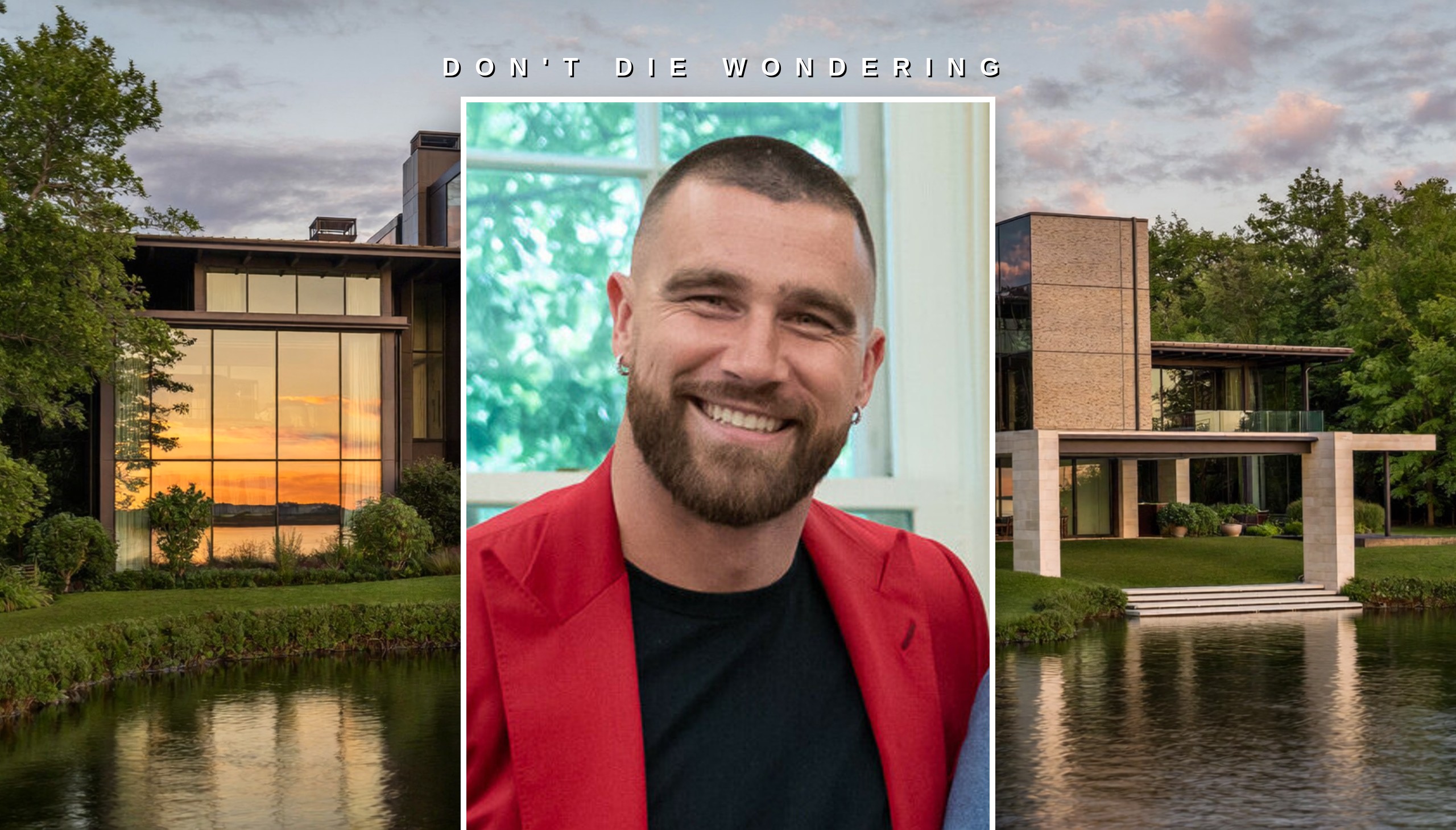



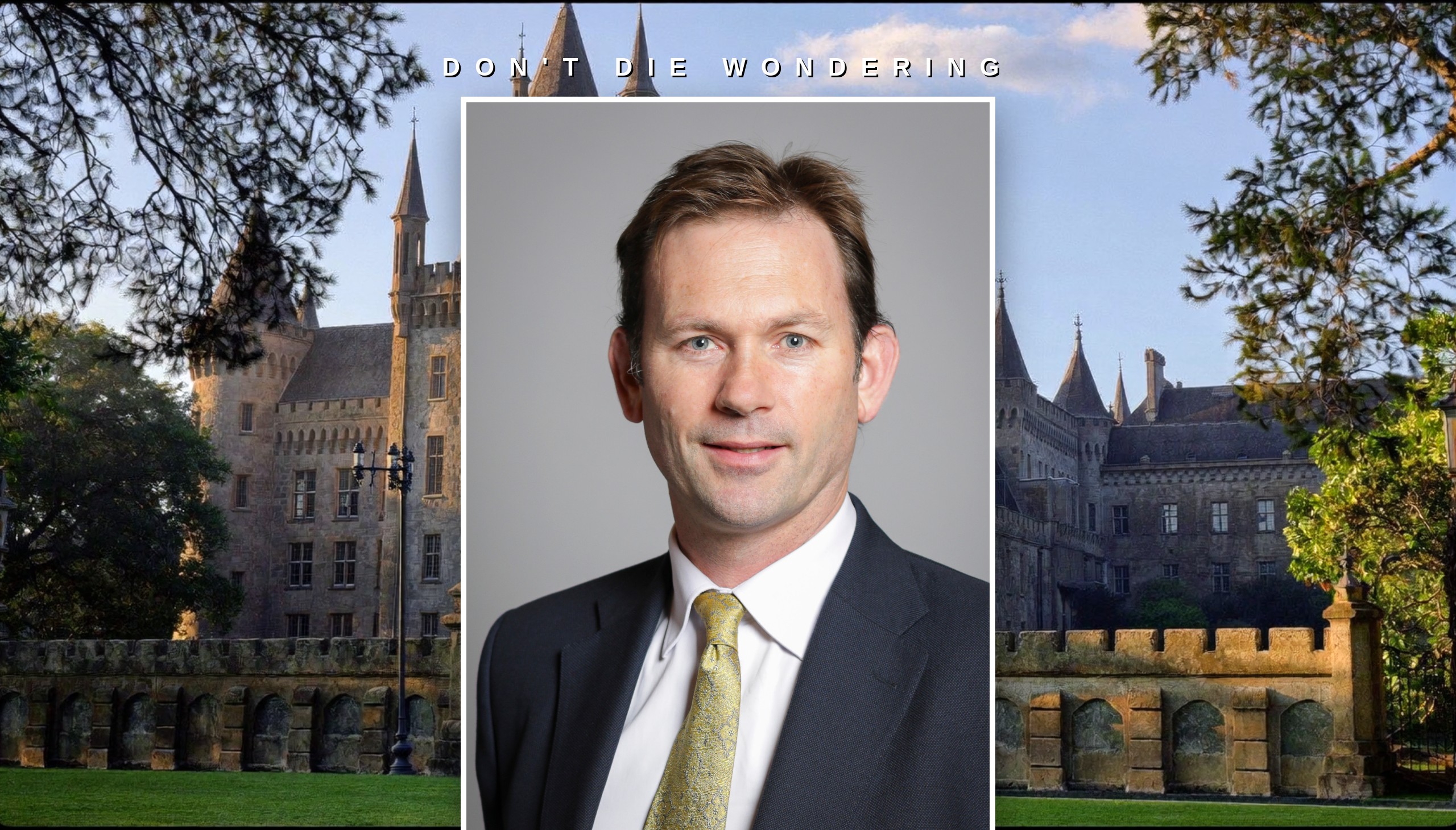
> “Unfair” and “inappropriate.” > The Earl of Devon, in 2026, on primogeniture and the order of succession to hereditary peerages.
He is a hereditary peer who spent his last years in the House of Lords arguing that the word “Lord” should be retired. The record of his positions has him calling the chamber itself “gendered” and “discriminatory” in 2025. A year later he went further and turned on the mechanism that produced him, saying the rules of succession to hereditary titles are unfair and inappropriate, and that daughters of peers should have what sons have.
According to the genealogical record kept by Peerage News, he has a daughter born on 31 January 2007 and a son born on 16 August 2009. The son is the heir.
Charles Peregrine Courtenay was born in Exeter on 14 August 1975. Eton, then St John’s College, Cambridge, then the Bar, where he practised as a barrister. From 1998 until 2015 he was styled Lord Courtenay, which is the courtesy version of a job you cannot apply for and cannot resign.
Four days after his fortieth birthday
His father, Hugh Courtenay, 18th Earl of Devon, died on 18 August 2015, aged 73. Charles had turned forty on the 14th.
What arrived with the condolences was Powderham Castle, a Grade I listed building on the Exe estuary, and the fifth creation of the earldom of Devon, established on 3 September 1553 by Mary I. He is its nineteenth holder. The land is harder to pin down than the title: Wikipedia has the estate at 3,500 acres, while the Daily Mail’s reporting during his divorce described 4,000, and no source resolves the gap. No net worth for the Earl or the Courtenay family has been published by anyone credible, and no valuation of the castle, its contents or its collection exists in the public record.
This is the reverse of how modern money works. Nobody knows what he is worth. Everybody knows exactly where he lives.
A casino in Las Vegas
In 2002 he met Allison Joy Langer at a casino in Las Vegas. She had been in My So-Called Life and The Wonder Years, had gone on to Baywatch, Escape From LA and Meet the Deedles, and was, on any reading, the more famous person at the table. They married in April 2004 at the castle outside Exeter. A daughter followed in 2007, a son and heir in 2009.
The divorce application, reported by the Daily Mail in November 2023, gave the date of separation as 30 September 2023 and cited irreconcilable differences. The couple’s statement put the wellbeing of their two children first. No financial terms were disclosed by any outlet, and none should be assumed. Even the finish line is contested: peerage records annotate the divorce as finalised in 2024, while Wikipedia’s infobox says 2026. Nobody has confirmed which is right, which tells you roughly how much appetite there is in Britain for the paperwork of an earl.
Eighteen years, one castle wedding, two children, one American actress who married into a 700-year address and left by the ordinary door.
£200,000 a year, and the licence that went with it
There is a piece of Powderham’s recent history that explains more about the house than any inventory would.
In 2008, according to LBC, Charles’s father refused to host a ceremony for two men at the castle, calling it “objectionable” to his Christian religion. Devon County Council revoked Powderham’s licence to host ceremonies. The family lost up to £200,000 a year in revenue, the single concrete figure that exists anywhere in the public record about how this estate earns its living.
So the son inherited a working stately home with a hole in its calendar, and then spent his parliamentary career arguing that the institutions he sits inside are discriminatory by design. Read the sequence twice and the man comes into focus. He is not renovating the family’s reputation. He is auditing it.
The case against his own seat
He was elected as a hereditary peer to the House of Lords in 2018, which meant standing in the smallest and strangest electorate in the country. He used the seat to argue against its furniture. On 29 April 2026 the seat itself was abolished under the Hereditary Peers Act, and he lost his position along with the rest of the hereditary membership.
Most people who campaign against an institution do not have to move out of it afterwards. He did not have to. The title survives the chamber, the castle survives the title, and the argument, by his own account, still stands: he wants equal opportunity for male and female descendants of peers, a reform that would, in his own household, promote the child born in 2007 over the child born in 2009.
Very few people volunteer to rewrite a rule that currently favours their own son.
Jemima Ensor of Elmwood House
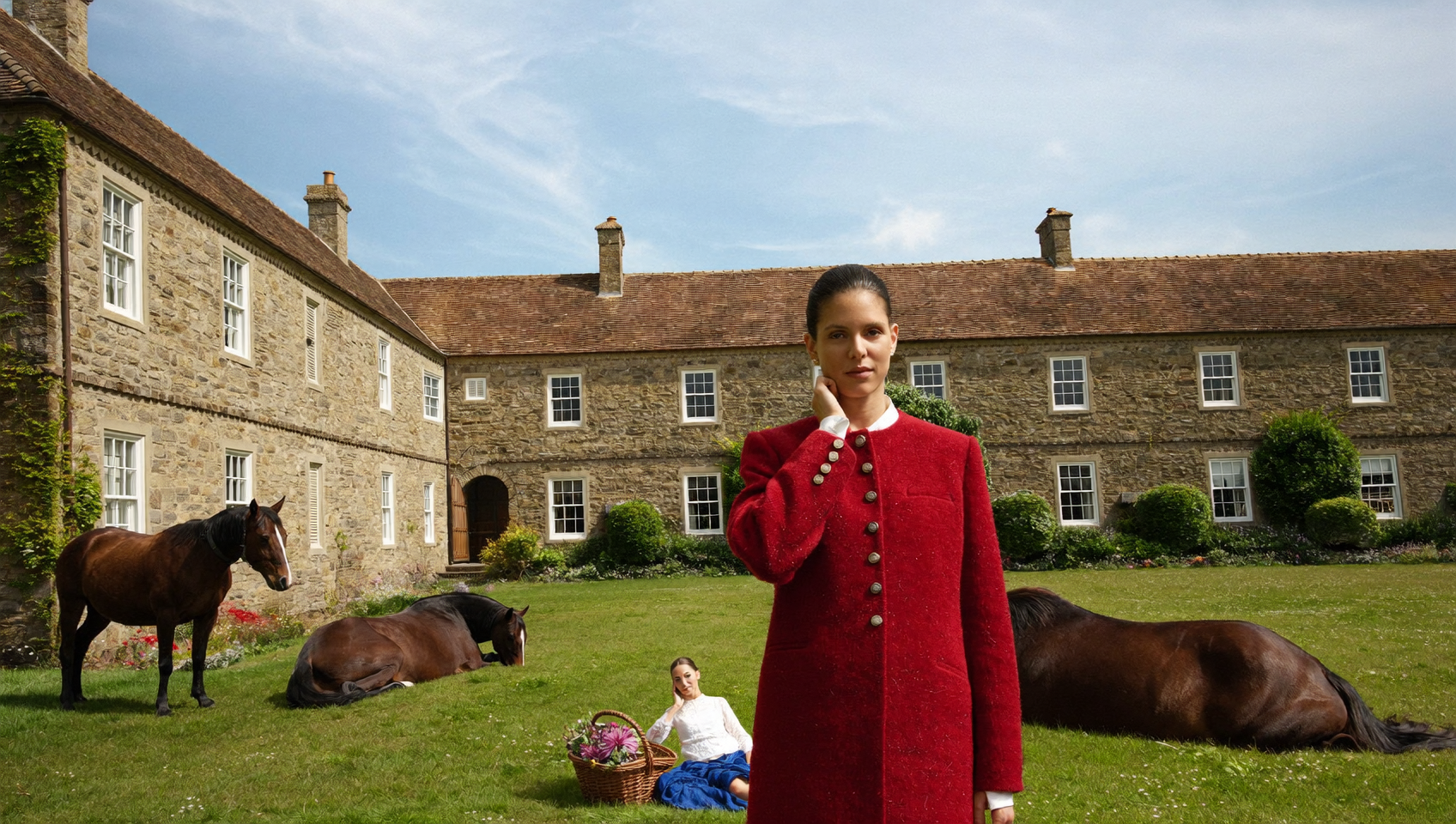
The engagement appeared, in the correct place and the correct font, in the Telegraph and The Times on 17 March 2026: the Earl of Devon, of Powderham Castle, Devon, and Mrs Jemima Hannon, of Elmwood House, Hampshire.
She was born in August 1982, the daughter of Peter Richard Ensor and the Hon Sarah Campbell. According to Peerage News, she married the racehorse trainer Richard Hannon on 4 September 2010 and has two children, born in 2012 and 2014. What she does for a living is, remarkably, still unsettled: the same genealogical source describes her as an equestrian, while a lower-tier aggregator has run her as an estate agent, and neither claim has been independently confirmed. In an era when a stranger’s employer is two clicks away, the new Countess of Devon has managed to arrive without a LinkedIn narrative.
The wedding followed in the summer of 2026, his second. The exact date has not been published, and whether the ceremony took place at Powderham itself has not been independently confirmed; the peerage records give only the season.
Consider what that means. The most photographed private house in Devon hosted, or did not host, one of the more interesting society weddings of the year, and the internet came away with a season and a surname.
What a dowry bought in 1325
Powderham did not arrive by conquest or purchase. In 1325, Margaret de Bohun married Hugh de Courtenay, Earl of Devon, and brought the Manor of Powderham with her as dowry. Her fifth son, Sir Philip, built the castle, and Country Life records that his leftmost tower and great hall went up in 1391. That fifth son founded the cadet branch which has lived on the same ground ever since.
Seven centuries of continuity, and the founding transaction was a woman’s property.
New fortunes buy permanence by other means. They do it through instruments, trusts and, in the case of Google’s co-founder, an unlisted family office quietly landing in Coconut Grove, where the buyer’s name is the last thing anyone finds. The Courtenay method is older and cheaper to maintain: stay put, marry well, keep the roof on, argue with Parliament.
The castle came in on a dowry. The earldom, by the rule the Earl himself calls unfair, goes to the boy born in 2009.