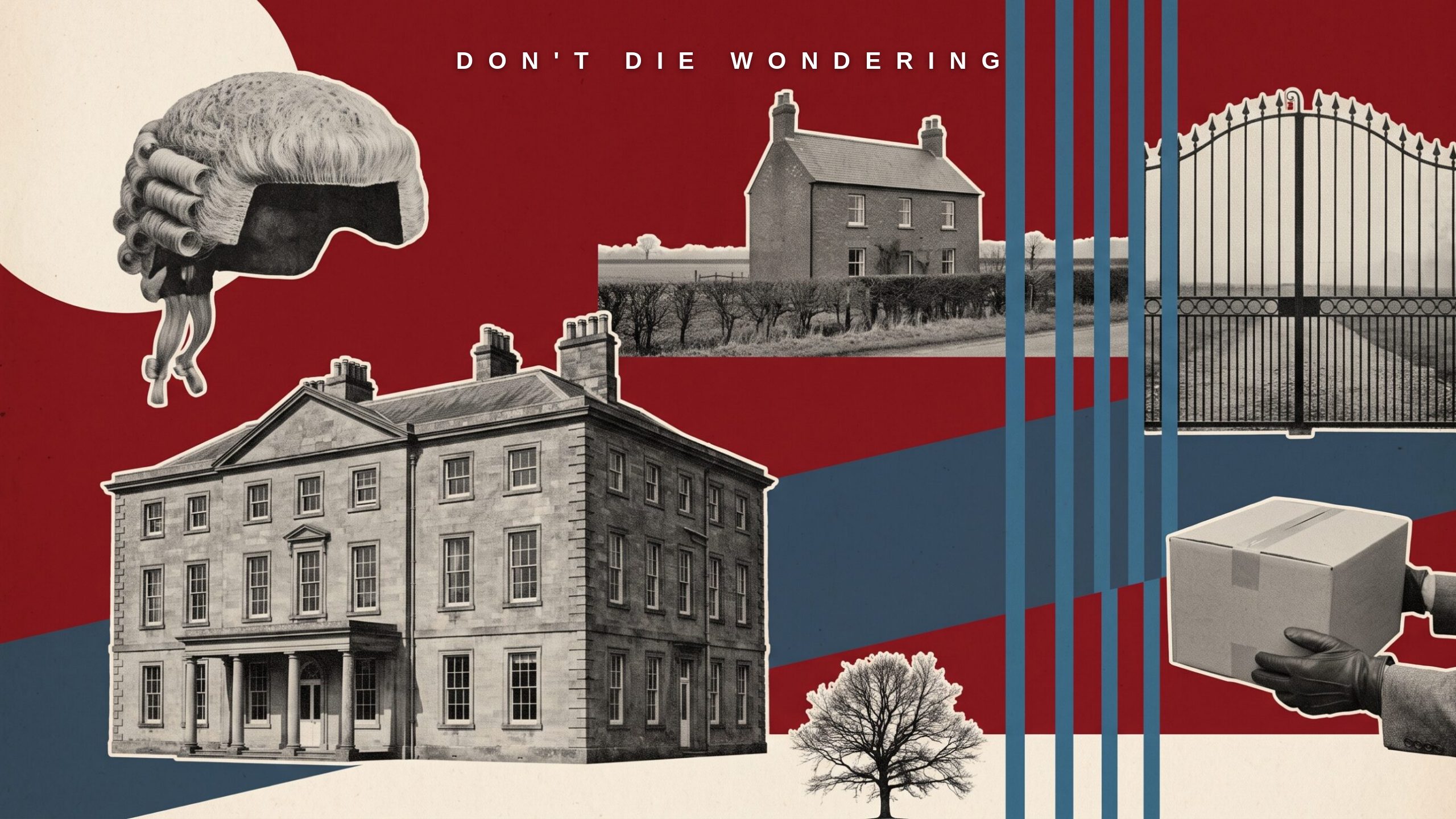



A charter from 1337, 135,000 acres across 23 counties, the Oval cricket ground and 67,000 acres of Dartmoor. The 25th Duke of Cornwall cannot sell a single field of it. He is paid the surplus.
William paid £7.76 million in income tax for 2024/25 on an estate that is not required to pay corporation tax at all.
£22.9m
That is the distributable surplus the Duchy of Cornwall recorded for the year to 31 March 2025, published on 30 June 2025 in its Integrated Impact Report. It was the second full year of William’s tenure as 25th Duke of Cornwall and the first of Will Bax’s as Secretary and Keeper of the Records.
Much of the coverage called it a salary, which it is not. The Duchy is a private estate and what it hands to the duke is a surplus: gross income less the costs of running 135,000 acres, with household expenses then deducted before anything reaches him. Global News noted that the size of those household deductions has never been itemised publicly, so the number that lands in the headlines is both externally audited and, in one respect, unexplained.
The run of numbers is worth having in order. Charles’s last full year as duke, 2022–23, produced a record £24.05 million, per Fortune, of which William’s part-year share was close to £6 million. His first full year, 2023–24, produced £23.6 million. Then came £22.9 million for the twelve months to March 2025. Three figures, trending gently down, covering the official, charitable and private costs of William, Catherine, George, Charlotte and Louis.
£7.76m
Charles began voluntarily paying income tax on the Duchy surplus in 1993 and announced the figure every year for three decades, which made the quiet that followed his accession conspicuous. William did not continue the habit. Fox News reported in July 2024 that he had declined to reveal what he paid for 2023–24, and the House of Commons Library records flatly that Kensington Palace initially did not share this information for the present Duke.
In June 2026 the position reversed. The Library’s briefing CBP-9807, published on 30 June 2026, records that Prince William had paid £7.76 million in income tax in 2024/25, and £8.34 million in 2023/24. That second figure covers the very year the palace had declined to discuss, which means the disclosure arrived late rather than not at all. The same briefing puts the King’s bill, drawn from the separate Duchy of Lancaster, at £12.9 million in income and capital gains tax for 2024/25.
Two years of William’s voluntary payments, then, come to £16.1 million. Nobody sent him an assessment for it.
£19.1m
The Public Accounts Committee has been through the mechanics before. Its 25th Report, on the Duchy accounts for 2012–13, recorded total income of £28.8 million and a surplus of £19.1 million paid to the then Duke of Cornwall, with no corporation tax payable on it. The committee’s conclusion was blunt: the Duchy “enjoys an exemption from paying tax even though it engages in a range of commercial activities”, which it thought might give an unfair advantage over competitors who pay corporation and capital gains tax, and it asked the Treasury to look at whether the playing field was level. That was Charles’s Duchy, a decade before William took it on, and the exemption under examination is the one William holds today.
William Nye, then the Prince of Wales’s principal private secretary, gave evidence to that inquiry in July 2013 and told the committee the Duchy does not pay capital gains tax because income relating to the Crown is technically exempt. The word “technically” is his, and he said it twice.
The Duchy’s own answer is on its website: the estate is not a corporation, so it is not subject to corporation tax, and if it paid corporation tax, “the Prince would effectively be taxed twice on the same income”. The Duchy is also exempt from capital gains tax, but its gains have to be reinvested in the business and cannot be distributed to the duke. There has never been a finding of impropriety here. There has been a parliamentary recommendation that the Treasury pay closer attention.
18,500 acres
Cornwall is the smaller half of the story. The Duchy’s own FAQ puts its land in the county at just over 18,500 acres, around 13 per cent of the overall estate. The rest is spread across 23 counties in England and Wales and includes, per Fortune, the Oval cricket ground and 67,000 acres of Dartmoor. The county that gives the dukedom its name supplies roughly an eighth of the ground; the other seven eighths do the heavier lifting.
What William holds is an interest in possession. He enjoys the net income, does not own the assets outright, and has no right to sell capital assets for his own benefit. He is a life tenant of a fortune he cannot liquidate, which is why the round numbers in circulation should be read carefully: the over-£1 billion estimate attributed to the Times is a press valuation of the estate’s capital, not a personal net worth disclosed by Kensington Palace. No official figure for his personal wealth has ever been published.
The Duchy’s accounts are laid before both Houses of Parliament so that Parliament can satisfy itself the Treasury is meeting its statutory responsibilities under the 1838 Act. The National Audit Office does not audit it. Independent external auditors do the work instead.
0.4%
The investment portfolio returned 0.4 per cent on capital in 2024–25, plus 1.8 per cent on income. A quiet year, reported without decoration in the annual accounts.
Meanwhile the Duchy put over £10 million of capital into its community development projects, including Nansledan in Cornwall and Poundbury in Dorset, the two model towns Charles started and William inherited along with the ledger. William has committed the estate to net zero by the end of 2032, to mental health support for tenants, and to working with local partners on homelessness in Cornwall. Ten million into the ground against a 0.4 per cent return on the portfolio is a ranking of priorities the accounts set out without once arguing for it.
The board is the Prince’s Council. It meets four times a year, he chairs it, and it takes responsibility for the Integrated Annual Report. Significant capital transactions still require Treasury approval. For a private estate of this age, the governance reads less like a family office and more like a utility.
26th
George becomes the 26th Duke of Cornwall the moment his father accedes, automatically and without ceremony, provided he is then the monarch’s eldest son and heir apparent. The 1337 charter from Edward III, which created the duchy for the Black Prince, says so, and the Prince’s Case of 1606 confirmed it. Accession does the work, and no appointment is involved.
The title people assume comes with it does not. The Royal Family’s own position, as reported by Hola, is that there is no automatic succession to the Prince of Wales title: the heir apparent must be formally created Prince of Wales by the sovereign. George would inherit the land and the income first and the title in his father’s current style only if and when it is granted.
Charlotte, born between her two brothers, is excluded from the dukedom by the charter: no female may ever be Duke of Cornwall, heir apparent or not. And when the estate is without a duke, the possessor is the monarch, even if the last duke left children behind.
Cover photograph: USAID/Vietnam via Wikimedia Commons (Public domain).