

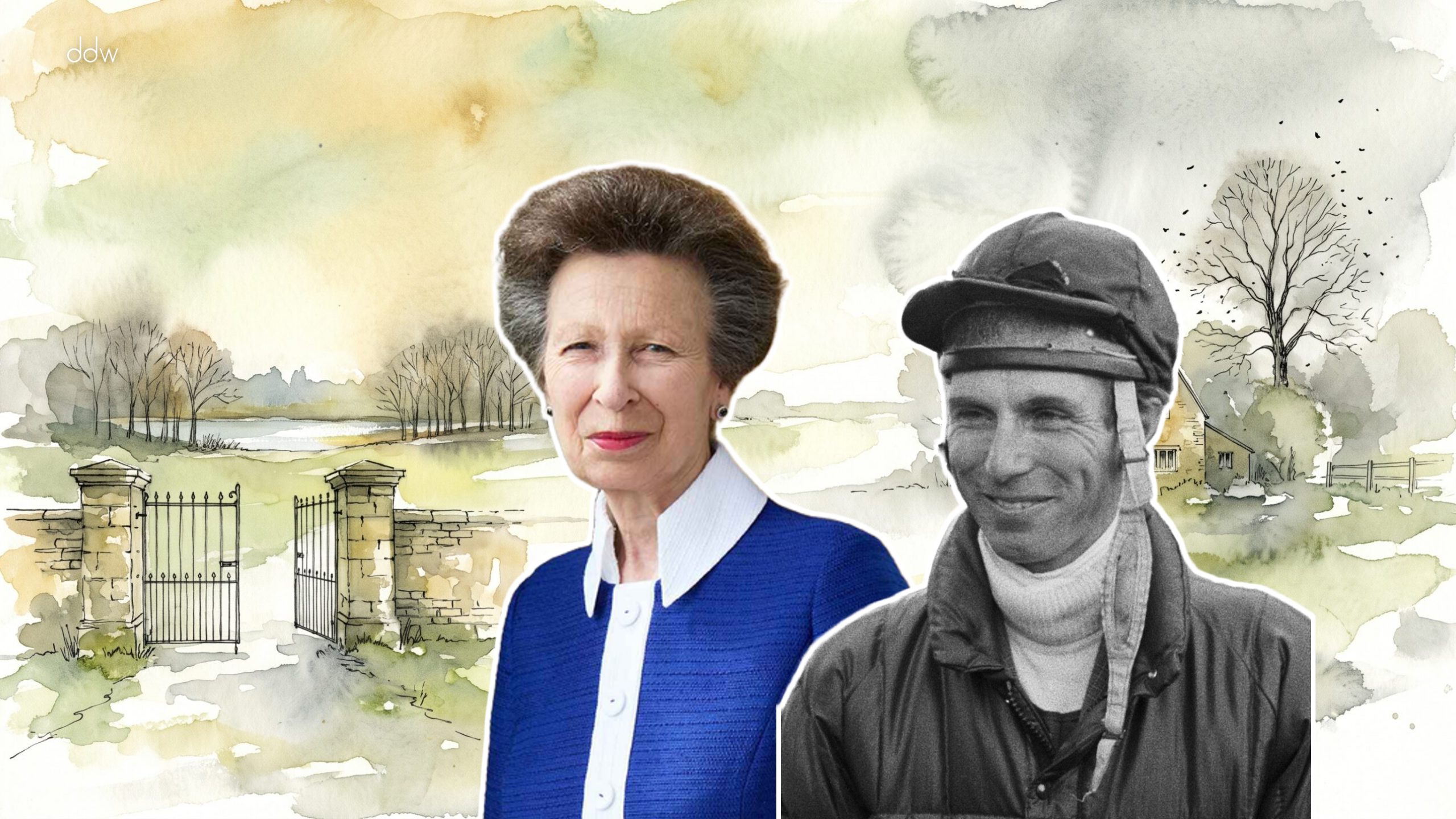
A divorce in April 1992, a seven-bedroom farmhouse on the same Gloucestershire estate, and twenty-one years before Captain Mark Phillips left for America. The settlement moved him two fields, not out.
The most useful fact about the Princess Royal’s divorce is a matter of geography. She and Mark Phillips divorced on 23 April 1992; she married Vice Admiral Timothy Laurence that December; and her first husband carried on living at Gatcombe, in a farmhouse on the same land, for another twenty-one years.
In the language of manners the arrangement is remarkable; in the language of property it is routine. A conventional divorce takes one house and makes two smaller ones. An estate cannot do that without ceasing to be an estate, so nothing is divided and the people are moved around the acreage instead. Gatcombe complicates the arithmetic further, since the Queen had given it to the couple in 1976, and nobody buys out a present. The marriage ended and the address very nearly didn’t.
Proximity instead of paperwork
The separation was announced in August 1989. Buckingham Palace said the terms were private, that the marriage had been under strain for several years, that “there were no plans for divorce proceedings”, and that the Princess would continue to live with the children at Gatcombe Park, which the Queen had given the couple in 1976. Two of those three things held. In 1991 a DNA test confirmed that Phillips had fathered a daughter, Felicity, born in New Zealand in 1985. The divorce followed the next spring, and the second marriage followed the divorce by eight months.
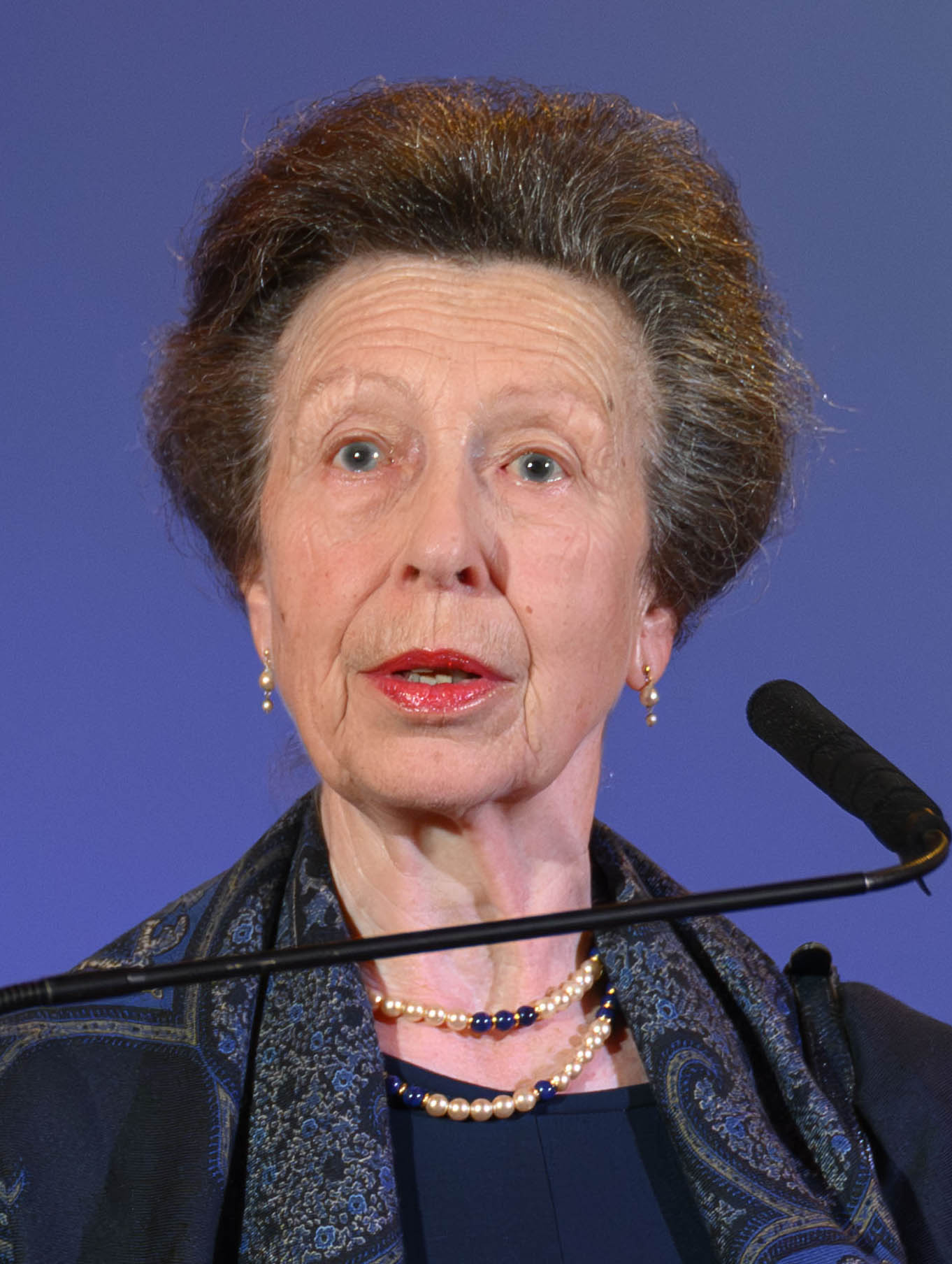
What happened then is the part worth repeating. Hello! has described the arrangement the divorced couple came to: he would reside at Aston Farm on the estate, while Anne and her new husband stayed at the main house. Same gates, same drive, same horse trials every spring, two households and no announcement that anything had been halved.
Whether that was ownership, a tenancy or something less formal has never been set out in public. The terms were private in 1989 and they have stayed private since. No court record, no title, no statement from the Princess Royal’s office has ever explained who held what at Aston Farm, and the vacuum has been filled, as vacuums are, by supposition. Privacy of this kind lasts because no one involved has any reason to end it.
Phillips himself has offered the only on-record framing, in a 2015 interview with The Times since recirculated by The List: “Well, I know we got divorced but the one thing we did really well when we got divorced was how we handled the Zara-and-Peter situation. The princess [Anne] and I get on great.” It is an account of children rather than deeds, which is how these things are usually settled.
A farmhouse bought to keep people away
The Crown Chronicles account of the purchase runs like this: Elizabeth II bought the estate in 1976 as a private home for her daughter, renovation was paid for privately, and the couple moved in during November 1977, ten days after the birth of their son Peter. The following year the estate was enlarged by 230 acres with the purchase of next-door Aston Farm, bought to give the family more privacy.
So the land acquired to keep the world at a distance became, fourteen years later, the place the world’s most-discussed royal ex-husband lived. The buffer did its second job rather better than its first.
What the Queen paid has never been reconciled. Royal Central has put the figure at £5 million; other accounts cite a far lower historic range, in the hundreds of thousands, and nobody has produced the record that settles it. The gap is wide enough to be a rounding error at one end and a substantial house at the other. Royal Central also describes the estate as it now stands: around 730 acres, 200 of them woodland, with a lake holding brown trout. The trout read like a sporting prospectus; the woodland is what actually keeps the neighbours at a distance. That acreage is the practical explanation for everything that followed.
Phillips married Sandy Pflueger, an American who had finished second at Badminton in 1981 and ridden for the United States dressage team at the 1984 Los Angeles Olympics, on 1 February 1997. Fifteen years later his solicitors confirmed, on 3 May 2012, that the couple had separated and intended to divorce. The cuttings then lose their grip: a Daily Mail piece in October 2017 still placed him at the adjoining Aston Farm with his second wife, years after both the separation and the move to America. Estates like this one run on arrangements nobody writes down, the same category of knowledge as what you leave the keeper after a day’s shooting. The press keeps the dates and the family keeps the keys.
What moved in 2013
In January 2013, Zara and Mike Tindall sold their house in Cheltenham and moved to Aston Farm. In 2013, Mark Phillips left Aston Farm and moved to the United States. Two moves in one calendar year, in opposite directions, along the same drive, and the cuttings never narrow the second one past the year. Hello!, in a story syndicated by Yahoo and recirculated this October, puts the two together and reaches for a motive: it seems it was only to make way for his daughter and her family, the magazine says, with the “it seems” doing a great deal of work. No statement from Phillips, from the Princess Royal, or from the Palace has ever given a reason for the relocation. The sequence is documented; the causation is a guess with good manners.
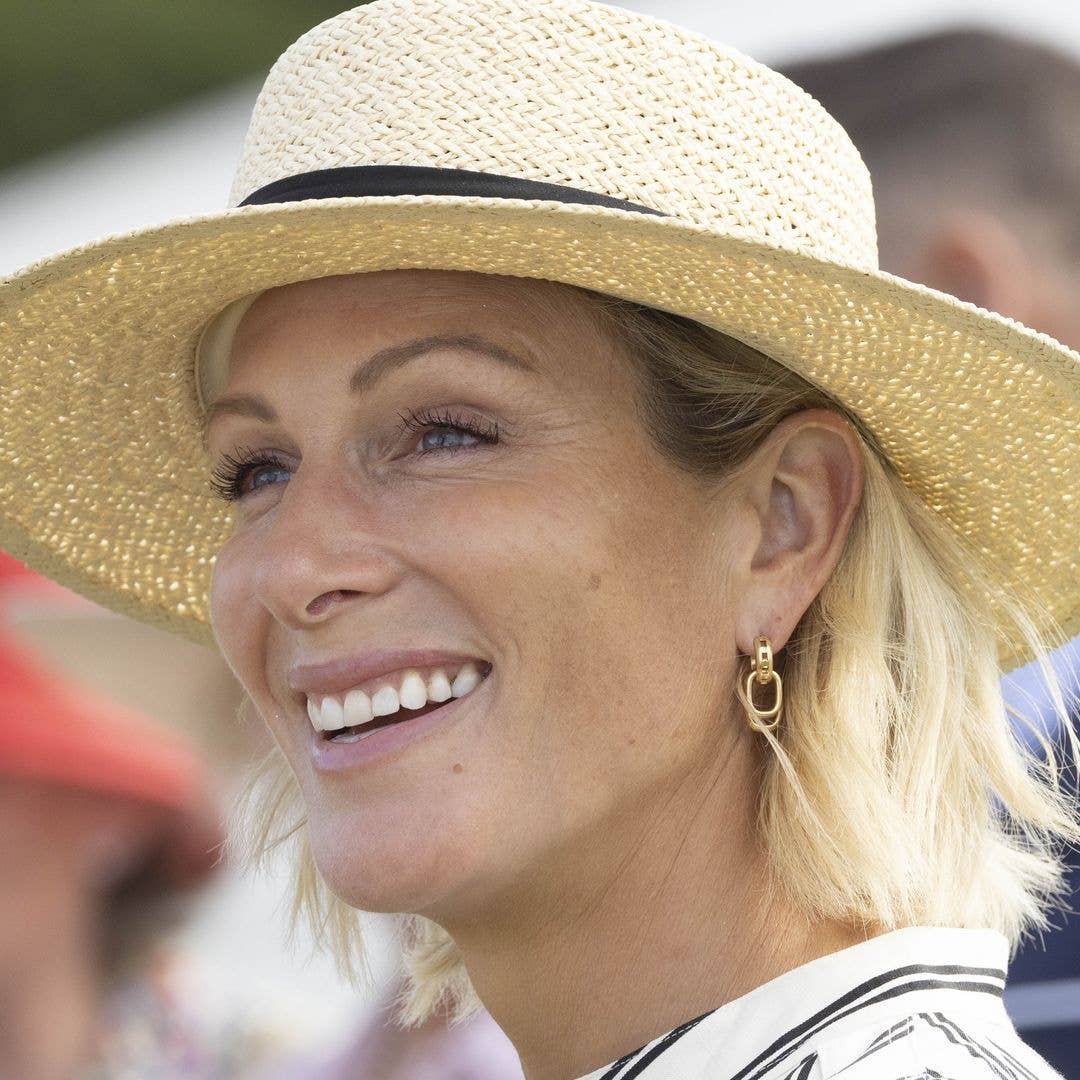
The sequence is enough, though, because it shows the mechanism. Nothing at Gatcombe was sold, split or announced. A farmhouse that had absorbed one generation’s marital rearrangement absorbed the next generation’s growing family. The occupant changed and the ground did not, which is how land of this kind passes between people: by diary, by who needs a kitchen, by somebody going abroad at a convenient moment.
The next instalment is fiscal rather than romantic. The News International, citing GB News, has reported that recent changes to inheritance tax on agricultural assets leave the Gatcombe estate exposed, with both Peter Phillips and Zara Tindall living on it. Those figures trace to a single outlet reading new rules, and the rules will be read again by better-paid people before anyone pays anything. What is not in dispute is the arrangement any bill would be applied to: two of the Princess Royal’s children housed on the same 730 acres, one of them in the farmhouse her father left.
Meanwhile the other inheritance has been itemised in public, by the daughter. On the Talk Horse podcast this month, Zara Tindall said her father had been “a tough coach” and “quite critical”, that a “yeah, that was good” was rare enough to chase, and that her parents made clear she would be getting no help from the family’s connections and would need to produce results. She added that she is trying not to be quite that bad with her own children. Olympic medals were not going to arrive by introduction. For a man who declined to make his daughter’s career easier, he vacated a seven-bedroom farmhouse for her at a useful moment.
Aston Farm is now home to Zara, Mike and their three children. Her father designs cross-country courses, writes for Horse & Hound, and has been photographed at Burghley with Florence Standaert, described in reports since 2022 as his girlfriend. He lives in America. The farmhouse stayed where it was, and no conveyance was ever announced.
Cover photographs: Robin Utrecht/Shutterstock via Usmagazine; Antonisse, Marcel / Anefo via Wikimedia Commons (CC BY-SA 3.0 nl).