


Truman Capote’s masked dance at the Plaza is remembered as the most abandoned night in New York, yet it ran on a door list, a two-colour dress rule and an invitation that put the host’s name first.
A masked ball makes one promise: for a few hours, nobody need know who anybody is. Truman Capote gave the most famous masked ball in American memory and spent the evening, and the summer before it, making sure that everybody knew exactly who everybody was.
The Black and White Ball was held in the Grand Ballroom of the Plaza in New York on Monday 28 November 1966. Sixty years on it is remembered as a romp, a room of masks and abandon. It ran on more rules than most weddings.
The rules come from the evening’s own paperwork: the drafts of the invitation, the lists held at the door, the dress line the hotel still prints in its history, and the masks now kept in New York collections. Beside each rule stands a guest who kept it, or in one case improved on it.
Capote put his own name first
Katharine Graham, publisher of The Washington Post, was the guest of honour. She was the reason given for the party and the second thing anyone read about it.
The New York Public Library, which holds Capote’s papers, published the drafts of the invitation on its blog on 26 September 2024. The first draft opens “Mr. Truman Capote requests the pleasure of your company”. Graham does not appear in it at all. She arrives in the second draft, written in by hand.
Capote could afford to bill himself first, because he was paying. The success of In Cold Blood that year paid for the party. A record of the Museum of the City of New York’s exhibition, held in Harvard’s DASH archive, says he set aside $16,000 for it. The same record says the surviving invitations and admission cards were designed by Tiffany’s, which is one way to make a list of names feel like jewellery.
The billing told every recipient whose evening it was. The guest of honour was honoured, and then corrected into place.
The ball began at ten on a Monday
Ten o’clock on a Monday is an hour that assumes guests have dined, and dined somewhere else. The ballroom was for dancing and for being seen to have been asked.
Capote chose the room with care. He held the Plaza’s Grand Ballroom to be the only really beautiful ballroom left in the United States, and the hotel has repeated his verdict in its own history ever since. A host who believes that about a room is unlikely to let just anyone into it.
The Plaza’s history page puts the number Capote invited at 540, and among the guests it names Alice Roosevelt Longworth, President Theodore Roosevelt’s daughter. She had been a fixture of American society since her father’s White House. At the Plaza she was one name among hundreds, and she came at ten like everybody else.
Men wore black masks, women white
The dress rule was short enough to remember and strict enough to matter. Men were asked to wear dinner jackets with black masks. Women were asked to wear black or white dresses with white masks.
Two colours make a room look like a photograph before anyone has taken one. They also make comparison easy, and comparison followed. Women’s Wear Daily covered the ball in its issue of 30 November 1966, which the New York Public Library keeps among the Capote material, and the paper ranked the guests’ looks. Gloria Guinness and Marella Agnelli were named best dressed. Norman Mailer was named worst.
In a room where the palette had been chosen for everyone, finishing last took some doing.
Isabel Eberstadt’s swans bent the mask rule
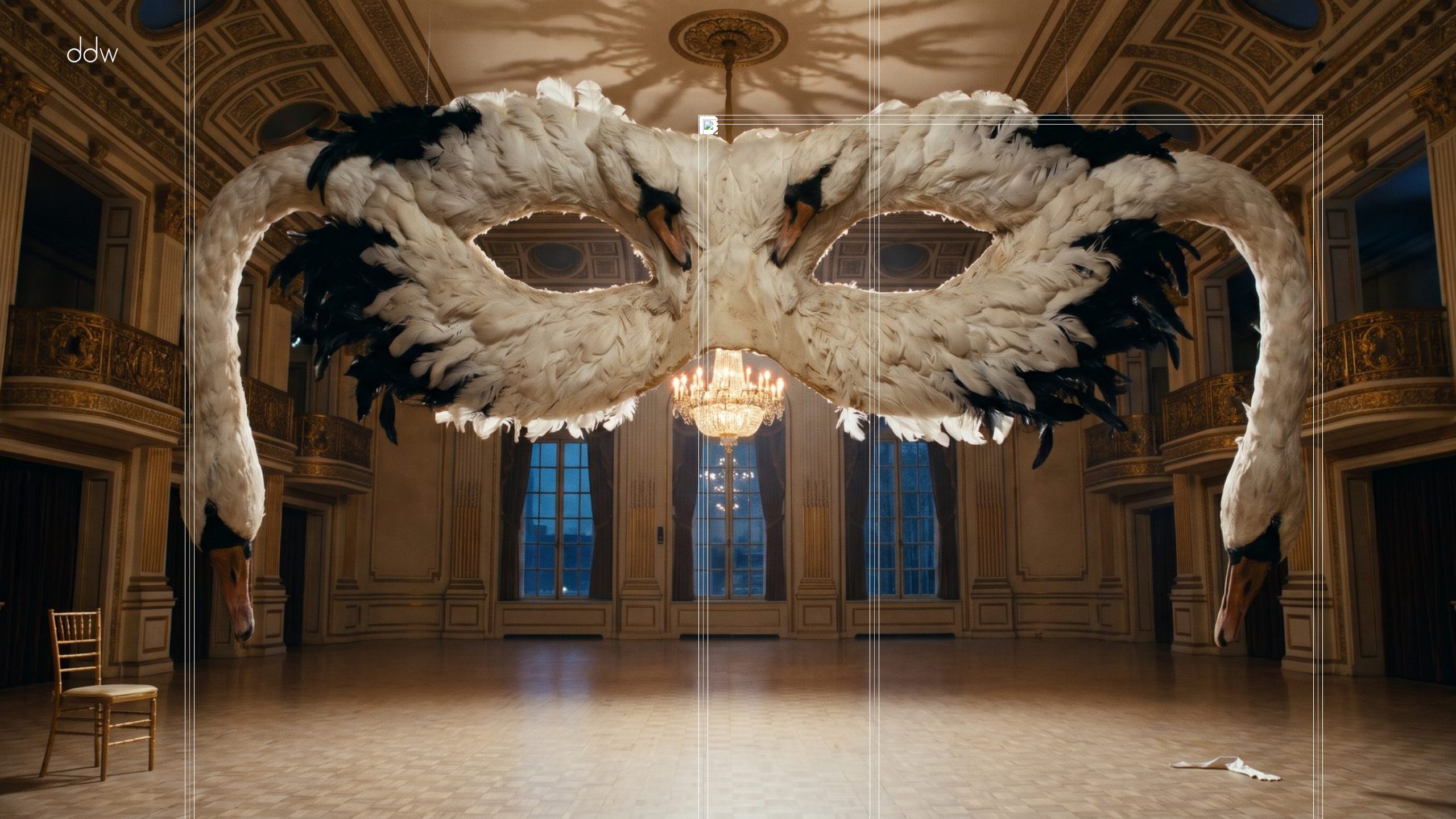
The most celebrated object of the night was worn by Isabel Eberstadt. Her mask was a pair of intertwining swans in white and black-dyed coq feathers on buckram, with a headdress to match. It was made for her by Bill Cunningham, who was then making hats and who later became known for photographing the streets of New York. The mask is now in the Museum of the City of New York.
DDW’s reading is that a black and white mask on a woman was a looser reading of the white-mask line than the rule itself allowed. The colours were right and the proportions were wrong, and nobody in the ballroom asked her to go home and change. The rule was applied with latitude, at least to a guest who arrived in Cunningham’s swans.
Every strict dress code has an exception, and the exception is usually the best-dressed person in the room.
Nobody entered without a mark against a name
Masks hid faces, but they did not get anyone through the door.
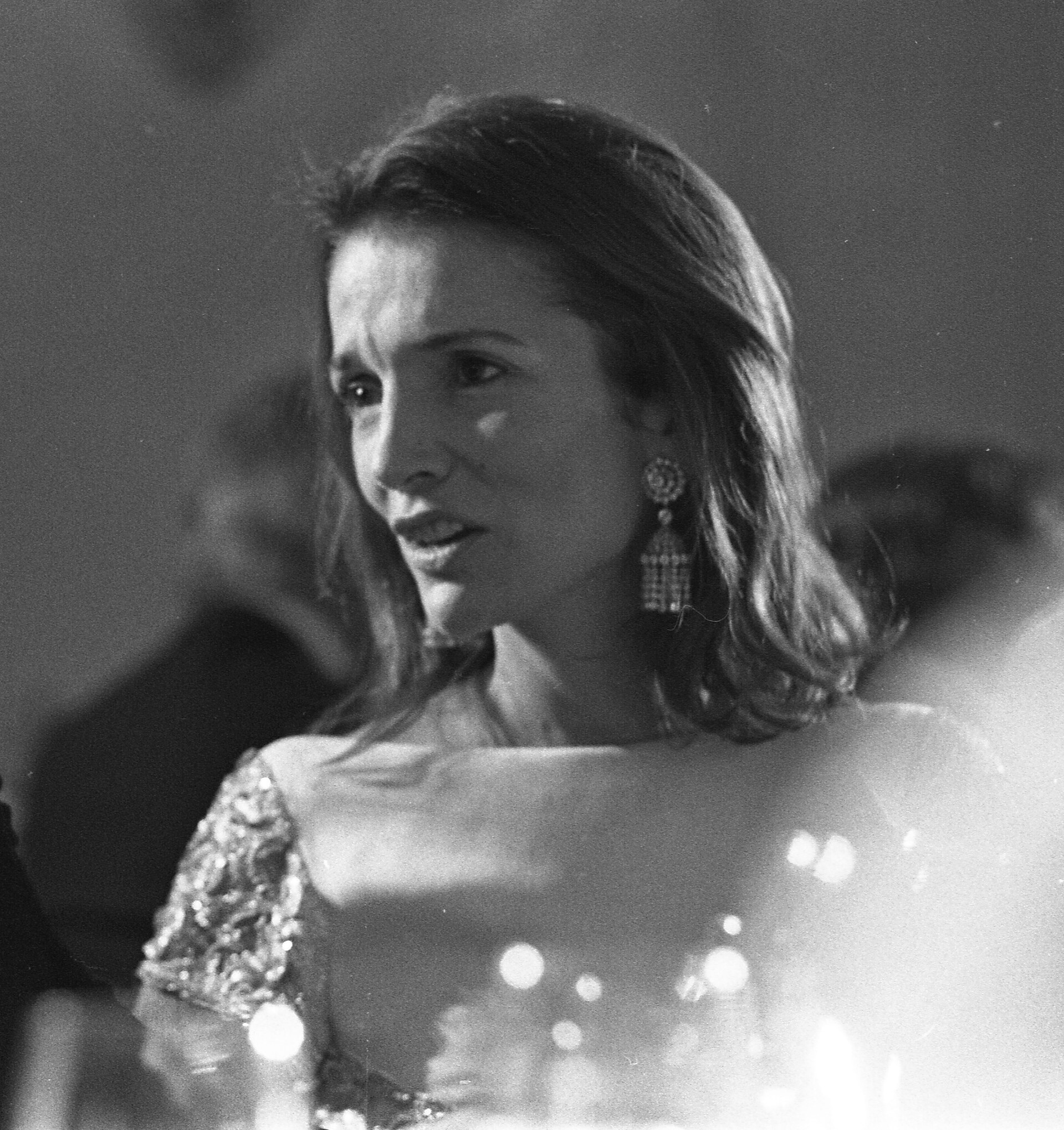
Capote placed two people at the entrance, each holding a tabbed and indexed copy of the invitation list, and each guest was marked off on arrival, the library’s 2024 blog records. A ticked name was the only admission that counted.
Princess Lee Radziwill, the sister of Jacqueline Kennedy Onassis, was photographed arriving in the Grand Ballroom. She belonged to the small circle of women Capote called his swans, with Babe Paley, Gloria Guinness, Gloria Vanderbilt, Marella Agnelli, Slim Keith and CZ Guest. A princess still went through the index.
So did the guests Capote had chosen from well outside that circle. The list included his own doorman, Graham’s personal assistant and an investigator from Kansas. Each of them was looked up and ticked off in the same alphabetical order as everyone else, which in a doorman’s case must have been a pleasant reversal of the usual arrangement.
Next morning, the Times printed the list
Capote had written the guest list himself, in a composition book, over the summer of 1966. The notebook survives in the Truman Capote Papers at the New York Public Library, along with one of the invitations.
The day after the ball, The New York Times printed the list of invitees. The publication caused particular discomfort for people who had claimed invitations they had never received. Before the Times appeared, a person could say they had been asked and had chosen not to go. Afterwards the answer was in print, and anyone could look it up.
The list also showed who had been left out. Dominick Dunne, who had given a black and white ball of his own in 1964 for his tenth wedding anniversary, was not asked.
A guest list is meant to be a private document. Capote’s became a public record within a day, and that may have been part of its purpose.
Three New York collections keep the evidence
The obvious next question is where the night can be seen now, and the answer is three places in Manhattan.
The New York Public Library has held Capote’s papers since 1985. They include the notebook of names and an invitation, and the library marked the fiftieth anniversary of the ball with a display drawn from them. The Museum of the City of New York holds an invitation, the reply card that served as the admittance card, and Isabel Eberstadt’s swans. The Metropolitan Museum of Art holds the mask Katharine Graham wore, which she gave to it herself.
The masks are in two museums. The list that decided who could wear them is in the library, in Capote’s own hand.
Read Next: How Prince William Brought Earthshot to Mumbai in Six Years
Cover photographs: Carl Van Vechten via Wikimedia Commons (Public domain); via Wikimedia Commons.