
Jay-Z owned half of a cognac he did not run; one sealed lawsuit and a Delaware judge later, Bacardi holds the larger share and he is still at the table.
Half of a business is a perfectly respectable thing to own until the day you would like to stop owning it. Jay-Z held half of D’Ussé, the cognac he launched with Bacardi, while Bacardi’s people did the running. When he moved to sell that half back to them, the argument went into a sealed courtroom in Delaware. It came out as a renewed partnership, with Bacardi in the majority and the price kept between the parties.
The facts run here in the order they happened, because in this story the sequence does most of the arguing.
Jay-Z and Bacardi launched D’Ussé as equal partners
D’Ussé went on sale in 2012 as a joint venture between Jay-Z and Bacardi, and on paper it was as level as a billiard table. SCLiquor LLC, the company through which Jay-Z held his interest, owned one half. Empire Investments, a wholly owned subsidiary of Bacardi International, owned the other, the 50/50 split later set out in SCLiquor’s own complaint. The company both halves owned was D’Usse LLC, and its paperwork would matter a great deal more in 2022 than it had at the launch. Equal partnerships work beautifully for as long as both partners want the same thing. For a man who grew up in the Marcy Houses in Brooklyn, a half-share of a cognac house was a long way from home, and the arrangement looked like the kind of deal that settles a career’s argument about who owns what. It settled nothing of the sort. What it established, quietly and in legal language few people outside the two companies would read, was that one partner held the shares while the other held the shares and the running of the place.
Bacardi’s subsidiary ran the cognac day to day
Empire Investments did more than hold its half. It ran D’Ussé’s daily operations, so the decisions that shape a spirits brand from one year to the next sat with Bacardi, while the ownership sat evenly between the two sides. Jay-Z’s protection against that imbalance was written into the structure. SCLiquor’s half carried a put option on D’Ussé’s corporate entity, and once triggered, the option obliged Bacardi to buy out Jay-Z’s half. It is about as civilised an exit as a partner who does not run the business can hope for: a promise, signed in advance, that the other side will take your share when you choose to hand it over. The difficulty with such promises is the price. An option to sell is only as comforting as the valuation behind it, and a valuation is a number that the buyer and the seller have every reason to see differently. In the early years of a successful brand that difference costs nobody anything. It costs a great deal at the moment somebody exercises the option, and that moment was still a decade away.
Forbes named him hip-hop’s first billionaire mid-partnership
On 3 June 2019, with D’Ussé seven years old, Forbes declared that Jay-Z’s fortune “conservatively totals $1 billion”, making him the first hip-hop artist to reach that mark on its count (conservatively, in a Forbes valuation, being the word that holds up the rest of the sentence). The boy from the Marcy Houses was by then married to Beyoncé, and the billionaire headline travelled further than most business stories manage. It matters to the cognac for a plain reason. Three years later, the value of his D’Ussé half would be the subject of a lawsuit, and the best-known measure of what Jay-Z was worth had been set before anyone asked a Delaware court to look at his cognac. A fortune counted conservatively by a magazine and a brand valued by its own co-owner are two different instruments. They would soon be playing very different tunes.
Jay-Z’s company sued under seal in Delaware
On 17 October 2022, SCLiquor made a sealed filing in Delaware’s Court of Chancery, the court where American companies go to find out what their documents meant. The complaint said SCLiquor had exercised its option to sell its half to Empire Investments. It also alleged that the buyout structure gave Bacardi a “perverse incentive” to mismanage D’Ussé and drive its valuation down. That was an allegation and it stayed one: no court ruled on it, and the case settled. Empire, for its part, sought to intervene, and a public filing indicated that it had also moved to dismiss. Jay-Z’s side was represented by Young Conaway Stargatt & Taylor and by Gibson Dunn & Crutcher, which is the legal equivalent of arriving at a country-house weekend with two sets of luggage. A sealed complaint is a strongly worded letter kept in a locked drawer; its argument becomes public slowly, through the papers filed around it. By the time those papers had done their work, everyone in the drinks trade knew the partners were no longer agreeing about the price of the thing they shared.
Jay-Z put his own price on D’Ussé
Bloomberg Law, reporting the settlement on 3 February 2023, wrote that Jay-Z had “maintained throughout the public dispute” that D’Ussé was worth at least $3bn. That was his figure, and Bacardi never confirmed it. By DDW’s comparison, it valued the cognac alone at three times the whole fortune Forbes had counted for him in 2019. The comparison says less about Forbes than about how differently a seller and a buyer look at the same bottle. A put option is a promise to buy; it was never a promise to agree. The seller of a half-share has every incentive to describe the whole as precious, and the buyer has every incentive to notice the dust on the shelves. Neither side’s number is a price until both sign it, and in this case, as item seven shows, neither signature was ever put to a published figure.
Delaware handed the venue question to an arbitrator
By late November 2022 there was a second Chancery suit, this one seeking a declaration on where the dispute ought to be heard. It is the sort of question lawyers relish and clients pay for. On 16 December, a Delaware judge said the proper venue was a matter for an arbitrator, and the Chancery litigation went on hold. For a quarrel about who controlled a business, it was fitting that the next instalment concerned who controlled the quarrel. A pause of that kind is rarely the end of anything, but it does give both sides a quiet month in which to count what the fight is costing and to work out what they would accept to stop it. Seven weeks later, the two of them were announcing a partnership.
Bacardi has held at least 75.01% since the settlement
On 3 February 2023, Jay-Z and Bacardi issued a joint release on PR Newswire announcing a long-term agreement that renewed their D’Ussé partnership, and Jay-Z said in it, “I am excited to renew this partnership with Bacardi.” Bloomberg Law’s report that day set out the structure. A Bacardi affiliate bought a majority of Jay-Z’s half, which left Bacardi owning at least 75.01% of D’Usse LLC, and the deal’s other terms were not disclosed. Jay-Z kept what the two sides described as a significant ownership stake, of a size that was not given. The announcement called the arrangement a renewal, and that is the accurate word for a deal in which the man who brought the lawsuit stayed on as an owner. By our count, the partnership had run eleven years, from the launch in 2012 to the settlement in February 2023, and it came out of its own lawsuit still a partnership. Plenty of marriages manage less. Bacardi now holds most of the building, and Jay-Z keeps his name on the deeds.
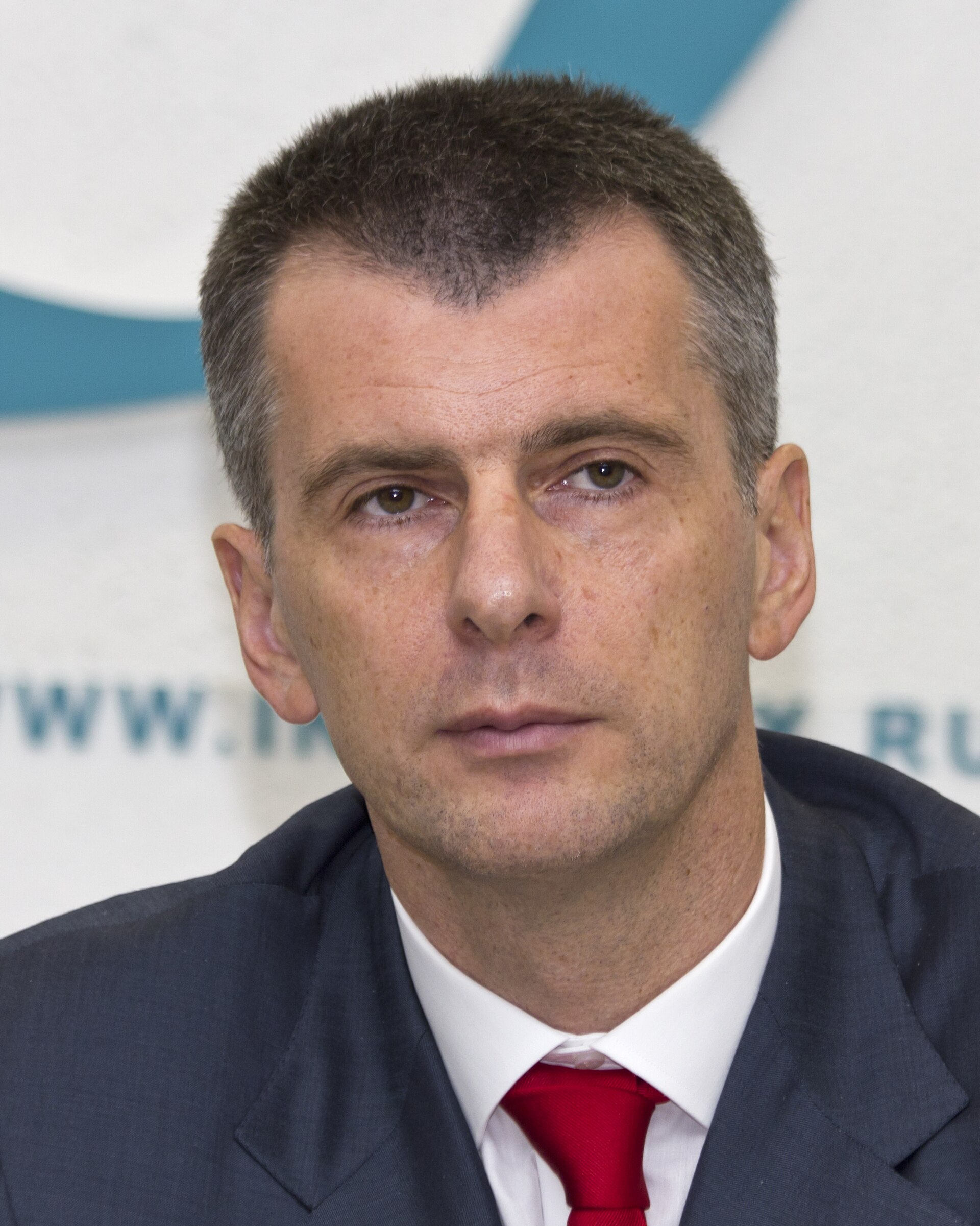
His GQ hotel line concerned Mikhail Prokhorov’s higher floor
Roc Nation announced GQ’s special issue marking thirty years of Jay-Z, with an exclusive interview, on 24 March 2026, and the interview closes on a hotel. Jay-Z recalled learning from Mikhail Prokhorov, the former Nets owner, that a hotel they had both stayed in had a higher floor than the one he knew about. The next step, he told GQ, was owning the building, at which point the other man is the one staying at his hotel. The anecdote is about a hotel, and Jay-Z did not present it as a remark about Bacardi or D’Ussé. DDW’s reading is that it is the D’Ussé fight in a sentence all the same. For a decade he held half of a cognac whose daily business Bacardi ran, a guest on a very good floor of a building somebody else operated, and the put option, the lawsuit and the settlement were each, in their way, an argument about the lease. The lesson he draws in GQ is the one the cognac taught at some expense: a guest can buy the finest suite in the house and still be told which floor is the top.
Bacardi paid for the majority of his half a sum neither side has disclosed, and the round figures that circulate online as the price come from no filing and no Bacardi statement. Jay-Z still owns a significant part of D’Ussé and Bacardi still runs it, which is where the story began. Only the proportions have changed.
Read Next: How the Milstein Fortune Turned on Itself in Four Generations