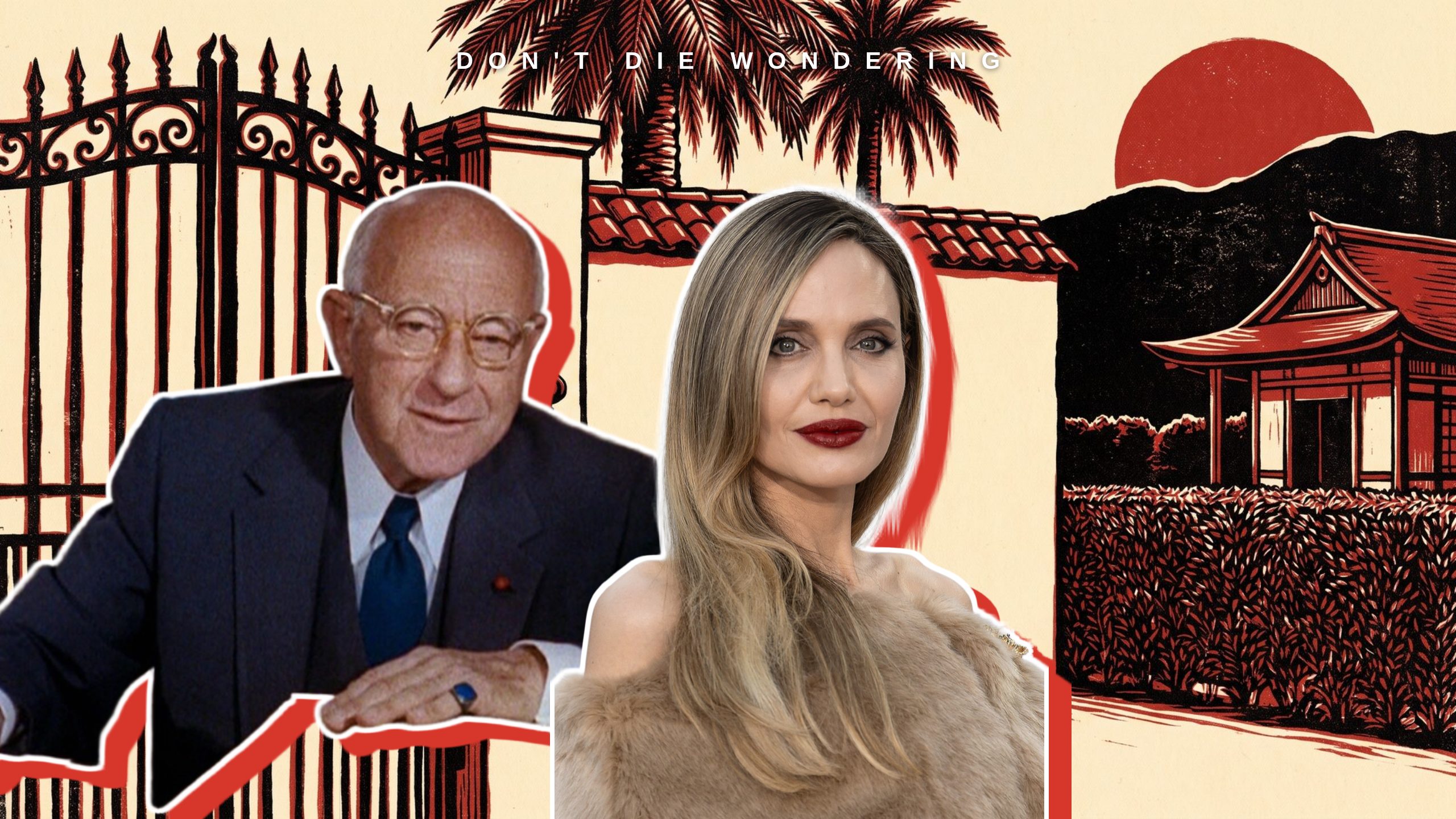



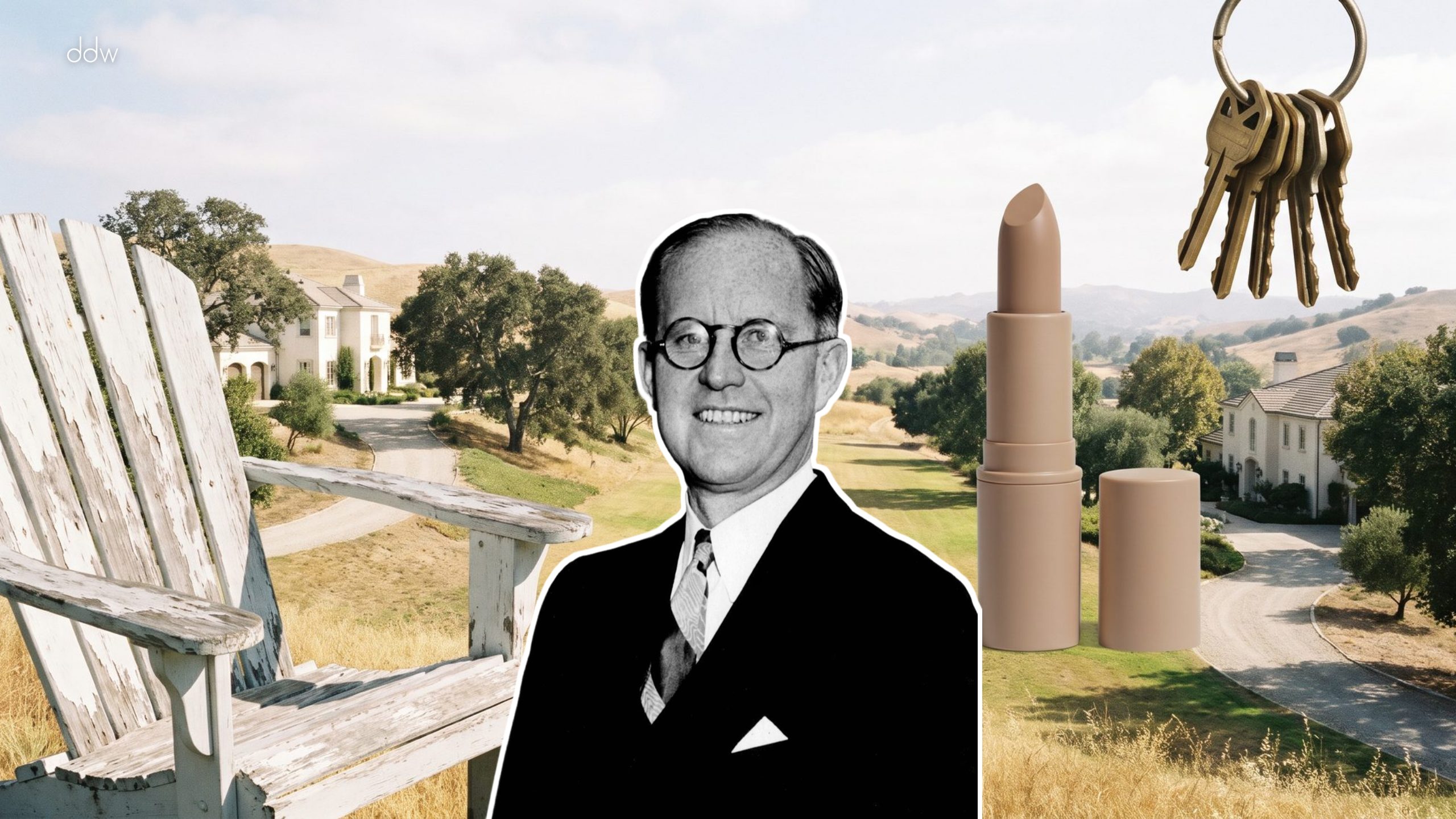
A mother at the centre, a ring of houses close enough to walk between and Coty and Goldman money in the companies, which the internet calls feudal and the Kennedys called Hyannis Port.
The Kardashian-Jenners have done the most conventional thing a rich family can do, and the internet has greeted it as a discovery. An account on X, @amishescapee, described the sisters as living in “a kind of feudal family estate arrangement”. In practice that means large houses no more than a quarter of an hour’s drive apart, many of them within walking distance of one another. As descriptions go, it is a fair one. The plan it describes was old long before anyone thought to post about it.
Put a mother at the centre and settle the grown children within reach of her. Give a family name to the businesses, and let husbands and wives arrive and sometimes depart while the houses stay where they are. You now have a family seat. Landed families have run on that arrangement for as long as there has been land to arrange it on, and the Kardashian version differs mainly in its speed and in how much of its paperwork sits on the public record.
Hyannis Port ran on the same plan
The comparison everyone reaches for is the Kennedy Compound, and it holds up better than most comparisons do. Joseph Kennedy, the father of the family, bought the first house at Hyannis Port. Two of the sons he had with Rose, John and Robert, later bought houses close by, and the three together make up six acres on the water. It now sits on the National Register of Historic Places, which is the American state’s way of conceding that a family has become a landmark.
Nothing about the place was inherited at the start. A father bought a house, his sons bought near it, and the arrangement acquired over the decades the dignity that only staying put can confer. The Kennedys did not hire an architect to design a dynasty. They simply declined to scatter.
Every old family was once a new one that chose not to move.
Kris Jenner sits where Joseph Kennedy sat
The best argument against all this is that the Kardashian version belongs to the women. The Kennedy seat was a patriarch’s. It grew from Joseph Sr.’s purchase and his sons’ additions, and Rose, matriarch though she was, did not do the buying. The Kardashian cluster is arranged around a mother, Kris Jenner, and around the daughters’ own houses and the daughters’ own businesses. Call it feudal if you like, the argument runs, but it is feudalism with the sexes reversed, and that makes it something new.

The argument is right about the facts and wrong about what follows from them. The sex of the head of house is the least structural thing about a seat. A seat needs three things: someone at the centre whom the children choose to live near, a reason for them to stay, and enough money that staying is a pleasure rather than a sentence. Kris Jenner supplies the first, as Joseph Kennedy did. The houses a short drive or a walk apart are the evidence that the second and third are in working order.
Old families have changed the person at the head of the table many times without redesigning the table. A widow running the estate, an eldest daughter holding the house while her brothers went elsewhere: the form absorbs these without complaint, because the form was never about who sits at the head. It was about who comes to lunch.
Two of six siblings founded companies, by our count
Our rule for the count is strict. A sibling counts as a founder only if the company’s own release, a regulatory filing or a named business publication says so. On that rule, two of the six qualify.
Coty’s release of 18 November 2019 records that Kylie Jenner launched Kylie Cosmetics in November 2015 and Kylie Skin in May 2019. Fortune reported on 12 November 2025 that Kim Kardashian co-founded SKIMS in 2019 with Jens Grede. Kourtney, Khloé, Kendall and Rob stay outside the count. That reflects the strictness of the rule, and it passes no judgment on anyone’s work ethic.
A stricter rule, one that asked who actually runs the company day to day, would struggle with both of them. Founding a business and running one are different jobs, and the record keeps them apart. Jens Grede is SKIMS’ chief executive and Kim is its co-founder, and since 2019 the Kylie business has been under Coty’s control. This is the most old-money detail in the whole arrangement. Great families have always hired the management and kept the name.
Two founders in one generation is a strong showing for any dynasty. Most manage one founder and then several generations of trustees.
Coty bought control and shared the board
The Coty deal shows what a seat does with a valuable field: it sells part of the field and keeps the house. According to Coty’s filing with the Securities and Exchange Commission, the company paid $600 million for 51 per cent of King Kylie, the company behind the Kylie brands, and the rest stayed with the sellers.
The same filing sets up a board of up to six managers. Coty names three, and New KJ LLC on the sellers’ side names the other three. Coty holds the majority of the equity, and the family side holds half the seats at the table. An old estate selling off its outlying farms to a neighbour would recognise the terms at once.
SKIMS has taken its outside money in rounds. The latest was led by Goldman Sachs Alternatives, with funds affiliated with BDT & MSD Partners taking part, and it valued SKIMS at $5 billion in November 2025. Both businesses now rest on a sister and both carry other people’s capital. Every durable family arrives at that arrangement sooner or later, usually after a long lunch with the bank.
The seat outlasts the people in it
The Kennedy Compound’s main house is now part of the Edward M. Kennedy Institute for the United States Senate. The other two houses are still lived in by members of the family. Every family seat hopes to end up in roughly that position. The big house becomes public, the smaller houses stay private, and the name means something to strangers who will never be asked in.
Most property stories concern a single address and whoever owns it, as with the DeMille house. A seat is a different animal. It is a family arranged across several houses, and it can only be read from a distance, which is perhaps why it took an account on X to notice this one.
The poster’s word for it was feudal, and in the old sense the word fits better than it was probably meant to. Feudal land was held in return for loyalty. A family whose grown children choose to live a short walk from their mother runs on loyalty of the most old-fashioned kind.
Houses can be bought, and companies can be sold off a slice at a time. A seat cannot buy children who choose to live round the corner. The sisters have already done the hard part, which is staying.
Read Next: Harriet and Peter Phillips Moved In After the Proposal
Cover photograph: Wide World Photos via Wikimedia Commons.