

Eighty per cent death duties, Hardwick Hall surrendered to the Treasury, a 99-year lease at a pound a year, and now a planning application for a kitchen. The Cavendishes have kept Chatsworth by not quite owning it.
“When artists come to instal their stuff beside the Old Masters they get quite nervous.” The 12th Duke of Devonshire, in Bonhams Magazine.
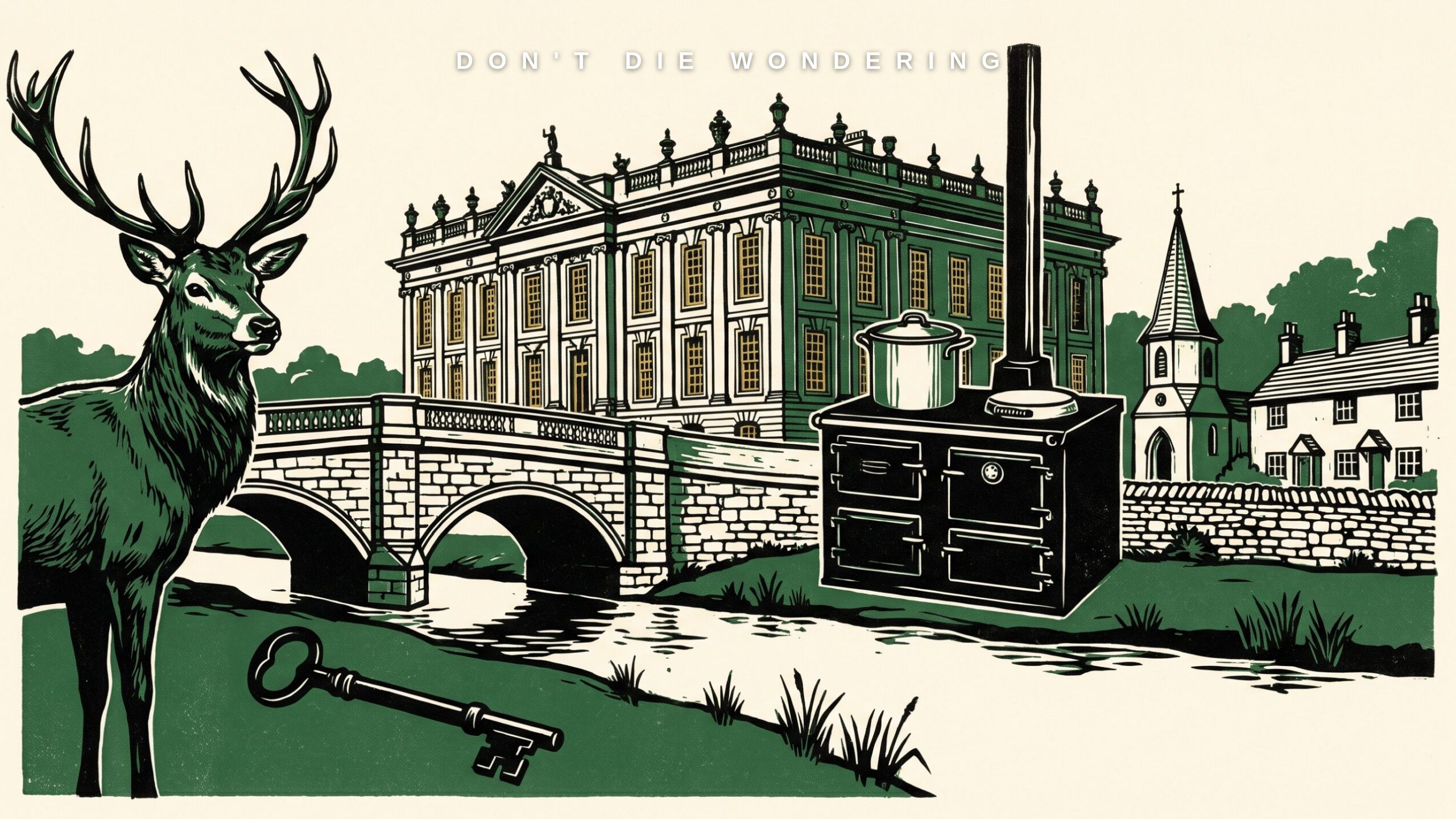
Off the Stag Parlour at Chatsworth, the proposal is a kitchen. William Cavendish, Earl of Burlington, and his wife Laura applied to remodel rooms around the parlour into a family space for three young children in a grade I listed house, and the application ran into heritage concerns. The same reporting from the Derbyshire Times revealed that the 12th Duke and Duchess of Devonshire had retired to a smaller cottage nearby. At the time of that report there was no movement and no timeline set for a resolution.
Peregrine Andrew Morny Cavendish, 12th Duke of Devonshire, called Stoker, was born at Chatsworth on 27 April 1944, the only surviving son of the 11th Duke and Deborah Mitford. He is 82, chairman of the Devonshire Arms Hotel Group and deputy chairman of Sotheby’s, and he has been Duke since 3 May 2004. He no longer lives in the house he was born in. In this family, that counts as procedure rather than demotion.
Chatsworth, November 1950
The modern arrangement at Chatsworth begins with a piece of tax timing that went wrong by a matter of weeks.
The family had been structuring for decades. The Chatsworth Estate Company was set up in 1926 with the Devonshires’ chief agent, U. R. Burke, as director and the Duke and Lord Hartington as majority shareholders; when the 9th Duke died in 1938, the Trust’s own archives guide records that the company structure helped avoid major death duties. A change in the law then forced the creation of the Chatsworth Settlement in 1946, a discretionary trust carrying a five-year quarantine before it took full effect. The 10th Duke died in November 1950, shortly before that quarantine expired.
The bill arrived at the maximum rate. The Trust’s own history of the 11th Duke records that death duties at 80% had to be paid, and that some of the most important works of art and many rare books, as well as Hardwick Hall and its estate, went to the Treasury in lieu. Thousands of acres and other assets were sold. What survived of the Derbyshire estates passed to the Trustees of the Chatsworth Settlement, which is where the freehold has sat ever since.
Five years of clear water would have made the difference. The family lost a Hall and a sizeable share of the collection to a calendar.
Hardwick Hall, 1956 and 1959
Hardwick went to HM Treasury in lieu of Estate Duty in 1956, and in 1959 the Treasury transferred the house to the National Trust, where it remains. Bess of Hardwick’s great Elizabethan glass box left the family and became a ticketed property belonging to somebody else.
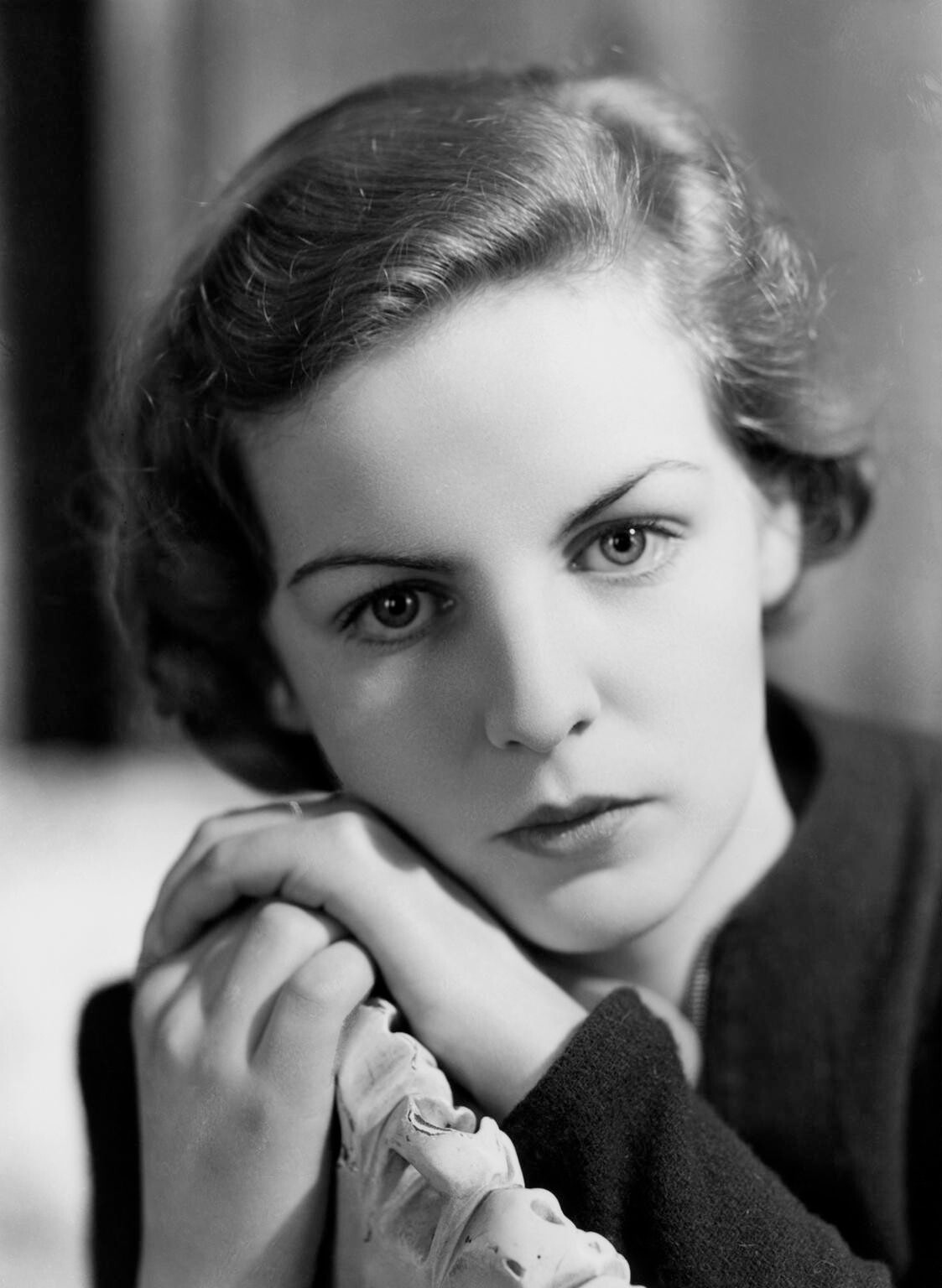
In the same year the Cavendishes went the other way. Andrew Cavendish, his wife Deborah and their children moved back into Chatsworth. The Trust’s own account of the 11th Duke credits the couple with establishing Chatsworth as a thriving visitor attraction and a registered charity, which is a polite way of saying they worked out that the only sustainable owner of a house like this was the paying public.
Debo was the youngest of the six Mitford sisters and the last survivor of them. She played a key role in the renovation of Chatsworth. The Cavendish surname did not do that on its own.
A lease at a pound a year
The structure that answers the question of who owns Chatsworth was put in place in 1981. Chatsworth House Trust was incorporated as a company limited by guarantee on 23 January 1981, number 01541046, and registered as charity number 511149. The Trust’s own announcement of its current director notes that it was set up by the present Duke’s grandfather to look after the house, collections, garden, woodlands and park for the long-term benefit of everyone, and that admission income goes directly to the Trust.
The mechanism is a lease. According to Peak District Online’s account of the arrangement, the Duke, his family and the family trustees granted the new charitable foundation a 99-year lease at a rent of £1 per annum over Chatsworth House, its essential contents, the garden, the park and some woods, a total of 1,822 acres. The same account states that the Duke and his family pay a full market rent to live in their quarters and are responsible for their private staff. No figure for that rent has been published.
So the Chatsworth Settlement holds the freehold, the charity holds the house and the contents that matter until 2080, and the family holds a tenancy in the corner of a building their name is attached to. The portraits in the state rooms are not theirs to sell. The cooker in the new family kitchen would be.
Year to 31 March 2025
The Charity Commission’s financial history for charity number 511149 shows total gross income of £19.35m in the year to 31 March 2025, against total expenditure of £17.39m. Within that income, charitable activities brought in £13.34m, other trading activities £4.82m, investment income £0.600m and donations and legacies £0.587m.
The trajectory since the pandemic is steep. The same filings record total gross income of £7.44m in the Covid-affected year to March 2021, then £13.94m, £17.41m, £19.40m and £19.35m. Admissions accounted for 69% of the charity’s total incoming resources in 2022/23, down from 72% the year before. For scale, the Trust’s own 2015 annual review put total income that year at £12,459,423 against £11,735,460 in 2014, with stewardship costs of £5,319,501.
Running the place is now a mid-sized business with a Council of Management to match. Jane Marriott is Director of Chatsworth House Trust. Charity Commission filings name Mr A C Lavery as the Trust’s chief executive and chief financial officer of the Devonshire Group, Mr S G Vickers as chief executive of the Devonshire Group, and Mr E A D Cadogan as chief operating officer. Katrin Henkel, also a trustee of the National Gallery Trust, was appointed a trustee on 1 July 2025. The 12th Duke sits on the Council as a trustee of the charity that leases his family’s house.
As for the family’s private wealth, a nine-figure estimate circulates online without a rich-list entry anyone can open behind it. Treat it as a rumour with a decimal point.
Edensor, and the cottage nearby
When the 11th Duke died on 3 May 2004, Sotheby’s wrote that it was a given that she would vacate Chatsworth so their son could take over its reins. Debo moved to the Old Vicarage at Edensor, on the estate. Her grandson’s verdict on the move, in the same Sotheby’s piece: “It felt immediately like it had always been her home.” She died on 24 September 2014, aged 94.
Twenty years on, the same handover ran in the same direction. Lord Burlington was appointed Chairman of Chatsworth House Trust on 17 June 2020, the date the Duchess of Devonshire resigned as a trustee; the Trust’s 2023 annual review notes that the chair is a position his father held before him. By early 2023 the Duke and Duchess were out, the Burlingtons were in, and the Trust had a new director, a transition described in the Financial Times coverage of the house’s contemporary commissions, published on 17 March 2023. Visitor numbers were put at around 600,000 a year in that reporting.
The heir is unusual in one respect: he is styled Earl of Burlington and has not taken the courtesy title Marquess of Hartington that previous heirs apparent to the dukedom carried. His wife, Laura, Countess of Burlington, is a former model, fashion editor and stylist; they married in 2007 and have three children, Lady Maud, born in March 2009, James, Lord Cavendish, born 12 December 2010, and Lady Elinor, born in 2013.
The Duke has said of Chatsworth, to Country Life, that he cannot imagine not being completely besotted by it. He has nonetheless left it to the next tenant, as his mother left it to him, and as his father’s generation left Hardwick to the nation because the arithmetic of November 1950 allowed nothing else.
The lease runs to 2080 at a rent of a pound a year.