


Five heirs apparent under 30, four constitutions, one group chat and a €1.5 million allowance that one of them refused for four years. Europe’s richest young royals are rich in a way nobody will put a number on.
The number of titled European royals under 30 with a personal net worth published by a named institutional source is zero.
A word on method, because this list lives or dies on it. Every figure below is attached to the source that produced it: Forbes, Bloomberg, a named publication, or a palace statement. State allowances are labelled as state allowances, not fortunes, because they are salary-adjacent money voted by a parliament and reclaimable in a way that shares in an eyewear group are not. Where an estimate exists but the palace concerned has disputed it, the dispute runs alongside the number. Where the only available figures come from sites with no named institutional source, they are described as such and not converted into a ranking. Under 30 means under 30 in 2026. For scale, the piece also names the richest Europeans under 30 who hold no title at all, since they are the ones whose money can actually be counted.
0
Five heirs apparent in Western Europe are currently under 30: Catharina-Amalia, Princess of Orange, 22, born 7 December 2003; Crown Princess Ingrid Alexandra of Norway, 22, born 21 January 2004; Princess Leonor of Spain, Princess of Asturias, 20, born 31 October 2005; Crown Prince Christian of Denmark, 20; and Princess Elisabeth, Duchess of Brabant, 24, the eldest child of King Philippe of the Belgians.
Not one of them has a credible personal net worth in the public record. Not a Forbes number, not a Bloomberg number, not a palace disclosure. What they have instead is a claim on assets that are held institutionally: crown estates, state-owned palaces, art collections vested in foundations, jewellery that belongs to a house rather than a person. The wealth is real and the ownership is deliberately not theirs.
That zero is the most honest figure in the entire category.
€1.5m
The Dutch heir turned 18 in December 2021 and declined the annual allowance that came with it, then reported at roughly €1.6 million. She kept declining it. From 2025, per the Dutch coverage of the decision, she agreed to begin receiving reimbursement of the roughly €1.5 million a year she had previously waived. Hola has separately described her entitlement as around $1.7 million annually.
Four years of a public salary, refused and then reclaimed, is the closest thing to a financial biography any of these five has. It is also a stipend, tied to the office, and it tells you precisely nothing about what the House of Orange-Nassau holds.
4
Search Princess Leonor’s net worth and you get four incompatible answers for the same 20-year-old in the same general timeframe: single-digit millions at the low end, a figure in the billions at the high end, with two more estimates scattered in between. None carries a named institutional source. One of the sites offering a number concedes in its own copy that she does not have a personal net worth that is readily calculable, and that her financial position is less about accumulated wealth than about the role ahead of her.
That concession is the only part of the genre worth quoting. A ranking built on the rest would be fiction with a decimal point.
1
There is one group chat. Ingrid Alexandra, Elisabeth and Catharina-Amalia are in a WhatsApp group together, three heirs apparent to three thrones, comparing notes on a job with a sample size of five.
> “We’ve known each other for a long time and see each other occasionally at events,” Princess Elisabeth said. “We are all in the same situation. It’s a hurdle we will face together.”
Note what the sentence does not contain. No mention of estates, portfolios or holdings. The shared inheritance they discuss is the scrutiny.
$4bn
The largest sourced figure attached to a European reigning house belongs to a man well over 30. Grand Duke Henri of Luxembourg’s $4 billion officially makes him Europe’s richest royal, according to a wealth analysis published by Fair Observer. It is a single-source figure, and the Grand Ducal court has form in rejecting this arithmetic: after a Business Insider report in 2019 named Henri as Europe’s richest royal, the Luxembourg Palace said the published figures were “pure fantasy” and that the family’s real wealth amounted to only a tiny percentage of them.
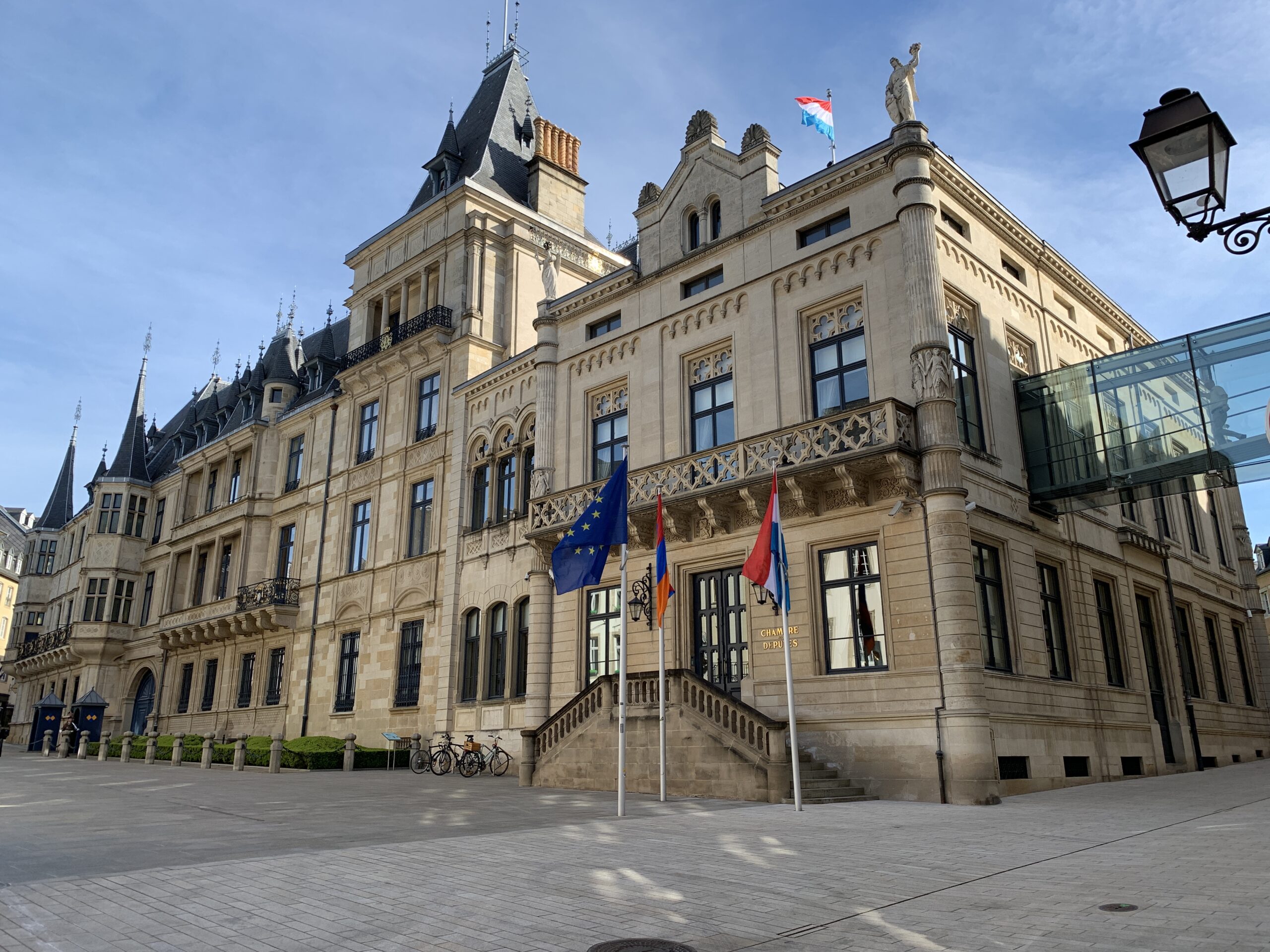
Two useful things follow. One, the richest-royal number most often repeated is contested by the family it describes. Two, Henri’s heir, Hereditary Grand Duke Guillaume, is over 30, so Luxembourg’s money does not enter an under-30 list at all.
$12.7bn
The biggest royal number in Europe with an institutional name on it: Prince Hans-Adam II of Liechtenstein, at a net worth of $12.7 billion per Bloomberg. He is in his eighties. The banking fortune behind the figure is private, dynastic and generational, which is exactly why the personal wealth of his under-30 grandchildren appears nowhere in the public record.
A billionaire grandfather is not a sourced figure for a grandchild. Every list that pretends otherwise is guessing.
35
Forbes counts 35 billionaires under the age of 30 across 12 countries in its 2026 list. The five wealthiest are all heirs, and they come from just two European family fortunes.
None of them is a titled royal of a reigning house.
$6.8bn
Clemente Del Vecchio holds an equal stake in EssilorLuxottica, the Italian eyewear group, inherited from his father Leonardo Del Vecchio, at $6.8 billion. Ray-Ban, Oakley, the frames on half the faces in any airport lounge: that is the asset, and it is countable because it is listed.
This is the tell of the whole category. A 20-something with shares in a public company has a net worth. A 20-something with a constitutional claim on a kingdom has an allowance.
$6.6bn
Johannes von Baumbach, 20, is an heir to the German pharmaceutical company Boehringer Ingelheim, with a net worth of $6.6 billion per the Forbes-sourced data. He is the same age as Crown Prince Christian of Denmark and Princess Leonor of Spain, and he is the only one of the three whose wealth a researcher can cite without flinching.
Boehringer Ingelheim has never been listed. Family-held pharmaceutical money still produces a firmer figure than any European throne.
22
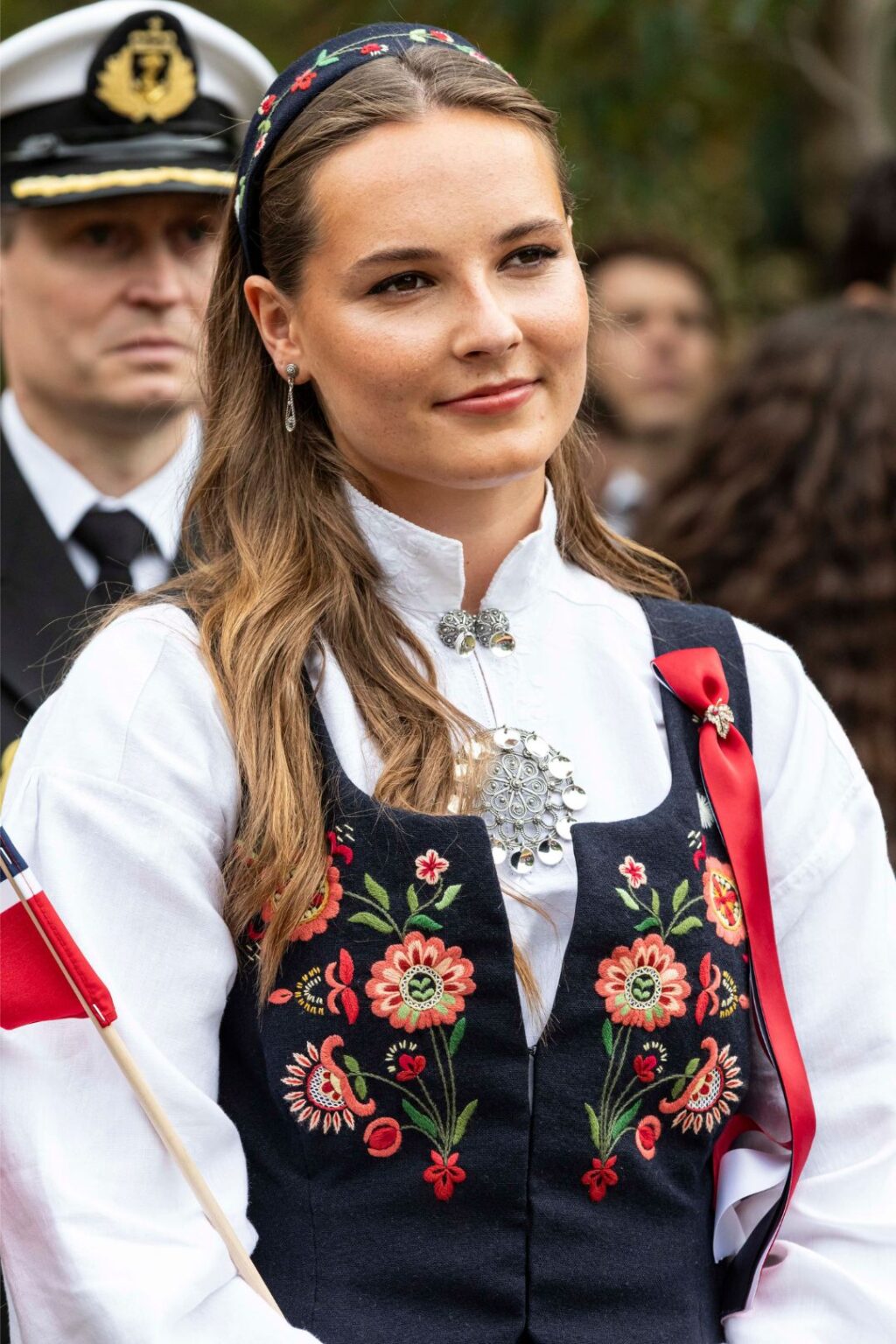
Crown Princess Ingrid Alexandra became Norway’s heir at 22, the first heir in generations to be of age when her father acceded, after the death of King Harald V in August 2026 and Crown Prince Haakon’s accession on 1 September as King Haakon VIII. Following her father’s spoken oath, she submitted a written declaration validating her position, which allows her to step in as regent whenever the King is travelling, incapacitated or unavailable.
Being of age at the moment of accession is the single most valuable thing any of these five has acquired. It converts a title into a constitutional function on day one. No allowance does that.
18
Prince Christian of Denmark became Crown Prince at 18, on 14 January 2024, when his father acceded as King Frederik X after Queen Margrethe abdicated following a 52-year reign. He is the eldest son of Frederik and Queen Mary, and he turned 20 in October 2025.
Fifty-two years of one reign, ended by choice, then an 18-year-old in the direct line.
2009
The number that actually determines who inherits. Denmark moved to equal primogeniture in 2009, having already changed its law in 1953 to bring King Frederick IX’s three daughters into the line of succession. Sweden, the Netherlands, Norway and Belgium eliminated male preference across the 1980s and 1990s. Those statutes, and not any portfolio, are why Amalia, Ingrid Alexandra and Elisabeth are heirs apparent rather than spares.
Spain and Monaco retain male-preference cognatic primogeniture, meaning a younger brother would outrank an elder sister. Leonor’s sibling is Infanta Sofía. The arithmetic never arose, and the law that would have decided it is still on the books.
The follow-up question
So who is the richest royal under 30 in 2026? On the public record, nobody can say, and anyone publishing a per-heir dollar figure for Leonor, Amalia, Ingrid Alexandra, Christian or Elisabeth is either reading a content farm or writing one. The richest verified Europeans under 30 are not royal at all: Clemente Del Vecchio at $6.8 billion and Johannes von Baumbach at $6.6 billion, on Forbes-sourced data, with 33 other under-30 billionaires behind them across 12 countries.
What the five heirs hold instead is a claim that no ranking can price: palaces they do not own, collections vested in foundations, and a line in a constitution. Ingrid Alexandra’s written declaration, lodged this September, is worth more than any of the estimates circulating under her name. It makes her regent when the King is away.