

A bank with CHF 386.1 billion under management, 1,600 paintings including the largest Rubens holding in private hands, and one man named as sole beneficiary of the foundation that owns it all.
For the 2025 financial year, LGT paid a special dividend of CHF 703 million to one shareholder, and that shareholder is a family.
CHF 703m
The bank records the payment in its own results. Group equity capital stood at CHF 5.5 billion as at 31 December 2025, down from CHF 6.0 billion a year earlier, reflecting a special dividend of CHF 703 million to LGT’s owner, the Princely House of Liechtenstein. The assets sit inside the Prince of Liechtenstein Foundation, a for-profit vehicle that manages the family’s holdings. Bloomberg, citing LGT’s annual report, reports that Prince Hans-Adam II is the sole beneficiary of that foundation.
He is also the head of state. LGT, in its own corporate description, notes that its largest client is also its owner.
Owner, largest client and sovereign: one household.
3 comparables
Everything that follows is either a figure LGT publishes about itself or an estimate with a name attached to it. The only serious personal number belongs to the Bloomberg Billionaires Index, which values the bank on its 2025 group equity capital of CHF 5.5 billion and the average price-to-book multiple of three publicly traded peers, EFG International, UBS Group and Julius Baer Group.
A private bank, priced off the listed ones it competes with.
Bloomberg also records that a spokesperson for LGT, Karin Brigl, said the Princely House declined to comment on the calculation. A slightly older Bloomberg figure of $12.7 billion has circulated via Yahoo Finance; it is the same model on a different day, not a second opinion. Celebrity Net Worth, a lower-rigour single source, puts the figure at $10 billion. No member of the family has confirmed any of them.
$11.9bn
Bloomberg’s index currently lists Prince Hans-Adam II at $11.9 billion, with a daily move of $151 million and a longer-period decline of $869 million. Yahoo Finance, citing the same index at an earlier date, described him as Europe’s richest living royal and many times richer than King Charles III.
The money is a rebuilding job. Bloomberg’s profile records that after graduating in 1969 he was handed a family business empire in disarray after poor management and wartime expropriations, that his father appointed him official representative in 1984, and that the title itself arrived only on his father’s death five years later. He became reigning Prince in 1989. In 2003 a constitutional referendum expanded the Prince’s powers, including the right to veto legislation and dismiss the government.
Then, in 2004, he handed the day-to-day duties of head of state to his eldest son, Alois, who has served as Regent since, according to Australian Women’s Weekly. Hans-Adam remains head of state and sole beneficiary.
He kept the throne and gave away the diary.
CHF 386.1bn
That is what LGT Group managed at year-end. The bank’s own results statement puts assets of CHF 386.1 billion (USD 487.3 billion) as at 31 December 2025, for wealthy private individuals and institutional clients. Bloomberg converts the identical franc figure to $465.9 billion, using a different exchange-rate date. Same bank, same francs, a $21 billion gap in the dollar sign.
Operating income rose 9 per cent to CHF 2.90 billion in 2025 and group profit rose 25 per cent to CHF 445.6 million. For the first half of 2026, S&P Global Ratings reported group profit of CHF 282 million, up 17 per cent, with assets under management growing to CHF 413 billion on market performance, organic net new money of CHF 12.3 billion and currency effects.
Prince Max von und zu Liechtenstein, the chairman and the reigning Prince’s second son, framed the year in the results statement: “As a family-owned company, we think in terms of generations. That long-term perspective guides our decisions and underpins the trust our clients place in us.” said Prince Max in LGT’s 2025 full-year results.
90+ years
LGT’s own account of its origins is unusually candid. Prince Franz I acquired a controlling stake in the modestly sized Bank of Liechtenstein Aktiengesellschaft in 1930, rescuing it from the Great Depression; Prince Max has described the purchase as something close to an impact investment, undertaken partly so the little bank did not go bust. The first international branch opened in Hong Kong in 1986. The group took the LGT name in 1996.
Max took over the family firm in 2006, and LGT’s publications describe a 16-country business spanning Europe, North America, the Middle East, Asia and Australia. The family has controlled it for more than 90 years.
The one bruise on the record is public. InvestmentNews reported that data stolen from the bank was used by Germany to prosecute tax evaders in 2008, that clients pulled money around that time, and that the bank boosted its transparency and reversed the outflows by 2010.
1,600 paintings
The second pillar of the fortune hangs on walls. The family’s collections site records around 1,600 paintings, from the early Renaissance to the second half of the nineteenth century, with works by Lukas Cranach the Elder, Raphael, Rubens, Van Dyck and Rembrandt, alongside some 700 sculptures. The Princely Collections hold the largest holdings of paintings by Rubens in private hands.
The Rubens “Decius Mus” cycle has been in the family since 1693, when Prince Johann Adam Andreas I bought it and had a dedicated room built for it in the Vienna City Palace. The cycle now hangs in the Garden Palace in Vienna, which the Vienna guide Visiting Vienna notes also once housed the most expensive item of furniture ever sold, the Badminton Cabinet, delivered to the 3rd Duke of Beaufort in 1733.
No insured or market valuation of the Collections has ever been published by the family, and no serious outlet has put a figure on it. What is published is a date: a Rubens anniversary exhibition, “Destined for Grandeur”, runs at the Garden Palace from 29 January to 29 March 2027.
5 names
The line of succession, per reporting from August 2026, runs: Hereditary Prince Alois, born 1968; Prince Joseph Wenzel, born 1995; Prince Georg, born 1999; Prince Nikolaus, born 2000; and Prince Maximilian, born 1969, the chairman of the bank.
Prince Georg, third in line, was born on 20 April 1999 in Grabs, educated at Malvern College, the University of St Gallen and ESCP Business School. The Princely House announced his engagement on 28 August 2026 to Princess Maria-Nives von der Leyen, born 13 February 2001 in Landsberg am Lech and the youngest daughter of Prince Philipp and Princess Elisabeth von der Leyen. The wedding is expected in Germany in late summer 2027.
The jobs and the rank do not match tidily. Alois governs as Regent, Max chairs the bank, and Prince Constantin, the reigning Prince’s third son, served as chief executive of LGT from 2020 to 2023. He died on 5 December 2023, aged 51.
2/3
On 15 August 2026, Liechtenstein’s National Day, Hereditary Prince Alois announced that the house law would move from agnatic primogeniture, under which only males inherit, to absolute primogeniture. Unofficial Royalty reports that the change carried the required two-thirds majority of the family members entitled to vote on such matters.
A statement from the Princely House specified that the amendment applies only to future descendants of the children of Alois and Hereditary Princess Sophie, and therefore does not alter the line of succession for now. No living woman in the family has gained a claim. The daughters of the 2050s have.
0 published valuations
The obvious follow-up question, what the Liechtenstein royal family is worth in total, has no verified answer. Bloomberg models one man, using one bank’s equity and three listed comparables, and the house declines to comment on the method. A foundation asset figure of $6.25 to 7.6 billion still circulates online; it dates from 2011 and tells you nothing about 2026. The paintings carry no public price at all, and holding them in a foundation rather than a portfolio keeps it that way.
What exists is the bank’s disclosure: CHF 386.1 billion managed at year-end 2025, CHF 413 billion by mid-2026, CHF 445.6 million of profit, and a CHF 703 million special dividend to a household of one beneficiary. The only audited figures here belong to the bank.
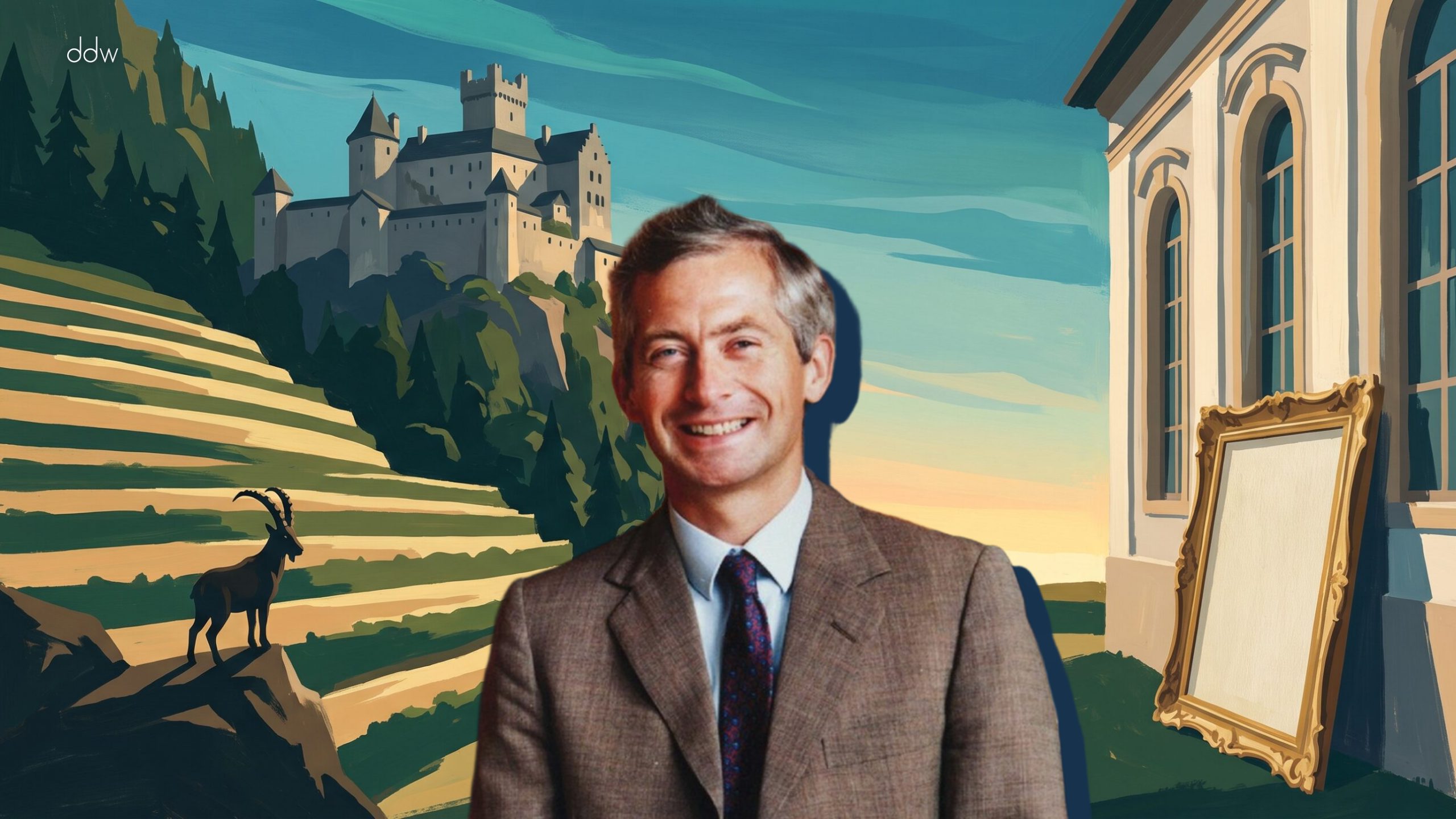
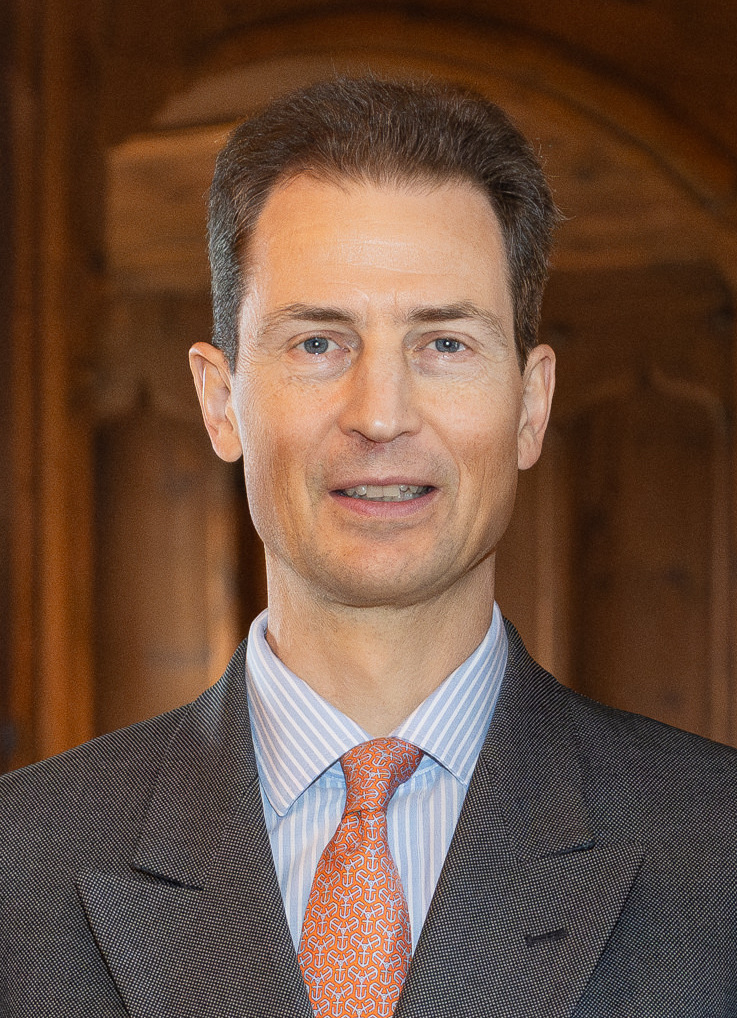
Cover photograph: Presse- und Informationsamt, Vaduz via Wikimedia Commons (Attribution).