


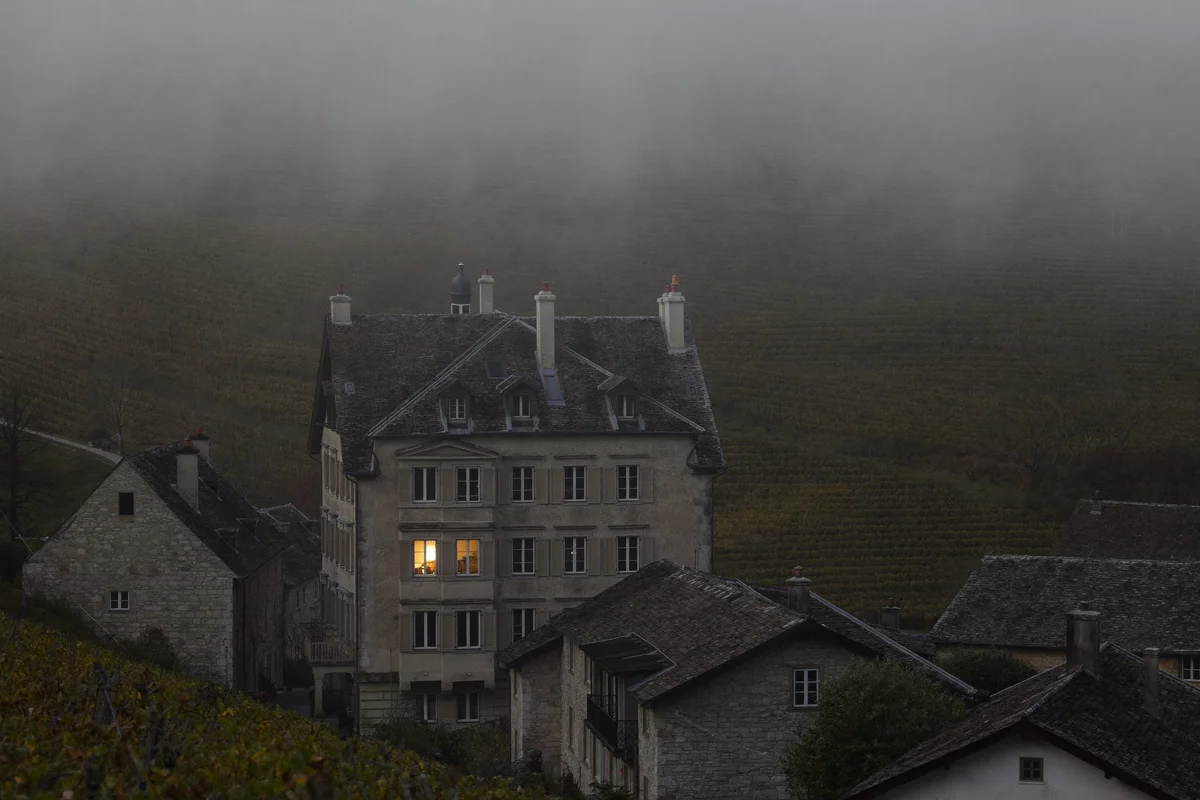
There is a village high in the Swiss Valais that you cannot reach by car when the snow comes. You walk in on snowshoes, past the vineyards, until you arrive at a large yellow house. In it lives an 82-year-old man with a Labrador named Nectar, a passion for horses, and — depending on which set of court filings you believe — either the largest misplaced private fortune in the history of European luxury, or nothing at all.
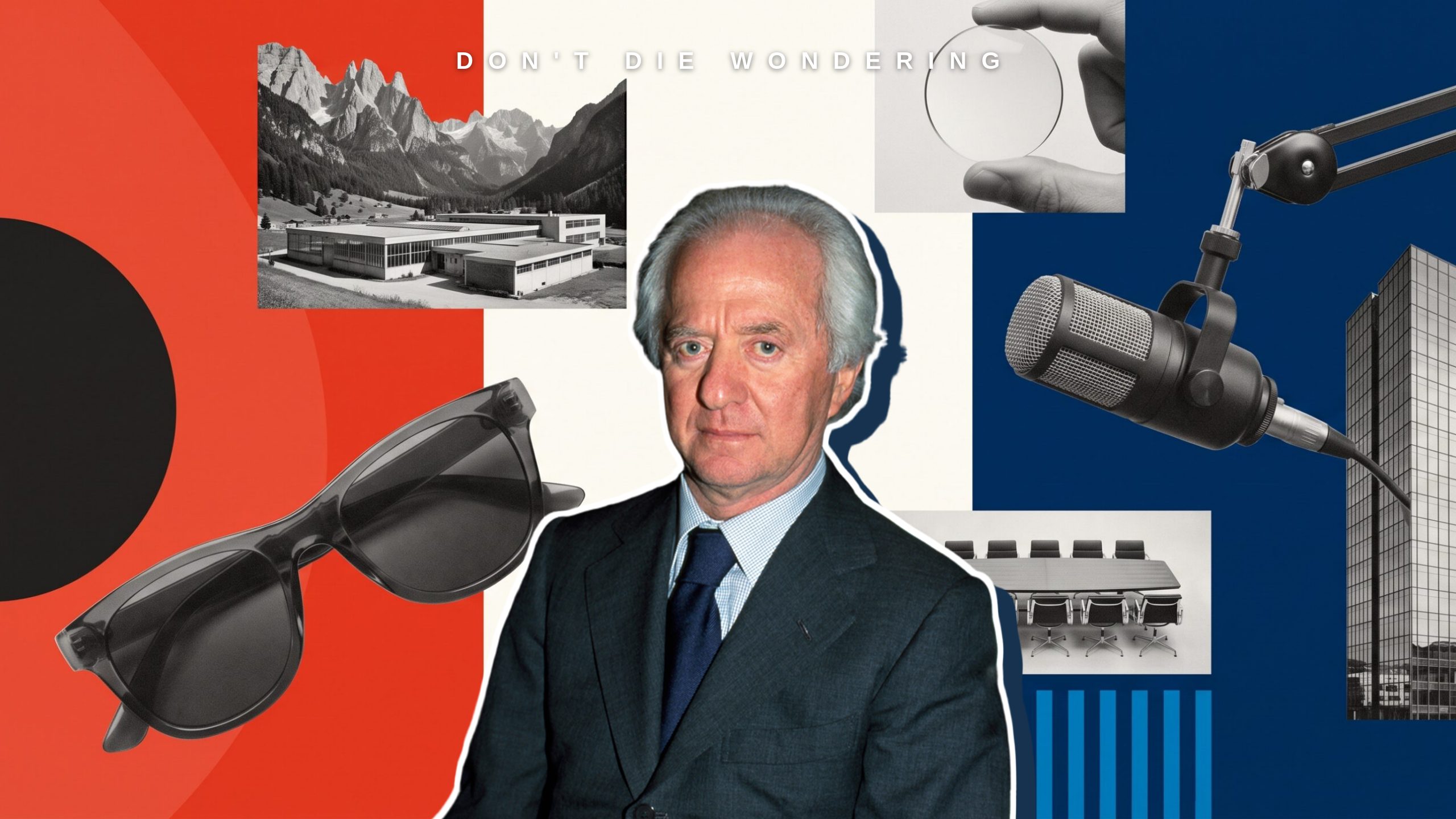
His name is Nicolas Puech. He is a great-great-grandson of Thierry Hermès, the harness-maker whose workshop became the most valuable luxury house on earth, and a grandson of Émile-Maurice Hermès, who bought the rights to put a zip on a handbag and changed the twentieth century’s idea of quiet money. For most of his life Puech was the family’s gentlest footnote: the fifth-generation heir who preferred horses to board meetings, architecture to arithmetic, and his Alpine valley to Paris. The village innkeeper says he comes in for coffee about once a year.
He was also, on paper, the single largest individual shareholder of Hermès International — some 6.08 million shares, a stake of roughly 5.8 per cent. In December 2023, Hermès’ own disclosures valued that holding around €12 billion. Forbes, in 2024, put his fortune as high as $15.6 billion.
Then he told a court he couldn’t find it.
The Man Who Didn’t Sign
To understand how a man loses six million shares of the world’s most carefully guarded company, you need to go back to October 2010, when Bernard Arnault — France’s richest man, proprietor of LVMH and collector of maisons the way Puech collects horses — announced that he had quietly acquired 17 per cent of Hermès. He had done it through cash-settled equity swaps, the financial equivalent of arriving at a wedding disguised as the caterers. The Hermès family, seventy-odd cousins who mostly agree on nothing — dynasties being what they are — agreed on this: never again.
Their answer, in December 2011, was H51 — a family holding company into which the Dumas, Guerrand and Puech branches pooled just over half the company’s shares, locked up for twenty years, with first refusal on any sale. It remains the most effective anti-takeover wall in European business. Arnault eventually signed a peace treaty in 2014, under the aegis of the Paris Commercial Court, and distributed his stake away.
Every branch of the family signed the pact. Except one cousin.
Nicolas Puech declined to put his shares into H51. His holding stayed outside the family fortress — private, unpooled, and, crucially, sellable. In 2014 he resigned from the supervisory board as well. The family’s black sheep wasn’t prodigal; he was simply elsewhere. But it meant that of the fifty-plus per cent of Hermès held by the family, only one slice could ever quietly go missing. His.
The Gardener
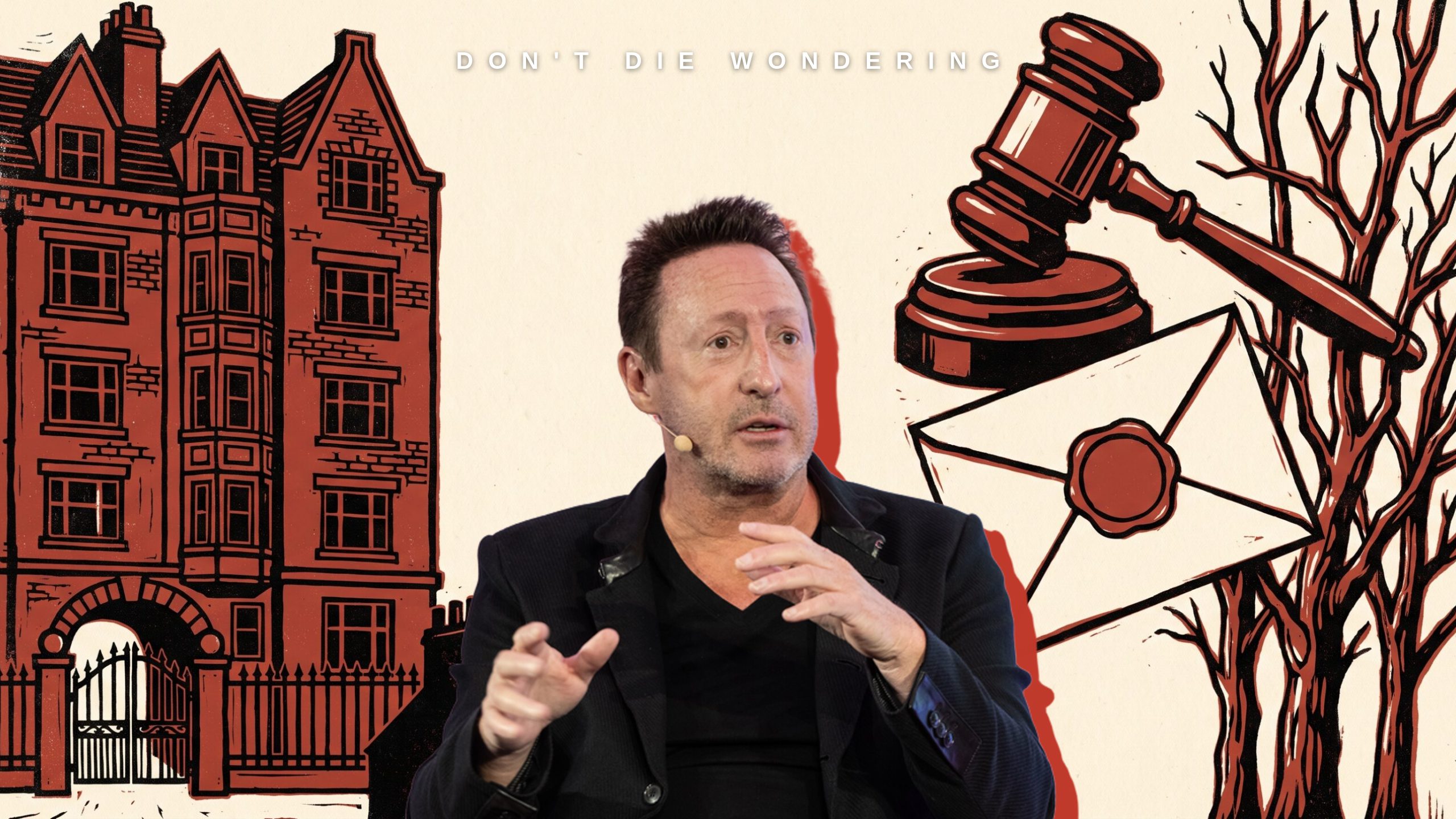
The world discovered that something extraordinary was happening in the Puech household on the first Friday of December 2023, when Geneva’s Tribune de Genève reported that the then-80-year-old heir intended to legally adopt his former gardener — a Moroccan-born man in his early fifties, married to a Spanish woman, father of two — and make him heir to billions.
No serious outlet has ever printed the man’s name, and we won’t either. What is reported: he began as a gardener and handyman, became indispensable, and over the years the relationship deepened into something the Swiss press has described as filial. Puech had reportedly already given the family two properties — one in Marrakech, one in Montreux — together valued at around €5.5 million. The adoption procedure, initiated through his lawyer in the canton of Valais as early as autumn 2022, would have made the gardener his forced heir under Swiss law.
The complication: back in 2011, Puech had signed an irrevocable succession pact naming his own charitable foundation — the Geneva-based Isocrates Foundation, which funds public-interest journalism — as his heir. The foundation, faced with the prospect of losing a bequest it regarded as contractually its own, objected. Swiss adult adoption is rare, slow, and contested; a report to the Valais adult-protection authority alleging “undue influence” over Puech was duly filed, the kind of document that manages to insult everyone it mentions, including the man it claims to protect. Puech, for his part, has carried on as a man who knows exactly what he wants done with what he owns.
Which raised, in court, the awkward question of what, exactly, he still owned.
The Vanishing
For roughly a quarter of a century, from 1998, Puech’s fortune was managed from Geneva by Éric Freymond, a wealth manager of impeccable discretion. Puech, by his own account, was the ideal client — in the way that a man who does not open his own post is an ideal client. When the foundation and the adoption battle forced a full accounting, Puech’s lawyers went looking for the six million shares.
They have not been found.
From December 2023, Puech filed complaints in Geneva accusing Freymond of having diverted or dissipated the bulk of his fortune over two decades. Geneva was unmoved: prosecutors declined to proceed, calling the accusations too vague and poorly substantiated, and in July 2024 the Geneva Court of Appeal rejected Puech’s civil claim outright, finding he had voluntarily entrusted Freymond with his affairs and shown no evidence of fraud. Freymond denied everything, consistently and completely.
Then the theatre moved to Paris, and the stakes changed. In May 2025, Puech’s lawyer filed a €14.3 billion civil suit in the Paris judicial court — naming not only Freymond but LVMH, Bernard Arnault, and the Arnault family holding companies, alleging his shares had ended up serving interests that were never his. LVMH has denied ever holding or “diverting” a single hidden Hermès share, and its board has complained of “an obviously coordinated press campaign.” On July 9, 2025, Paris investigating judges nonetheless placed Freymond under formal investigation — mise en examen — for aggravated breach of trust spanning 1998 to 2023, and for forgery.
Two weeks later, Éric Freymond was dead — struck by a train near his home in Saanen, in what was treated as an apparent suicide. His lawyers said he had been “broken by the violence of suspicion.” He was never tried, never convicted, and the presumption of innocence he held in life he holds still. It is the point at which this story stops being a parlour game about rich men’s paperwork, and everyone involved knows it.
The investigation did not die with him. Through the spring of 2026, Paris judges have placed three more Swiss legal professionals under formal investigation in the same probe. Nothing has been proven against anyone. The civil suit against LVMH and Arnault grinds on, currently entangled in procedural stays. It may yet be the largest private lawsuit in French history about shares nobody can produce.
The Arithmetic of Absence
Here is what is not in dispute. On an earnings call on July 30, 2025, Hermès executive chairman Axel Dumas told analysts that, so far as the company can see, Nicolas Puech no longer holds his shares. Forbes has removed him from its billionaires list entirely — the rare delisting caused not by a crash or a divorce but by a shrug. And in early 2025, a Qatari-backed vehicle reportedly agreed to buy Puech’s entire stake — a transaction that collapsed into the same fog as everything else, since selling shares first requires locating them.
There is one more twist the courts cannot touch. Hermès stock has fallen roughly 30 per cent in the past year; the missing 5.8 per cent, worth some €14 billion when the lawsuits were filed, would fetch closer to €10 billion today. Somewhere, a vanished fortune is quietly losing value — which rather suggests the market, at least, believes it exists.
On July 29, Hermès reports its half-year results — one year, almost to the day, since Dumas confirmed the shares were gone. Analysts will ask about handbag waiting lists and American demand. Someone may ask about the cousin in the yellow house. In the village, the man who once owned more of Hermès than anyone alive will feed the horses, walk Nectar, and possibly have his annual coffee. Eighty-three years old this January, litigating on three fronts for a fortune he may never see again — and still, by every account, in good health and good spirits.
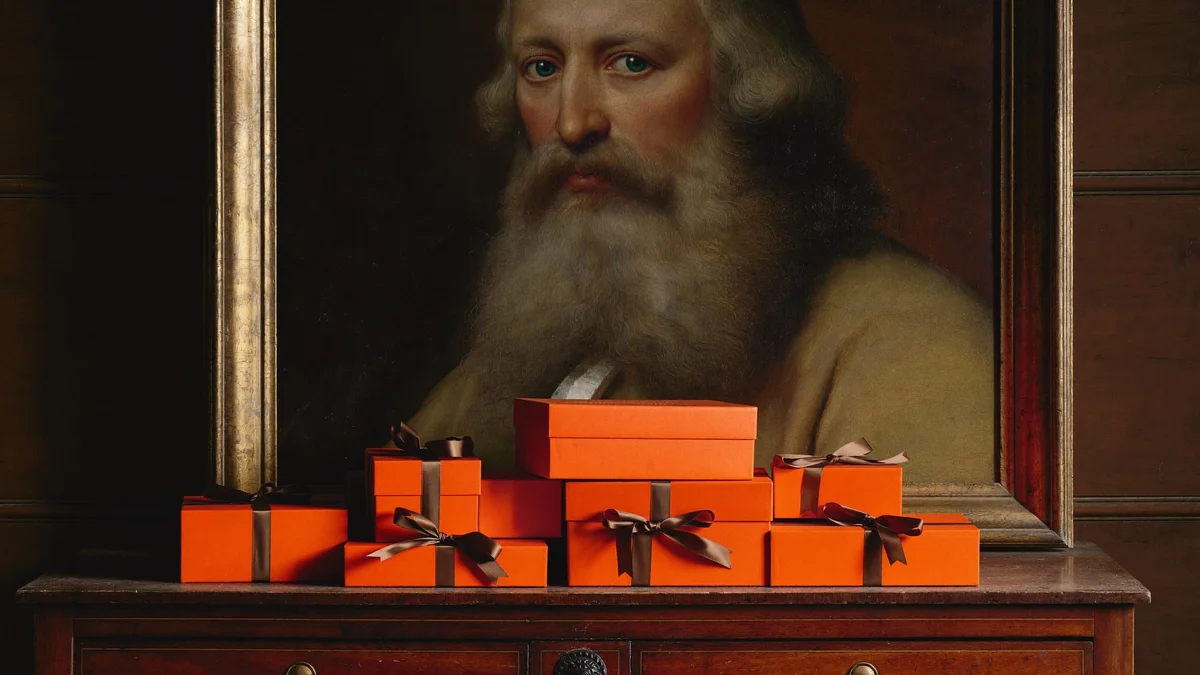
You would be too, perhaps, if you had spent eighty years learning what every Hermès box teaches: the value was never really the thing inside.