



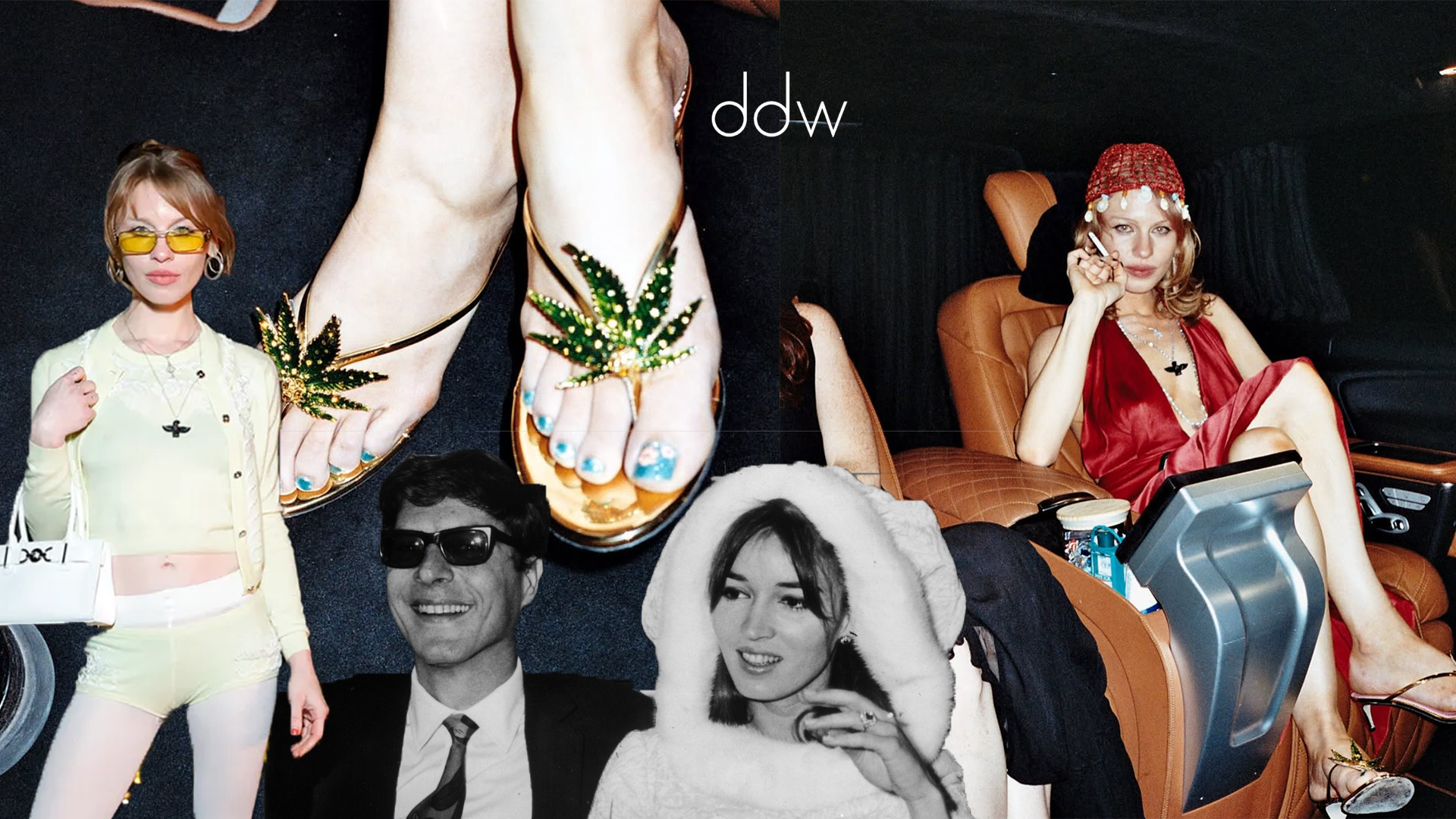
Kidnappings, overdoses, billion-dollar fortunes, Vogue weddings and a $200 million art sale. The Getty dynasty was supposed to be over. Instead, it became content.
There’s something sinister about picturing a half-empty multi-million dollar mansion, walls faintly ringed with sun marks where paintings once hung, corners void of the expensive art work that used to be there.
It’s a melodramatic image, admittedly, but it’s the one I can’t shake when thinking about the Getty residence in San Francisco circa 2022, as more than $200 million worth of art from the family’s celebrated collection passed through Christie’s auction rooms. Piece by piece, paintings, sculptures, furniture and decorative objects that had spent decades helping define the Gettys’ cultural identity were dispersed into the hands of strangers.
For a family of that cultural calibre, that could’ve been the end. After all, once you’ve sold the Degases, the Chinese porcelain, the eighteenth-century furniture and whatever else billionaires buy when they run out of normal things to own, what’s actually left?
As it turns out, quite a lot.
Turning Money into Cultural Authority
In the middle of the 20th century, the name Getty was synonymous with vast wealth and eccentricity. The family had made its fortune through oil after J. Paul Getty built a sprawling petroleum empire by acquiring and consolidating oil fields across the United States and the Middle East. By the 1950s, he was widely regarded as one of the richest men in the world.
The Gettys were rich, but not exactly admired. Paul Getty’s public image was shaped by the kidnapping of his grandson, an aggressive business acumen and his extreme frugality despite his immense fortune.
History is littered with rich people who were quickly forgotten. The families that endure tend to understand a different rule: wealth must be transformed into something society deems valuable. We’ve seen it all over history: renaissance bankers funded churches, aristocrats built absurdly large houses, industrialists donated museums to cities that could barely afford roads. The wealthy have always understood that there is a difference between having money and having a reason for everyone else to tolerate it.
The first generation of Gettys didn’t seem to get it, but the later ones did. Together, Ann and Gordon Getty worked their way through social acceptance throughout the 1980s, 1990s and 2000s, through a decades-long performance of refinement, patronage, and taste. Gordon provided the money, Ann the taste. Magazines began covering what the Gettys were up to, how they decorated their houses, who was invited to their soirées.
Most importantly, however, they assembled one of the most celebrated private collections of fine and decorative arts in America. Comprising a sprawling world of Old Masters, Impressionist paintings, European furniture, Chinese porcelain, textiles, and antiques, the Gettys’ home felt less like a residence than a private museum.
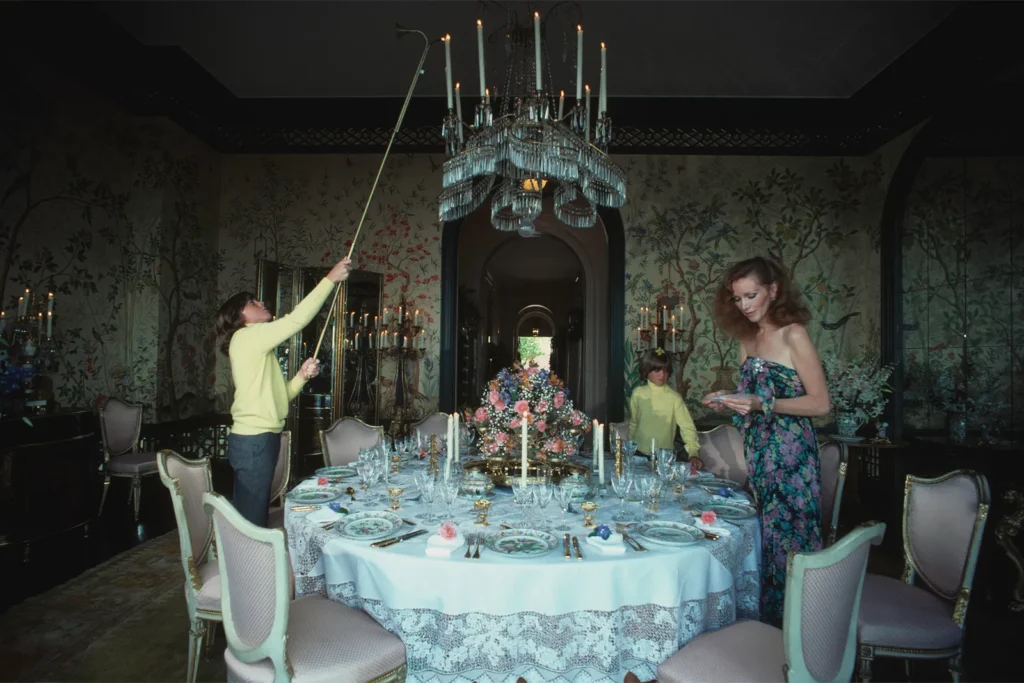
Following Ann Getty’s death in 2020, the collection she and Gordon had spent decades assembling would eventually realise more than $200 million at auction. It finalised an interesting chapter for the family.
The Gettys weren’t just absurdly rich. They had taste too.
The Contradiction
Despite their bought taste, the Gettys have long been shadowed by what the tabloids have aptly named the ‘Getty Curse’.
It’s a catchy but unfortunate title.
It first came up during the kidnapping of J. Paul Getty’s grandson John Paul Getty III, in Rome, 1973. Back when he was only 16 years of age, the Getty grandson was taken by members of the Italian criminal organisation known as the ‘Ndrangheta, in what some family members first dismissed as a prank. Demanding a ransom of around $17 million, the ‘Ndrangheta then cut off part of John Paul Getty III’s ear and mailed it, along with a lock of his hair, to a newspaper in Italy after the Gettys refused to pay.
John Paul Getty III was released in December 1973 after roughly five months in captivity.
The curse continued, however.
Eight years later, John Paul Getty III was left partially blind and paralysed following a drug-and-alcohol overdose. Then came another generation of headlines: Andrew Getty’s death in 2015, and John Gilbert Getty’s unexpected passing in 2020, just months after the passing of Ann Getty.
Much to their misfortune, the Gettys spent much of the late 1990s and early 2000s trying to escape a story that refused to stay buried. The family threw itself into philanthropy, the arts, and business. Mark Getty helped build Getty Images into a global media powerhouse. Gordon Getty became a respected composer and benefactor. Ann Getty continued to shape the family’s cultural reputation through collecting, entertaining, and patronage.
And then Ann passed away in 2020 and the collection was sold shortly thereafter.
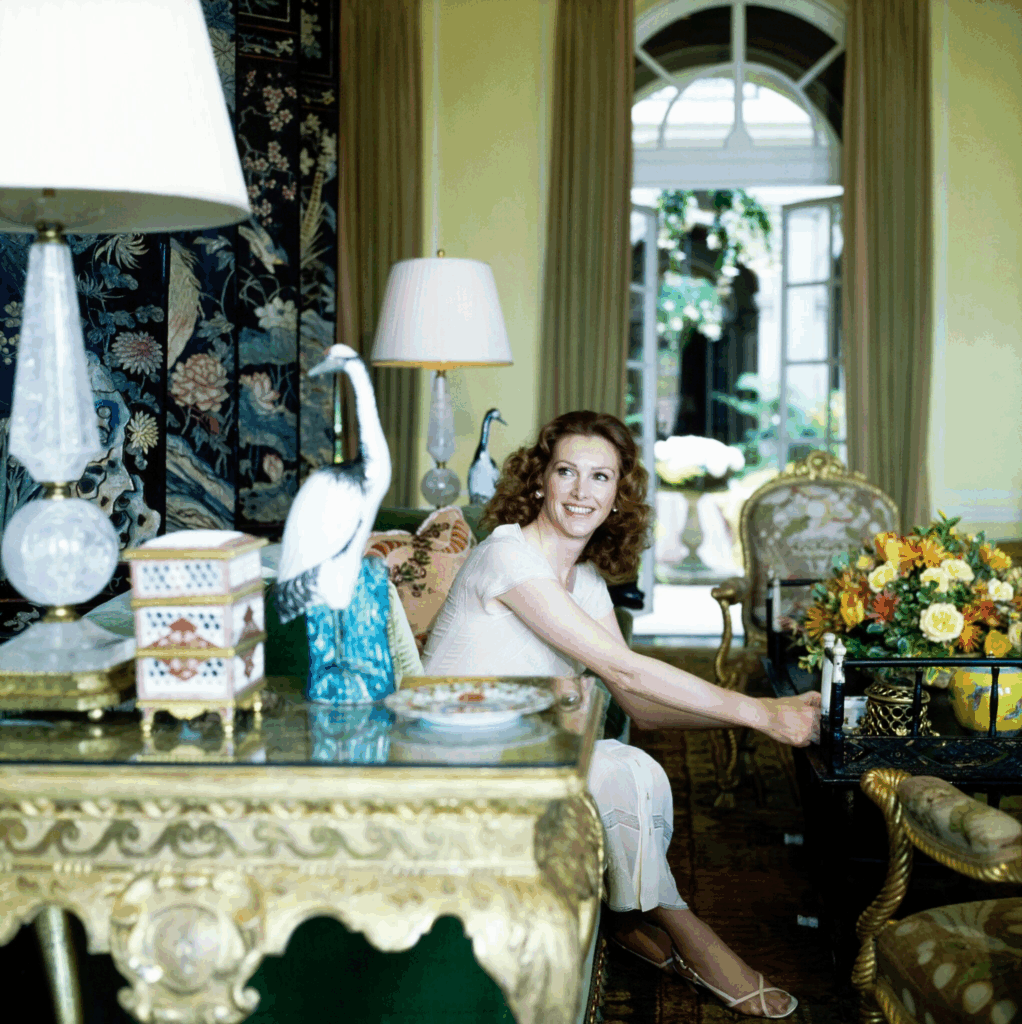
The paintings were leaving. The matriarch was gone. The cultural project appeared complete. If you were looking for signs that an era of Getty history was ending, they were hard to miss.
But dynasties rarely disappear. They simply find new heirs.
Third Generation Getty
By the deeply scientific metric of “would you rather have a drink with her than most billionaires,” Ivy Getty scores surprisingly highly for me.
With eyes pencilled in with kohl, off-kilter photographs in the back of limousines and front row seats during fashion week, Ivy has become the most publicly visible Getty of her generation. She doesn’t look like the heir to a cultural dynasty, or at least not a historical aristocratic one.
Unlike previous generations of Gettys, Ivy’s cultural contribution is not institutional. She is not building museums, funding opera houses or assembling collections. Instead, she participates in culture directly. She wears it, attends it, photographs it and occasionally becomes it. She has turned her family’s social capital into, for lack of better words, clout.

This is not as frivolous as it sounds. In many ways, Ivy Getty represents a modern form of status laundering. Instead of transforming wealth into patronage, many young heirs transform privilege into authenticity. They trade inherited status for cultural relevance, embedding themselves within fashion, art, music and creative subcultures that appear resistant to traditional elite structures. The goal is not to look rich, but interesting.
This is where Ivy Getty excels.
Her social media presence is filled with skewed photographs, unconventional styling, artists, parties and fashion shows. She married in a Galliano gown full of loaded meaning, and divorced not long after. She’s the heiress to a deeply scandal-prone family, and was particularly close to Ann Getty herself. Whether entirely intentional or not, it works. Fashion week invites, 91K followers on Instagram, or features in Vogue.
The second generational Getty project involved collecting beautiful things. Ivy Getty’s project appears to be becoming one.


Maintaining a Position in Society
Viewed through a sociological lens, the Getty story is less about wealth than the translation of power.
Every Getty generation inherited a form of capital and converted it into something society valued more. J. Paul Getty transformed oil into a fortune. Ann and Gordon Getty transformed that fortune into cultural legitimacy. Ivy Getty appears to have transformed that legitimacy into attention.
This is not a lesser form of power. If anything, it may be the defining form of power in the twenty-first century.
The Gettys spent decades collecting things that made them culturally important, then they sold most of them. Which makes sense, really. Because in 2026 a Degas can’t go viral.
An heiress can.