


It’s been nearly 11 months since a mysterious 3am crash in Sydney’s affluent Rose Bay suburb made 23-year-old Chinese-Australian Yang Lanlan hit the news.
Driving a Tiffany-blue Rolls-Royce reportedly worth around A$1.5 million, Lanlan crashed into a Mercedes-Benz van driven by George Plassaras, a Greek-Australian chauffeur who worked for Sydney radio host Kyle Sandilands.
Up until the crash, she had no obvious public profile. But when someone with no visible past crashes a million-dollar car, gets charged with serious driving offences, and can’t be found online at all, the internet struggles to let go.
The Crash and the Ghost Profile
It took around 13 days for the name Yang Lanlan to hit the headlines of Chinese media. Through a combination of public outrage and curiosity, the story of a mysterious wealthy woman crashing a car amassed enormous attention on Chinese social platforms, making Yang Lanlan one of the most searched names online.
As Chinese internet users began digging into her background, they encountered something slightly unusual: a woman who appeared to have extraordinary wealth (she owned a Rolls-Royce after all) but almost no discoverable biography. No company, no public-facing career, no visible social media history… practically a ghost to today’s standards. It was a slippery slope — the deeper people looked, the less they seemed to find.
The Woman Nobody Could Find
Dubbed “Celestial Dragon Girl” by Chinese internet users, Yang Lanlan was charged with multiple offences related to the collision, giving people plenty of time and opportunity to get a glimpse of the now internet-famous woman.
Despite the crowds, the cameras, and the growing mythology surrounding her, Yang did not regularly appear in person to court. At some hearings, she attended by video link, showing up only as a face on a screen while the internet continued speculating.
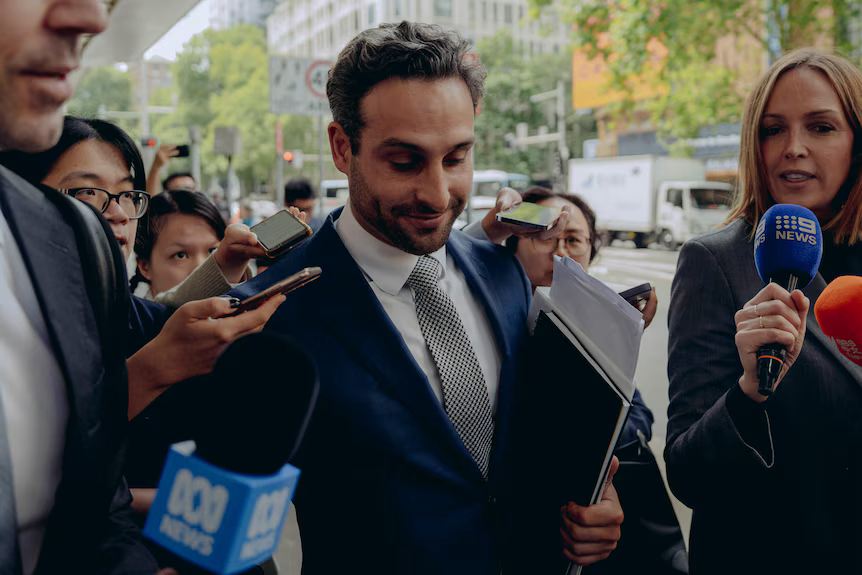
The mystery deepened when journalists pressed her lawyer about the source of his client’s apparent fortune, and no public explanation was offered. Asked where the money came from, there was no verifiable answer. Asked who she was, there were even fewer answers. The one person who theoretically should have known something about the mystery woman, didn’t.
Yang Lanlan wasn’t invisible in the traditional sense, but she was unfortunately visible in all the wrong places. There were the court appearances, news articles, police reports and photographs. Reddit is still full of threads, anons speculating on her looks, her family history, who her mother might be, but no official source is able to confirm it.
The Chanel Decoy
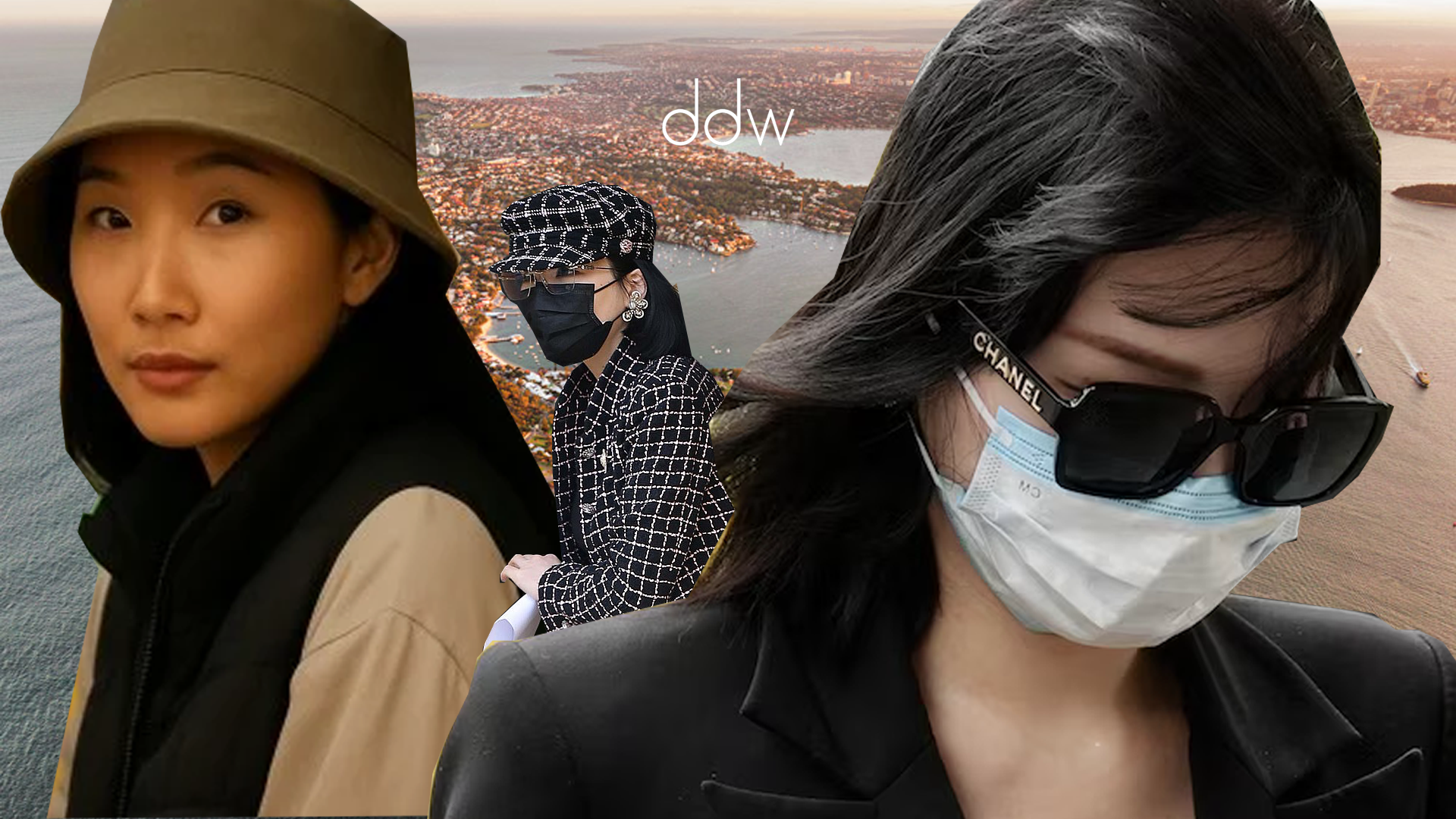
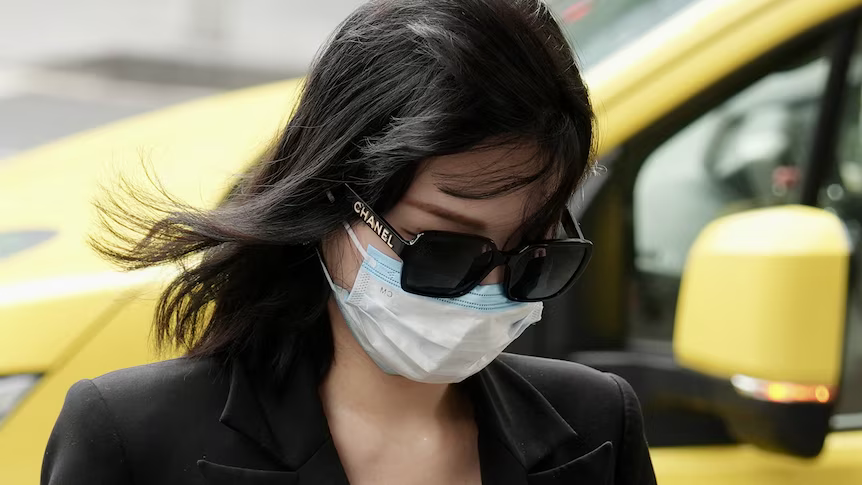
As part of her bail conditions, Yang was required to report regularly to police, which is straightforward enough. Except, according to reporters camped outside the station, the woman who arrived was reportedly not Yang Lanlan at all. Instead of the 23-year-old, journalists were greeted by yet another mystery woman, dressed head-to-toe in Chanel and accompanied by a bodyguard.
When approached by a Daily Mail reporter and asked whether she was Yang Lanlan, the woman reportedly said she was not. Lanlan appeared publicly the following week, and the Chanel-clad woman was never publicly identified.
Throughout the scandal, the court case itself moved at a glacial pace. Hearings came and went, lawyers requested adjournments, and prosecutors reviewed the evidence. Additional charges were later added, but with every passing month, the legal proceedings seemed increasingly secondary to the circus surrounding them.
The Speculation
Across Chinese social media, speculation about Yang’s identity at some point exploded. Theories ricocheted across Weibo, WeChat, Xiaohongshu and overseas Chinese-language forums. Was she the daughter of a billionaire? A hidden heiress? The relative of a senior Communist Party official? As the rumours snowballed, some commentators began floating an even more sensational possibility: that Yang might belong to China’s highest political circles.
Chinese netizens tore through corporate records, alumni databases, social media archives and public registries searching for answers. They found almost nothing. To this day, no journalist has produced documents, records, witness testimony, or any verifiable proof linking Yang Lanlan to Xi Jinping or any other senior Chinese political figure, so this is of course all speculation.
The Classification Instinct
As the rumours multiplied, it became increasingly clear that many people weren’t simply trying to identify Yang Lanlan, but trying to classify her.
Modern internet culture is remarkably good at sorting wealthy people into familiar categories. We know where to place founders, influencers, socialites, celebrity children, property heirs, crypto millionaires, and political dynasties. Each comes with an established script explaining where their money came from and how they fit into the broader social hierarchy.
What kind of rich person is this?
Humans are natural classifiers. Sociologists have long observed that we make sense of the social world by sorting people into categories, using labels to understand where they fit within the hierarchy around us. This instinct becomes particularly pronounced when it comes to wealth. Money is never just money; it carries assumptions about character, legitimacy, and status. It also allows us to place ourselves within that scale, providing a story that explains why some people have extraordinary amounts of money while most do not.
The Problem of Illegible Wealth
Thirty years ago, wealthy people were often private, but today, we expect wealth to come with a narrative.
Founders tell us how they built their company, influencers document every purchase, nepo babies explain their family history… Ultimately, we expect wealth to be legible. We have built a social ecosystem where people with money need to justify having it.
Sociologists have repeatedly found that people are far more willing to tolerate extreme wealth when they believe it was acquired through legitimate means. Wealth derived from entrepreneurship, innovation, hard work, or risk-taking tends to receive greater social acceptance than wealth perceived as inherited, political, corrupt, or opaque.
Particularly in China.
Having produced extraordinary amounts of wealth very quickly, many Chinese people remain deeply suspicious of unexplained wealth because of decades of corruption scandals, hidden political families, and stories about officials’ relatives living extraordinary lifestyles.
Another recurring theme in academic circles on contemporary China is that economic success and political access have often been intertwined. Researchers studying China’s corruption system describe a form of “access money” in which wealth is generated through privileged access to officials, land, licences, state resources, and political networks rather than purely through market competition. Whilst this doesn’t mean every wealthy person is corrupt, it does mean Chinese citizens have grown up in a society where business success can be linked to state relationships, political connections and patronage matters. When somebody appears extremely wealthy but their background is unknown, people naturally start wondering whether hidden political connections exist.
Chinese scholars even have a word for it: choufu (仇富), loosely translated as “resentment of the rich”. But the term is slightly misleading. People aren’t necessarily angry that somebody has money. Plenty of wealthy entrepreneurs are admired. What tends to provoke suspicion is wealth that appears to have materialised out of thin air, when money comes without a visible source, which is what made Yang Lanlan so fascinating.
The Case Today
As of mid-2026, Yang Lanlan has not been convicted, acquitted, or formally cleared of any wrongdoing. The case remains before the New South Wales court system, where hearings have repeatedly been pushed back and procedural delays have become the norm.
She continues to face a lengthy list of charges arising from the crash, including dangerous driving occasioning grievous bodily harm, negligent driving causing grievous bodily harm, refusing a breath test, and driving with alcohol in her blood. Yang has pleaded not guilty to all of them, including additional charges added by prosecutors in early 2026.
There has, however, been one small twist.
In January, Yang admitted to breaching her bail conditions after failing to notify authorities that she had moved addresses. According to reports, she had relocated from a luxury Watsons Bay penthouse to an apartment in Sydney’s Crown development without formally updating police. The breach was dealt with in court and resolved, allowing her to remain on bail.
Otherwise, the mystery remains largely unchanged.
The funny thing about Yang Lanlan is that if she’d been a billionaire founder, nobody would’ve cared. If she’d been an influencer, we would’ve found her Instagram. If she’d been a socialite, we’d have located her mother’s charity board within fifteen minutes. The internet wasn’t interested in her because she was rich. Sydney is full of rich people.
It was interested because it couldn’t understand her.
Nearly 11 months after a Tiffany-blue Rolls-Royce crashed into a chauffeur’s van on a quiet Sydney street, the legal case is still unresolved.
Lanlan’s silence, ironically, became the loudest story of the year.