


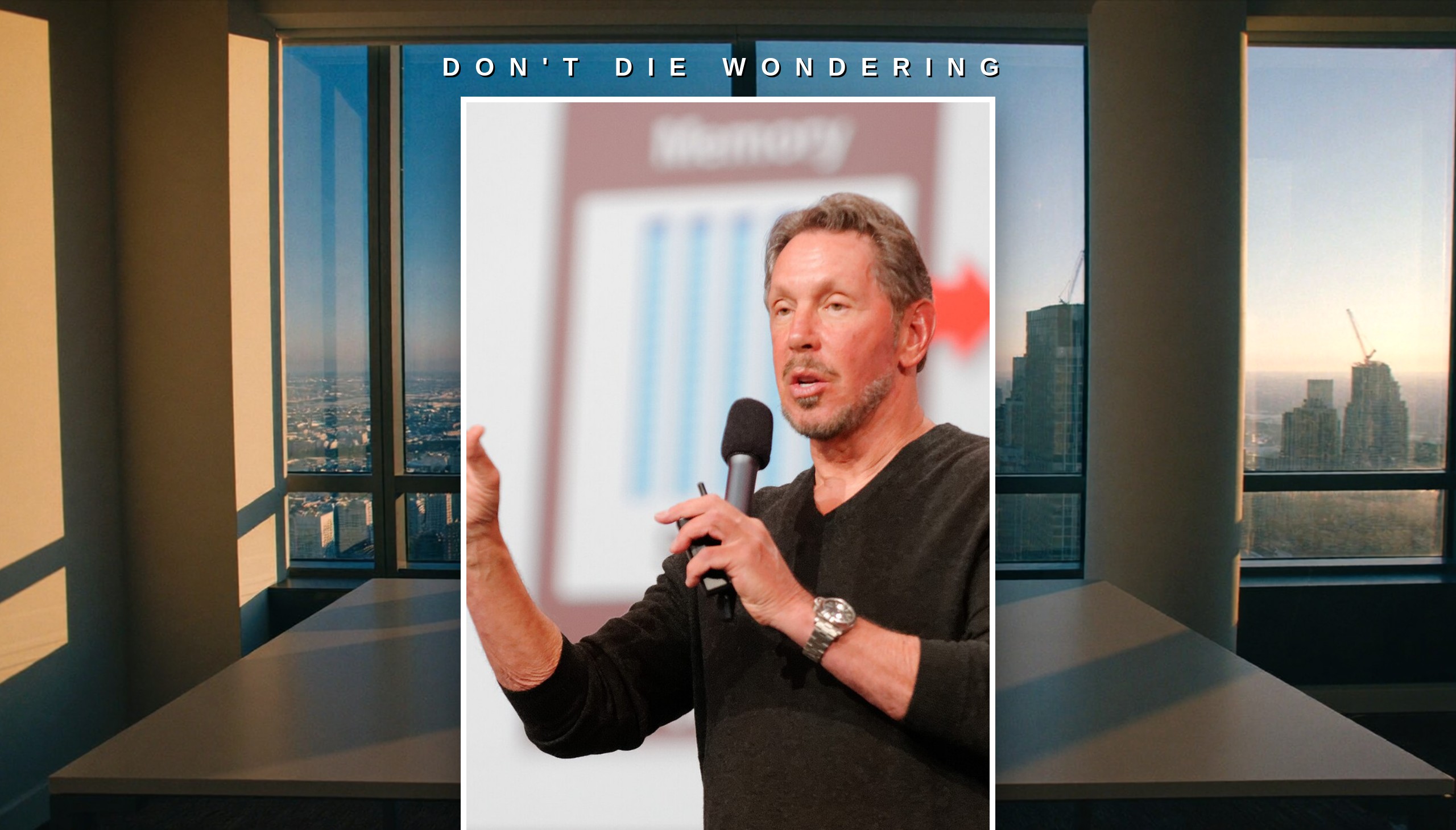
Larry Ellison had a standing arrangement to sell up to 50 million Oracle shares, worth roughly $7.5 billion according to Reuters, and he sold none of them.
The mechanics are dry and the timing is not. Ellison adopted a Rule 10b5-1 trading plan on 22 June 2026, set to expire on 24 October, according to The Wall Street Journal. A regulatory filing disclosed its existence on 11 September, as CNBC reported. He cancelled it the next day, and Oracle put out a release saying so. “No Oracle stock was sold under that plan, and he has no other plans to sell any of his Oracle stock,” the company said. Cancelling a 10b5-1 plan is entirely permitted under SEC rules. Oracle gave no reason for doing it.
That silence is the whole story for anyone watching the register. Investors may choose to read the reversal as a controlling shareholder declining to reduce his exposure at current prices, which is a reasonable inference and nothing more. Nobody at Oracle has said it. The only confirmed fact is the absence of a transaction.
Forbes reported that in September 2025 Ellison became only the second person ever valued above $400 billion, on an AI-driven surge in Oracle stock, briefly passing Elon Musk. The Bloomberg Billionaires Index put him at $204 billion and seventh-richest as of 13 September 2026, down $3.14 billion on that day alone. The widely republished “$200 billion in a year” framing traces to a single underlying analysis, and its two endpoints come from two different wealth trackers with different methodologies, which routinely value the same man differently. Ellison himself has never confirmed any of it; a spokeswoman, Deborah Hellinger, has previously said he declines to comment on his net worth.
The share price is the part that isn’t an estimate. Oracle traded at $141.61 on the morning of 14 September 2026, off 5.77% in that session and 10.81% over the prior week, per Yahoo Finance data. Year to date the stock was down 26.64%. Over the trailing year, down 53.48%.
The buyback did the work
Here is the quiet engine under the fortune. According to Barron’s, cited by CNBC, Oracle’s share repurchase programme has cut outstanding shares by 36% over the past 15 years, which lifted Ellison’s holding from 23% of the company to 41% while his own share count stayed essentially flat. SEC filings showed him with 1.16 billion shares as of July, and Bloomberg’s profile puts him at around 40% on an October 2025 filing. He got more of Oracle by standing still while the company bought itself back around him.
Fifty million shares out of 1.16 billion would have been a trim, not an exit. It would also have been the first meaningful signal in years that the man who has held this position since the company’s early days was willing to let any of it go.
There is a separate line in the filings worth knowing. Ellison had pledged 346 million Oracle shares as collateral “to secure certain personal indebtedness” as of 19 September, equivalent to 30% of his stake, according to regulatory filings reported by IFR. That is up from 277 million shares, or 24%, in September 2024. No source connects those loans to the cancelled plan, and nobody has suggested one.
The company he chairs is spending at a scale that makes an $7.5 billion share sale look modest. Oracle’s single-quarter capital expenditure hit $28 billion and free cash flow turned negative $5 billion, even as its AI cloud backlog reached $664 billion, according to Yahoo Finance. Oracle also became one of the major owners and security partners for TikTok’s US operations.
And TechCrunch reported that Ellison has used his wealth to back his son David’s acquisition of Warner Bros, which is being contested in court. The record there is straightforward: a coalition of state attorneys general sued on 13 July 2026 to stop Paramount Skydance’s $111 billion purchase of Warner Bros Discovery, US District Judge Araceli Martínez-Olguín of the Northern District of California issued a temporary restraining order barring a close, and the trial is set for March 2027. Paramount has said nothing that resolves it, and the outcome is open.
Ellison is 82. He served as chief executive from 1977 to 2014 and is now executive chairman and chief technology officer. The plan he cancelled would have run out on 24 October anyway.
Not one share moved.