



Jensen Huang met his wife across a laboratory bench at Oregon State, and the paperwork of his Nvidia fortune has followed that seating plan ever since.
Oregon State, the early 1980s
Jensen Huang’s longest partnership began in an electrical engineering class at Oregon State University, where a fellow student, Lori Mills, was assigned as his lab partner. His university biography records the detail, which is more than most universities can say about the couples who met in their laboratories. He had been born in Taipei in 1963 and graduated from Oregon State in 1984.
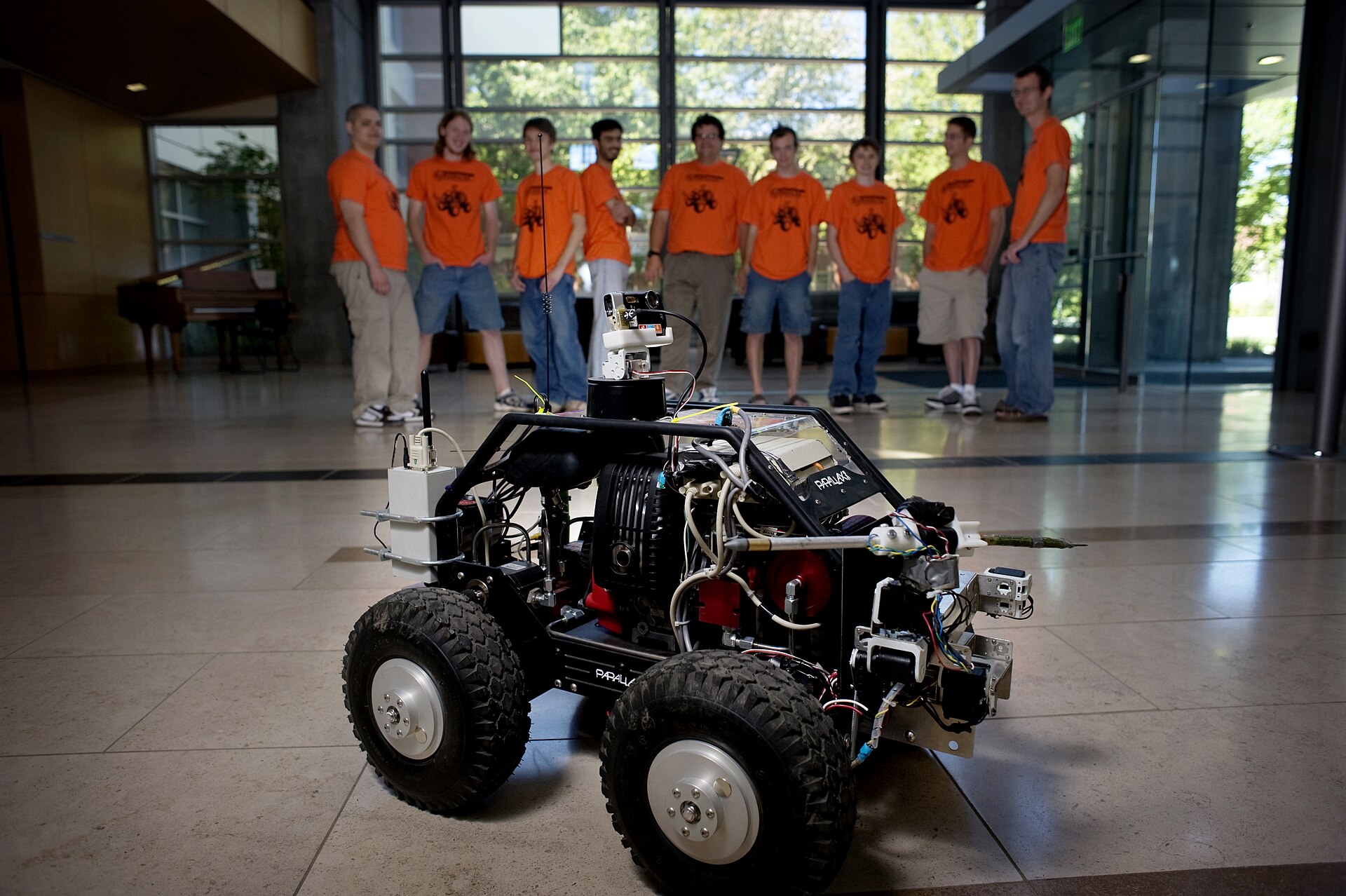
The lab partners married five years after that class. Engineering timetables are not usually thought of as a marriage market. In this case the timetable did rather well.
A wedding in 1985
The Huangs married in 1985, when Nvidia did not yet exist. It was co-founded in 1993 by Huang, Chris Malachowsky and Curtis Priem, and Huang has been its president and chief executive from the first day.
The calendar would hardly be worth mentioning if the couple lived somewhere else, but they live in California. Forbes sets out the state’s community property rule: assets acquired during a marriage are divided equally on divorce unless they can be shown to be separate property. A founder who marries after the company is formed has an argument about where the founding shares came from. Huang’s founding stake arrived when he had already been married for eight years, which leaves rather less to argue about.
According to Newsweek, Lori Huang left the workforce a few years into the marriage to raise the couple’s two children. Those children, Madison and Spencer, both now work at Nvidia. She has never been a public figure, and she has not commented on any of what follows.
Her place in the fortune is a matter of record, not of sentiment, and the records come next.
1 May 1995
Two years after the founding, the couple created the Jen-Hsun & Lori Huang Living Trust. The date is fixed in Nvidia’s filings with the Securities and Exchange Commission: a 2019 Form 4 lists shares held by Jen-Hsun and Lori Huang as co-trustees of a trust dated 1 May 1995.
This is the dullest document in the file and, by DDW’s reading, the most revealing. A couple ten years married and two years into an uncertain chip company put both names on the trustee line, at a moment when nobody could have guessed what the line would one day hold. Prenups are drafted by people expecting a fortune. Living trusts are drafted by people expecting a life.
Whether the Huangs ever signed a prenuptial or postnuptial agreement is not public. Forbes says it is unclear, and nothing on the record settles the question either way. The 1995 deed, by contrast, can be read by anyone with an internet connection and a tolerance for SEC formatting.
Between 2007 and 2016
The money began to acquire institutions. In 2007 the couple set up the Jen-Hsun and Lori Huang Foundation, based in Palo Alto, bearing both names in the same order as the trust.
Then came the trusts designed to outlast the people who signed them. Nvidia’s 2019 proxy statement sets out irrevocable and annuity trusts established in 2012 and 2016. Two of the irrevocable trusts are reportedly intended for the couple’s children. Lawyers choose the word “irrevocable” precisely so that it stays true, and shares placed in such a trust are not obviously part of any pot a court would carve in half.
The family’s holdings therefore sit in layers: shares in Huang’s own name, shares in the couple’s living trust, and shares in trusts for the next generation. A headline net worth flattens those layers into one number. In a divorce court, each would be argued over separately. Securities law requires a holder to report shares in which he has a beneficial interest, which is not the same as saying every one of those shares belongs to the couple, still less that every one could be divided.
That is where things stood, in tidy order, until this year.
Early 2026
According to TechCrunch, a memo circulating among US policymakers earlier this year claimed that a woman named Alice Huang had been recruited by China’s Ministry of State Security to spy on Nvidia’s chief executive. She is a former executive of Megaspeed, a Singapore-based company, and is no relation to Jensen Huang. When asked at the time, Nvidia said the pair’s interactions were “not unusual” and that it does not share classified information with customers.
Megaspeed is a cloud company and an Nvidia customer. CNBC has reported that it is accused of helping restricted Chinese companies acquire Nvidia’s AI chips. Megaspeed has reportedly denied diverting chips to China. No accusation about the chips has been made against Huang personally, and Alice Huang has not been charged with anything.
The memo’s date has never been made public. For most of the year it stayed a policy matter, which in Washington is another way of saying it stayed in a drawer.
Thursday 5 November
The rich lists moved first, and the cause was the market. On 5 November, during a broad sell-off in artificial-intelligence stocks, Nvidia shares fell 9.3 per cent. Bloomberg’s index cut Huang’s fortune to $150.9bn and moved him from ninth place to 13th.
The tumble out of the world’s top ten, later bundled into the scandal coverage, happened three days before Huang said a word about his private life. By our reading of the dates, the ranking fell on a chip sell-off, and the email came afterwards.
Sunday 8 November
That Sunday, Nvidia published a message from its chief executive to its staff.
“I was unfaithful to my wife.” Jensen Huang, in his email to Nvidia employees, 8 November 2026
In the email he said his actions had hurt his wife and their children, and he apologised to the company’s staff, its board and its shareholders. He did not name the other person. TechCrunch reported that the admission concerned Alice Huang.
Huang admitted infidelity and nothing more. He admitted no espionage, no breach of security and no connection to anybody’s chips. The board said the same day that it had no reason to believe national security or company secrets had been compromised.
The board also announced an independent investigation, prompted, it said, by reports that Huang had been the target of a foreign intelligence effort. CNBC reported its statement that a committee of independent directors, with outside independent counsel, would oversee the inquiry. The board added that Huang supported the review and had promised to co-operate with it, and that it retained confidence in him and his leadership team. A company spokesman said Huang intended to carry on as chief executive without interruption.
NBC News went further. A person familiar with the matter told it that intelligence agencies had concluded Alice Huang was a Chinese spy. That is one anonymous source, not the finding of any court, and no charges have been reported against anyone.
Monday 9 November
Beijing answered on Monday, when Guo Jiakun, spokesman for China’s Foreign Ministry, called the spy allegation unsubstantiated, NBC News reported. Nvidia shares fell a further 4.3 per cent.
The same day Forbes turned to the question its readers were plainly asking. It put Huang’s fortune at about $155bn and calculated that, under California’s equal-division rule, Lori Huang could be entitled to at least $75bn, a figure it hedged with care: the amount would depend on Nvidia’s share price and on any agreements or separate-property claims.
Every part of that sum is hypothetical, as are the rival calculations other outlets ran beside it. Neither Jensen nor Lori Huang has announced any plan to divorce, and nothing has been filed. The arithmetic was done for them by strangers, which is rather like having one’s wedding speech written by the Inland Revenue.
What the strangers could not see is the structure set out above. A settlement need not be paid in shares, the children’s trusts complicate any division, and a woman who has been co-trustee of the family’s main trust since 1995 is not negotiating from the outside of anything. If she ever has to negotiate at all.
Tuesday 10 November
By Tuesday the market had finished with him for the week. Bloomberg’s index put Huang at $148bn on 10 November, and its profile says he owns about 3.3 per cent of Nvidia, in his own name and through family trusts, according to a December 2025 filing.
The phrase “family trusts” carries more weight in that line than anything else on Bloomberg’s page. Each version of his fortune printed this autumn was a snapshot of a share price on a given day; those numbers will be different again by the time this is read. The trust deed has stayed put since 1995.
The board’s investigation continues, and DDW will not guess at its outcome. The marriage is the Huangs’ business, and they have kept it that way. Bloomberg’s figure counts the fortune in one man’s name.
The 1995 deed was drawn up in two.
Read Next: 7 Facts That Explain Kavya Maran in 2026