


New York society once had a guest limit, and the man who announced it, Ward McAllister, admitted it matched the capacity of one woman’s ballroom.
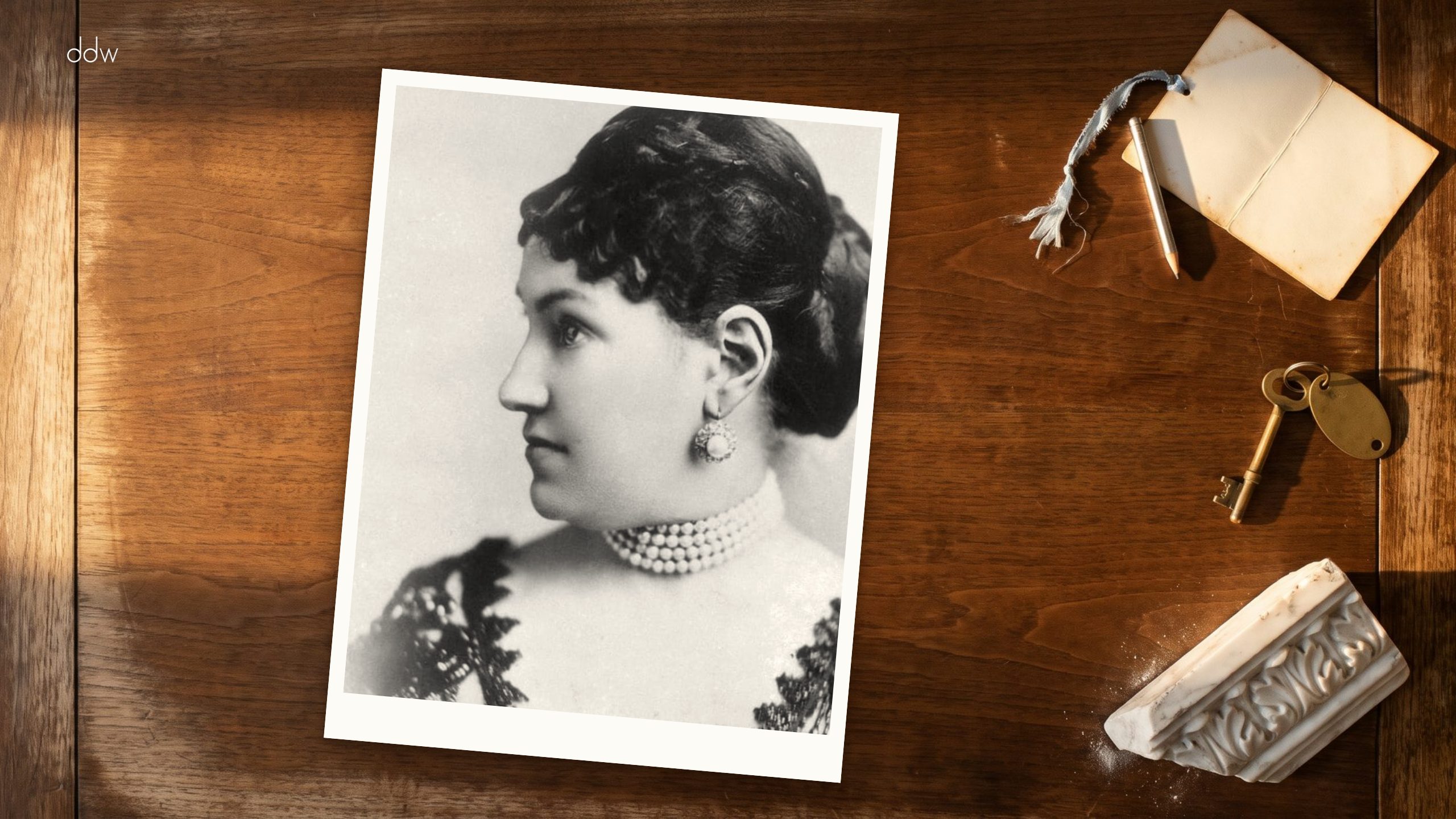
New York has had more than one Mrs Astor, and only one of them came with the definite article. American Aristocracy gives Caroline Webster Schermerhorn, 1830 to 1908, the title line “The Mrs. Astor” and calls her arguably the leading hostess of Gilded Age New York. A surname is shared by a whole family. The article in front of it can belong to only one person at a time.
HBO’s drama The Gilded Age began its fourth season on 1 November 2026, Deadline reported in August, and television is welcome to its own version of her. The history turns on two dates, 1888 and 1892, which belong to two different newspapers and are best kept apart.
Caroline Astor was the Mrs Astor
The same American Aristocracy page says she and Ward McAllister drew up the Four Hundred, the roll of New Yorkers who counted. The partnership suited both sides. She had the name and the house; he had the appetite for administration.
Her influence ran through the ballroom more than the drawing room. The Daily Beast says that by the 1880s McAllister, with Mrs Astor’s support, dominated the management committees of most society balls, and so largely decided who was in and who was out. Control of the committees meant control of the invitations, and in a city that measured standing by invitations, that was most of the power there was to have.
A ball committee is a modest office, but in Gilded Age New York it served as the whole constitution.
McAllister’s number matched her ballroom, he said
The figure entered the language through a newspaper. The same Daily Beast page says that on 24 March 1888 McAllister gave the New York Tribune his view of society. The reporter had him define Society as “The Four Hundred”, and McAllister admitted this was also the capacity of Mrs Astor’s ballroom.
The candour is the charming part. Most attempts to define an elite reach for breeding, taste or virtue. McAllister’s definition, on his own account, came with a set of dimensions, and those dimensions belonged to one house.
The number therefore rests on his word, given to a reporter, and it is safest left there. A social register sized to one hostess’s floor space has at least the merit of a firm upper limit.
McAllister’s list reached print in 1892
Four years passed between the interview and the names. American Aristocracy says The New York Times published the list on 16 February 1892, and that those on it had to come from families with at least three generations of wealth. That condition is the site’s description of the list, not a rule McAllister published.
The New York Irish History Roundtable offers an explanation for the gap. It says McAllister probably had a list of 400 in 1888 and refused to release it until 1892. A number without names costs its author nothing; a list of names gives every reader something to check, and everyone left off it something to resent. Holding it back for four years kept the Four Hundred a figure of speech for as long as it lasted.
Once printed, the list stopped being his to manage. He died in 1895, so it outlived its compiler by some way. Caroline Astor outlived him too, by thirteen years.
Her house made way for the Astoria
The fiercest contest over the name took place inside the family. Edwardian Promenade says her nephew, William Waldorf Astor, son of her husband’s elder brother, felt that his own wife should be “Mrs. Astor”. The quarrel, put plainly, was over a single word of three letters, and which woman was entitled to stand behind it.
It moved into masonry. The New-York Historical Society says the Waldorf and the Astoria were built in the 1890s for William Waldorf Astor and John Jacob Astor IV, cousins nursing a feud, on the sites of their parents’ mansions, including that of “The” Mrs Astor. The ballroom whose capacity had set the size of New York society thus became the footing for a hotel, and hotels admit anyone who can pay.
Two hotels side by side were, in effect, a family argument with a lobby.
An office tower now stands on the site
The Empire State Building’s own history says its backers bought the original Waldorf Astoria site in 1928, had the hotel demolished, and opened the building on 1 May 1931. The New-York Historical Society dates the hotel’s move uptown to 1931, so the name and the ground parted company in the same year.
By our count the plot has carried three buildings in this story: Caroline Astor’s mansion, the Astoria that replaced it as half of the Waldorf Astoria, and the Empire State Building that replaced the hotel. Each was larger than the last, and each admitted more people than the one before. A house that once held the Four Hundred now sits beneath an office tower, which is about as thorough a revision of a guest list as Manhattan has managed.
Brooke Astor was a different Mrs Astor
The other Mrs Astor usually found beside her is Brooke Astor, who died in 2007, the Center for Art Law says. She belongs to the family’s later history and to a different century: her death came 99 years after Caroline’s. The confusion between them is understandable, since both carried the same surname into the same city’s grandest rooms, but only one of them was ever billed with the article.
Caroline Astor, the one with the ballroom and the list, died in 1908.
Read Next: Prince Albert Means to Hand Princess Charlene Monaco’s Spare Keys
Cover photograph: Unknown author Unknown author via Wikimedia Commons (Public domain).