
Portraiture began as the pride of people with skill and money, and within two centuries it was the uniform of rank.
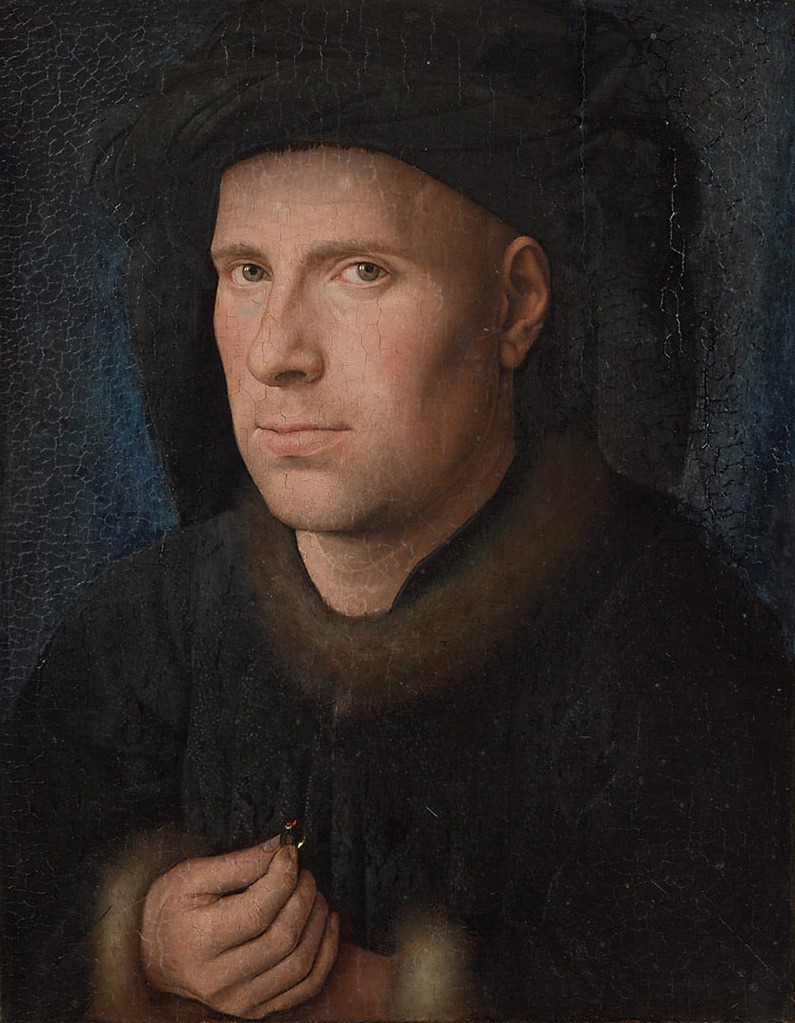
Start with the frame. On the portrait of the goldsmith Jan de Leeuw, his surname is drawn as a lion, and in the picture he holds up a ring, a craftsman’s pride in his skill. Jan van Eyck painted him in 1436, when de Leeuw was working in Bruges, and probably counted him a friend. For the first time in its history, Vienna’s Kunsthistorisches Museum has lent both of its van Eycks at once.
The show, Van Eyck: The Portraits, is at the National Gallery from 21 November 2026 to 11 April 2027, and it gathers all of Jan van Eyck’s surviving portraits. Tickets are from £18, audio guide included.
The first sitters had money and no rank
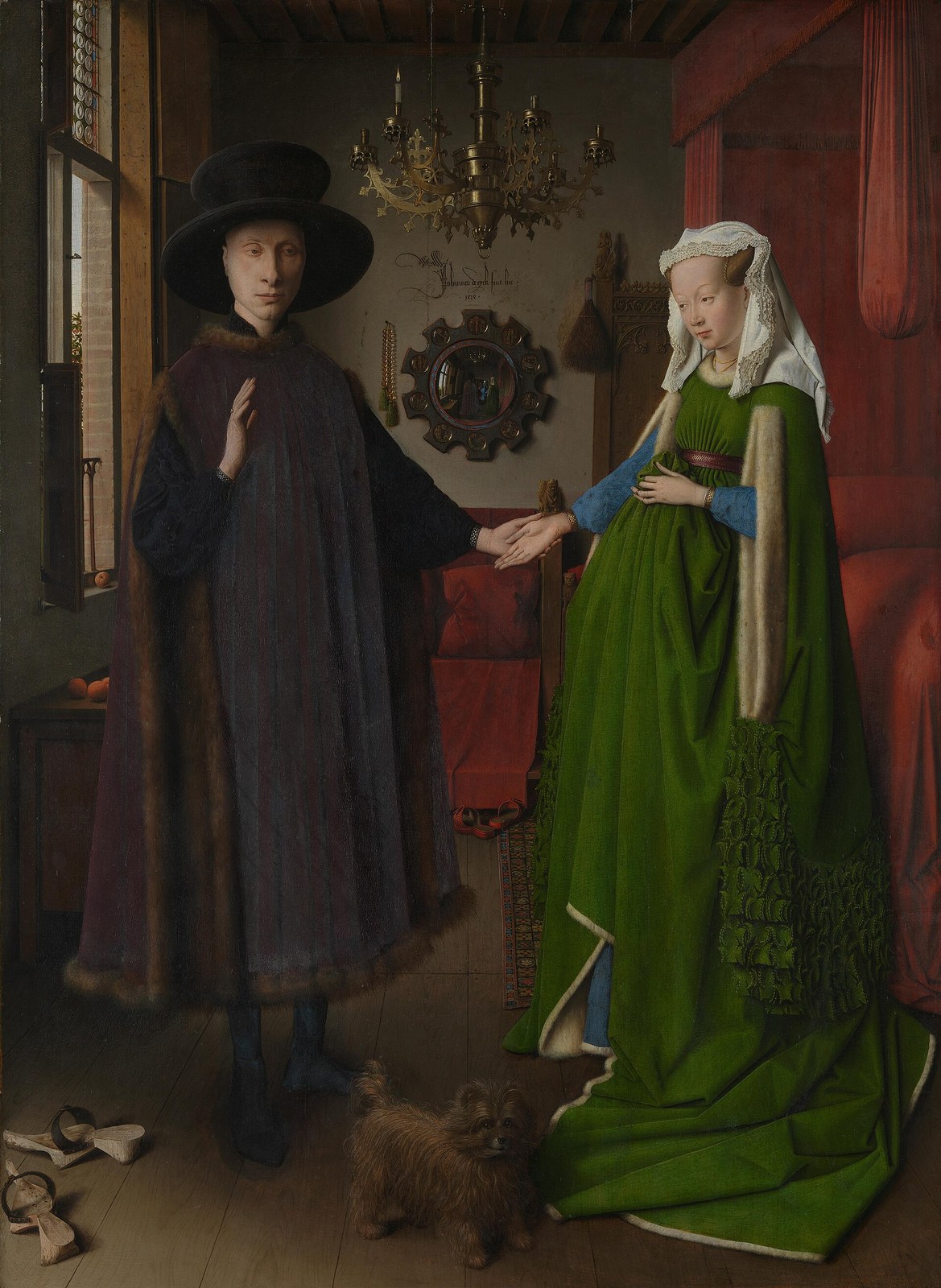
Look at who sat. The couple in The Arnolfini Portrait are probably Giovanni di Nicolao di Arnolfini, an Italian merchant working in Bruges, and his wife. The painter signed it in Latin, and the signature translates as “Jan van Eyck was here. 1434”, which is how a tourist signs a wall. (The chandelier cannot fit into the space it seems to occupy.)
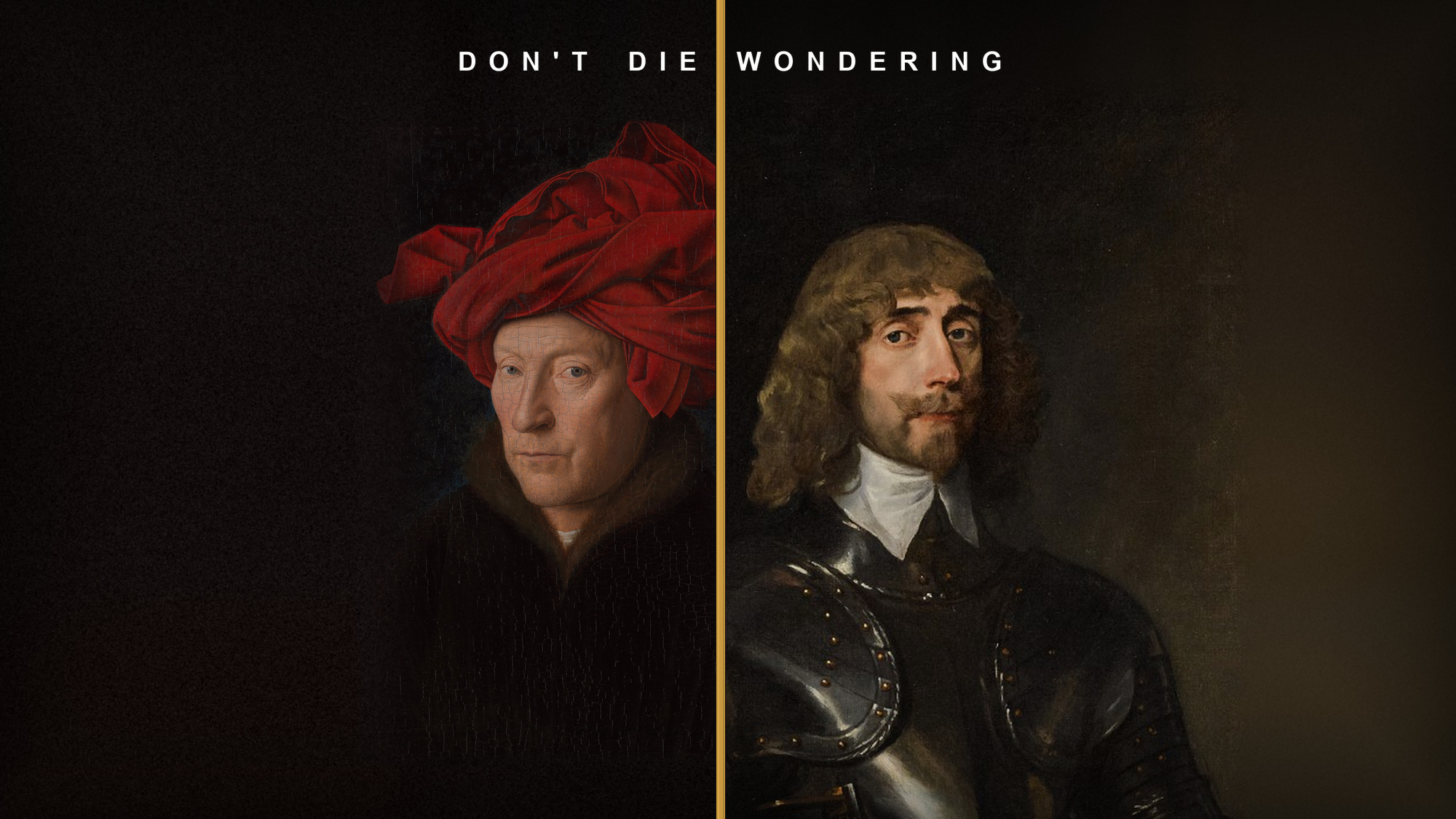
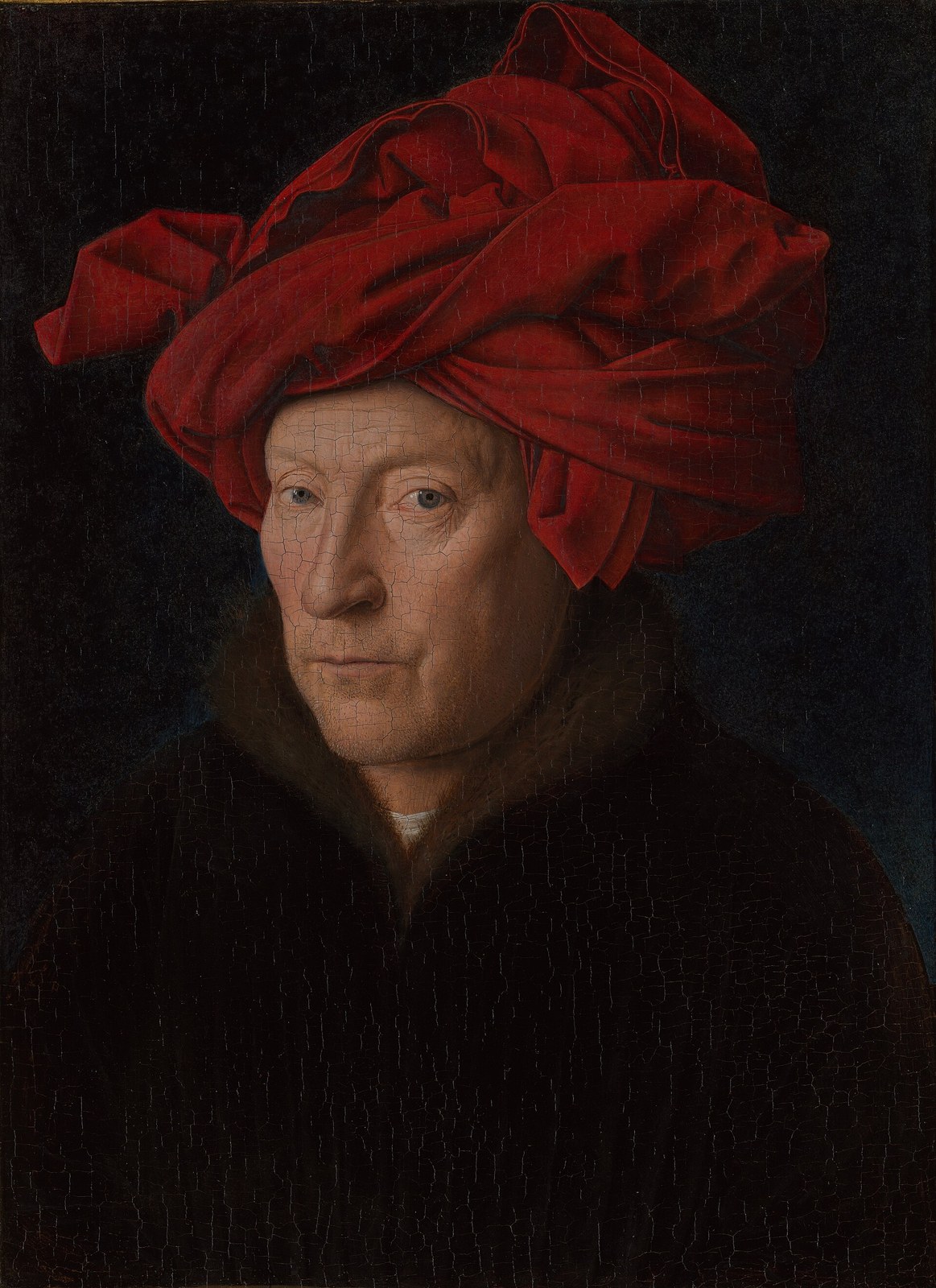
His own face is in the show too. The sitter in his own portrait is almost certainly the painter himself, and no other portrait of him survives. His motto, Als Ich Can, runs in Greek letters along the upper frame, and the lower inscription says Jan van Eyck made the picture on 21 October 1433. (The ruling for the signature slipped and was redone, and the letters for October were squeezed in at the end with no room for a full stop.)
Then there is Margaret, the Artist’s Wife, painted in 1439: the first dated identifiable portrait of a woman who was not a member of the aristocracy. Van Eyck painted frames and panel backs to look like precious metals and stone, and his signatures as if they were carved. Even the frames and panel backs were painted to look like something dearer.
Two centuries later the portrait was a uniform
The goldsmith’s ring has given way to a knight’s chain. In Holbein’s The Ambassadors, of 1533, Dinteville’s gold chain shows he belongs to the knighthood of the Order of Saint Michael, and the broad black shoes in the picture were legal wear only for nobles.
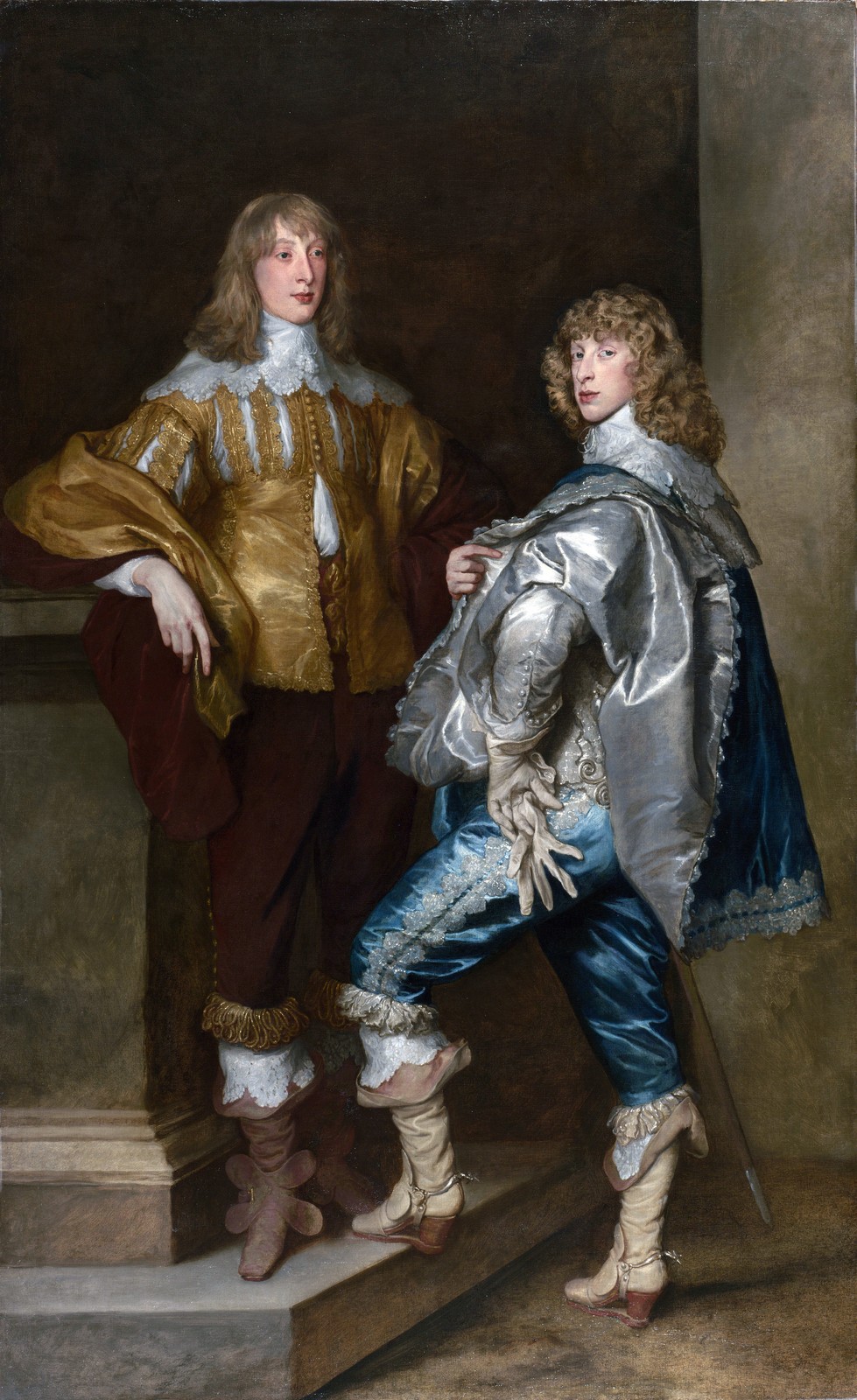
In Van Dyck’s Lord John Stuart and his Brother, Lord Bernard Stuart, of about 1638, the two brothers stand side by side, and their eyes do not meet. Both were later killed fighting on the Royalist side.
An earl in armour, with a baton in his hand
Sir George Hay, 7th Lord Kinfauns, later 2nd Earl of Kinnoull, had a title of his own before he had an earldom to inherit. His father, the Lord Chancellor of Scotland, held the barony of Kinfauns, ratified to him by Parliament in 1621, and was raised to the peerage in 1627 as Viscount Dupplin and Lord Hay of Kinfauns, then in 1633 as Earl of Kinnoull. The son went by his father’s barony: on 18 June 1629 the States General of the Dutch Republic swore in “Sir Gorge Hayes, baron van Kienfaunes” as colonel of a newly raised Scottish regiment, and from 1632 to 1635 he was Captain of the Yeomen of the Guard. He succeeded as Earl in 1634, had the barony ratified to himself by Parliament in 1641, and died on 5 October 1644. Scotland keeps a hereditary rank of its own outside the peerage, the Scottish barons.
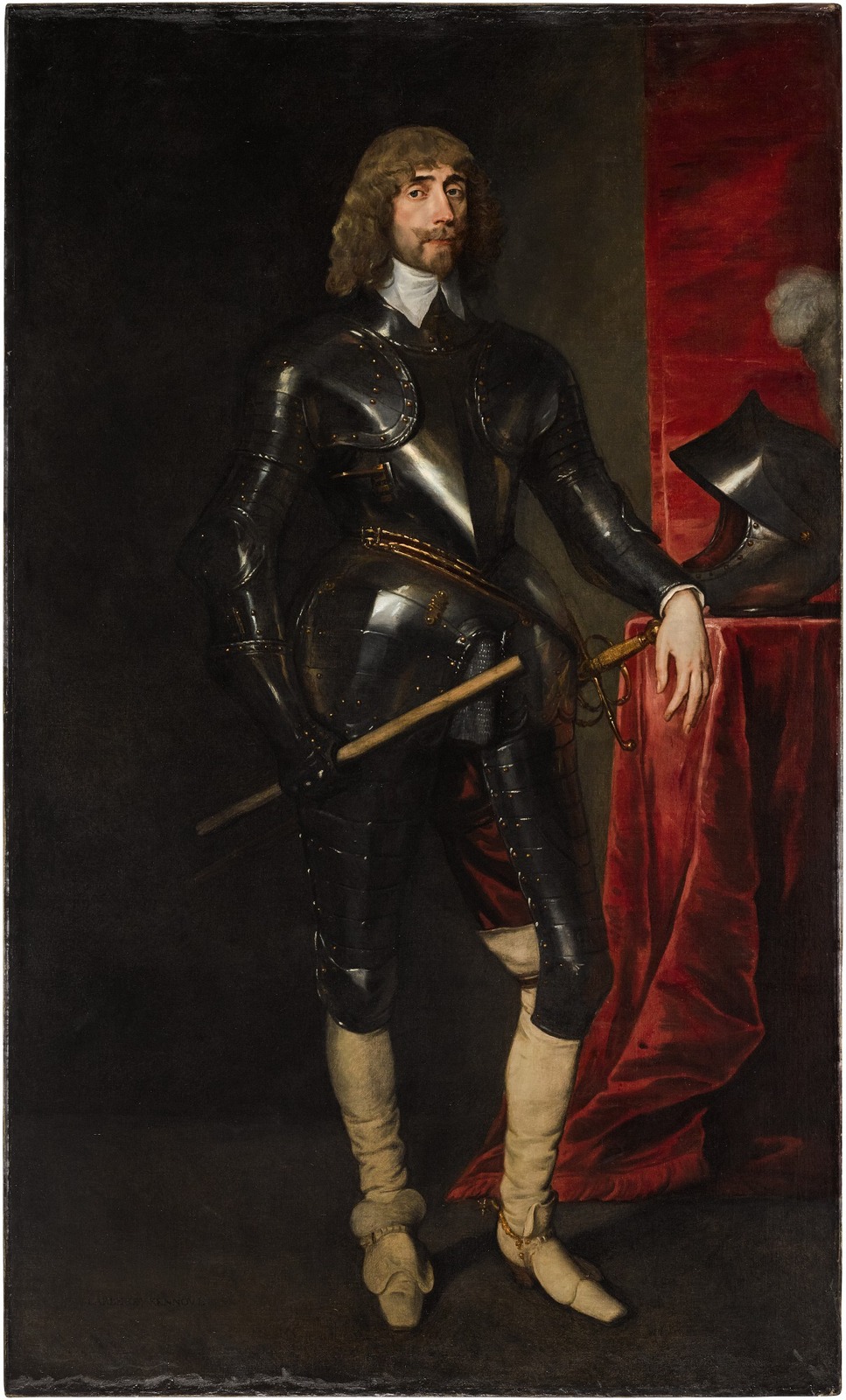
The full-length portrait shows the Earl in armour with a baton in his right hand, his left hand on a table where a red cloth carries his helmet. EARLE OF KENNOVL is lettered at lower left. The canvas is given to “Sir Anthony van Dyck and Studio” in the Sotheby’s catalogue.
Its provenance runs from the Earls of Kinnoull at Dupplin Castle to the Earls of Clarendon. The picture hung on loan at the Scottish National Portrait Gallery in Edinburgh from 1997 to 2020, and in December 2020 it came up, as property from a private collection, as lot 26 in the Old Masters Evening Sale.
A sitter who lost his name
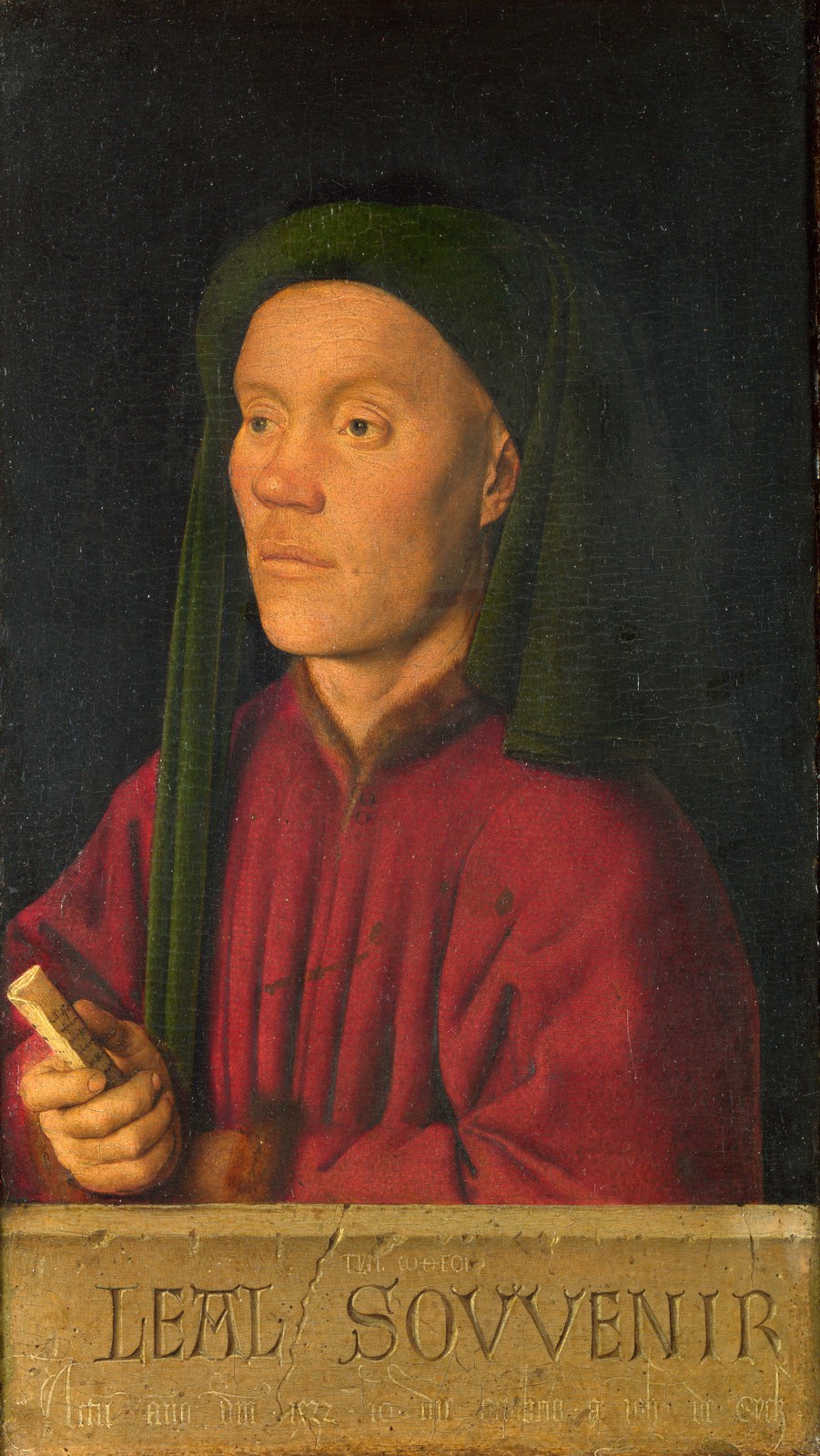
The man in Léal Souvenir has no name. Nobody knows who he was, and he may have been painted after his death. The picture is dated 10 October 1432, and the words LEAL SOVVENIR, Loyal Remembrance, are painted to look carved into the stone: the only French inscription on a surviving picture by Jan van Eyck. The original frame, which might have said who he was, is lost.
Cover: Jan van Eyck, Portrait of a Man (Self Portrait?), 1433, National Gallery, London; Sir Anthony van Dyck and Studio, George Hay, 2nd Earl of Kinnoull. Both via Wikimedia Commons (public domain).