

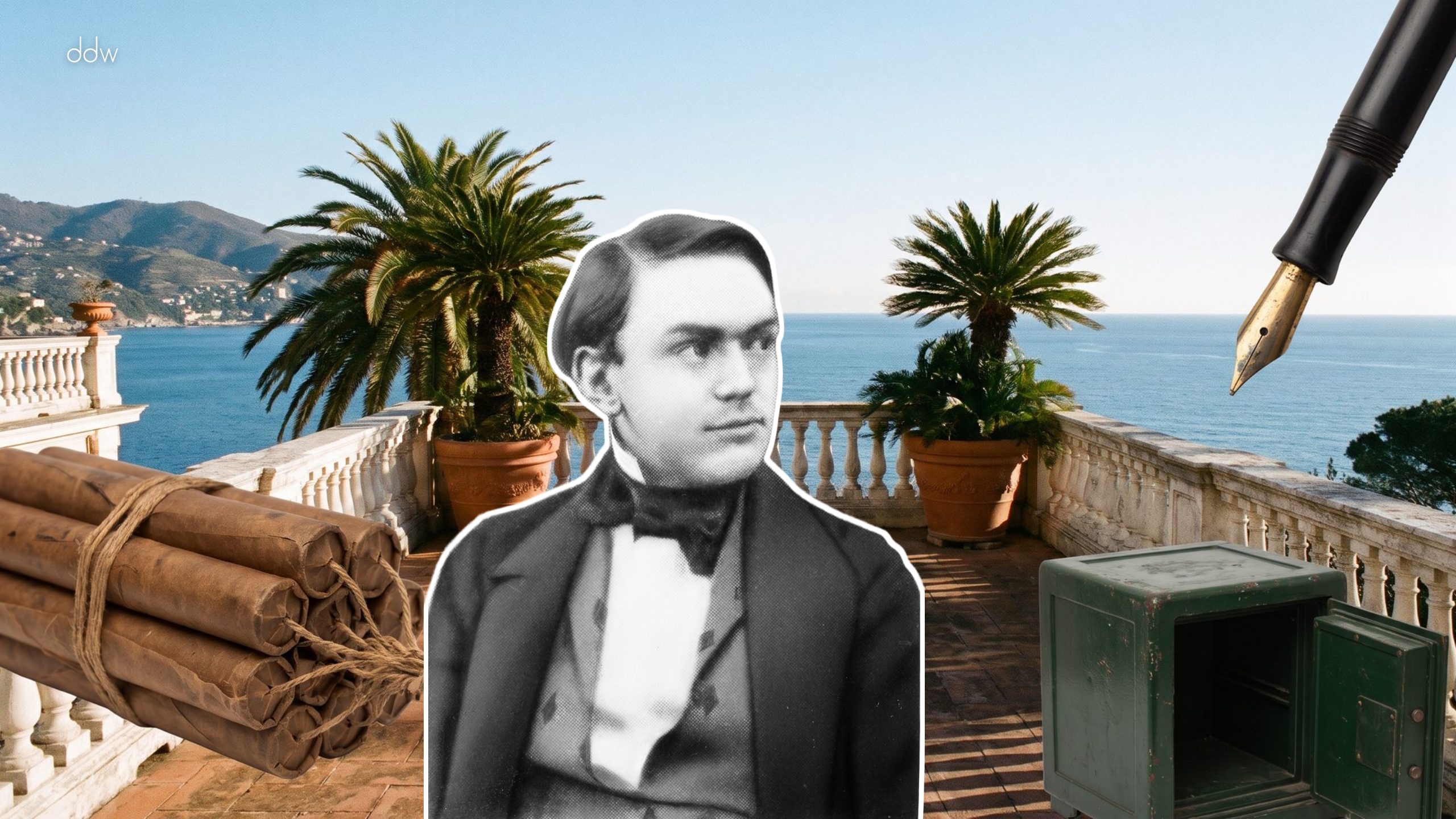
Alfred Nobel made his fortune in explosives and signed his last will at a club in Paris, asking for nothing cleverer than “safe securities”, a caution that shrank his prizes for decades.
Alfred Nobel’s estate came to some 33 million kronor, money that could not readily be moved from his death estate into a foundation. His executors managed it, and 31 million was left to fund the prizes, by the Nobel Foundation’s own history of itself. The Foundation keeps its books in kronor, and every sum that follows is its own.
Dynamite made the fortune behind the prizes
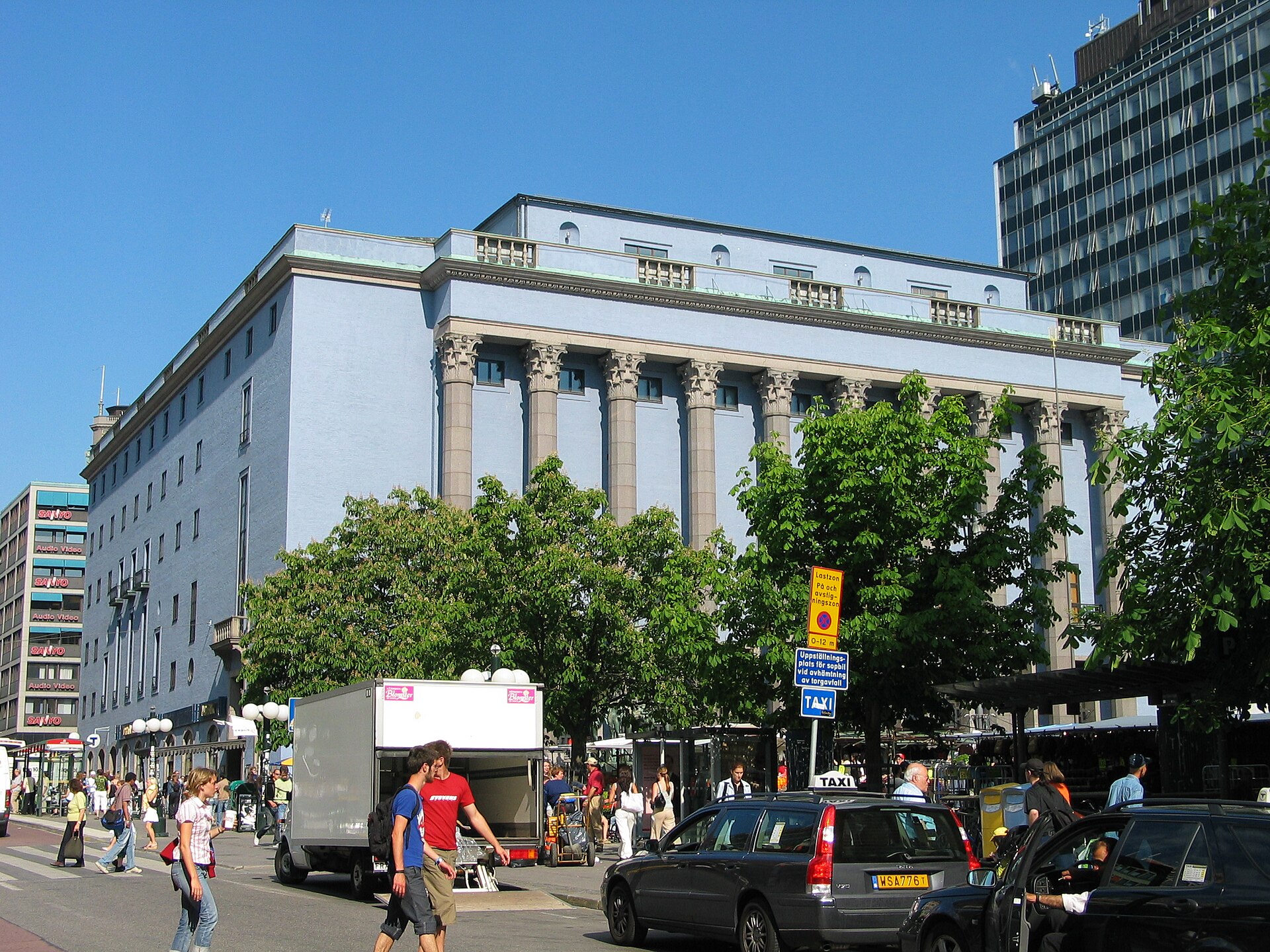
The Foundation’s biography of Nobel calls him an inventor, entrepreneur, scientist and businessman, and adds that he wrote poetry and drama. He is known for dynamite and held 355 patents. The business crossed borders early. In 1880 his Italian and Swiss companies merged as Dynamite Nobel, and in 1881 he bought an estate and laboratory at Sevran, outside Paris. In 1891, after a dispute with the French government over ballistite, he left Paris and settled in Sanremo, Italy. He died on 10 December 1896, aged 63. The prizes still keep that date. The 2026 award ceremony is at the Stockholm Concert Hall on 10 December, followed by the banquet, and Oslo holds the Peace Prize ceremony the same day.
He signed his last will in Paris
Nobel signed his third and last will at the Swedish-Norwegian Club in Paris on 27 November 1895. It divides the bulk of his fortune into five parts, for prizes in physics, chemistry, physiology or medicine, literature and peace, and says who the prizes are for:
“those who, during the preceding year, shall have conferred the greatest benefit to humankind.” (Alfred Nobel’s will, Paris, 27 November 1895)
Economics is not among the five. Sveriges Riksbank instituted a prize in economic sciences in memory of Alfred Nobel to mark the bank’s tercentenary, its statutes were approved by the Crown on 19 December 1968, and the funds the bank places at the Foundation’s disposal meet the expenses of presenting it. The will provides for five prizes, and a central bank looks after the sixth.
Two executors turned the estate into a foundation
Nobel hired Ragnar Sohlman, then a young engineer, in 1893, and later named him executor of his will. The will appointed two executors, whose duty was to create an organisation for the prize. That organisation became the Nobel Foundation, established in 1900 as a private foundation on the basis of the will and the founding statutes that came with it. The Foundation describes its job as managing the assets so as to safeguard the economic base of the prize over the long term and to guarantee the independence of the prize-awarding institutions, among them the Royal Swedish Academy of Sciences, which awards physics and chemistry, the Nobel Assembly at Karolinska Institutet and the Swedish Academy. It also manages the trademarks and intangible assets built up over the prize’s history. The Foundation keeps the money and the name; it chooses no laureates.
“Safe securities” shrank the prizes for decades
The will said only that the fortune should be converted into “safe securities” and the interest given out as prize money. The same history is plain about the result. The fortune decreased over the following decades, because of that conservative strategy and because of taxes. The first prizes, in 1901, were SEK 150,000 each, and the Foundation records that the amounts then declined steadily. Freedom to invest, together with a tax exemption granted in 1946, reversed the trend, and the real value of the prize amount was finally restored in 1991, ninety years after the first award. The costliest words in the will were its most prudent ones. For 2026, the Foundation sets a full prize at SEK 12.0 million.
The fund stands at SEK 6,744 million
That is the market value of total invested capital at the end of 2025, in the Foundation’s annual report for 2025, which the trustees certified on 24 April 2026. It is slightly down on the year before, and it includes properties the Foundation owns directly. The Foundation’s release on the 24 April meeting breaks down the exposure: 56 per cent in equity funds and 22 per cent in alternative assets, with the rest in fixed income and cash, property and infrastructure funds, and currency hedging. Nobel’s safe securities are now mostly equity funds.
One flat year sits on a steady decade
The same release puts the 2025 return on investment capital, a measure that leaves out the directly owned properties, at 0.9 per cent, after 11.6 per cent in 2024. Over five years the return has averaged 7.7 per cent a year, and over ten years 7.6 per cent. The prize is paid for by the long run, so the decade’s figure carries more weight than any single year’s.
Unawarded prize money returns to the fund
Under the statutes, if no work is found worthy, the prize money is held over to the following year, and if it still cannot be awarded, it is added to the Foundation’s restricted funds. The same statutes limit how far a prize can be split, to no more than three persons, and since 1974 a prize cannot be awarded posthumously unless the death came after the announcement. A prize nobody wins ends up as capital.
At present-day value, the Foundation’s history puts Nobel’s estate at approximately 2 billion kronor. The fund it became now holds more than three times as much.
Read Next: Six Points on the Hailey Bieber Rhode Sale in 2026
Cover photograph: Unknown author Unknown author via Wikimedia Commons (CC0).