

Declining the family firm sounds like one awkward conversation over dinner; for a Buffett, a Wang, three Murdochs and a Hermès heir it became years of filings, settlements and, in Paris, a criminal inquiry.
People search for heirs who refused the family business as though refusal were a single, clean act, performed once and preferably at Christmas. The record is untidier. Below are the five cases the public conversation most often files under that heading, each checked against what a company, a registry, a court or a named outlet has said. Three are refusals in the plain sense. One is a negotiated buy-out, and one is an exit now tangled in a disputed fortune, and each is labelled as what it is. Every figure carries the name of whoever published it. Where no serious outlet has put a reliable number on a fortune, none appears.
Peter Buffett looked hard at Berkshire, picked music, and asked to skip the $150bn giveaway
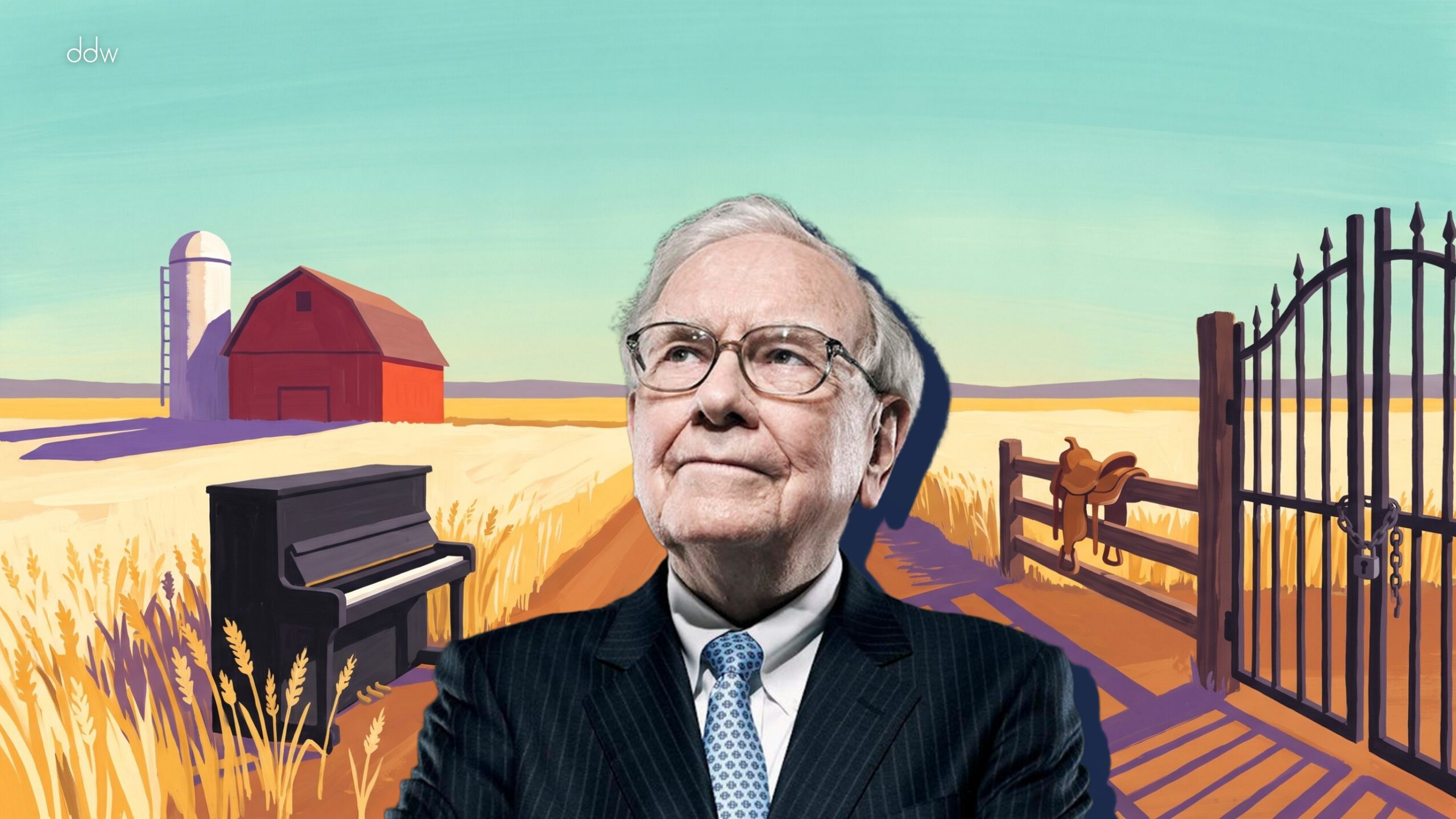
Warren Buffett’s youngest child is an Emmy Award-winning musician. NPR once described him as a man raised with plenty of emotional support and very little financial support from his parents. The money he did receive came at 19: about $90,000 of Berkshire stock, which, NPR reported, had started out as a farm left by his grandfather that his father sold and put into Berkshire. So the inheritance was a farm before it was a share certificate, and it became a recording career, which is about as far from actuarial tables as a Buffett can travel. In an interview with the Coutts Institute’s Maya Prabhu, he recalled raising the idea of joining Berkshire with his father about a year and a half into his working life, on the reasoning that his two siblings had not chosen it and it would be odd not to look. He looked, and chose music. Asked by Forbes in 2017 whether his father had minded, he said they both did “the same thing, what we love.” He and his wife Jennifer later became responsible, by Forbes’s account, for billions of dollars to give away. Now Bloomberg reports that Warren’s three children face the task of giving away his $150bn fortune within their own lifetimes. According to Bloomberg, Peter told his father a couple of years ago that he wanted no part of it, and his wishes were not honoured. In some families the one job nobody is allowed to decline is the unpaid one.
“I don’t think anyone should have billions of dollars at their disposal.” Peter Buffett, speaking to Bloomberg
He holds that view while sharing responsibility for giving away one of the largest fortunes on earth. Most sons manage only the first half.
Wang Sicong left the Wanda boardrooms but kept 2% of the family holding company
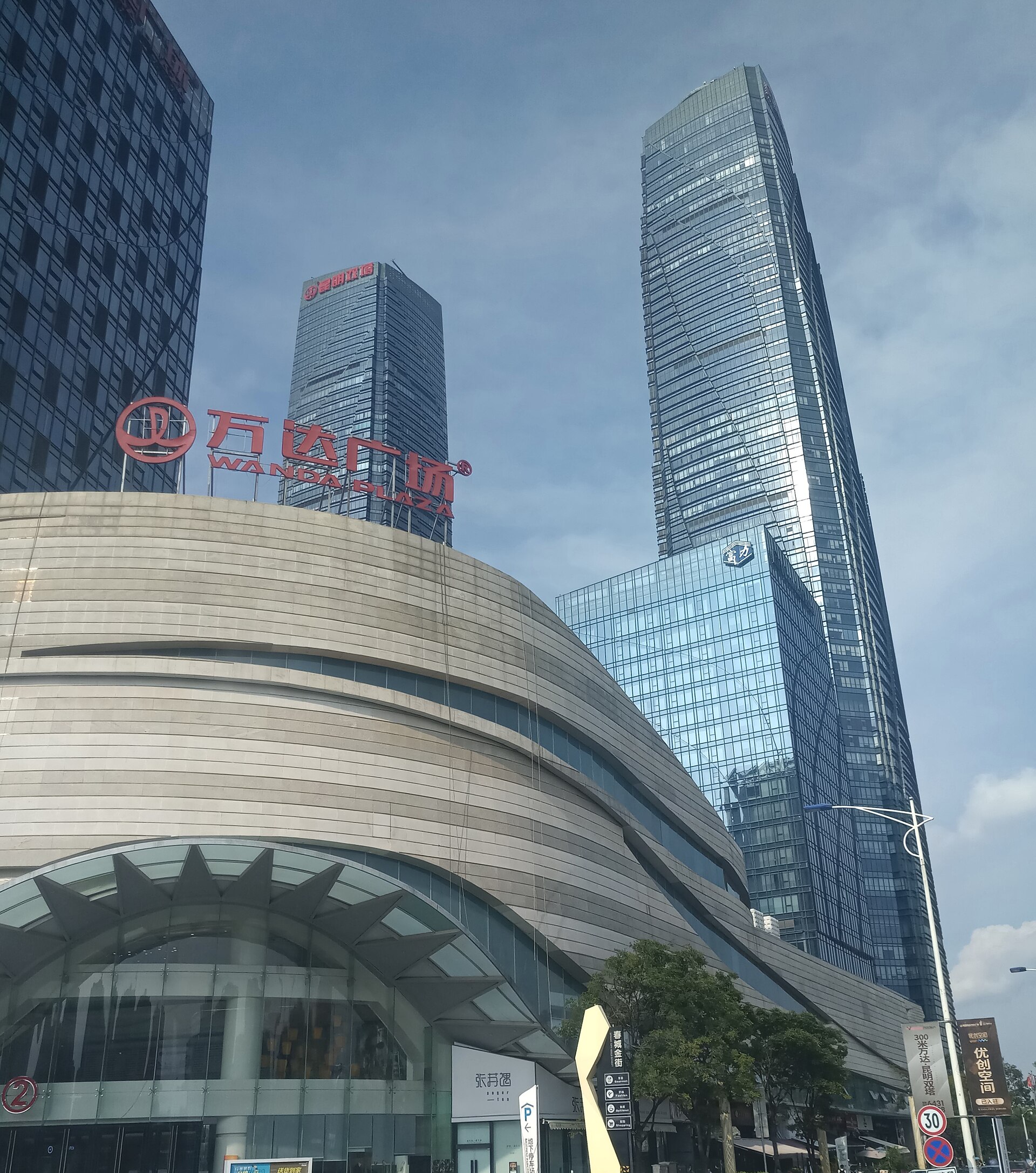
Reports from around 2016 and 2017 had Wang Jianlin, founder of Dalian Wanda and then 62, saying his son, then 28, did not want a life like his, and that the group would probably pass to professional managers. The son has kept to that line with unusual consistency. According to Leida Finance, as carried by 36Kr, Wang Sicong has stepped down since 2020 from director roles across Wanda companies, including the operator of Feifan.com and Dalian Wanda Group itself, and prefers his personal investment career. The latest step, 36Kr reported, was a registry change dated 27 July 2026 taking him off the board of Wanda Industrial Investment. He did not take his name off the share register. Citing China’s national enterprise credit registry, 36Kr reports that Wanda Industrial Investment is wholly owned by Dalian Hexing Investment, in which Wang Jianlin holds 98% and his son 2%, and that Sicong keeps his shareholder status after the change. The same outlet reports that the group has faced liquidity pressure, with debt of about 600bn yuan, that ownership of many Wanda Plazas has changed hands, and that Wang Jianlin, now 71, is still working on the front line. Two Chinese outlets have read the 2026 Hurun list for the family in ways that cannot both be right, so no family figure is given here. Resigning a directorship is easy; resigning a surname is harder.
Li Fante, a Wenling factory heir, is one face of China’s six-in-ten problem
Wang is the famous version of a common story. The South China Morning Post says about 85 per cent of China’s private sector is family-run and that children are increasingly declining to inherit. Joseph Fan of the Chinese University of Hong Kong has estimated that more than six in ten children of Chinese founders are unwilling to take over their parents’ businesses. That is a large share of the country’s private sector waiting for a successor who would rather be elsewhere. Li Fante, heir to his family’s factory in Wenling, Zhejiang, put the case in a single sentence: “I cannot – and probably should not – take over from my father,” he told the SCMP. The middle clause carries the weight. “Cannot” is about ability, and fathers tend to argue with that. “Should not” is a judgement on what is good for the factory, which a founder finds much harder to dispute without conceding something. No serious outlet has put a figure on the Li family’s business, and none is needed. A founder’s real problem tends to arrive as a polite sentence from a child who has given the matter careful thought.
Prudence MacLeod, Elisabeth Murdoch and James Murdoch were bought out of Fox and News Corp
This entry turns up in every search for heirs who refused the family business, and it belongs in a different category. On 8 September 2025 Fox Corporation announced that the trustee and beneficiaries of the Murdoch Family Trust had reached a mutual resolution of the Nevada proceedings, ending all litigation. NPR reported that Rupert and Lachlan Murdoch had sued Prudence, Elisabeth and James without warning in a Reno probate court to sever them from any influence over the company’s future, that Elisabeth and Prudence felt betrayed, and that James had become an increasingly outspoken critic of the direction of Fox News. Under the terms in Fox’s release, the three became “Departing Beneficiaries”, with no place in any trust holding Fox or News Corp shares. They had six months to sell even their small personal holdings, and they accepted a long-term standstill that bars them and their affiliates from buying back in. About 16.9 million Fox Class B shares and about 14.2 million News Corp Class B shares were sold publicly, partly to fund their cash consideration. New trusts for Lachlan, Grace and Chloe Murdoch run until 2050, with voting control of the shares held by LGC Holdco, about 36.2% of Fox Class B and 33.1% of News Corp Class B, resting solely with Lachlan. On the money, the New York Times first reported about $3.3bn in total. NPR, citing a person with direct knowledge, put it at about $1.1bn each, and noted that precise details have not been publicly disclosed. A standstill agreement is the legal way of saying the door has been locked from both sides.
Nicolas Puech quit the Hermès board and kept his shares out of the family pact
The fifth-generation Hermès heir made his choice when his brother Bertrand Puech led dozens of relatives in pooling their shares to repel LVMH. Nicolas declined to add his holding to the two family companies that control the house, and in 2014 he left the supervisory board, a step Fortune says was seen inside the family as a betrayal. For three years before 2016, Hermès annual reports cited his signed declarations of 5.8% of the capital, or 6.08 million shares, of which 900,000 sat with his foundation. In December 2023 Fortune valued a stake of about 5.7% at about €12bn, and Forbes, as cited by Fortune, put him at $13.6bn in 2024. On an earnings call on 30 July 2025, Hermès executive chairman Axel Dumas said the company believes Puech has not held shares for some time. In September 2026 Reuters reported that LVMH had signed a 2002 agreement to buy his shares, and that a 6% stake would be worth about $10bn at current prices. Puech has filed a suit seeking €14bn in damages from whoever might be found guilty in a parallel prosecutors’ investigation into the missing fortune, and he declined to comment to Reuters, citing that probe. LVMH has denied ever holding or diverting a hidden Hermès share. Everything beyond those statements is unresolved, and the long version of Nicolas Puech is a saga of its own. He is the only heir on this list whose refusal may have cost him the very shares he refused to pool.
Did walking away cost them the money?
Rarely all of it, and never in the same way. Peter Buffett had his $90,000 at 19 and now shares the job of giving the rest away. Wang Sicong keeps 2% of his father’s holding company, according to 36Kr. The departing Murdochs left with about $1.1bn each, according to the NYT and NPR. Nicolas Puech is suing for €14bn over a stake Hermès believes he no longer holds. The companies carried on without them: Wanda’s founder is still at his desk at 71, and Lachlan Murdoch has the votes until 2050.
Cover photograph via Mx.