


A converted flying boat once came down on Dublin Bay so the Guinnesses could lunch at the Royal St George, and Netflix, with a second series to shoot, has yet to put anything that good on screen.
The second series of House of Guinness should go to sea. Its creator, Steven Knight, has the renewal in hand and a shoot booked for January 2027, as What’s on Netflix reported in June 2026 and IFTN in August. On Thursday 19 November, at 8pm, Dr Eddie Bourke will speak to the Dublin Bay Old Gaffers Association at Poolbeg Yacht & Boat Club on the Guinness family’s collection of vessels, Liffey barges included.
The two events are unrelated, apart from a surname. Taken together, they suggest a better series than either would make alone.
Season one went out on a pistol shot
The show has earned its second run. It premiered on 25 September 2025 and spent four weeks in Netflix’s Global Top 10, which is a respectable showing for a period drama in which a good deal of the action concerns who gets the brewery. Netflix bills it as a drama inspired by the family. The story opens after the death of the patriarch, Benjamin Guinness, and follows his children: Arthur (Anthony Boyle), Edward (Louis Partridge), Anne (Emily Fairn) and Benjamin (Fionn O’Shea), with James Norton as the fixer Sean Rafferty. Kudos produces again, and the shoot has been scheduled to follow Knight’s Peaky Blinders series. Netflix has given no release date. Anyone planning a Christmas binge should plan for a later Christmas.

Knight’s instincts are well known. Netflix’s Tudum, announcing the renewal in August 2026, points out that the last sound of the season-one finale is a pistol shot, and Knight told Tudum: “I want people to wonder where that bullet’s going to go.” That is a perfectly good place to end a television series. The real family, though, seems to have been more interested in where the boats were going.
DDW’s reading is that the gunfire is the least Guinness thing in the programme. Peaky Blinders built its fortune on threat. The Guinness record suggests a family that did its showing off on water, and did it with the confidence of people who never had to explain the bill.
Guinness boats carried the family’s names
Start with the yachts, because they are the bit a scriptwriter would not dare invent. Afloat.ie’s notice of the Bourke talk, published on 12 November, says the Belem, a three-masted barque, was for a while known as Fantome II in Guinness ownership and made a round-the-world cruise. Renaming a three-master is one way of making it feel like part of the family.
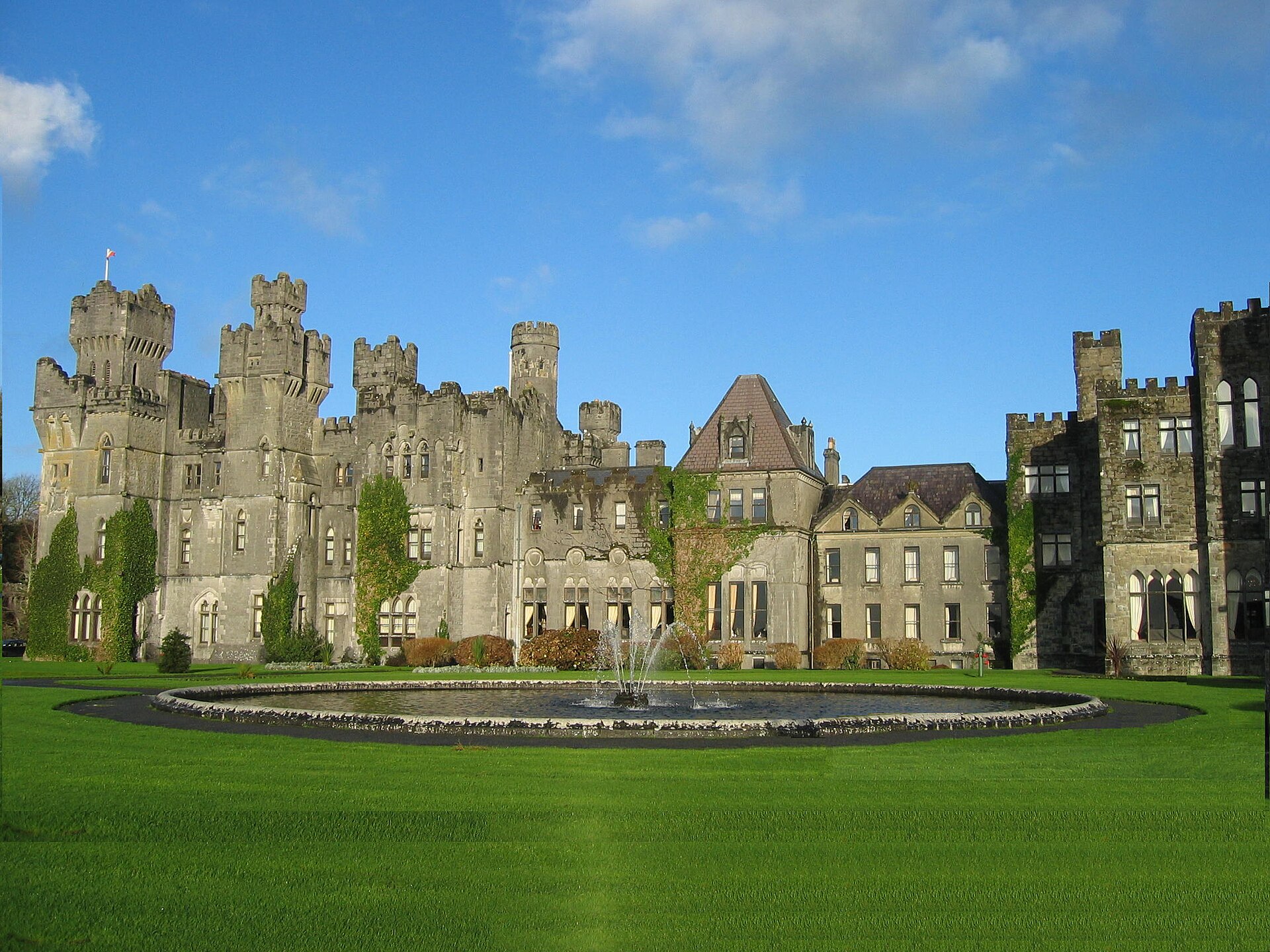
Then there is Solent. Afloat describes her as a flying-boat cruiser converted for the family’s use, which landed on Dublin Bay for lunch at the Royal St George Yacht Club and then carried on to Lough Corrib and Ashford Castle. Most families would have sent a car. The Guinnesses sent an aircraft that could land on the water, ate at the yacht club and then flew west to a lake. Television tends to show wealth as menace. Real ease looks more like a flight plan built round a lunch reservation.
The company’s fleet was a separate matter, and the series could use that too. The brewery bought its first vessel, the W.M. Barkley, after the 1913 Dublin Port strike. A firm that could not count on the docks bought its own ship, which is family capitalism in a single decision. The war then took her. A German U-boat torpedoed the W.M. Barkley on 12 October 1917 on the run from Dublin to Liverpool, and no screenwriter needs to add a pistol to that.
Later the ships were named for the family. From 1952 to 1993 the Guinness Ladies fleet ran under the names Lady Grania, Lady Patricia and Lady Gwendolen, each named after a family member. The six Liffey barges were named after Dublin suburbs. By our count, the family got three ships and the suburbs got six barges, which is about the right balance for a Dublin brewery.
Put the boats in order and they tell the story Knight is after. A strike produced a ship, a war sank it, a dynasty put its women’s names on the bows, and a flying boat came down for lunch. Every one of those is a plot, and none of them needs a fixer in a long coat. If the second series goes looking for a set piece, a seaplane touching down off Dún Laoghaire is better than another bullet.
Lord Iveagh’s filings point to Suffolk
Then there is the question every viewer asks by the third episode: does this family still own Guinness? It does not. Edward Cecil Guinness, later the 1st Earl of Iveagh, floated two-thirds of the company on the London Stock Exchange in 1886. Diageo took full control of the brand in 1997, through the merger with Grand Metropolitan. The lease Arthur Guinness signed for St James’s Gate in 1759 ran for 9,000 years at £45 a year, which turned out to be far longer than the family’s ownership of the business that grew there.
The Guinness family is also not a single household, whatever the series title suggests. It has branches: Iveagh, Ardilaun, Moyne and the banking Guinnesses, each with its own history. The present head of the Iveagh line is easiest to find in the most British document of all, the companies register. Companies House lists Arthur Edward Rory Guinness, 4th Earl of Iveagh, as a designated member of Elveden Farming LLP since 17 September 2016, at an Elveden Estate Office address, and as a director of Endurance Fund Management Limited since 29 June 2000. The same record shows Iveagh Trustees Limited as dissolved.
That is how a brewing dynasty looks two centuries on: a Suffolk estate, a farming partnership and a family trustee company that has been wound up. It has none of a drama’s noise, which is rather the point. The money now lives in land and paperwork, and the people who hold it are not in the habit of firing pistols.
So the advice to Kudos is gentle and specific. The siblings, the feuds and the inheritance can stay. But somewhere in the second series the camera should leave the brewery yard and follow the barges down the Liffey, past a ship called Lady Gwendolen, out to a bay where a converted flying boat is coming in to land for lunch. Knight starts filming in January. The Old Gaffers get to the boats first, at Poolbeg on Thursday at eight.
Read Next: Allison Ellsworth’s 2026 Poppi Story Begins With a Bank App
Cover photograph: Web Summit via Wikimedia Commons (CC BY 2.0).