


Nine hundred pounds, three years unworn in a cupboard, one televised confession, and nearly thirty years in Scotland raising money for charity. In December, Sotheby’s expects it to make up to $300,000.
The Cupboard Years
I keep coming back to the three years it spent in the dark.

Diana commissioned the black silk gown from Christina Stambolian, a Greek designer working in London, in 1991, and then did not wear it, judging it too daring for public view. Three years of dinners and premieres went past it on the rail. The dress is reported to have cost £900, around £2,100 in 2025 money, which made it a modest purchase by the standards of the wardrobe it hung in: a boutique dress, off the approved circuit, bought and quietly shelved.
Nothing about that is unusual. Most people own one garment too good for the diary they actually keep.
Odile
On 29 June 1994 she wore it to a Vanity Fair fundraising dinner at the Serpentine Gallery in Kensington Gardens. That same evening, ITN broadcast the documentary in which the Prince of Wales, now King Charles III, acknowledged his affair with Camilla Parker Bowles. The coverage split cleanly into two stories, and the one about the dress won.

Stambolian’s own reading of it was balletic. Diana, she said, “chose not to play the scene like Odette, innocent in white. She played it like Odile. She was clearly angry.”
Which is the detail I find hardest to shake: the designer understood immediately that a client had used her work as a reply. In 2026 the fashion scholar Justine Picardie called the gown “the most powerful thing Diana ever wore”, according to the Financial Times, which credits the evening with fixing “revenge dressing” in the language. Two words that now get applied to divorce hearings, contract negotiations and other people’s birthdays.
Lot Two
In June 1997 the dress went to Christie’s as part of Diana’s sale of 79 dresses for AIDS and cancer charities. The idea, according to the catalogue, came from Prince William. The sale raised $3.25 million in total, an average of roughly $41,000 a dress, according to Eternal Goddess as cited by Hoodline. The Stambolian was Lot 2.
What it actually made that day depends on which outlet you trust. Most American coverage says $65,000. Attitude reported $74,000. Wikipedia’s entry gives £39,098, equivalent to about £77,100 in 2025. No primary catalogue figure has surfaced in any of it, which is a strange thing to be true of the most photographed dress of the decade.
Diana died in Paris on 31 August 1997, weeks after the sale. The receipt is disputed. The provenance never has been.
Paisley
The buyers were a Scottish businessman and his wife. Attitude names them as Grahame Mackenzie and Briege Mackenzie, and reports that the dress has remained in their ownership since June 1997; Archyde, citing the Financial Times, identifies the widow as the current owner. Sotheby’s itself says only that the consignor is anonymous, and ArtNews describes the seller as “understood to be a Scottish businessman”. I am inclined to leave the family where they have left themselves.

What they did with it is the part worth repeating at dinner. They took the most notorious dress in Britain and put it to work at charity fundraisers around Scotland, and then it went on display at Paisley Museum, where it was last seen publicly nearly three decades ago. Not a vault in Geneva. A museum in Renfrewshire.
“My late husband and I knew that this dress was something special,” the anonymous consignor said. Thirty years of custody, and that is the entire public statement.
Estates come apart eventually, and usually in front of strangers: Lady Annabel Goldsmith left £5.6m to two children and the number was being read on phones within days. A widow consigning a dress at least gets to choose the room.
Luxury Week
Sotheby’s has put a preliminary estimate of $150,000 to $300,000 on it, with the sale set for 9 December in New York during the house’s Luxury Week. Before that, it goes on public display in London from 18 to 24 September, then travels to Hong Kong and Geneva. A rare numbered copy of the 1997 Christie’s catalogue, signed by both Diana and Stambolian and crediting Prince William with proposing the sale, goes with the lot. A portion of the proceeds will be donated to NHS Lothian Charity on behalf of the Royal Edinburgh Hospital, according to ANI.
Admittedly, the estimate looks shy. Julien’s Auctions said in 2023 that a Diana evening dress had sold for $1,148,080 against an estimate of $100,000 to $200,000, which the house called a world record for a Diana dress at auction. The purple Victor Edelstein gown from her 1991 portrait made $604,800 at Sotheby’s, five times its $80,000 to $120,000 estimate, per the Daily Telegraph. In 2025 Julien’s listed a 1986 Catherine Walker Falcon gown at $200,000 to $300,000, a garment no one has ever made a documentary about. Estimates are an invitation, not a forecast.
Morgane Halimi, Sotheby’s global head of handbags and fashion, framed the lot this way: “On her own terms, Princess Diana turned the dress into one of the most powerful messages she ever made, during one of the most scrutinized and emotionally charged episodes of her life.”
The commercial logic is clean enough. There is one object that carries an entire evening of British history in eight hours of wear, and it has spent the intervening decades doing good in Scotland rather than circulating through dealers, which is exactly the ownership story a saleroom prays for.
I find I want to see it in London more than I want to know what it makes in New York. Black silk, a mannequin, a signed catalogue in a case beside it, six days on New Bond Street.
Then Hong Kong.
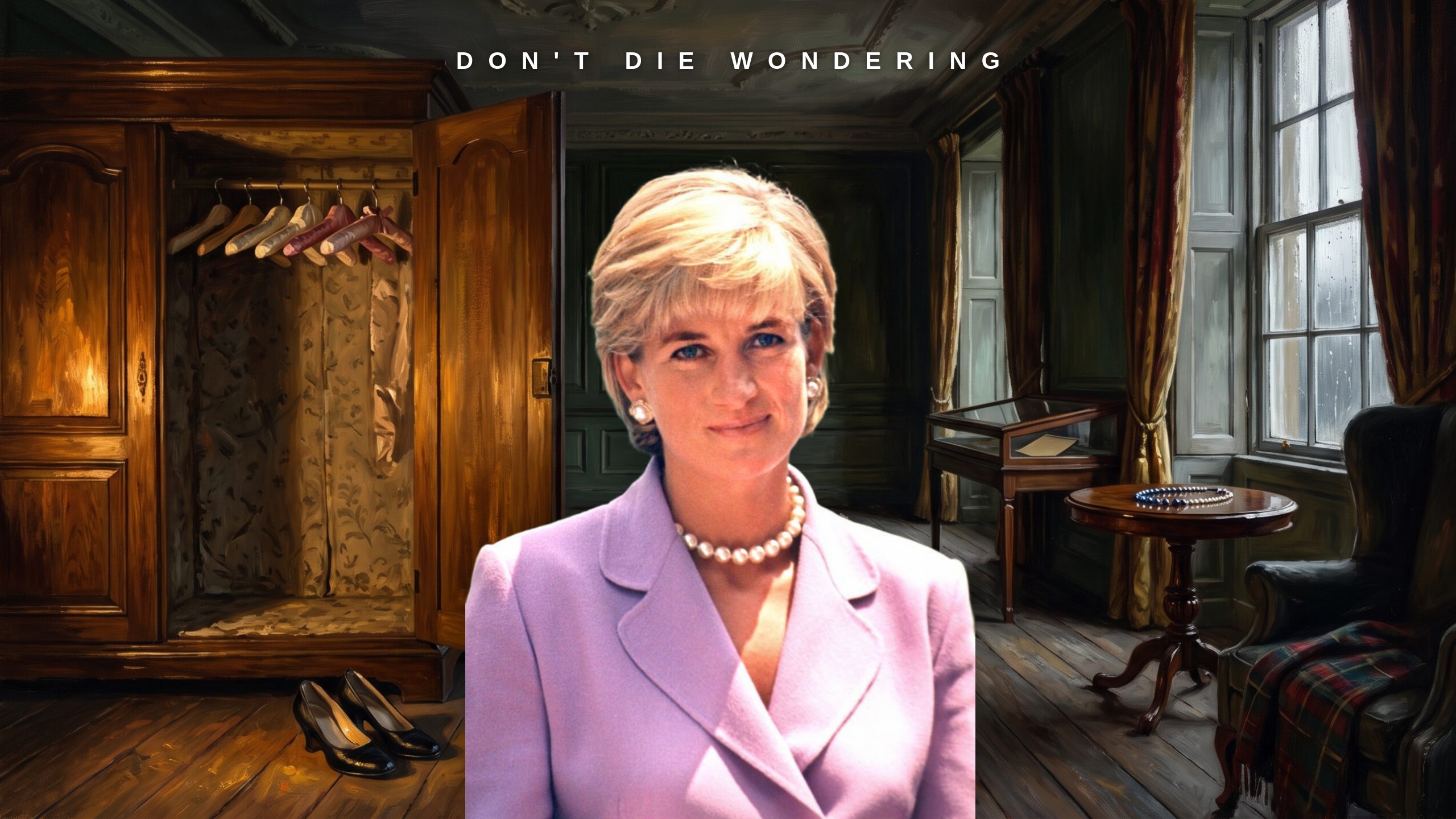
Cover photograph: John Mathew Smith via Wikimedia Commons (CC BY-SA 2.0).