



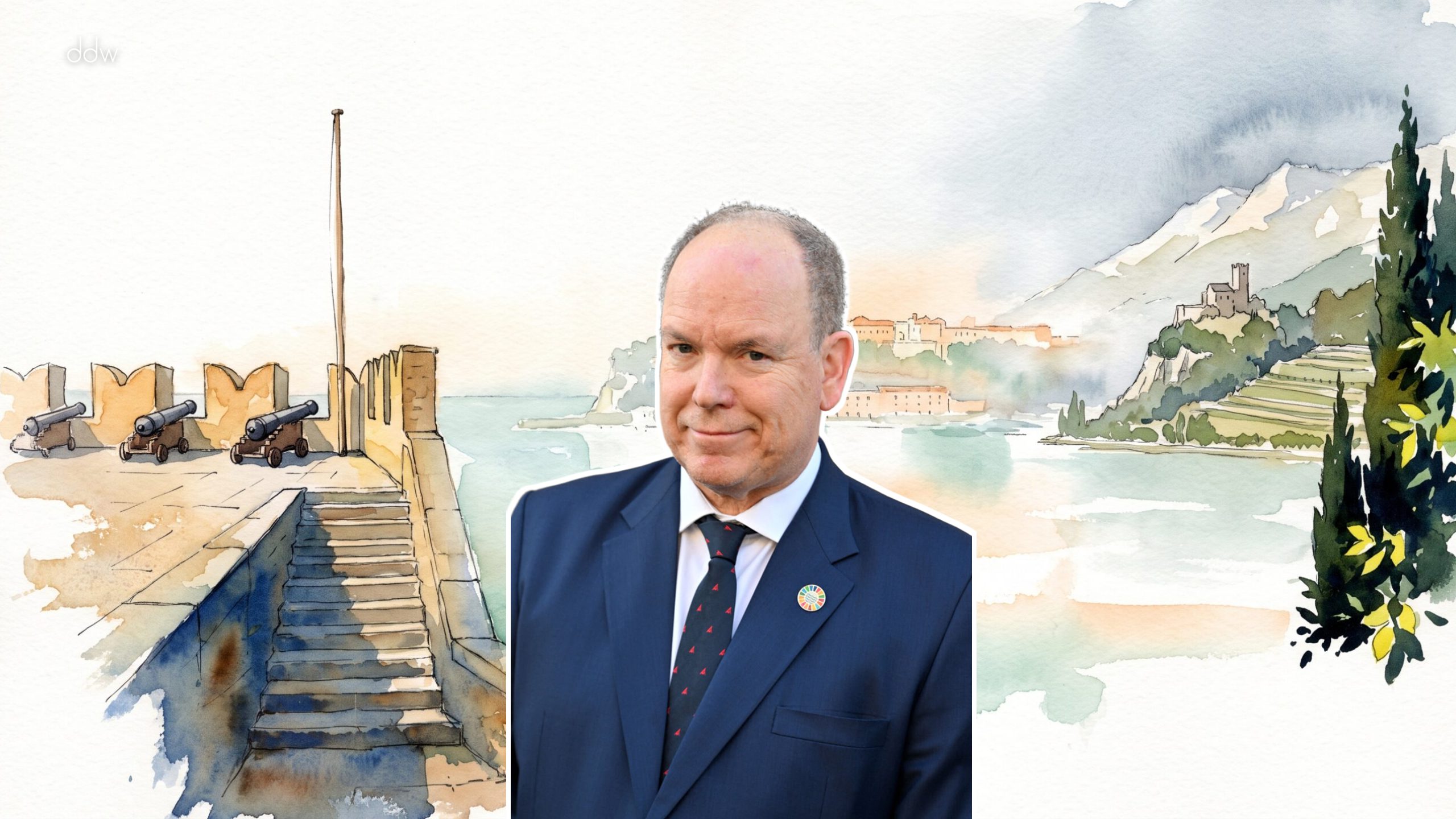
A Monaco fortune estimated at a billion dollars, twin heirs born two minutes apart, and a Liechtenstein reform that arrives one generation too late for the princess it would have crowned.
One published estimate, from the personal finance site GoBankingRates as cited by the South China Morning Post, puts Prince Albert II of Monaco at US$1 billion, and it is the only fortune in this piece with a number attached to it at all.
That is the methodology, such as it is. Everything below is ordered by what a named source has actually published, not by what a title implies. Where a figure exists, its publisher is named in the sentence. Where no figure exists, the entry says so and stops, because the alternative is arithmetic dressed as reporting. Ages, birth dates and constitutional positions come from court announcements and contemporaneous news reports. No estimate here is ours.
US$1bn
Albert II is the only reigning figure in this field with a widely cited personal valuation, and it belongs to him rather than to the children who follow him. GoBankingRates, quoted by SCMP, valued him at US$1 billion. The number does the rounds because it is convenient, not because the Palace has confirmed anything.
What it hides is the split running through the Grimaldi household. SCMP reported that Alexandre Grimaldi-Coste, born 24 August 2003 to Albert and Nicole Coste, has the same inheritance rights to that billion-dollar fortune as any of his siblings. He will not rule. The money and the throne travel on separate documents.
25%
The same GoBankingRates estimate notes that Albert owns about a quarter of the land he reigns over. In a principality of that size, the sentence lands differently than it would anywhere else.
Nobody publishes what that quarter is worth, and no serious valuer would try in public. It is the reason the billion-dollar figure should be read as an estimate with a byline rather than a balance sheet. A landholding is only priced when someone sells, and the Grimaldis have been in Monaco since before there were prices.
2 minutes
Princess Gabriella was born at 5:04 p.m. on 10 December 2014. Her brother Jacques arrived two minutes later, CBS News reported at the time.
Gabriella is the elder twin. Jacques is Hereditary Prince of Monaco and heir apparent. Two minutes decided which of them is heir apparent, and Monaco has shown no inclination to revisit the question, which is what makes the Liechtenstein announcement further down this page worth reading twice.
1643
Jacques also holds the title Marquis of Baux, which every heir apparent to the Monegasque crown has held since 1643. It is the oldest continuously used credential in this entire ranking, and it is attached to a boy who turned ten in December 2024.
The twins passed the ten-year mark in 2025 and were on the palace steps on 7 June that year to welcome Emmanuel and Brigitte Macron for the French state visit. Ten-year-olds are not usually deployed for bilateral choreography. In Monaco, the ceremonial apprenticeship starts early and is photographed thoroughly.
2002
Monaco’s constitution was amended in 2002 to state that only “direct and legitimate descendants” may rule the principality. Alexandre Grimaldi-Coste was born in August 2003.
The sequence is the whole story of his position: the rulebook was rewritten roughly a year before he arrived, and it places the crown with Charlene’s children, Jacques and Gabriella. What the amendment governs is sovereignty, not the estate. On SCMP’s account, the inheritance rights are undisturbed, which is why searches for his name spike whenever the words “billion” and “Monaco” appear in the same headline. He is the clearest illustration in Europe of a fortune and a throne that do not move together.
15 August 2026
Liechtenstein’s Hereditary Prince Alois used National Day 2026 to end male-only succession.
> in the future, the first-born child will, regardless of sex, become the heir to the throne and later the princess or prince of Liechtenstein
The clause that matters is the one about timing. The change applies to descendants of the children of Alois and his wife, Hereditary Princess Sophie, who are born in the future. It does not touch the current line of succession. A reform announced in 2026 will produce its first eligible heiress at a date nobody can yet name, and every living member of the family stays exactly where the old rule left them.
29
Princess Marie Caroline is 29 and the second-oldest of Alois’s four children, according to Euronews. Her elder brother, Prince Joseph Wenzel, is 31 and stands second in line to the throne behind their father.
Had absolute primogeniture arrived a generation earlier, the order at the top of the Liechtenstein succession would look identical, because Joseph Wenzel is the eldest anyway. Marie Caroline is the person who would have been most visibly affected had she been born first, and she was not. The reform is therefore a statement of intent rather than a redrawing of the queue. It costs nothing today and settles everything later, which is a rather elegant way to run a monarchy.
Prince Hans-Adam II remains head of state. He handed most of his powers to Alois in 2004, and Alois, now 58, has been running the principality in practice ever since. Two decades of that is an unusual apprenticeship by any standard, including this one.
1998
François Pinault Jr was born in 1998, the son of Kering chief executive François-Henri Pinault. On 14 March 2026, Countess Lara Cosima Henckel von Donnersmarck announced on Instagram that the two are engaged, after a relationship that began in February 2025.
Fortune reported in April 2024 that the eldest Pinault son, then 26, had replaced his grandfather, Kering’s founder, on the board of Christie’s while working as a product marketing manager. A seat previously occupied by the man who bought the auction house, filled by a grandson with a job title from the marketing department. Succession in the luxury houses tends to arrive with a lanyard.
Lara Cosima is the daughter of Count Florian Henckel von Donnersmarck, the Austro-Hungarian nobleman who wrote and directed The Lives of Others in 2006, and of Christiane Asschenfeldt, a lawyer by training who served as the first international executive director of Creative Commons. Hers is a title without a territory, a countess by descent rather than by constitution, which is the most common form of European nobility and the least discussed.
No verified public figure for the Pinault family fortune appears in the sourcing behind this piece, and none is offered here. Kering owns Gucci and Saint Laurent. Draw your own conclusions, but do not attribute them to us.
31
The obvious follow-up is which of these young heirs is actually the richest, and the honest answer is that the field refuses to be ranked by money, because only one participant has a sourced number.
Joseph Wenzel, at 31, is the oldest heir in this piece and the one Swiss outlet Bluewin has described as the richest heir to a throne in Europe. That description travels widely and arrives without a published figure behind it, which is exactly the problem with the genre. The Liechtenstein princely family’s wealth is held privately and is not disclosed in the way a listed company’s is. Repeating an unsourced total would put us in the same position as every aggregator that has already done it.
So the league table ends where it began. The single billion-dollar estimate on record belongs to a 68-year-old head of state rather than to any of the children in line behind him, and it comes from a personal finance website rather than from a palace. Jacques will inherit a throne. Alexandre, per SCMP, will inherit a share. Gabriella missed the succession by two minutes and Marie Caroline missed it by a generation.
None of them has published a number.
Cover photograph: Bruno Bebert / Bestimage via Purepeople.