

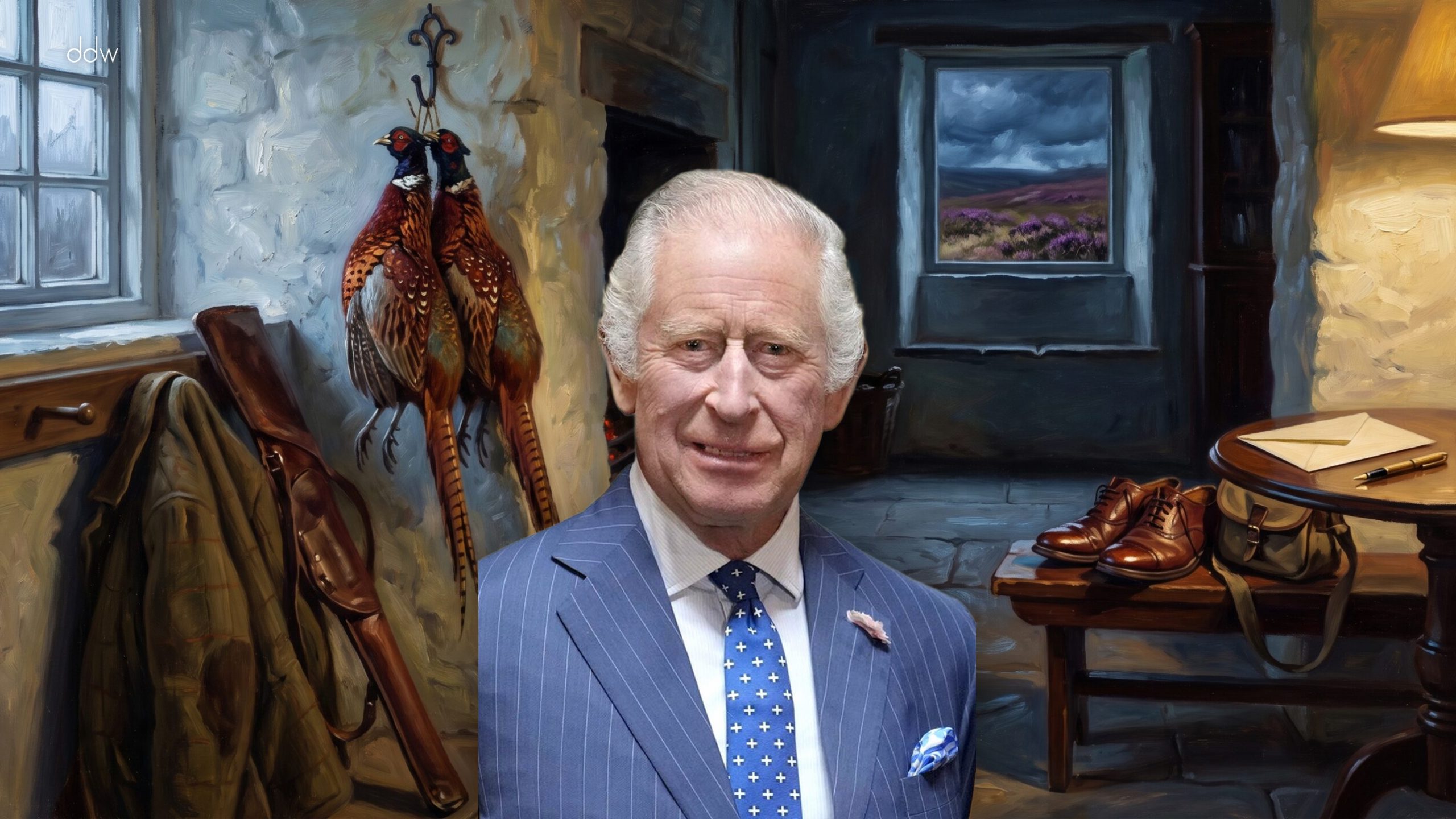
King Charles does not buy in his pheasants. Shooting UK reports that Sandringham is one of a decreasing number of wild shoots left in Britain, and that the King has resisted topping up numbers with commercially bred birds to keep the estate’s approach eco-friendly. That decision carries a consequence nobody prints on an invitation: a wild shoot can simply run short. In 2025, the same trade title reported that a long-serving Sandringham gamekeeper had been dismissed after a significant decline in pheasant numbers, a story that began in the tabloids and spread. Buckingham Palace declined to comment on the alleged dismissal when People asked.
So the grandest shoot in England is also the most exposed to weather, beetles and luck. Everything else about the weekend, the clothes, the cash, the letter afterwards, is a system for behaving well when the birds decide otherwise.
Where do these weekends actually happen?
Two royal seasons, two different rhythms. Grouse runs from 12 August to 10 December, which is why August belongs to Scotland; pheasant and partridge carry through to 1 February, which is why Boxing Day belongs to Norfolk. Sandringham sits about 110 miles north of London and hosts its shoots on a large wild bird population. Balmoral, reported at 50,000 acres, has its grouse days on the 7,000-acre moor at Corgarff, roughly ten miles from the castle.
The Prince and Princess of Wales have hosted their own shooting parties at Anmer Hall in Norfolk since 2014. Prince George reportedly attended his first grouse shoot in 2018, and in the 2020 bank holiday weekend was taken to Corgarff by his father, according to press reports; Princess Anne, Tim Laurence, Prince Edward, Viscount Severn and Peter Phillips were among the extended family reported at an area grouse shoot that year. Campaigners criticised George’s attendance at the time as inconsistent with the family’s conservation messaging, a criticism they have repeated since. Outside the royal estates, the Daily Mail has described George’s godfather, the Duke of Westminster, as holding one of the biggest grouse-shooting estates in the country at Abbeystead in Lancashire.
What do you wear, and what gives you away?
Debrett’s, publishing peerage guides since 1769 and now the default authority on this sort of thing, has a whole guide to country pursuits covering shooting parties, fishing and riding. Its central point is unromantic: country dress codes are practical first, built for all-weather protection, country pursuits and draughty houses.
The tell is colour. Debrett’s notes that black is traditionally a city colour: men wear brown shoes rather than black, and a tweed jacket rather than fine wool. A first-timer who arrives in the good London overcoat and the polished black brogues has announced himself before he speaks, and will also be cold.
Nobody will say anything.
How much do you tip the keeper, and how do you hand it over?
This is where published guidance is unusually candid, and where the numbers vary enough to be worth knowing. Purdey’s own etiquette page recommends guests always take cash for the head keeper and their loader, at between £40 and £80 depending on the shoot. The Field suggests £40 to £50 for the first 100 birds and £10 per 50 thereafter, with grouse starting at £50 regardless of bag. Farlows puts it at around £30 per gun for a 100-bird day or smaller, plus an extra £10 per 100 birds on top of the estimate given at the start. Ardmoor sets a baseline of £20 plus £10 for every 100 birds; The Country Girls UK offers a rule of thumb of £20 per 100 in the bag. Shooting UK cites an industry rule of thumb of £100 for a driven grouse day of 100 to 200 brace, and £40 for a 200-bird pheasant or partridge day.
None of this is palace protocol. It is gunmaker, retailer and magazine guidance, which is exactly why it exists: the host will not tell you, and asking the other guns in the Land Rover is a confession.
The mechanics matter as much as the sum. Farlows describes the tip as folded and passed into the keeper’s hand during the final handshake, so that no one has to watch money change hands. John Sugden of Campbells of Beauly, described by Shooting UK as a keen Gun, has argued that the tip should reflect the day’s overall success and enjoyment rather than the bag, on the grounds that when birds are plentiful it is the guns who are responsible for not shooting straight.
Before any of it, there is the reply. Purdey’s guide says that if you are fortunate enough to be invited, you answer quickly, and in writing.
Why did Boxing Day at Sandringham come into doubt?
Because wild shoots are at the mercy of a given year. David Pooler, chairman of the National Gamekeepers’ Organisation, told Shooting Times that “wild bird shoots are susceptible to annual fluctuations in bird numbers and therefore variations in the shootable surplus of stock. For many this is part of the appeal, but it can also be a challenge.” (as reported by Shooting UK)
Balmoral has had the same problem from the other direction. Grouse shooting there was cancelled in 2019 after a shortage of birds blamed on extreme weather and a heather beetle outbreak, and that August Vanity Fair had already reported there would probably be no grouse on the moors that season. Hello! has described the 26 December pheasant shoot in Norfolk as a tradition upheld for decades, with senior royals travelling up for Christmas. Late in 2025, trade press reported that the King was expected to keep it going, the shoot day being considered one of the most important private functions in the family’s year. DDW could not confirm this season’s arrangements from any primary source, and the palace does not announce them.
What does a first-time guest get wrong?
Both of the errors set out in the published guidance happen off the peg line. The British Association for Shooting and Conservation notes that gamekeepers work year-round, with irregular and often unsocial hours, and that it is only polite to thank them and leave a tip for the day. The keeper is the person whose season you are standing in.
The other is the brace. BASC advises that if you are offered birds to take home, you do not decline them, on the simple principle that if you shoot game, you should eat game. Declining on the grounds that you are driving straight back to London is the single line most likely to land badly, and it is not about the pheasants.
For what it is worth, no shoot-owning host appears to have set out their own version of this on the record. The guidance that exists comes from Debrett’s, BASC, Purdey, The Field and the retailers, which tells you something about who is willing to be quoted on manners.
What do you owe afterwards?
The Field’s checklist does not stop at the keeper. It lists thanking the beaters and the pickers-up, the people who walked the covert and found the birds you did not see fall, and then writing a thank-you letter. Not a text from the A149.
A weekend that is socially frictionless costs a reply in writing, brown shoes, between £40 and £80 folded small, a word to the beaters, and a letter. And a brace of pheasants in the boot, which you are expected to cook.
Cover photograph: White House via Wikimedia Commons (Public domain).