


Christie’s London, six days in late September
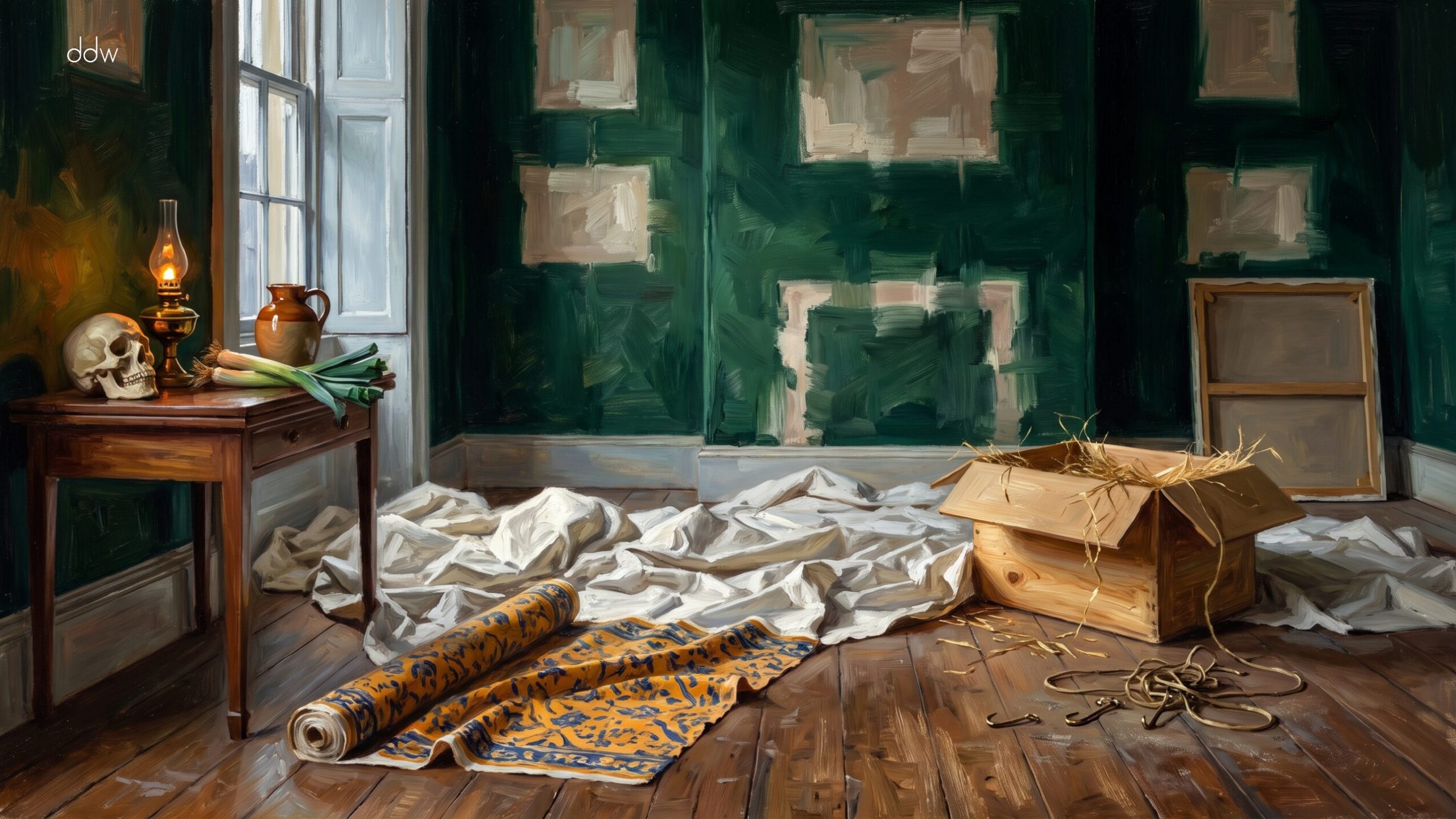
Anyone can walk in off the street, from 26 September until 1 October, and stand in front of a Picasso that has not been shown publicly in more than 25 years. It is called Crâne, lampe, poireaux, pichet, and it was painted days before Europe celebrated the end of the Second World War. No ticket, no appointment, no cotton gloves. Then the doors close and it belongs to whoever raises a paddle.
The man whose walls it came off is Peter Simon, 77, born in Ceylon in August 1949, founder of Monsoon and Accessorize, trustee of the Tate Gallery, and a fixture on ARTnews’ Top 200 Collectors list in every edition since 2005. He is not the sort of collector who gives interviews about it. The nearest thing to a manifesto is a line he has given Christie’s about wanting to “build links and foster dialogue across different worlds”, which tells you almost nothing and, once you have seen the hang list, tells you everything.
Christie’s announced the sale on 9 September and is billing it as the highest-value single-owner collection it has offered to date in London. Nearly 200 works, estimated at £87 million to £127 million, or $118 million to $172 million. Katharine Arnold, the house’s vice chairman of 20th and 21st century art in Europe, calls the collection “dynamic” and “unbridled by geography and time”. Joseph Braka, its post-war and contemporary specialist, goes further: “one of the finest and boldest ever assembled in the United Kingdom.”
It is called Monsoon: The Peter Simon Collection. The shop is in the title.
Beauchamp Place, May 1973
Simon was a market-stall trader before he was anything else. The first Monsoon shop opened in Beauchamp Place in May 1973, selling hippie clothes, which he later repositioned into mainstream womenswear, which is the unglamorous sentence underneath most British retail fortunes.
Fifty years later, in 2023, he marked the anniversary with a pop-up vintage shop near Monsoon’s original Portobello Road market pitch, according to the Guardian. A founder who keeps the market stall in the story is telling you where he thinks the money came from.
The art starts where the clothes started, in Britain. Bacon, Ben Nicholson, Barbara Hepworth: those were the first names he bought. It expanded outwards from there until it took in Mondrian, Miró, Picasso and Jeff Koons, which is roughly the trajectory of a man who began by importing prints and ended by owning the grammar of twentieth-century abstraction.
Covent Garden, and the shop next door
In 1984 he opened the first Accessorize, next door to Monsoon in Covent Garden. A 2005 Evening Standard profile credits his then wife, Kate Simon, as the creator of the chain. They married in 1977 and divorced in 2000.
The corporate arc is short and unusually tidy. He floated the combined company in 1989, then, having tried in 2003 and again in 2004, bought back every share held by outside investors in 2007 to become sole owner. Monsoon Accessorize Ltd reported 181 UK stores and 19 in Italy as of 2018, a figure that is now old enough to distrust. What his current stake and role look like is not something we could verify, so we are not going to pretend otherwise.
The Monsoon Art Collection began in 2000, seven years before he owned the company outright.
The evening sale, 14 October
The material is split three ways: an online auction running 1 to 20 October, an evening sale on 14 October, a day sale on 15 October. Frieze Week, in other words, when every serious buyer in Europe is already in a taxi somewhere between Regent’s Park and King Street.
Two Bacons anchor it. Figure in Movement, from 1978, carries an estimate of £14 million to £18 million, or $19 million to $24.4 million. Study for a Figure, from around 1945, is estimated at £4 million to £6 million. Then Mondrian’s Composition A, with Double Line and Yellow, 1935, at £8 million to £12 million, and Miró’s Peinture (Les amants – Adam et Eve), 1925, at £7 million to £10 million.
Add the Picasso that nobody under 30 has ever seen in the flesh, and you have four lots that will decide whether the low estimate or the high one turns out to be the honest one.
Primrose Hill and Christ Church
The English pictures are where the collection stops being a shopping list and starts being a person. Frank Auerbach’s Study of Primrose Hill is expected to reach up to £3 million. Leon Kossoff’s Christ Church, Stormy Day, Summer is estimated at up to £600,000. Two men who spent their careers painting the same few square miles of London over and over, hung by a man who spent his career selling clothes in the same city.
Hurvin Anderson’s Last House is also expected to make up to £3 million. It was in Anderson’s 2017 Turner Prize exhibition and again in his Tate retrospective this year, which is a useful thing for a picture to have on its passport in the fortnight before it is sold.
Buying the artist before the Turner Prize is luck. Buying him and still owning him through the retrospective is temperament.
Chelsea, 2015, and the number we will not print
There is a figure the internet very much wants, and it does not exist in any form we would put our name to. One reference work reports a Sunday Times Rich List net worth of £480 million; another entry on the same platform states he reached £1 billion as of 2019. The two cannot both be right, neither could be matched to a live, dated Rich List entry, and DDW does not print numbers that will not tell you where they came from. The only sum in this story with a named source attached is Christie’s own estimate, and estimates are marketing until the hammer says otherwise.
What is on the record is smaller and more human. In 2015 he was reported to be planning to knock five homes in Chelsea into one, a proposal that met local dissent, which is the most London sentence in the file. He has six children, four of them with Kate Simon.
Nothing in the verified record explains why the walls are coming down now. Simon’s own line to Christie’s is about a new direction in his collecting, and there is no family-office briefing, no succession memo and no distress signal behind it. Collectors are allowed to change their minds in public, at scale, with a catalogue.
20 October
By the time the online sale closes, nearly 200 objects that hung in one man’s houses will have been distributed across an unknown number of other people’s, most of whom will never be named. That is the part of an auction nobody photographs: the dispersal, the quiet re-hanging, the picture that goes back into a room with the blinds down.
Which is what makes the six days in late September worth the walk. The exhibition is free and open to all, and after 1 October the Picasso that was painted in the last week of the war and then vanished from public view for a quarter of a century goes wherever its next owner decides.
He may be no more generous with it than the last one.