


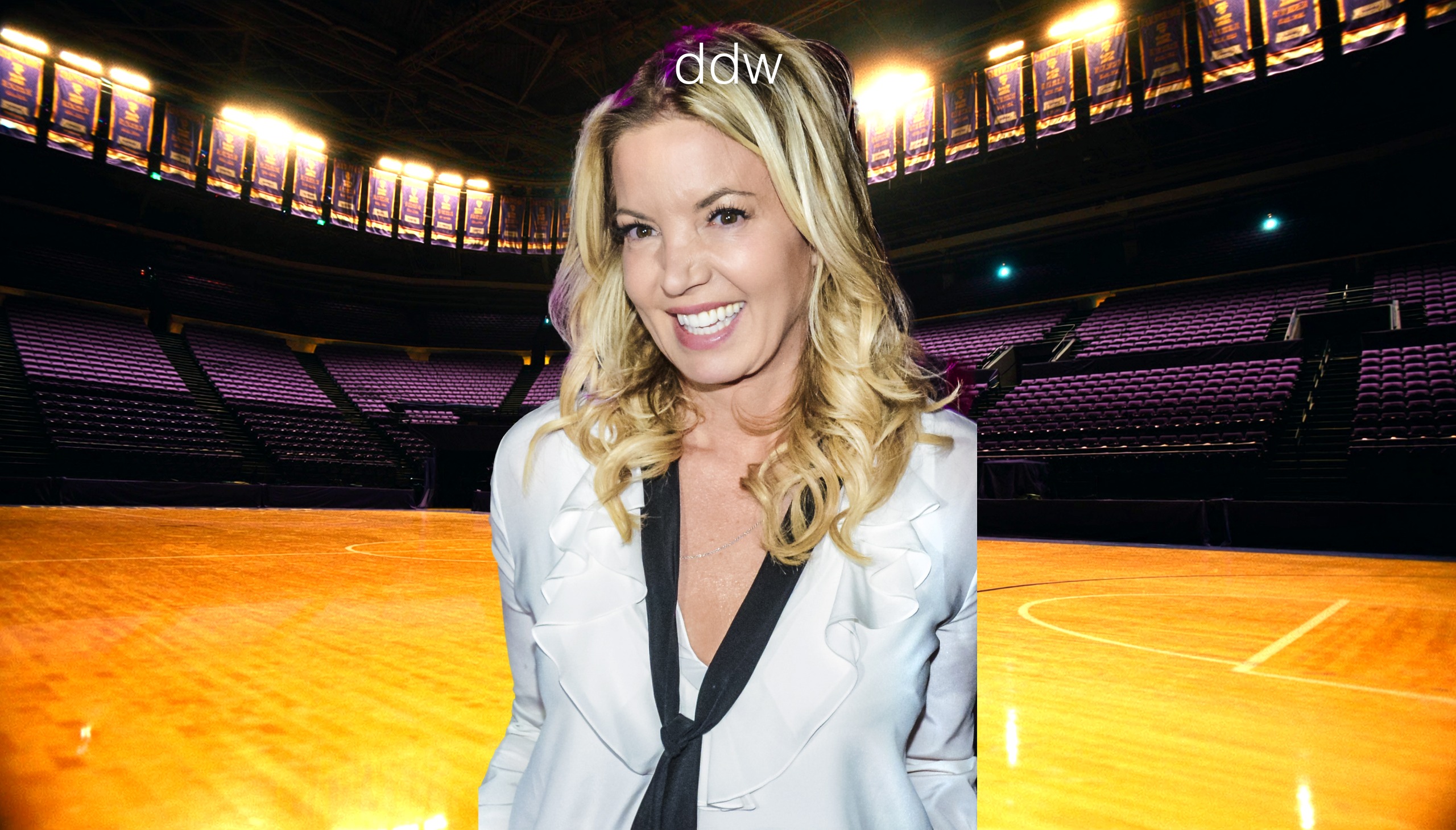
Jeanie Buss is the last Buss still attached to the Los Angeles Lakers, and she is in court trying to stop the other five from selling what remains of the family’s holding. Her petition, filed in Los Angeles Superior Court in late August, states that she “never agreed to any sale, was never consulted, and was never even informed”. The stake her siblings have voted to sell is priced at a valuation of $12.5 billion. Fourteen months earlier, the same six people had split a windfall from the same asset at a valuation of $10 billion. The gap between those two numbers is where the family broke.
The Clause
Jerry Buss bought the Lakers in 1979 for $67.5 million, having turned an initial $1,000 apartment-building investment into a property fortune worth close to a billion dollars. He died on 18 February 2013, aged 80, and his controlling ownership, roughly 66 per cent of the franchise, passed into a trust for six children: Johnny, Jim, Jeanie, Janie, Joey and Jesse. Each held an equal economic interest and equal voting rights. Jeanie became governor, the family’s representative on the NBA Board of Governors.
That structure survived thirteen years, a championship, and one open revolt. It did not survive a tag-along provision.
When Mark Walter agreed on 12 August 2026 to sell the Lakers to a group led by Josh Kushner and Bob Iger at a reported $12.5 billion, the tag-along attached to his own 2025 purchase allowed the family’s residual stake to be carried out alongside his. Exercising it required a majority vote of the trust’s beneficiaries. Five of the six voted yes. The one who did not is the governor.
The retained family stake has been reported inconsistently: The Daily Beast puts it at 17.8 per cent, while Forbes, citing ESPN’s Shams Charania, described it as just over 15 per cent. The distinction is not trivia. It is the whole argument.
Six Shares
To understand why the younger Busses were in a hurry, read the succession arithmetic. Per Jason Lloyd of The Athletic, the family trust specified that whenever a sibling died, their shares would be disbursed equally among the remaining siblings. Johnny, Jim, Jeanie and Janie are all in their 60s. Joey was reported at 41 and Jesse at 37 in November 2025, more than twenty years younger than their half-siblings, which meant that on the trust’s own terms Joey and Jesse were likely to end up in full control of the Lakers eventually.
Jerry Buss appears to have designed an estate that could not be broken up by any one child. What he built instead was a clock. Every sibling in that room knew roughly what their patience was worth and roughly who would be left holding it.
The first stress test came on 21 February 2017, when Jeanie, then club president, fired the longtime general manager Mitch Kupchak and removed her brother Jim from his role overseeing basketball operations. Three days later Johnny circulated a letter proposing a new board of directors that did not include her. That dispute ended with Jim stepping down as co-trustee, replaced by Janie, according to the Los Angeles Times. A family that resolves governance disputes by rotating co-trustees has told you what its next dispute will be about.
The Firings
In June 2025 the family agreed to sell majority ownership to Mark Walter, the Dodgers’ principal owner, who had held a minority Lakers position since the 2021 acquisition of Phil Anschutz’s 27 per cent stake and a right of first refusal alongside it. The valuation was $10 billion, then a record for a US professional sports franchise. Celebrity Net Worth put the family’s proceeds at $6.15 billion, roughly a billion per sibling, with a collective 18 per cent retained; another outlet estimated closer to $1.1 billion each based on the 66 per cent trust share. These are estimator figures rather than audited disclosures, and they vary. The order of magnitude does not.
The NBA Board of Governors approved the transaction unanimously in mid-October 2025. It closed later that month. Jeanie was to remain governor for a period of at least five years following closing.
Then came 20 November 2025. Jim and Johnny, who held Lakers administrative roles, were let go. So was Janie, 62 and near retirement, who told ESPN she pleaded “Please, let me resign”, was paid through year end, and felt “disappointed and disrespected, like a crumpled-up piece of paper thrown into the trash”. The same day, Jesse, 37, and Joey, 41, were removed from their scouting roles; Jesse was assistant general manager, Joey vice-president of research and development. Jesse later said he had not spoken to his sister or to general manager Rob Pelinka in five months.
By the end of that afternoon, one Buss remained inside the building. Nine months later, five of them voted to sell the rest.
The Threshold
Jeanie’s opposition rests on a number rather than a grievance, at least in the filings. Governorship of an NBA franchise requires a 15 per cent ownership position. Selling the family’s remaining stake alongside Walter would drop her beneath it, and with it goes the seat her father’s trust was built to preserve. She has also pointed to a 2017 court ruling requiring co-trustee approval, per Forbes.
There is, in theory, a compromise: the siblings sell, Jeanie stays. Sportscape Magazine reported that holding her position would require her to personally find close to $2 billion to maintain a 15 per cent stake. A billion-dollar payday does not, on its own, buy you back into a $12.5 billion asset.
Her petition, quoted by Deadline and reported by The Daily Beast, asks the court to remove Joey and Janie as co-trustees and to impose financial penalties on them for alleged breaches of fiduciary duty; it also seeks to hold James, Johnny and Jesse in contempt and liable for allegedly aiding and abetting the trustees. In the filing she describes her siblings as “devious” and says she was “blinded” by the attempted sale. Those are her characterisations, made in live litigation and not established in any court. On the other side, sources close to the process told ESPN that multiple siblings felt frustrated with Jeanie and misled by her over what they believed was a rushed sale.
The Resale
The mechanics of the second deal are their own study in speed. Mark Walter bought majority control at roughly $10 billion in 2025 and agreed to sell at $12.5 billion less than fourteen months later. Forbes, summarising Wall Street Journal reporting, noted that Walter came under federal investigation for potential insurance fraud a year after the Buss sale closed, and that he agreed to sell the Lakers two weeks after that news broke. No charges have been confirmed in the reporting reviewed.
The buyers are Josh Kushner, founder of Thrive Capital, co-founder of Oscar Health and a minority owner of the Miami Heat, and Bob Iger, chief executive of Disney from 2005 to 2020 and again from 2022 to 2026. Sportico put their combined wealth at about $6 billion and raised the obvious question of how a $12.5 billion purchase gets financed. The transaction still requires NBA Board of Governors approval; the next board meeting is set for September in New York.
So the asset has more than doubled in twelve years of Buss trusteeship and gained $2.5 billion in fourteen months of somebody else’s, and the family that bought it for $67.5 million is arguing about the residue in a Los Angeles courtroom.
November
The hearing on Jeanie Buss’s petition sits on the Los Angeles Superior Court calendar for 15 November 2026. Until then, five siblings hold a majority vote and a tag-along provision, one sibling holds a governorship and a 2017 ruling, and the league holds the approval that makes any of it real.
Jerry Buss wrote a trust that gave each of his six children an equal say, on the assumption that equality would keep them aligned. It gave them exactly that, and each of them used it.
A dynasty is a document until somebody reads it closely.