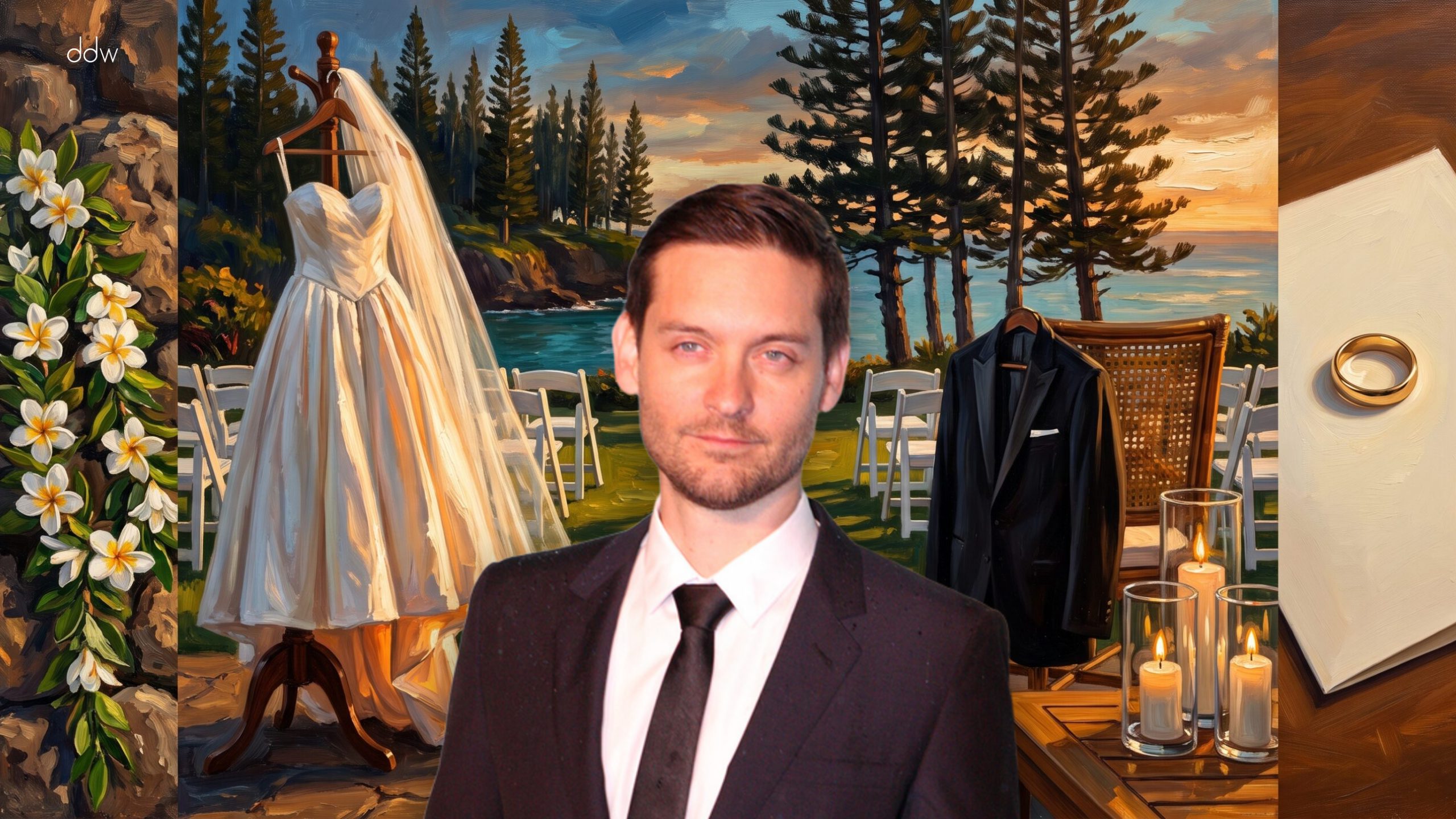



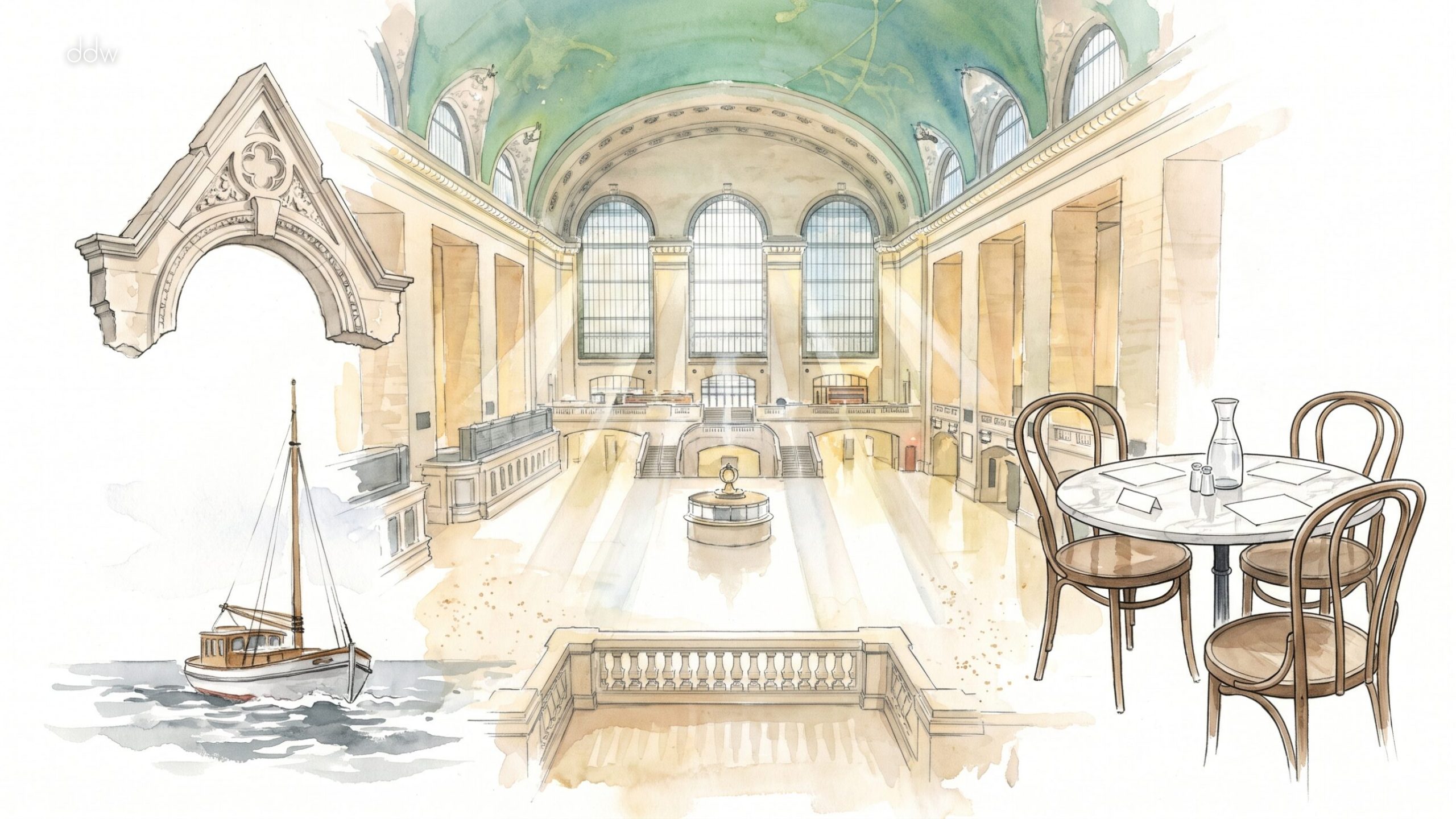
Consuelo Vanderbilt Costin chose the Grand Brasserie in Grand Central for lunch, which is either a good joke or a good thesis, and possibly both: the terminal was conceived by her family, and she is trying to work out what else the name might still be good for. She is 47. She has started an investment firm called House of Vanderbilt. Bloomberg reported on 20 August that she intends it to become a financial nexus for the 800-plus living descendants of Cornelius Vanderbilt, most of whom she has never met.
The firm currently comprises only her own money. She declined to tell Bloomberg’s reporting partners at WealthManagement.com how much that is, or what her personal net worth amounts to. So the proposition on the table is a family office in search of a family, launched around February 2026, dated by an April piece as roughly two months old at the time.
The Lunch
“We share an extraordinary history,” Costin said of the relatives she hopes to convert into co-investors, and the sentence is doing considerable work. Shared history is the entire asset. There is no trust to unlock, no block of railroad stock waiting behind glass, no single surviving pot that eight hundred people might agree to point in one direction. What there is, per the reporting, is a headcount and a surname.
The surname still attaches itself to more than two dozen American institutions, according to the family-office trade site The FO Pro, among them the Vanderbilt Museum, Vanderbilt University, Fisher Island, the Biltmore Estate and Grand Central itself.
Costin was born in New York on 21 February 1979 and raised in London. Her first career was as a dance-pop singer-songwriter, and she occasionally mined the family history for material, which is a more honest form of estate management than most heirs attempt. Her mother, Serena Vanderbilt Van Ingen McCallum, is a photographer and life coach in Tiburon, California, and a descendant of the oil tycoon Charles Pratt on the other side. Her father, Brackenridge Costin, is a life coach to entertainment clients at his own Los Angeles firm, BCC & Associates. Two life coaches and a Vanderbilt. Somebody is going to make the docuseries; more on that shortly.
The Arithmetic
The number everyone reaches for is the Commodore’s. Cornelius Vanderbilt died in 1877 leaving an estate of about $100m, according to his biographer T.J. Stiles, the overwhelming bulk of it to his son William. WealthManagement.com puts that at more than $3bn in present-day purchasing power, which sounds like a decent Manhattan property portfolio and not much else.
Measured against the size of the American economy at the time, the same reporting puts his fortune at roughly $373bn in 2026 terms, which would make him richer than anyone currently alive except Elon Musk. These are inflation and GDP-share estimates rather than audited figures, and they describe a dead man’s balance sheet, not the family’s. The clan’s present combined wealth is simply unknown. Too many branches, too many generations, no aggregate anybody has produced.
He started with a ferry. Born in 1794 to a Dutch immigrant family, he left school at eleven to work on his father’s boat in New York Harbour, and by 1871 he was instrumental in building Grand Central Depot, which is the through-line to a brasserie table 155 years later.
The Vanishing
The fall is the better-documented half of the story, and it happened faster than the rise. In March 1883 the family threw a costumed ball at the newly built Petit Chateau on Fifth Avenue that The New York World called an unequalled society event. The Petit Chateau was demolished in 1927. The Hyde Park mansion was finished in 1899 and is now a National Historic Site, which is what happens to houses nobody in the family can heat.
By 1947 every Vanderbilt house in New York City had been pulled down and the family had dropped out of the ranks of America’s wealthiest. At a family reunion in 1973, according to the estate blog Belle-Hampton, not one Vanderbilt present was a millionaire. Three generations turned the largest fortune in America into a very good address book.
What survived instead was distribution. Gloria Vanderbilt, who died on 17 June 2019 aged 95, put the name on denim and then on her son, the journalist Anderson Cooper. Wikipedia’s family entry lists the actor Timothy Olyphant, the screenwriter James Vanderbilt, the musician John P. Hammond, the art historian John Wilmerding and the Duke of Marlborough, James Spencer-Churchill, among living descendants. Costin herself is described as a great-great-great niece of the first Consuelo Vanderbilt, who married into Blenheim in 1895 and became Duchess of Marlborough. The dynasty did not disappear. It diversified into people.
The Machinery
For the operating side, Costin has brought in Julia Valentine as chief operating officer. The FO Pro reports that Valentine has thirty years in finance across major institutions and has helped build multi-billion-dollar family offices, which is the kind of CV that suggests somebody has thought about custody arrangements and not merely about narrative.
The structure, as described, is unusual in one respect and conventional in another. House of Vanderbilt is not setting up a 501c3, though The FO Pro reports it will run philanthropic initiatives alongside its investments. It will also have a media division, producing docuseries, books and other tellings of the family story, on the reasoning that public appetite for the Gilded Age is currently strong and shows no sign of exhausting itself. A family office with a content arm is a family office that understands its most liquid holding.
Costin’s own press materials, issued via PR Newswire, describe House of Vanderbilt as the first official family office of the Vanderbilt family, a claim that is the company’s rather than an independently verified point of history. The same release announced her return to the Forbes Iconoclast Summit on 3 June 2026 for a third consecutive year, as an advisory board member and co-host of the family office breakfast. In press interviews she has been billed as the Rebel Heiress, though her Wikipedia page carries a notice questioning whether she meets the site’s notability threshold, which is the sort of detail a seventh-generation descendant of the richest man in America might reasonably find funny.
The Pitch
The hard part is not the investing. The hard part is the outreach: persuading several hundred strangers who happen to share a great-great-great-grandfather that their capital belongs in the same vehicle as yours. Family offices normally begin with a family that already speaks. This one begins with a genealogy and a mailing list.
Whether any other descendants have signed on, and on what terms, has not been reported. The firm’s assets under management have not been disclosed. Its regulatory structure and jurisdiction are not in the public record. What is on the record is a name, a chief operating officer, a media division and one investor.
Set against 1973, when nobody in the room could clear a million dollars, an heiress with an office and a plan is a considerable improvement in the family’s fortunes, if not yet in its fortune. The Commodore also started with one boat.