


Banner image courtesy of Polina Rytobva
Montenegro does not want to be discovered…which is precisely why everyone keeps trying.
There is a very specific genre of European delusion that involves announcing a place as “the next somewhere” just before flattening it into sameness. Montenegro has been orbiting that fate for years now — whispered about in the same breath as “authentic” and “untouched,” words that usually signal the beginning of the end.
And yet, it hasn’t fully happened here.
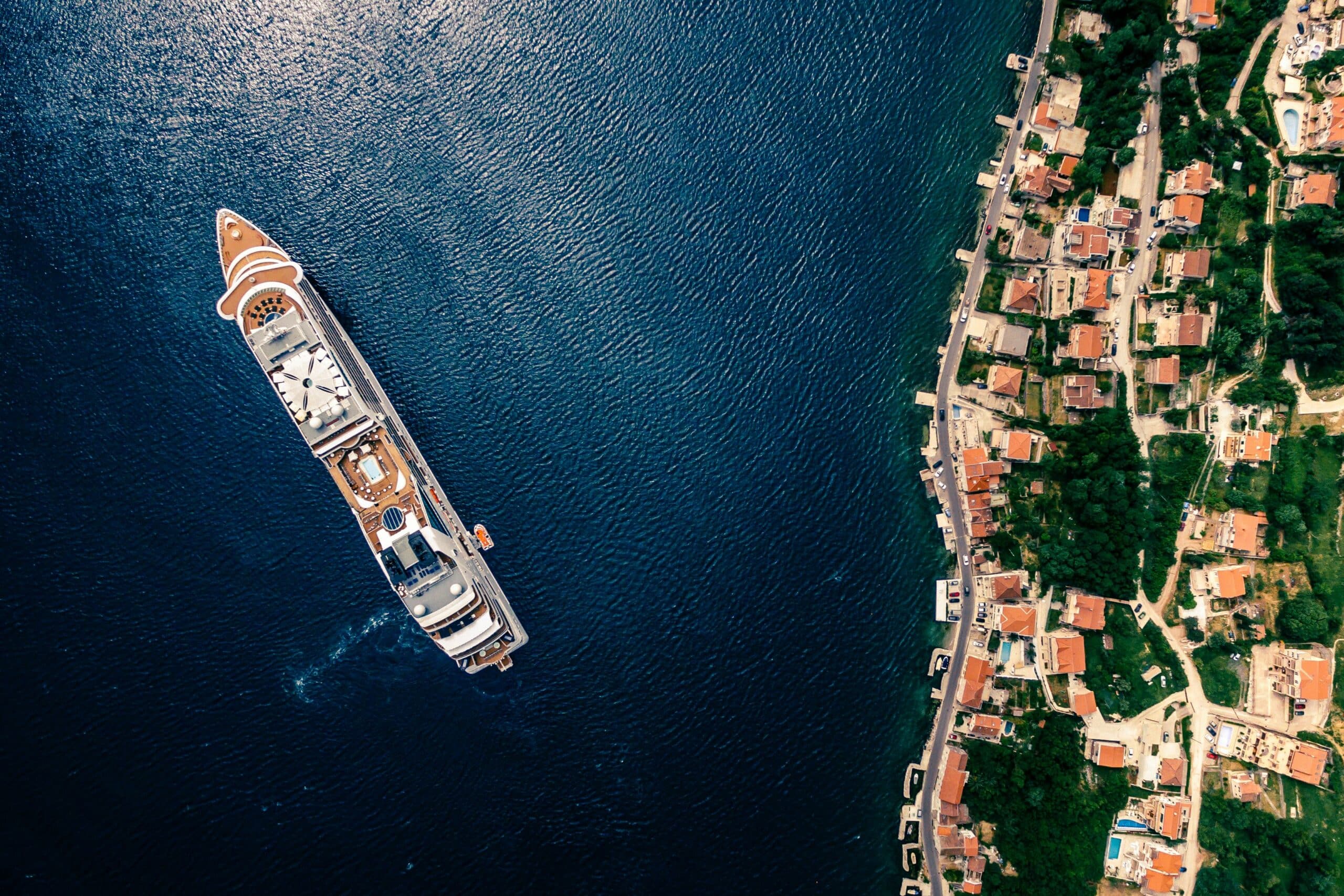
Not because Montenegro is hidden. It isn’t. The yachts are already in the bay, the hotels are already very good, and the coastline has been photographed to death. But there is a stubbornness to the place, a refusal to consolidate into a single, digestible version of itself.
It gives you what you expect. And then it withholds the rest.
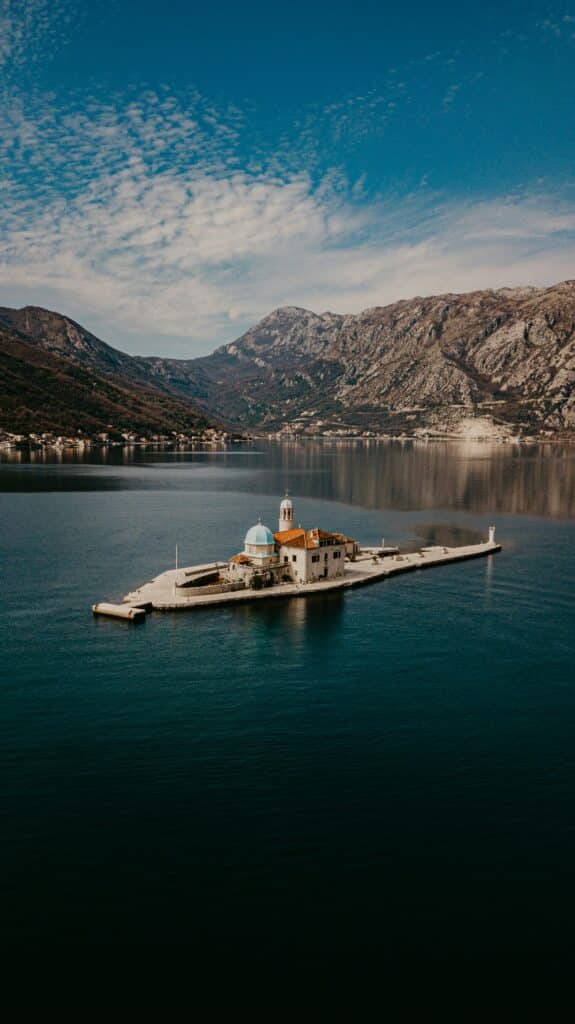
If you arrive via the Bay of Kotor, you could be forgiven for thinking Montenegro has already made up its mind.
The mountains drop into the water with almost aggressive theatricality. Everything feels over-designed by nature, like it knows it’s being looked at. The light hits at the right angle. The boats move slowly enough to be appreciated. It’s all very convincing, in a way that borders on suspicious.
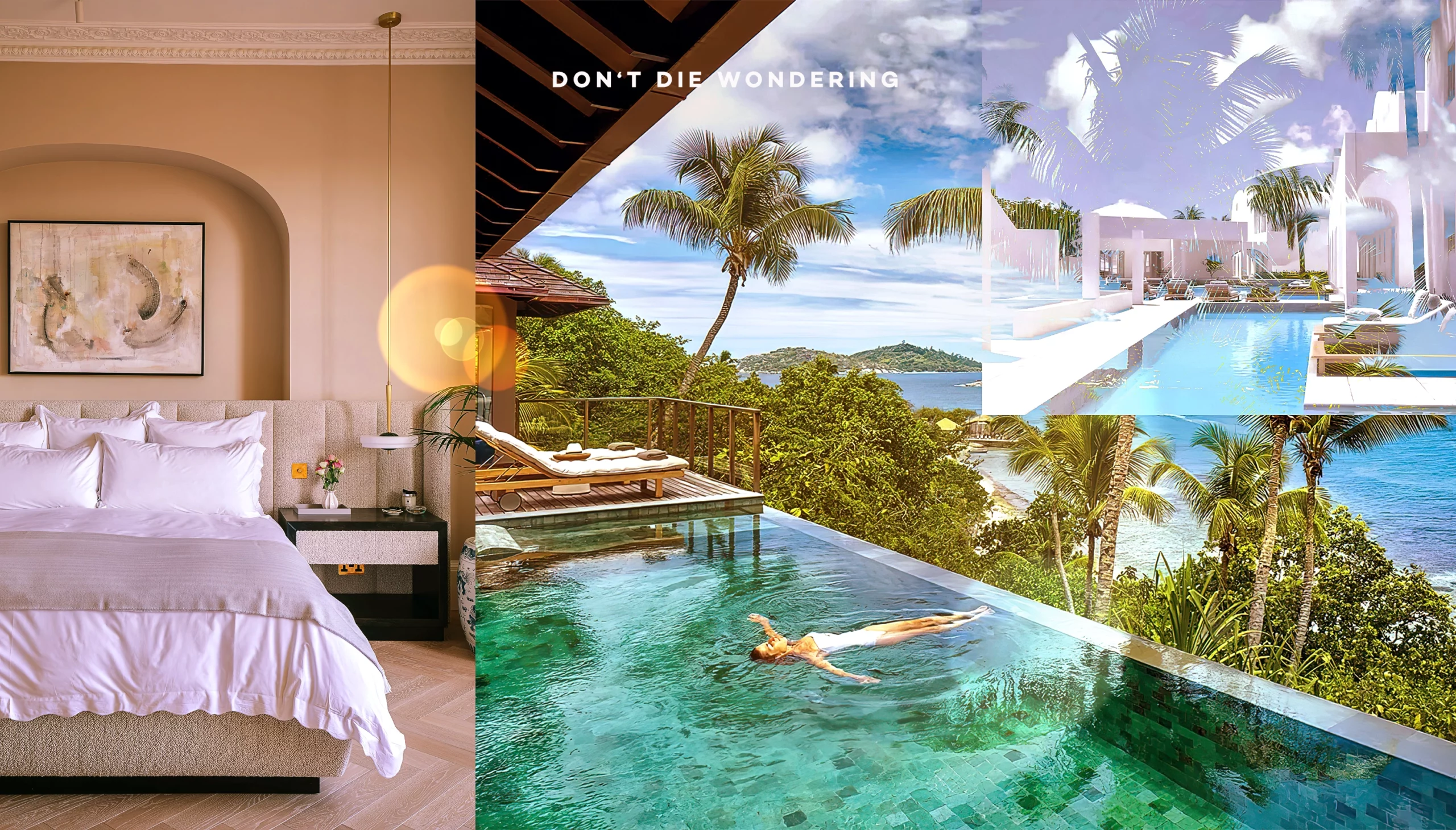
Then there’s Mamula Island — a 19th-century fortress turned luxury hotel, now scrubbed, softened, and reissued as a high-design Adriatic retreat. It sits out in the water like a controlled experiment in how far you can aestheticise history before it becomes palatable. Which is to say: very far.
Lazure, further along the bay, does something similar but with better manners. A restored Venetian lazaretto — once a quarantine station, now a place for linen shirts and discreet cocktails. The kind of hotel that lets you feel cultured without requiring any actual effort.
All of this is undeniably beautiful. It is also, if you linger too long, unreal. Like you’re being shown a version of Montenegro that has been edited for export.
The problem is not that it’s fake. It’s that it’s incomplete.
To understand Montenegro properly, you have to start making worse decisions.
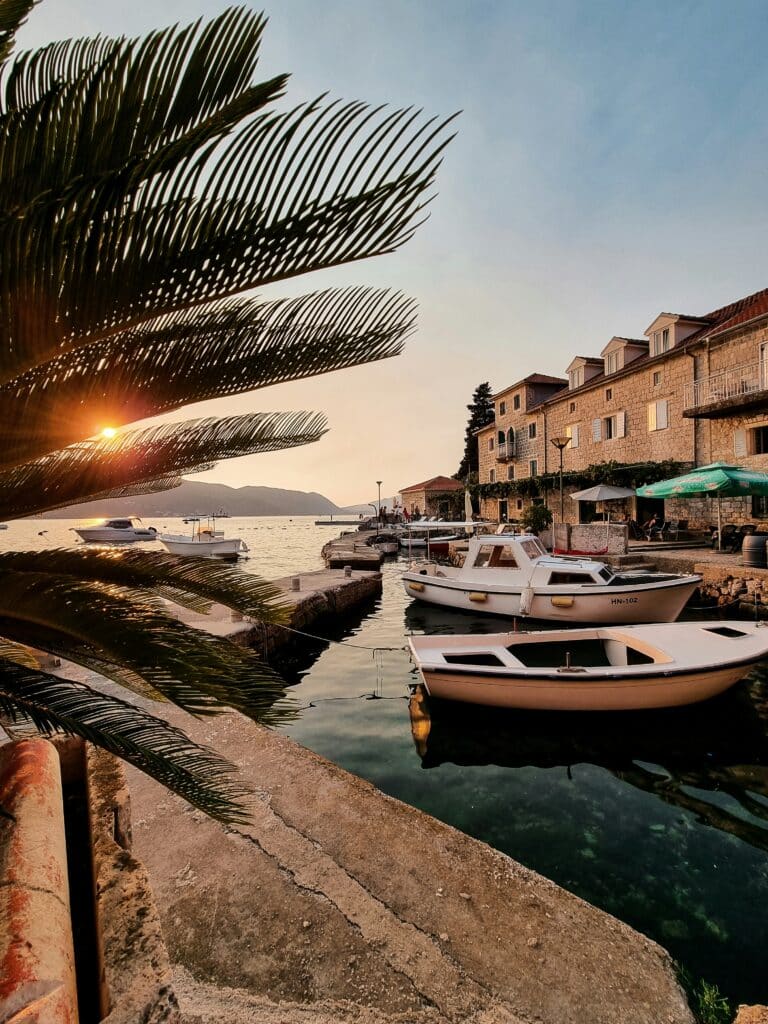
Leave the bay. Go somewhere that doesn’t photograph as well. Sutomore, for example — a town that feels like it was assembled out of leftover parts from better-known coastal destinations.
From there, you walk uphill.
Not on a curated trail or anything that would pass for an “experience,” but on a path that stops pretending to be one. The landscape thins out, the buildings disappear, and eventually you reach what is optimistically referred to as the House on the Mountain.
It’s Montenegro’s first street-art gallery, allegedly. In practice, it’s an abandoned house covered in murals, sitting on a ridge like a half-finished thought. There’s no entrance, no signage, no sense that anyone is concerned with how you engage with it.
The art is good, in that unstable way that comes from not needing to impress anyone. Murals bleed into walls that are already collapsing. Paint peels. The landscape does its own thing. It’s less a gallery than a negotiation between intention and entropy.
You don’t “visit” it so much as arrive, look around, and leave unsure of what you’ve just experienced.
Which, in Montenegro, is usually a good sign.
Then there’s Podgorica.
Most people skip it, which is understandable if you are expecting charm. Podgorica has little interest in being charming. It is, instead, committed to something else: the afterlife of Yugoslav modernism.
Blok 5 is the place to start. A vast housing complex from the late 70s and early 80s — sixteen-storey slabs, wide courtyards, playgrounds that feel both communal and faintly dystopian. It’s the kind of architecture that assumes people will adapt to it, rather than the other way around.
There is no attempt to seduce you here. No framed viewpoints. No narrative about heritage. Just concrete, space, and the idea that architecture once had bigger ambitions than looking good on Instagram.
If you keep walking — and you should — you start to notice things. A mural tucked into a courtyard. A piece of graffiti that feels more like a private joke than a public statement. Another, half-finished. Then another.
The street art in Podgorica doesn’t announce itself. It accumulates. You drift through Preko Morače, across Blok 5, along the river, and realise that the city is speaking to itself in fragments.
You’re just overhearing it.
Montenegro’s cultural life operates on a similar frequency.
There’s a bookshop in Podgorica, tucked under a bridge, that doubles as a café and a kind of informal salon. You go in for a coffee and end up staying for three hours, not because anything dramatic happens, but because the pace of the place absorbs you.
People drift in, sit, read, talk, leave. There are events, occasionally. Readings, small gatherings, things that feel more like they’re happening despite the setting than because of it.
Elsewhere, there are galleries that feel almost deliberately underplayed. A contemporary art centre set within palace grounds that no one seems eager to promote. A private gallery that exists between the controlled world of a yacht marina and something resembling serious artistic intent.
In Budva, artists work out of studios that you can walk into, if you arrive at the right time. Nothing is overly packaged. Nothing feels resolved.
There is a recurring sense that culture here is less about presentation and more about continuation. Things are happening, but not necessarily for you.
Kotor, predictably, tries a little harder.
It has the old town, the walls, the crowds — all the usual signals that you are somewhere important. But even here, the more interesting moments tend to sit outside the obvious.
A former prison, now repurposed as a creative hub, where the architecture still remembers what it used to be. The cells haven’t been erased. The past sits in the layout, in the proportions, in the uncomfortable feeling that not everything has been resolved.
Nearby, a cinema operates out of what was once a church. Films play where sermons used to be delivered. The acoustics are good. The symbolism is obvious enough to not require explanation.
This is a country that reuses its buildings without forgiving them.
Which is more interesting than the alternative.
If you push further — or, more accurately, if you stop trying to push at all — you start to encounter the part of Montenegro that doesn’t exist on any itinerary.
Pop-up events. Temporary gatherings. Cultural initiatives that appear, disappear, and reconfigure somewhere else. Groups that organise things without the need for a fixed venue or a coherent brand identity.
You hear about something, you go, something happens, and then it’s gone.
It’s not chaos. It’s just not optimised.
And in a Europe that has spent the last decade optimising itself into exhaustion, that feels radical.
Calling Montenegro “undiscovered” misses the point.
It has been discovered. Repeatedly. Documented, circulated, aestheticised. The images are out there, doing their job. But the country itself has not complied with the narrative.
It offers you the polished version — the bay, the hotels, the controlled beauty — and then refuses to let that be the whole story.
To get any further, you have to let go of the idea that there is a correct way to experience it.
You have to walk into places that don’t announce themselves. Spend time somewhere that doesn’t reward you immediately. Follow things that don’t quite make sense.
Eventually, something shifts.
You realise that Montenegro isn’t hiding anything.
It hasn’t agreed to perform for you.