


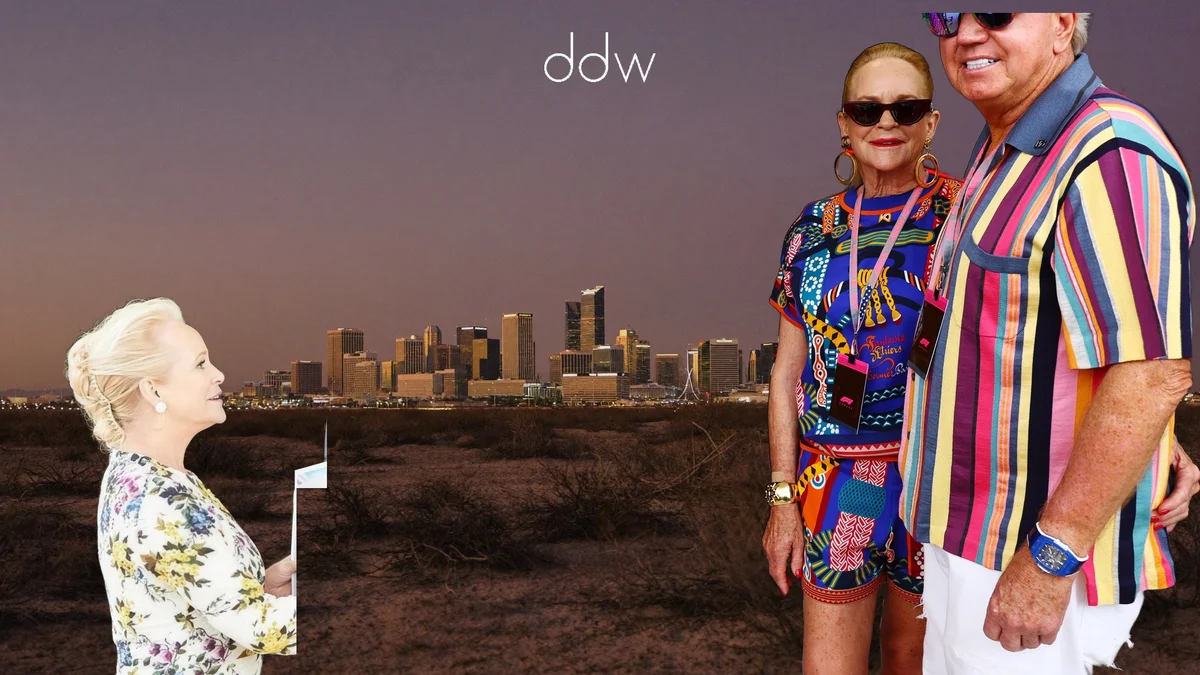
Fifteen minutes from the Las Vegas Strip, in the gated hills of Henderson, Nevada, lives a seventy-five-year-old woman whom Forbes values at $17.8 billion and whom almost nobody in America would recognise at a blackjack table. This week, in the manner of a family that has spent sixty years perfecting the art of not being noticed, her name entered the most expensive property race in the history of basketball: the contest for Las Vegas’s NBA expansion franchise.
Her name is Nancy Walton Laurie. She is the youngest daughter of Bud Walton, the quieter of the two brothers who founded Walmart in 1962, and when Bud died in 1995 his stock passed to his two daughters, Ann and Nancy. The Waltons are, by most reckonings, the richest family on earth; collectively they are worth more than the GDP of most countries that host Formula 1 races, several of which Nancy attends. She is the quiet end of a quiet family. She has given, as far as anyone can establish, no meaningful press interview this century.
Which is why it mattered when Sportico reported on Tuesday that Laurie and her husband Bill are considering a bid for the NBA’s mooted Las Vegas expansion team, joining a field that already includes a former Disney chief executive and the man who brought the Golden Knights to the desert. The radar sweep of American sport has spent a month watching Bob Iger. It should perhaps have been watching the house in Henderson.
The Quiet Daughter
She was born in 1951 in Versailles, Missouri, a town of two and a half thousand people that shares a name with the least understated building in Europe. Her father ran the trucking-and-distribution end of Walmart while his brother Sam ran the mythology, and the division of labour appears to have been hereditary: Sam’s children built the family’s public institutions, while Bud’s daughters bought things that move. Nancy went to Memphis State University, where she met a point guard named Bill Laurie, a Missouri farm boy who in 1973 took the floor in the NCAA national final against UCLA and a centre called Bill Walton. UCLA’s Walton scored 44 points and destroyed Memphis State almost single-handedly. Bill Laurie lost to a Walton, then married one; it remains the only recorded instance of anyone getting even with that particular family.
For decades that was very nearly the whole public record. She founded a contemporary ballet company, Cedar Lake, in New York, and closed it in 2015. She owned a community bank in Columbia, Missouri, and sold it in 2021. She has funded scholarships, dance programmes and, in Memphis, a 58,000-square-foot basketball practice facility with her surname on it. The consistent theme is not the sector; it is the silence.

Three Polite Rejections
The silence should not be mistaken for a lack of appetite. In 1999 the Lauries bought the St. Louis Blues and their five-year-old arena from a consortium of local businessmen who were tired of losing money, taking on the building’s $96 million of debt in the process. What they actually wanted, by every account, was basketball. In 1999 Bill Laurie tried to buy the Denver Nuggets. In 2000 he agreed terms to buy the Vancouver Grizzlies, with a plan to move them to St. Louis; the deal collapsed over the league’s discomfort with relocation, and the Grizzlies moved anyway a year later, to Memphis of all places, the city where the Lauries met and whose practice courts now carry their name. In 2001 he pursued the Charlotte Hornets. Three pursuits, three failures, and in 2006 the couple sold the Blues to a group led by Dave Checketts for a reported $150 million and appeared, to the untrained eye, to retire from sport.
The family did not. In July 2000, months after the Nuggets slipped away from Bill Laurie, the franchise was bought as part of a $400 million package by a Missouri property developer named Stan Kroenke, whose empire now spans the Los Angeles Rams, Arsenal and the Colorado Avalanche, and whose Nuggets are formally held in the name of his wife: Ann Walton Kroenke, Nancy’s older sister. The team that got away from one of Bud Walton’s daughters has spent a quarter of a century belonging to the other one. Sisters have gone to war over less, and these two have instead spent the years amiably not giving interviews about it.

Chaos, by Name
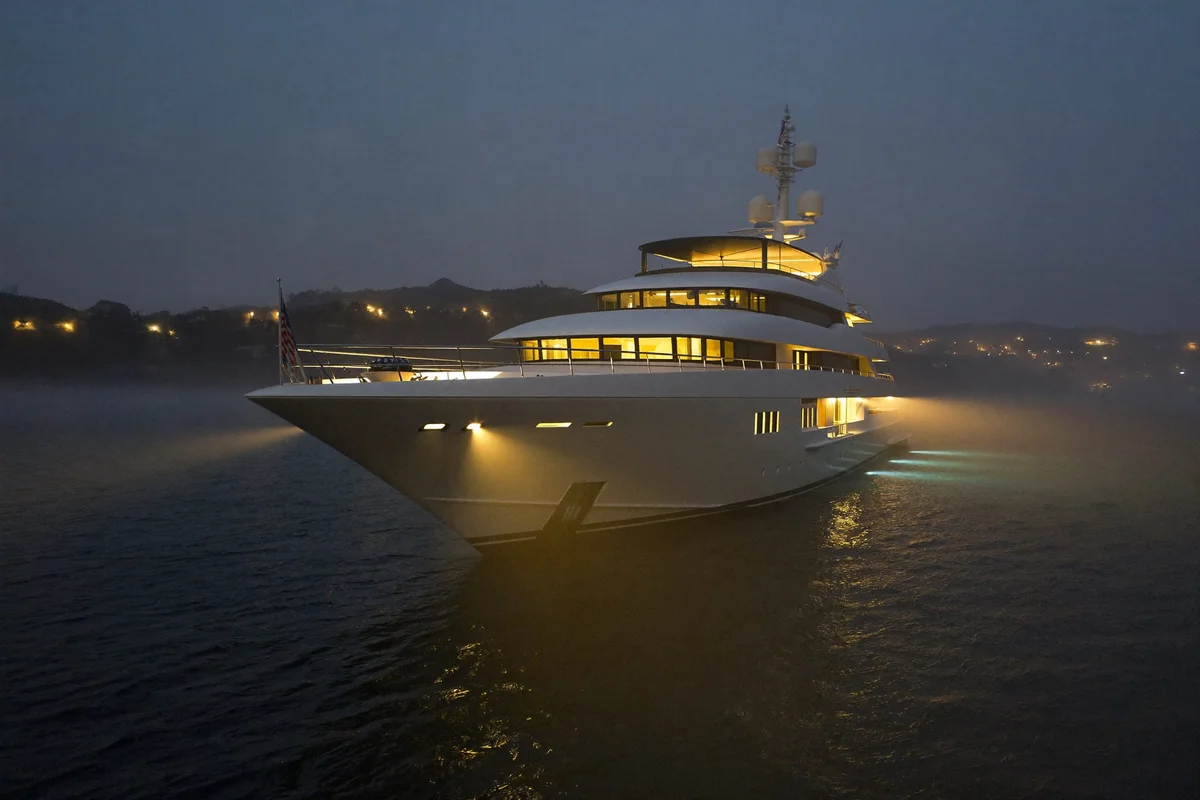
If you want a measure of how Nancy Walton Laurie spends money when nobody stops her, it is 360 feet long. In 2019 she bought the Oceanco superyacht Jubilee, at delivery the largest yacht ever built in the Netherlands, and renamed it Kaos. The boat cost somewhere in the region of $300 million and carries the sort of anonymity money buys: no name on the transom you would connect to Bentonville, Arkansas. It found fame anyway. In July 2023, while Kaos lay moored in Ibiza, two activists from the Spanish climate group Futuro Vegetal emptied fire extinguishers of red and black paint across her stern and unfurled a banner reading “You Consume Others Suffer.” The owner’s response was characteristic: nothing. The yacht was repainted; the activists were arrested; the silence resumed.
The family’s one involuntary spell in the headlines came in 2004, when the University of Missouri arena the Lauries had funded with a $25 million gift, and named for their daughter Paige, had to be quietly renamed after Paige’s former college roommate told ABC she had been paid roughly $20,000 to do Paige’s coursework. Paige returned her USC diploma the following year. It was the only time the Laurie name has trended for the wrong reasons, and the family absorbed it the way they absorb everything: by declining to add a single quotable sentence.
The Eight-Billion-Dollar Question
The race she has now entered is the one everyone in basketball has been pricing all summer. Adam Silver says the league will decide on expansion by the end of 2026, with Las Vegas and Seattle the presumed destinations and new teams unlikely to take the floor before 2028-29. The bankers’ consensus puts an expansion fee somewhere between $7 billion and $10 billion, which would make this the most expensive franchise ever sold in any sport. The declared and reported field in Vegas is formidable: Bob Iger and Josh Kushner, bidding through Kushner’s Thrive Eternal vehicle with investment bankers already engaged; Bill Foley, who owns the Golden Knights and half the town’s goodwill; Marc Lasry; and the eternal spectre of Magic Johnson.
Against that field, consider the woman from Henderson. She can write the cheque alone, without a syndicate, a sovereign fund or a term sheet. She has owned and operated a major-league team and its arena before. She lives in the market, which is more than Iger can say. And she has been told no by this league three times, in three cities, in three consecutive years, a quarter of a century ago, when an NBA franchise cost roughly one-fortieth of what it costs today. Waiting has been expensive. It has also, conveniently, been survivable in a way it would not have been for anyone else.
There is a school of thought that says the NBA will prefer the celebrity consortium, because leagues like a famous face at the podium. Perhaps. But the modern NBA has learned to love the owner who signs quickly, stays off television and lets the product speak — and there is no cleaner signature in America than a Walton’s. She is seventy-five years old. She has watched her sister’s name sit on an NBA franchise for twenty-five years. The team is finally, possibly, there for the taking, twenty minutes from her front door — and the one thing a Walton heiress has never needed to do is wonder whether she can afford the ticket.