


A first look at Venice’s Orient Express Palazzo Donà Giovannelli, a 15th-century palazzo reborn as a theatrical, heritage-led luxury hotel opening in April 2026.
Image courtesy of Accor Hotels
There are cities that reward arrival, and then there is Venice, which insists on it. You do not so much enter the city as you are staged into it—by water, by shadow, by the slow revelation of façades that seem less built than remembered. It is, in other words, exactly the sort of place where a brand like Orient Express, long fluent in the art of orchestrated travel, would eventually decide to make itself at home.
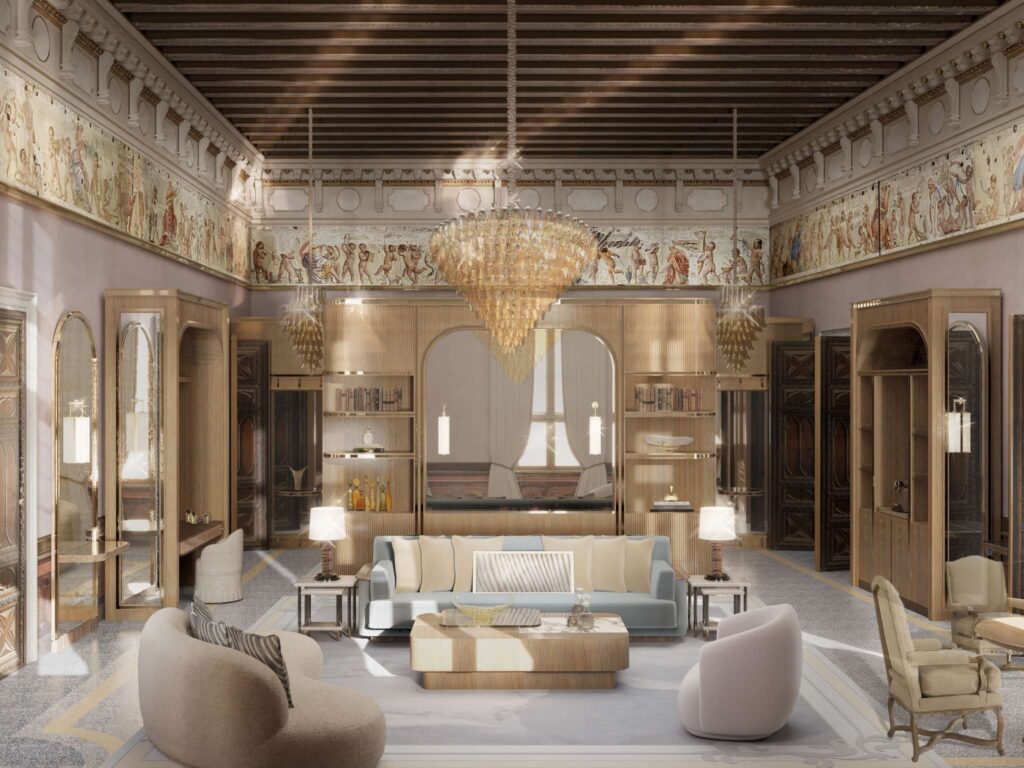
This April, it does just that with the opening of Palazzo Donà Giovannelli in Cannaregio, a 15th-century residence now reborn as the brand’s second Italian hotel. If the original Orient Express train perfected the romance of movement, this new address is concerned with what happens when the journey ends—or, more precisely, when it pauses.
The timing is not incidental. Venice, already saturated with history, is undergoing a quiet recalibration at the highest end of hospitality. New openings are more about refining experience: fewer keys, more narrative; less spectacle, more atmosphere. Palazzo Donà Giovannelli fits neatly into this shift in luxury stays. Reservations opened well ahead of launch, a small but telling indicator that the appetite for this kind of intimacy is only growing.
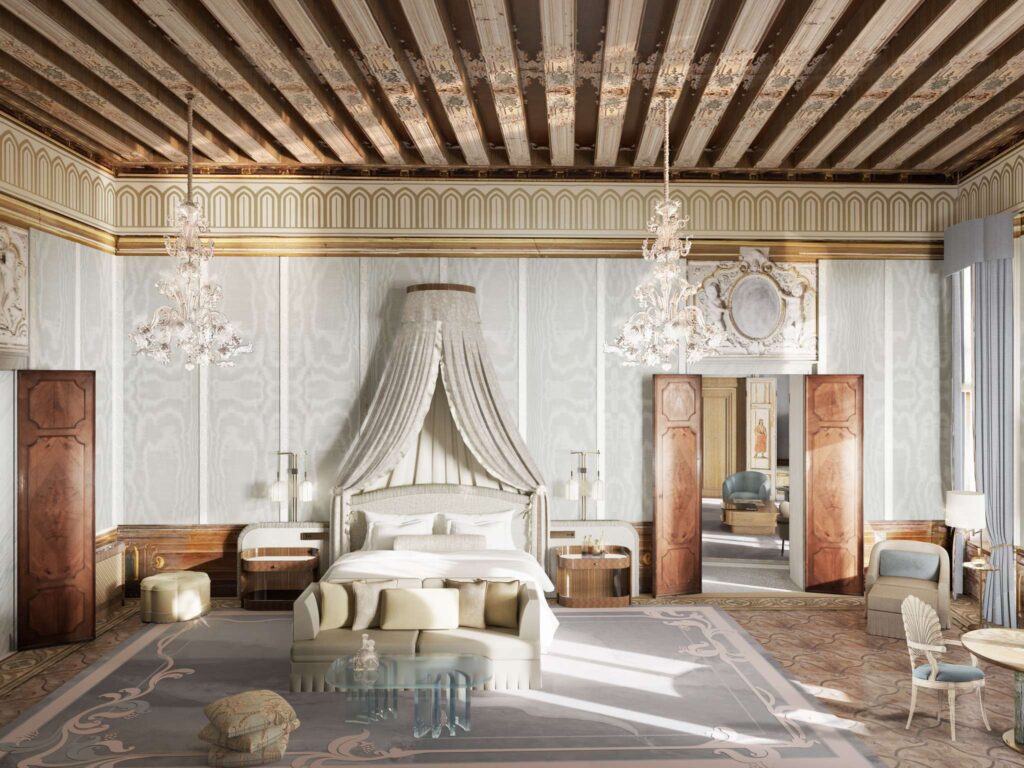
The building itself dates back to 1436, a noble palazzo that has, over the centuries, accumulated the architectural equivalents of footnotes: Gothic windows, Baroque flourishes, frescoes that seem to hover somewhere between decoration and documentation. Its restoration, led by Aline Asmar d’Amman and her studio Culture in Architecture, avoids the heavy-handedness that often plagues heritage projects. There is no sense here of history being polished into submission. Instead, it is allowed to remain slightly unruly, its layers visible, its contradictions intact.
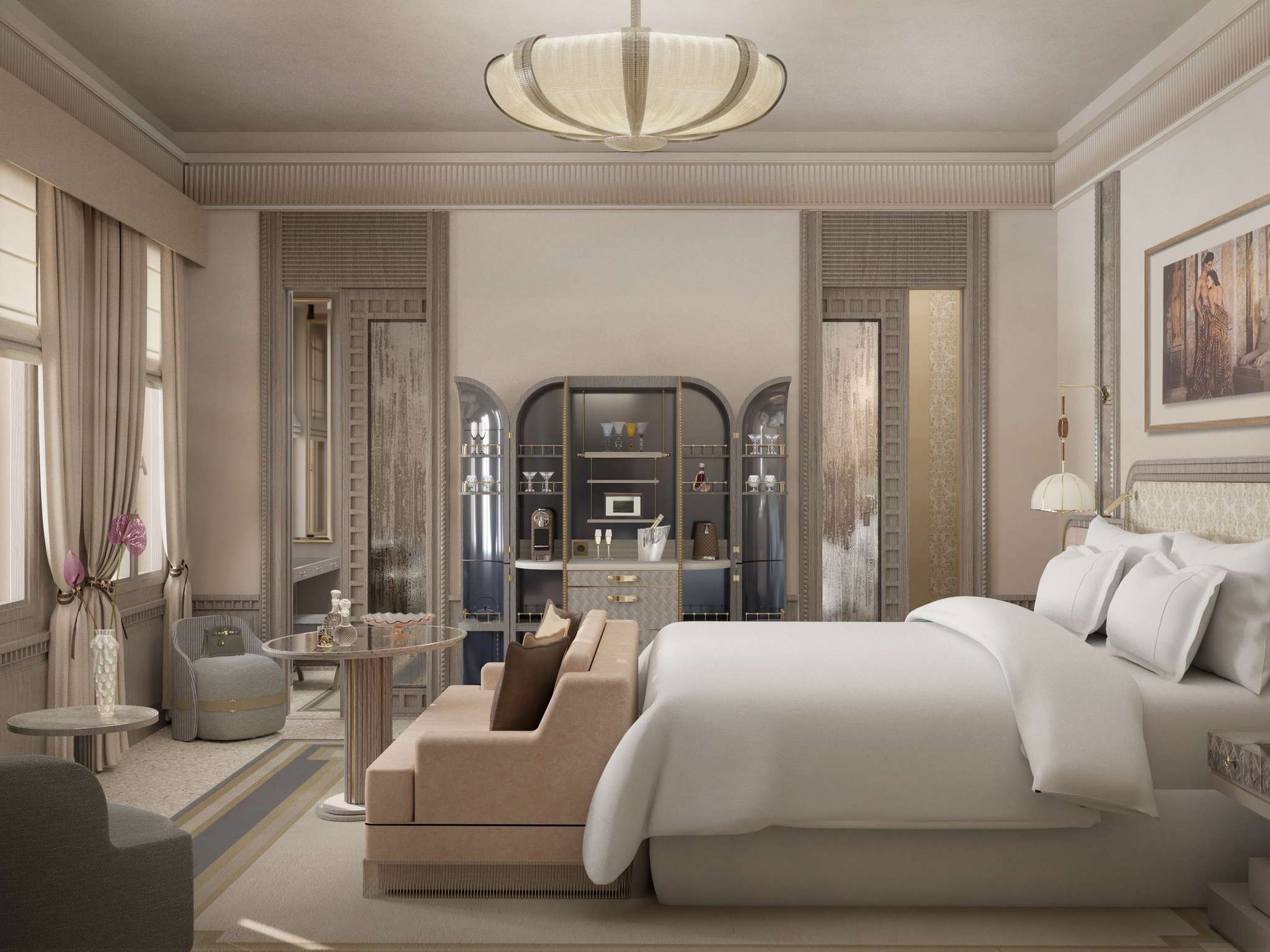
This matters. Because what the project proposes is not simply a hotel, but a reframing of Venetian history as something inhabitable. The interiors lean into a dialogue between neogothic drama and Baroque excess, tempered by the logistical clarity required of contemporary hospitality.
There are 47 accommodations in total, including a handful of suites and two so-called Orient Express Apartments, which lean fully into the fantasy of private palazzo living. Canal views are, naturally, part of the offering, but they are almost beside the point. The real luxury here is not the vista but the sensation of having slipped, however briefly, into another register of time.
Public spaces follow a similar logic. A fine-dining restaurant, accessible by boat, performs the familiar Venetian choreography of arrival and departure. An all-day dining room opens onto a courtyard and garden, offering a rare moment of interior calm in a city that tends towards the operatic. And then there is the Wagon Bar, a knowingly referential nod to the brand’s railway heritage, where the mythology of travel is distilled into something you can hold in a glass.
It would be easy, perhaps too easy, to dismiss all of this as a particularly elaborate exercise in branding. But that would miss the point. What Palazzo Donà Giovannelli suggests is that ultra-luxury hospitality is moving away from scale and towards authorship.
In this sense, the hotel becomes less a place to stay and more a form of cultural staging. To check in is to accept a role, however loosely defined: participant in a narrative about travel, memory, and the enduring allure of old-world glamour. Venice, of course, has always excelled at this kind of illusion.