



Why Submariner, Royal Oak and Santos Owners Keep the Bracelet in the Box
The steel stays in its tissue. The watch goes out on rubber. The reasons are partly money, partly weather, and partly what the brands themselves have been doing since 2015.
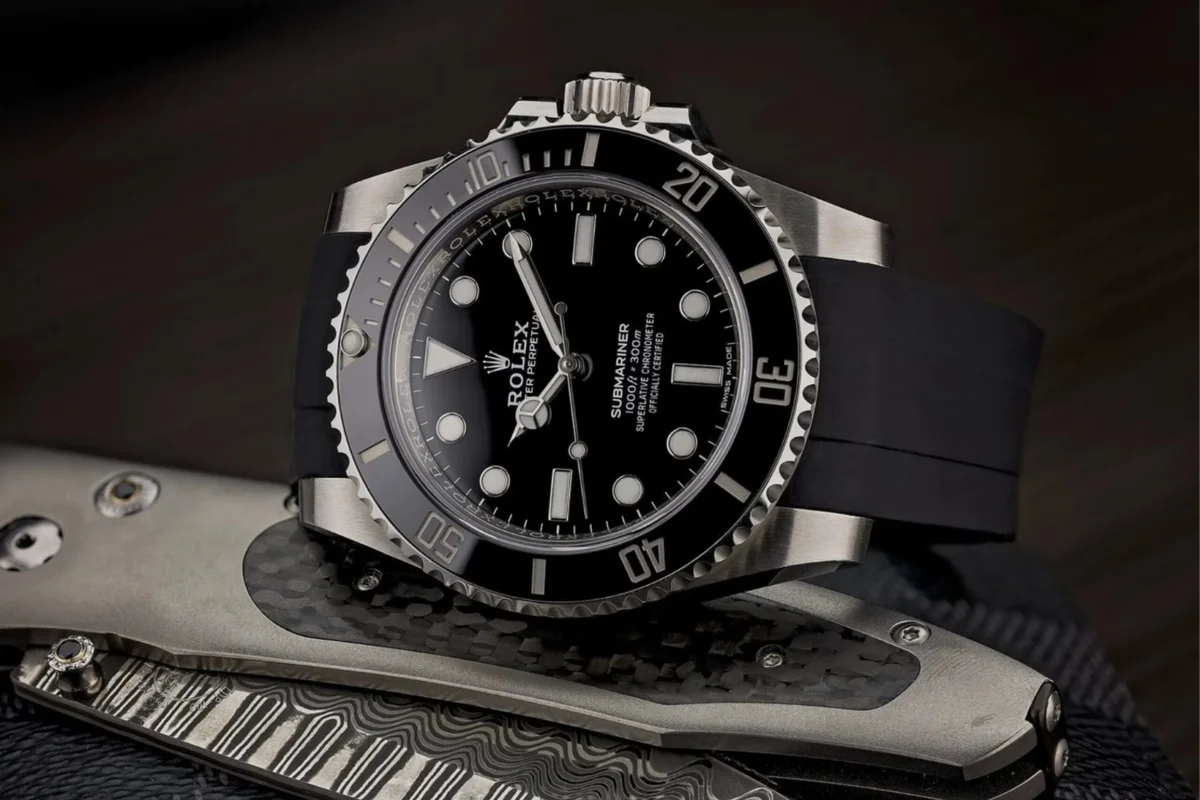
Open the watch box in a certain kind of dressing room and you will find a bracelet with no watch in it. The Oyster is coiled in its tissue, every link still in place, the clasp never once closed on a wrist. The Submariner it belongs to is downstairs on an arm, on a black rubber strap. The same scene repeats with Royal Oaks and with the Santos, and it has stopped being the habit of a few collectors. Ask a dealer what the first question is when a steel sports watch comes in for sale and it is rarely about the dial. It is whether the bracelet has been worn.
The bracelet is where the money is
On all three watches the bracelet is the part that ages. Steel picks up its first hairline the first time it meets a desk, and on a Royal Oak the polished bevel along every link shows that mark in any light. Vintage Oyster bracelets stretched at the pins; modern ones do not, but a brushed finish can only be redone so many times before the edges go soft. A service can refinish a bracelet, but it does so by removing metal, which is why serious buyers count polishes the way they count the miles on a car.
Buyers know all of this, and they pay for it. The same reference with an unworn, unsized bracelet brings a cleaner price than one whose bracelet has done five summers, and a dealer will say so to your face. The arithmetic is not complicated. A rubber strap costs a small fraction of the watch, takes the wear, and can be replaced without a second thought. The bracelet keeps its value by doing nothing at all.
Summer does the rest
The second reason is weather. A steel bracelet in August is a heat sink; it pulls at the hair on your arm and it holds sunscreen in every link. Salt water and chlorine do it no favours either, however good the steel. Rubber, and FKM in particular, a fluoroelastomer that shrugs off sunscreen, salt and chlorine, weighs a few grams and rinses clean under a tap. The watch that used to sit in the safe from June to September now goes to the beach, the gym and the boat, which was the point of a Submariner in the first place.
Fitted is the whole argument
None of this works with a strap bought by lug width alone. A straight 20 mm strap on a Submariner leaves a gap at the case and stands proud of the lugs, and it looks like exactly what it is. What made the bracelet-in-the-box habit respectable was a generation of straps cut to the reference, with curved ends that meet the case flush and sit as if they came out of the same factory.
The Submariner is the simplest case. The 40 mm models take 20 mm at the lugs and the 41 mm model, in production since 2020, takes 21 mm, so a maker has to cut a separate mould for each. Helvetus does exactly that, and its rubber strap moulded for the Submariner comes shaped to the 40 mm and 41 mm cases, with a deployant version that takes the watch’s own Rolex clasp, so the one part of the bracelet that matters day to day carries over.
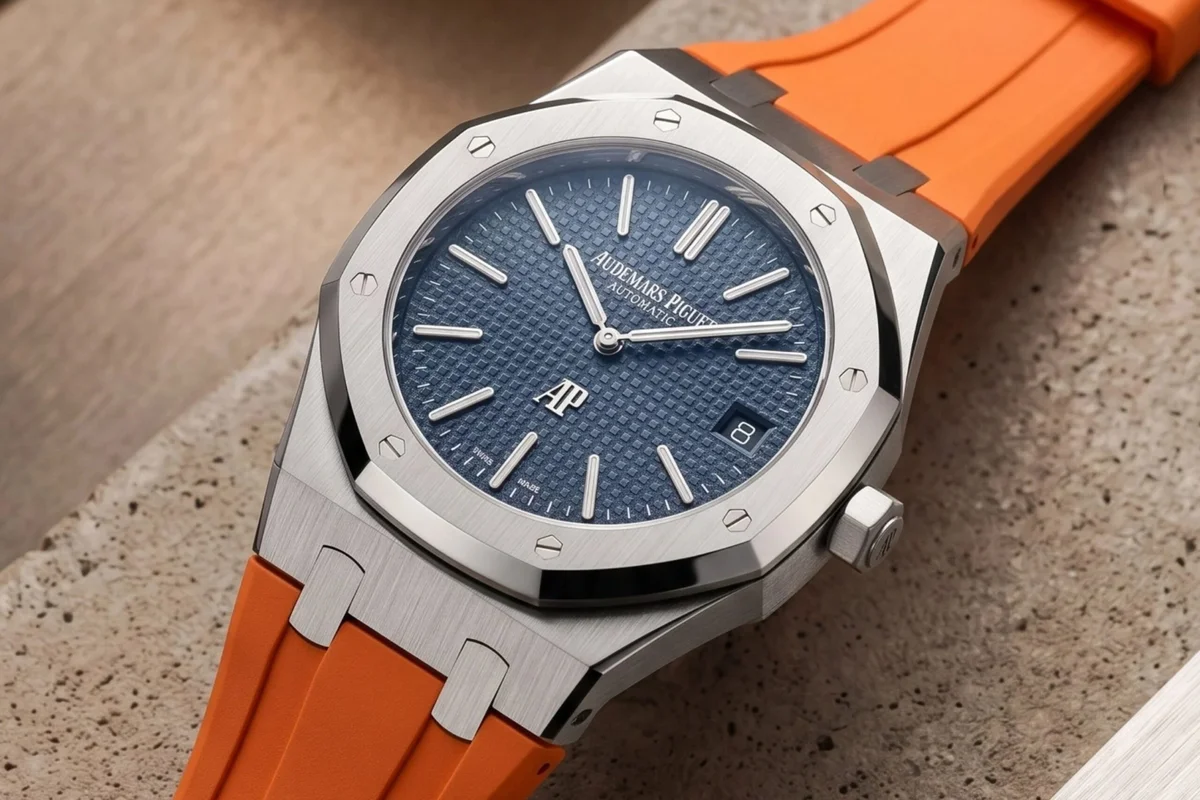
The Royal Oak is the hard case. Gérald Genta drew it in 1972 with the bracelet flowing straight out of the case, and there are no conventional lugs to hang a strap from. A strap either has to be built for that geometry or it does not go on, which is why the Royal Oak stayed on its bracelet for decades while everything around it went to rubber. The better fitted makers now cut for the 41 mm references, and a watch that always felt heavy on the wrist suddenly does not.
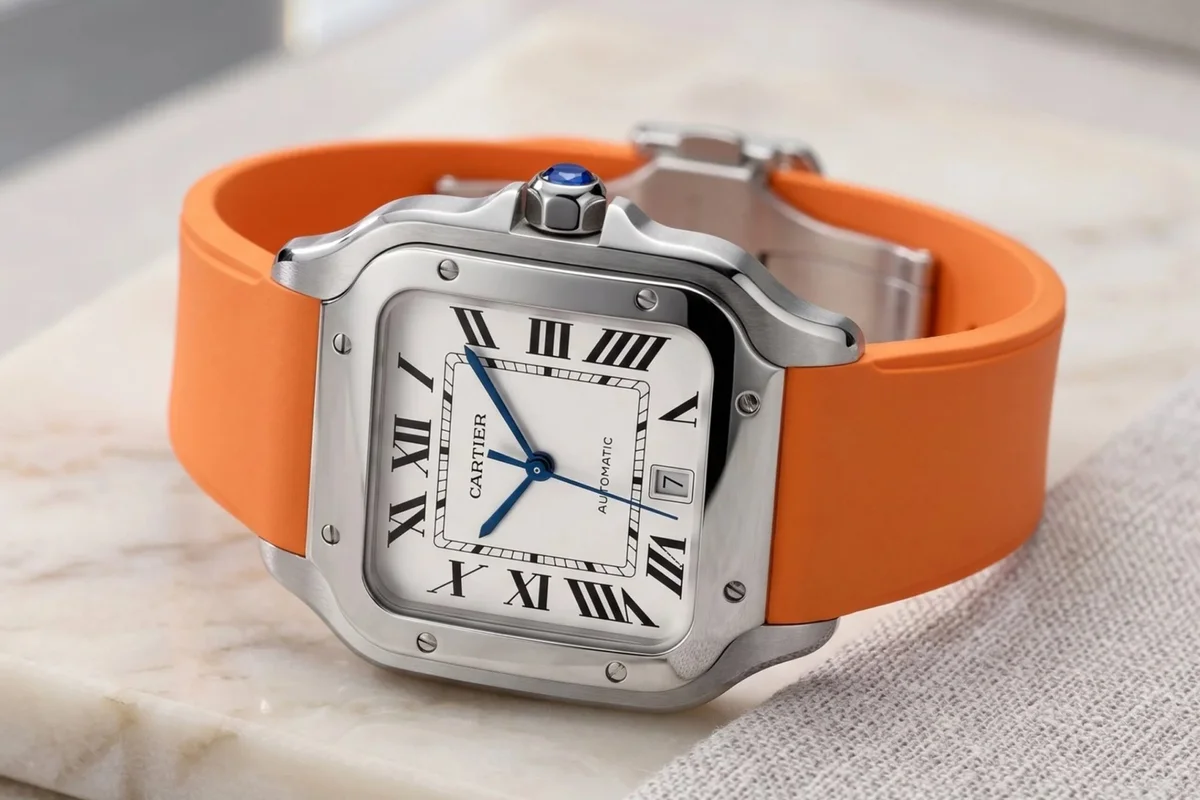
The Santos is the easy one, because Cartier did the work. When the Santos de Cartier was relaunched in 2018 it came with QuickSwitch, a button under the strap that releases it without tools, and a second strap in the box beside the bracelet. Cartier built the habit into the product. The medium takes 19 mm and the large 21 mm, and Helvetus makes rubber Santos straps that click in without tools, with the original Cartier buckle carrying across.
The brands got there first
If rubber on a serious watch still sounds like a downgrade, look at what the houses have done. Rolex introduced the Oysterflex in 2015, a black elastomer over a titanium and nickel blade, on the Everose Yacht-Master, and has since put it on the Daytona. It has never offered it on the Submariner. Audemars Piguet has sold the Royal Oak Offshore on rubber for years. Cartier puts a second strap in the box with the Santos de Cartier. The owners who keep the bracelet in the box are not rejecting the brand’s idea of the watch. They are extending it to the one reference the brand would not.
Three rules the box-keepers follow
Leave the bracelet unsized. If the boutique already took links out, keep them in the box with the papers, because a buyer will ask for them before asking anything else.
Change straps with a proper spring-bar tool, not whatever is in the kitchen drawer. The scratches that cost money on a Submariner are the ones between the lugs. The Santos needs no tool at all, which is rather the point of it.
Match the ends to the case. If there is daylight between the strap and the case, it is the wrong strap, however good the rubber.
When the bracelet comes out
It comes out twice. Once for the dinner where steel still reads better than rubber under a cuff, and once on the day the watch is sold, when the unworn links go back on, the clasp closes for the first time, and the price reflects the five summers the bracelet never saw.